To avoid these ads, REGISTER NOW!

What caused this - burned neutrals in panel

benjamintmiller

Well-known member
Joined
Feb 8, 2011
Messages
284
Location
IA
I have a torque screwdriver that I use and have been surprised at how much torque the specs call for. The larger wires need almost as much torque as I am capable of applying with a screwdriver.
 
To avoid these ads, REGISTER NOW!

sberry

Banned
Joined
Jun 18, 2005
Messages
35,747
Location
Brethren, Michigan
Guys that have done a bit of engine work have good feel. I can come really close and am out them farmer tight. I had an inspector check my last job at main lugs and was happy . With alum conductors it doesnt hurt to let them sit overnight, tighten a pinch again. I spray a light shot of wd down those bars and a little no lox on lug screws. I don't want any screw to tighten with a squeak.
 

checkthisout

Well-known member
Joined
Sep 5, 2008
Messages
5,232
When doing electrical work, use T-Handle drivers. They save your wrist and forearm muscles and allow you to achieve the proper torque.

Tight is right!
 

wyliesdiesels

Well-known member
Joined
Aug 14, 2012
Messages
19,998
Location
Modesto, CA
Guys that have done a bit of engine work have good feel. I can come really close and am out them farmer tight. I had an inspector check my last job at main lugs and was happy . With alum conductors it doesnt hurt to let them sit overnight, tighten a pinch again. I spray a light shot of wd down those bars and a little no lox on lug screws. I don't want any screw to tighten with a squeak.

Spraying oil in electrical panels? Now thats ridiculous and hack work!

Do u wipe it down afterwords?
 

checkthisout

Well-known member
Joined
Sep 5, 2008
Messages
5,232
Guys that have done a bit of engine work have good feel. I can come really close and am out them farmer tight. I had an inspector check my last job at main lugs and was happy . With alum conductors it doesnt hurt to let them sit overnight, tighten a pinch again. I spray a light shot of wd down those bars and a little no lox on lug screws. I don't want any screw to tighten with a squeak.

I have seen grease on the service entrance cable and big allen head screws used to connect them to the panel, what's that for?

Never seen any on neutrals or grounds leaving the panel but I wouldn't think a little dab of a solvent oil like WD would hurt.

What kinds of tools do you use for simple outlets and panel wiring?
 

wyliesdiesels

Well-known member
Joined
Aug 14, 2012
Messages
19,998
Location
Modesto, CA
I have seen grease on the service entrance cable and big allen head screws used to connect them to the panel, what's that for?

Never seen any on neutrals or grounds leaving the panel but I wouldn't think a little dab of a solvent oil like WD would hurt.

What kinds of tools do you use for simple outlets and panel wiring?

were the conductors aluminum? If so then it was an anti-ox grease for keeping the aluminum from oxidizing...
 

MBfreak

MEMBER EMERITUS
Joined
Dec 10, 2010
Messages
2,301
Location
Linkoping , Sweden
Long shot, but have seen it several times in industrial buildings.

Somebody is going to do some arc welding and attaches the ground clamp in a convenient place. But not the right place so the welding current goes thru a neutral/ground wire on to the bar in the fuse panel and then on to where the welding is done.

Great fun to repair!

Ola
 

manwithtools

ALLIANCE MEMBER
Joined
Aug 24, 2015
Messages
13,762
Location
Lebanon, TN
I have seen grease on the service entrance cable and big allen head screws used to connect them to the panel, what's that for?

Never seen any on neutrals or grounds leaving the panel but I wouldn't think a little dab of a solvent oil like WD would hurt.

What kinds of tools do you use for simple outlets and panel wiring?

You wont see anti-ox grease on the neutrals or grounds leaving the panel because they are copper, the anti-ox grease is only used for aluminum conductors. Aluminum is usually only used for the large incoming main conductors.

Not sure about your question on kinds of tools? Screwdrivers, side cutters, wire strippers, etc. ?
 

checkthisout

Well-known member
Joined
Sep 5, 2008
Messages
5,232
.

Not sure about your question on kinds of tools? Screwdrivers, side cutters, wire strippers, etc. ?

For torqueing. I have seen even pro electricians using ordinary screwdrivers to torque connections on outlets and in panels. They struggle to achieve the proper torque.

I have found that t-handle tools work wonders for torqueing screws in outlets and panels.
 

manwithtools

ALLIANCE MEMBER
Joined
Aug 24, 2015
Messages
13,762
Location
Lebanon, TN
Do not lubricate anything in an electrical panel....

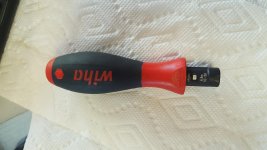
This is the tool to use for smaller conductors - 4ga and below.

20160424_134046.jpg

Any larger, use a torque wrench and the appropriate tool to fit the fastener; internal or external hex usually.
 
To avoid these ads, REGISTER NOW!

sberry

Banned
Joined
Jun 18, 2005
Messages
35,747
Location
Brethren, Michigan
I am not talking about hosing it down but a drop of WD on a steel screw wont hurt a thing. I use no lox on the lug screws, copper or aluminum. Any time a screw squeaks during a tighten it cant be good.
 

rlitman

Well-known member
Joined
Oct 18, 2010
Messages
24,596
Location
Long Island
Spraying oil in electrical panels? Now thats ridiculous and hack work!

Do u wipe it down afterwords?

LOL to the wiping, but no it isn't necessarily hack work. I'm not a fan of WD for this though. Too flammable to my taste. I make heavy use of DeOxit Dn5 spray at work. It's certified as non-flammable, non-conductive, and not damaging to plastic (and I would NOT consider a product for this use that does not meet all three of these criteria).

were the conductors aluminum? If so then it was an anti-ox grease for keeping the aluminum from oxidizing...

True for aluminum, but other greases are regularly used in panels. Many manufacturers include a dab of grease on a breaker's bus contacts (especially on spring contact surfaces) to reduce the heating effects of corrosion. I recall a breaker at work (Square D J-frame) that came with a specific warning to not remove the grease from the bus clips on the end, and to not use it if the grease was removed.

You wont see anti-ox grease on the neutrals or grounds leaving the panel because they are copper, the anti-ox grease is only used for aluminum conductors.

Again, not so. However, I would not recommend applying grease where it is not called for by the manufacturer.

I am not talking about hosing it down but a drop of WD on a steel screw wont hurt a thing. I use no lox on the lug screws, copper or aluminum. Any time a screw squeaks during a tighten it cant be good.

I don't know if I'd agree with that. I'm actually a fan of screws squeaking in the particular case of electrical connections. The squeak is an indication of a high static friction, which should prevent the screw from backing out under thermal cycling. Lubrication is more likely to lead to loosening over time. Especially in the case of bi-metallic connections (like a copper wire screwed into an aluminum bus).

As for meter bases, yeah, I'm more with you there. Anything outdoors needs more corrosion protection.

Long shot, but have seen it several times in industrial buildings.

Somebody is going to do some arc welding and attaches the ground clamp in a convenient place. But not the right place so the welding current goes thru a neutral/ground wire on to the bar in the fuse panel and then on to where the welding is done.

Great fun to repair!

Ola

Interesting thought. I could certainly see that if the ground clamp were connected to the welder's frame.
 
Last edited:

benjamintmiller

Well-known member
Joined
Feb 8, 2011
Messages
284
Location
IA
Screws in electrical panels are aluminum, not steel. Steel screws in aluminum busses will back out over time due to differing thermal expansion. This is why it's so easy to strip these screws and is why you should always use a Robertson driver if the screw allows.
 

rlitman

Well-known member
Joined
Oct 18, 2010
Messages
24,596
Location
Long Island
^ ^ ^ ^ Decipher please ???

Is that Nvidia cooling fan . . . . For the Win ??? :D

:)

LOL. Typo. I meant ECX screwdriver tips. The Robertson's cam out. But I've also munged up the same screws using a slotted (usually one side starts to get damaged first if the screwdriver gets off-center). The ECX bits stay centered and make it damn near impossible to damage the screws that they fit.
 

sberry

Banned
Joined
Jun 18, 2005
Messages
35,747
Location
Brethren, Michigan
They use steel plates and screws on alum lugs in meter bases all the time. A little water displacer spray that drys isn't an explosive, where you guys learn all this? I see examples of places it would have avoided connections from condensate etc that ruined it well before its time. **** couldn't be fixed if it needed to due to seized screws.
The reason they need values in the first place is most don't know the difference between 10 and 30 and are not as strong as they think they are.
I did them the same way an inspector recently checked one of mine, a big ole fat handle Klein with both hands right on it square and let them rest for an hour on alum, come back and nip them again which is near impossible with a stuck squeaky screw.
 

rlitman

Well-known member
Joined
Oct 18, 2010
Messages
24,596
Location
Long Island
There may be different kinds of screws in the same bar. The little screws are steel.
Agreed. In those aluminum "I" bar ground/neutral bus bars, the screws are steel.

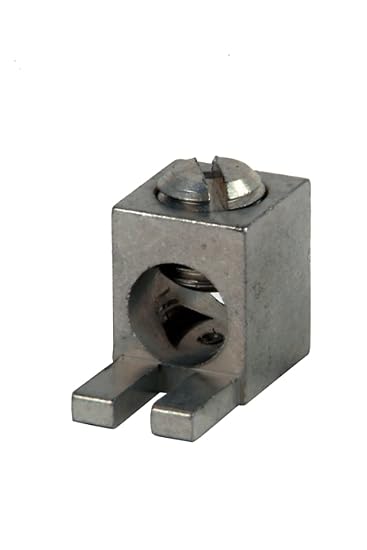
If your bus bar has an aluminum block lug in it meant to hold a larger wire that looks like this:
51zyplnv86L._SY550_.jpg

That would have an aluminum screw.
The main lugs will also have aluminum screws, IF (and most likely this is the case) the bus bars are aluminum. If you happen to have a copper lug on a copper main bus bar, the screw will also likely be copper.
 

rlitman

Well-known member
Joined
Oct 18, 2010
Messages
24,596
Location
Long Island
They use steel plates and screws on alum lugs in meter bases all the time. A little water displacer spray that drys isn't an explosive, where you guys learn all this?

Steel screws in aluminum lugs? :( Blech.

I'm with you on the WD as being better than nothing. The spray itself is only a little flammable, but the flammability risk it prevents once dried is about nil.

However, the corrosion protection it provides is also minimal. That's why I switched to better stuff.

Also, while I will not frown upon your use of WD on terminal lugs in outdoor enclosures (unlike others in this thread), there are places where corrosion can cause issues, but where I feel that WD is quite inappropriate.

One such example is on silver plated fuse end caps. Another, is on contactor contact points.
 
To avoid these ads, REGISTER NOW!
Top Bottom