
threeputt
Well-known member
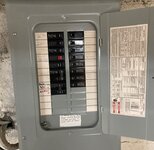
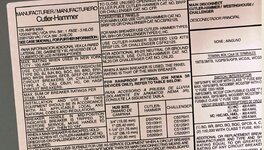
I live in a house I bought 49 years ago. It was built in 1958. My electrical panel was upgraded to a 125 amp about 15 years ago. I had the old fuse type. Most wiring is the older two wire. I had some wires updated that could be got to easy as I have a full basement. The clothes drier in basement was upgraded as was where we plugged in the washing machine. The electrician also cut a hole in my floor and added a grounded outlet to where I plug in my computer and monitor .
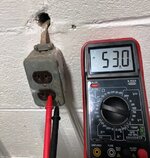
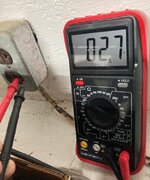
The question I have is when I was checking in a spare room in the basement tonight I noticed I got a strange reading using my meter as shown in picture. Is this safe ?
I just never checked it until tonight. There are a total of four like this in this room and one more. Two out of the three outlets were showing volts of 53 to 54 volts and the one was 2.7 volts when putting the red lead of meter on hot side of outlet and just touching black lead to the outside of outlet cover which is metal by the way. One actually showed around 80 volts when testing like this. We very rare use this room . For now I turned off the breakers to these two rooms. I used these outlets tonight and they worked . Do they need replacing ? wondering what would cause this ?
I know I have read where people just put a GFIC on first outlet from panel instead of rewiring the entire house. For now I would like to know how I can fix these outlets if there is a fix. How would I know which one is at the end ? I think I read where you can use a tool to find out but I don't remember what it was called.
The question I have is when I was checking in a spare room in the basement tonight I noticed I got a strange reading using my meter as shown in picture. Is this safe ?
I just never checked it until tonight. There are a total of four like this in this room and one more. Two out of the three outlets were showing volts of 53 to 54 volts and the one was 2.7 volts when putting the red lead of meter on hot side of outlet and just touching black lead to the outside of outlet cover which is metal by the way. One actually showed around 80 volts when testing like this. We very rare use this room . For now I turned off the breakers to these two rooms. I used these outlets tonight and they worked . Do they need replacing ? wondering what would cause this ?
I know I have read where people just put a GFIC on first outlet from panel instead of rewiring the entire house. For now I would like to know how I can fix these outlets if there is a fix. How would I know which one is at the end ? I think I read where you can use a tool to find out but I don't remember what it was called.
Attachments
Last edited:
