

You are using an out of date browser. It may not display this or other websites correctly.
You should upgrade or use an alternative browser.
You should upgrade or use an alternative browser.
what epoxy for maxjax anchors?
- Thread starter mepstein
- Start date
wssix99
Well-known member
The best product is what came with the lift. Epoxy is not necessarily better and has several drawbacks. One of the major drawbacks is that many epoxies (even strong ones) creep under tensile loads and can fail.
I would not take advice on this topic from the internet. If you feel that you really need epoxy anchors for this application, you should contact the manufacturer. They can give you accurate and safe technical advice.
I would not take advice on this topic from the internet. If you feel that you really need epoxy anchors for this application, you should contact the manufacturer. They can give you accurate and safe technical advice.
tinmanwpk
Well-known member
^^^^What he said.
Denwood
Well-known member
I ended up using epoxy anchors for my MaxJax, similar to this: https://www.maxjax.com/accessories/epoxy-anchor-bolt-kit/
The mechanical ones were not reliable after multiple torque sessions. Epoxy have been rock solid (and hold the 90 ft/lbs bolt torque) for 7 years and counting.
I don't see why you could not use this product for that application as well: https://www.homedepot.ca/product/quikrete-fastset-anchoring-epoxy-296ml/1000684856
Data sheet: https://www.quikrete.com/pdfs/data_sheet-anchoring epoxy- fastset 8620-30.pdf
The mechanical ones were not reliable after multiple torque sessions. Epoxy have been rock solid (and hold the 90 ft/lbs bolt torque) for 7 years and counting.
I don't see why you could not use this product for that application as well: https://www.homedepot.ca/product/quikrete-fastset-anchoring-epoxy-296ml/1000684856
Data sheet: https://www.quikrete.com/pdfs/data_sheet-anchoring epoxy- fastset 8620-30.pdf
wssix99
Well-known member
I don't see why you could not use this product for that application as well: https://www.homedepot.ca/product/quikrete-fastset-anchoring-epoxy-296ml/1000684856
Data sheet: https://www.quikrete.com/pdfs/data_sheet-anchoring epoxy- fastset 8620-30.pdf
Because the data sheet says, "Not for overhead anchoring. Not for sustained long-term loads." This means that it creeps under tensile loads. (Like you would experience with a 2 post lift.)
An engineer at Simpson strong tie said this product is their highest strength epoxy for my use with epoxy anchors.
My cars weigh between 1800-2200 lbs (old Porsches), so even though my floor is a little over 4”, I’m pretty confident that it will hold up to my intended use. I also have the newer maxjax with the extended base.
My cars weigh between 1800-2200 lbs (old Porsches), so even though my floor is a little over 4”, I’m pretty confident that it will hold up to my intended use. I also have the newer maxjax with the extended base.
Attachments

speed bump
Well-known member
I've used liquid roc 500 for anchoring crushing equipment since our local vendor recommended it and it does well. It also conveniently comes in a single tube dispenser.
https://www.mktfastening.com/products/liquid-roc-500-single-tube
https://www.mktfastening.com/products/liquid-roc-500-single-tube
wssix99
Well-known member
Strength is not the most important thing in this type of application, although this product doesn't have the typical warnings (like the other product above) that would give one pause to use it for a lift.An engineer at Simpson strong tie said this product is their highest strength epoxy for my use with epoxy anchors.
I would still not use any epoxy for a lift unless it's blessed by the manufacturer. It looks like MaxJax shipps a Chineese epoxy with their kit, which doesn't give me a warm/fuzzy - but hopefully they know what they are doing.
bluedog225
Well-known member
Interesting. Had not heard of 3g. It is better. Maybe it’s new?
For both XP an 3G, the 1/2“ rod fails first.
Good comparison here.
 seblog.strongtie.com
For both XP an 3G, the 1/2“ rod fails first.
Good comparison here.
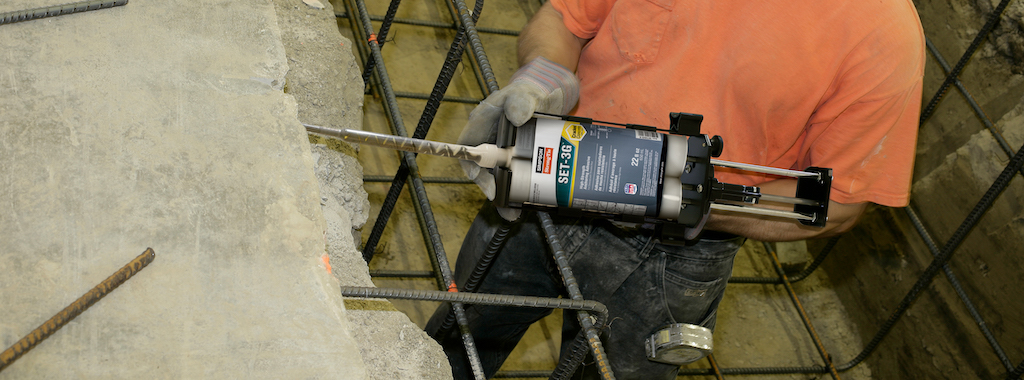
Reasons to Specify SET-3G Adhesive for Anchorage in Concrete Construction -
This post explains reasons to specify SET‑3G adhesive for anchorage in concrete construction, highlighting its performance characteristics, installation advantages, and code‑compliant design benefits that support reliable post‑installed anchorage solutions.
seblog.strongtie.com
It looks like the 3g might handle less than perfect conditions a bit better. I told the engineer what I needed it for and this was his suggestion. I’m not just winging it here. I have it on order and I’ll give it a go once it comes in. I just got my drill and it went through the concrete like butter. A smaller, Dewalt hammer drill with a masonry bit did nothing but the Bosch is the right tool for the job.Interesting. Had not heard of 3g. It is better. Maybe it’s new?
For both XP an 3G, the 1/2“ rod fails first.
Good comparison here.
Reasons to Specify SET-3G Adhesive for Anchorage in Concrete Construction -
This post explains reasons to specify SET‑3G adhesive for anchorage in concrete construction, highlighting its performance characteristics, installation advantages, and code‑compliant design benefits that support reliable post‑installed anchorage solutions.
Attachments

Last edited:
bluedog225
Well-known member
The Bosch with a good bit is amazing. Made me thing there was something wrong with my concrete. 
I would have thought the same thing if I hadn’t tried a test hole with the Dewalt. It took me 20 minutes to go an inch. It was on the hammer drill setting and a good bit. The Bosch was an “Now I get it” moment. The weight of the drill was enough to drill down 4 inches in about 30-45 seconds. Probably a bit overkill for 10 holes but I think of you have a tool, you will find a use for it.The Bosch with a good bit is amazing. Made me thing there was something wrong with my concrete.
bluedog225
Well-known member
Two things come to mind. If you are attaching floor plate anchors, make sure your hole in the wood is larger than the bit. I didn’t clear chips enough, rifled a bit down, and it is stuck forever. It was just a baby.
And note the 3G wants a wire brushed hold, not nylon if I remember correctly from the link above. That side wall hold is a big deal and apparently subtle.
And note the 3G wants a wire brushed hold, not nylon if I remember correctly from the link above. That side wall hold is a big deal and apparently subtle.
Jeff C
Well-known member
One of the major drawbacks is that many epoxies (even strong ones) creep under tensile loads and can fail.
Interesting read related to epoxy creep is the ceiling failure in the Big Dig project in Boston.
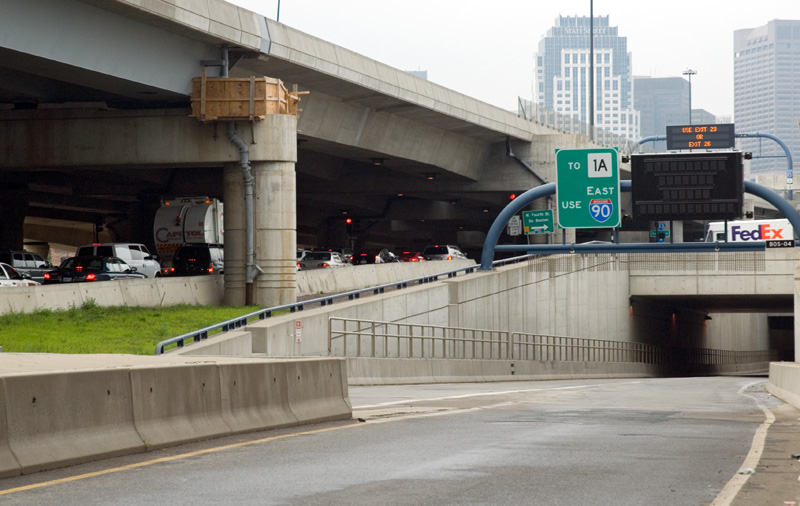
Big Dig ceiling collapse - Wikipedia
 en.wikipedia.org
Hey there, just curious how the Simpson Set-3G worked out for you. I've got the same epoxy on order, to have extra on hand during my Maxjax-branded epoxy anchors install. Thanks.I’m not sure what your first paragraph means. I’m installing a maxjax lift.
I did already get some steel wire brushes. I read they are recommended. I don’t think they are needed for this particular epoxy but it won’t hurt.
Curtis
OP probably already made a decision, but in case anyone else goes through this thread...
Wedge-style anchors require a specific hole size for the wedge to seat properly. If you oversize this hole for epoxy specs, the wedge is pulling entirely on epoxy which is very unsafe. If you want to use epoxy on a wedge-style anchor with a smooth exterior like the WedjITs, DO NOT oversize the hole. The wedge needs to be against the concrete, and make sure you brush and vacuum the concrete after hammer drilling because the dust can act as a dry lubricant and cause even more issues. In this scenario, the epoxy isn't really adding much strength except if the wedge starts to fail upward. Another concern that has been widely debated is "does the epoxy act as a lubricant and affect seating torque?" Dry threads vs wetted threads give different tensile results at the same torque. To be honest, I can see it having an effect, but seating outward the wedge is going to bite concrete either way and it's physically blocked. If anything, you'll have greater seating at the same torque value, so unless you really over-torque the **** out of it, it shouldn't hurt anything.
Most of the anchor epoxies rely on external features on the anchor itself, like threads or rebar-style ribs. It does practically nothing on a smooth surface. It's meant to distribute forces as evenly as possible throughout the surrounding concrete and eliminate voids in the process so you don't have stress concentrations that cause cascading failure. As others mentioned, they can creep under load, but that's why they have load ratings. Anything plastic will creep, but it comes down to if it's within an allowable spec. I've done FEA on all sorts of bizarre mechanisms- everything has some level of "give" even if it isn't measurable.
I've designed and installed a lot of industrial machinery over the years, and to date, none have failed that I am aware of (trust me, lawyers would have already called). I am aware of one failure that was quickly caught and corrected, not on a project I worked on, where the install environment was an industrial freezer and the epoxy did not set properly before 3rd party contractors started firing up machinery- that's in its own category. My point here is, anchoring is generally a very robust process. Just stick to the manufacturer's guidelines, make sure the concrete is good, don't overthink it, and it'll be fine.
Wedge-style anchors require a specific hole size for the wedge to seat properly. If you oversize this hole for epoxy specs, the wedge is pulling entirely on epoxy which is very unsafe. If you want to use epoxy on a wedge-style anchor with a smooth exterior like the WedjITs, DO NOT oversize the hole. The wedge needs to be against the concrete, and make sure you brush and vacuum the concrete after hammer drilling because the dust can act as a dry lubricant and cause even more issues. In this scenario, the epoxy isn't really adding much strength except if the wedge starts to fail upward. Another concern that has been widely debated is "does the epoxy act as a lubricant and affect seating torque?" Dry threads vs wetted threads give different tensile results at the same torque. To be honest, I can see it having an effect, but seating outward the wedge is going to bite concrete either way and it's physically blocked. If anything, you'll have greater seating at the same torque value, so unless you really over-torque the **** out of it, it shouldn't hurt anything.
Most of the anchor epoxies rely on external features on the anchor itself, like threads or rebar-style ribs. It does practically nothing on a smooth surface. It's meant to distribute forces as evenly as possible throughout the surrounding concrete and eliminate voids in the process so you don't have stress concentrations that cause cascading failure. As others mentioned, they can creep under load, but that's why they have load ratings. Anything plastic will creep, but it comes down to if it's within an allowable spec. I've done FEA on all sorts of bizarre mechanisms- everything has some level of "give" even if it isn't measurable.
I've designed and installed a lot of industrial machinery over the years, and to date, none have failed that I am aware of (trust me, lawyers would have already called). I am aware of one failure that was quickly caught and corrected, not on a project I worked on, where the install environment was an industrial freezer and the epoxy did not set properly before 3rd party contractors started firing up machinery- that's in its own category. My point here is, anchoring is generally a very robust process. Just stick to the manufacturer's guidelines, make sure the concrete is good, don't overthink it, and it'll be fine.
Very well-statedOP probably already made a decision, but in case anyone else goes through this thread...
Wedge-style anchors require a specific hole size for the wedge to seat properly. If you oversize this hole for epoxy specs, the wedge is pulling entirely on epoxy which is very unsafe. If you want to use epoxy on a wedge-style anchor with a smooth exterior like the WedjITs, DO NOT oversize the hole. The wedge needs to be against the concrete, and make sure you brush and vacuum the concrete after hammer drilling because the dust can act as a dry lubricant and cause even more issues. In this scenario, the epoxy isn't really adding much strength except if the wedge starts to fail upward. Another concern that has been widely debated is "does the epoxy act as a lubricant and affect seating torque?" Dry threads vs wetted threads give different tensile results at the same torque. To be honest, I can see it having an effect, but seating outward the wedge is going to bite concrete either way and it's physically blocked. If anything, you'll have greater seating at the same torque value, so unless you really over-torque the **** out of it, it shouldn't hurt anything.
Most of the anchor epoxies rely on external features on the anchor itself, like threads or rebar-style ribs. It does practically nothing on a smooth surface. It's meant to distribute forces as evenly as possible throughout the surrounding concrete and eliminate voids in the process so you don't have stress concentrations that cause cascading failure. As others mentioned, they can creep under load, but that's why they have load ratings. Anything plastic will creep, but it comes down to if it's within an allowable spec. I've done FEA on all sorts of bizarre mechanisms- everything has some level of "give" even if it isn't measurable.
I've designed and installed a lot of industrial machinery over the years, and to date, none have failed that I am aware of (trust me, lawyers would have already called). I am aware of one failure that was quickly caught and corrected, not on a project I worked on, where the install environment was an industrial freezer and the epoxy did not set properly before 3rd party contractors started firing up machinery- that's in its own category. My point here is, anchoring is generally a very robust process. Just stick to the manufacturer's guidelines, make sure the concrete is good, don't overthink it, and it'll be fine.