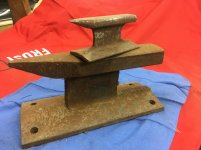
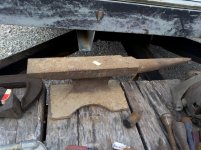
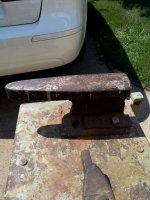
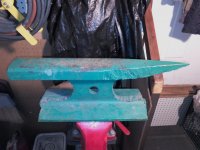
I've got a length of rail that I've pounded on for years. It's always done the job... just not really well.
The problem with a railroad anvil is the same positive in a real anvil: MASS.
The mass absorbs the blows, so all the force of the hammer goes into the piece you're working. A rail road rail anvil doesn't have the mass to absorb the blows, so the piece you're working on ends up bouncing and jumping around.
One trick I've seen is to build a "stump" for a railroad rail, and set the rail vertically in it, so you're hammering on the small end, rather than the wheel surface. This makes the entire length of rail absorb the blows, rather than having it localized into the area only under the work.
I've got a real anvil now too. The benefit of a rail road anvil over a real anvil, in my opinion, is that you can hammer cold steel on a railroad rail and it won't damage the rail or work surface of the rail, while hammering cold steel on an anvil can crack the top plate.
-Brad