To avoid these ads, REGISTER NOW!

What is this thing and how do I fix it?

Luckydevil

Well-known member
Joined
Jan 1, 2005
Messages
1,469
Location
Tampa
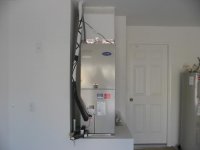
My wife was complaing about the smell coming in from the garage. The smell was just from normal garage stuff, oil, gas, paint, etc. It was somehow getting into the house though. I traced it back to this thing. I guess it is part of the A/C, but not exactly sure what it does. For a temporary fix I just covered it with some plastic sheeting to keep the garage air seperate from it.

Is it okay for me to leave it like this? Is there a better way to keep this thing from sucking in garage air and sending it into the house?

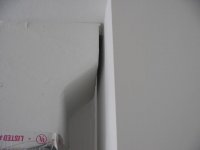
The pictures of the uncovered unit are from another house being built near mine. You can also see the gap in the back part of it. Not sure if this is where the air is coming in from on mine.

Thanks ahead of time guys.
 

Attachments

  • 144_4410.JPG
    144_4410.JPG
    22.5 KB · Views: 422
  • 144_4413.JPG
    144_4413.JPG
    15.9 KB · Views: 407
  • 144_4418.JPG
    144_4418.JPG
    25.6 KB · Views: 411
  • 144_4416.JPG
    144_4416.JPG
    40 KB · Views: 401
To avoid these ads, REGISTER NOW!

OI812

Well-known member
Joined
Jan 8, 2005
Messages
202
If I am not mistake that is your AC unit with blower. I am not real familiar with these units, I have a furnace/ac unit. There should be a blower motor somewhere on the unit, some people call them a squirrel cage. You should have a air return duct going to the unit. That draws your fresh air into the unit before it is cooled and pushed back into the house. Does your fresh air intake draw from the garage or house. Probably isn't going to matter either way, because it is not air tight and will still draw fumes from garage. Solution might be to enclose it with a drywall room.
 

jstbecauz

Well-known member
Joined
Jan 9, 2005
Messages
97
Location
Spring Hill
Luke, yours is the one that is covered up with plastic? If so then I think that you need to remove it. The air that is sucked in should only be coming from inside your house, but since there is a gap in your system it may be pulling in some other air. I would get it fixed though, it could make it harder to cool in the summer being that it is pulling in hot air, rather than circulated air from within the house. I am not sure if this makes any sense so if it doesnt just disregard :lol_hitti
 

danski0224

Well-known member
Joined
Jan 29, 2005
Messages
13,375
Location
Near Naperville, IL
Wow, I am amazed that air handling equipment placed in an open garage is even allowed by code! Would never fly here.

Even if you taped every single visible seam with a UL rated aluminum foil tape, I bet the CO that sneaks by would still be unhealthy at best.

You should go to a town meeting and find the braniac behind this one, and get him fired. I hope you have a fire damper in the wall between the garage and the living space... or else why have the Type X drywall and a fire rated door?
 
OP
L

Luckydevil

Well-known member
Joined
Jan 1, 2005
Messages
1,469
Location
Tampa
danski0224- The house is less than a year old so I guess it is up to code. It was inspected before we moved in and passed. I noticed right away that this definitely was not done correctly, but there isn't a whole lot I can do about it now.

What would you recommend as a fix for this aside from relocating it? Also, can you elaborate on the fire damper? I know zilch about home air conditioning. Thanks.
 

OI812

Well-known member
Joined
Jan 8, 2005
Messages
202
danski0224 said:
Wow, I am amazed that air handling equipment placed in an open garage is even allowed by code! Would never fly here.

Even if you taped every single visible seam with a UL rated aluminum foil tape, I bet the CO that sneaks by would still be unhealthy at best.

You should go to a town meeting and find the braniac behind this one, and get him fired. I hope you have a fire damper in the wall between the garage and the living space... or else why have the Type X drywall and a fire rated door?

All good points.
Luke just because it met or does still meet code, doesn't mean it meets the manufactures recommended installation. If the manufacture doesn't recommend installation in a garage, you might be able to go after the HVAC contractor.
I have never seen or even heard of anyone putting a fire damper into a house, the cost would be some what prohibitive.

What about building a room around it to enclose it from the garage. Not a great idea, but it may solve it. Its hard to see were the air return is and the supply duct going back into the house.
 

OI812

Well-known member
Joined
Jan 8, 2005
Messages
202
Looking at that again did they drywall the duct going into the ceiling? It looks like the duct is going into the attic. I can't tell if they drywalled around the duct to enclose it, if they did that would probably meet the fire rating.

If you look at the supply and return line of the coolant going into the ceiling, it looks like they use drywall mud or plaster on those where they meet the ceiling. It looks like they changed the insulation on those lines. Did they put a fiberglass insulation on those lines?
 
To avoid these ads, REGISTER NOW!

danski0224

Well-known member
Joined
Jan 29, 2005
Messages
13,375
Location
Near Naperville, IL
Fire dampers are not cost prohibitive. I have been involved in a few residential projects that required them.

Even enclosed in drywall, because the air handling equipment is out of the chase (drywall), there should be a fire damper at the point where the ductwork enters the fire rated partition (the home). At least that is how things are done around here.

The only way to weasel out of the fire damper requirement is if the ductwork starts in the home behind the fire rated partition and remains behind the wall or soffit as it travels to something like a register above the garage.

Think of it this way. Your ductwork is a potential fire chase from the garage to the home. The fire damper is designed to prevent that.

A fire damper has a fusible link that holds open a set of blades that may also be spring loaded (horizontal and vertical dampers differ in construction). At a certain temperature, the link opens and the blades close the opening. An access door needs to be near the damper for service and inspection.

If you do a search for "fire dampers" you should find more information than you want... :bounce:

Building codes are minimum standards, nothing more.

Besides the obvious CO problem, do not forget about any flammable or hazardous chemicals (like herbicides) that you may have stored out there. I bet your air handler is not explosion proof. Those "normal garage smells" of oil, gas and paint are all flammable vapors. The electric motor and relays in your air handler create sparks.

Hazardous chemicals stored in the garage can eat the aluminum and copper construction of your air conditioning coil as they are circulated into your home.

The room enclosure thing is a partial solution, better than what you have now.

Your "ductwork" appears to be nothing more than fiberglass ductboard painted white. I do not know if that product has a fire rating. I do know that the schmuck that installed it should not have left that gap by the wall.

You have a very serious problem that needs to be addressed. I still fail to see how this installation could pass. Is the air handling unit gasketed on the service doors?

Your home should have at least a one year builders' warranty. Make them fix it. That is what they do around here.
 

OI812

Well-known member
Joined
Jan 8, 2005
Messages
202
Your idea and my idea of cost prohibitive are two different things. The buildings I work on the fire dampers are a minimum of 2 hour rating. Most are in the 4 hour rating area. These dampers area heavy and expensive. Again they are commercial grade, not residential grade. I consider anything like that in a residential house not necessary. The design should be so that fire dampers aren't needed. I suppose when you get into the 1,2 or more million dollar homes that might be need. All they had to do was drywall that in seperate from the garage and the issue would be dead (provided the drywall went to the underside of the roof and was open only to the house side). Another word the garage never lost its fire rating. The gap between the duct work and the wall I don't believe is anything. I believe that duct work goes straight into the attick. If that is fiberglass board that is painted white, then it most likely meet a 1 hour fire rating. Most dense pack fiberglass such as pipe insulation and duct board meets the ansi requirements for 1 hour rating.

You bring up very good points and I don't disagree with what you have said one bit. The best thing Luke can do is get it out of the garage. And yes the schmuck that did this should fix it all for free. It doesn't matter if there is a 1 year warranty or not.
 

danski0224

Well-known member
Joined
Jan 29, 2005
Messages
13,375
Location
Near Naperville, IL
The residential projects I worked on that needed fire dampers had exposed ductwork passing through a fire rated partition (not a garage). Simple tight drywall joints and fire caulk around the opening was not good enough.

Yes, there are different ratings on fire dampers and their assemblies, but I did not want to confuse the issue. The majority of dampers I have worked with are the two hour variety, whether they have been in a commercial building or a residential one. School work is a completely different animal.

Most builders try to eliminate fire dampers. In the fiercely cutthroat residential market, pennies count- even at the million plus level. Overall, they have been a rarity, found mostly (in my experience) in multi-family units like townhomes. Some municipalities here treat the furnace room in a multi-family building as a fire rated enclosure.

Even if the fiberglass duct is fire rated, there is still an air handler connected to it. Therein lies the problem, because the air handler is located in an area not in the living space. Maybe the air handler is gasketed and rated for this type of installation. That gap by the ductwork is also allowing garage air to escape into the home and negates the fire rated integrity between the drywall and the fiberglass ducting. A fire rated caulk would be a simple fix.

Where I am, the ductwork coming out of the wall in a garage would need a fire damper... if the town would even allow that. If the ductwork was fully behind the fire rated wall, and never came out, no damper would be needed.

Just goes to show the different building codes in different parts of the country.
 

ranger_dood

Well-known member
Joined
Jan 22, 2005
Messages
1,237
Location
Pennsylvania
I would go back to the builder and complain. Obviously, it's not working correctly and it's not a good thing. Shouldn't be drawing air from the garage like that. Igh.
 

M-Funf

Active member
Joined
Mar 21, 2005
Messages
26
Location
Petaluma, CA
I don't know what codes are like in FL, but here in CA, that looks to be up to code. We don't require fire dampers if I remember correctly.

First, I would suggest that you remove the plastic from the unit. If it's working, then there must be a leak in the unit, but the plastic is probably not a good idea.

Supply air and return air should both be isolated from garage ambient air. Combustion air "should" come from an outside source, and is isolated from both supply and return unless there's a leak somewhere. Since you're in FL, I'm guessing that your house is slab on grade, so you must have some outside flow getting into the combustion chamber through ductwork or an outside grate somehow... :headscrat

If your house is only one year old, I hope the builder had some type of home warranty. If not, did you purchase a warranty on major appliances? (everyone here gets them...usually given to the buyer as a "gift" from the realtor).

I would suggest that you first contact the builder and let them fix it.

Let us know how it works out

P.S. Oh, and that "thing" is your furnace. The AC compressor should be outside.
 

MRhude

New member
Joined
Mar 31, 2005
Messages
4
Location
Middlebury, IN
I don't see any exhaust stack from that unit so it may be a straight air handler with an electric backup strip as I see you live in Florida. I am also a builder in Indiana. Our state has a 10 year warranty of merchantibility which means if I specify a system and it doesn't work I have to fix it for ten years. It pays not to cut corners and do things right the first time.

If your contractor is a straight up guy or gal, he would probably want to know if you have a concern. I take very good care of my clients because they sell my next house for me. If he doesn't respond, very foolish, contact your local building inspector and explain your concerns. I suspect your contractors have to be licensed also and knowbody wants to be sued or loose their credentials/ paycheck.

I would give him a chance before you go vertical. I am a member of the National Association of Home Builders and we hold ourselves accountable to the Total Quality standard in Indiana. That means if a client doesn't think their being taken care of, they have a legal right to bring the builder to arbitration and have the problem corrected. Much more efficient and cost effective than a law suit.

Do your homework and go for it.
 

68bnut

New member
Joined
Feb 8, 2005
Messages
2
Location
Bedford TX
If the builder doesnt want to do anything just go buy some alluminum tape and re tape all the seams and doors closed,
 
To avoid these ads, REGISTER NOW!
Top Bottom