
You are using an out of date browser. It may not display this or other websites correctly.
You should upgrade or use an alternative browser.
You should upgrade or use an alternative browser.
What is this tool?
- Thread starter wafer
- Start date
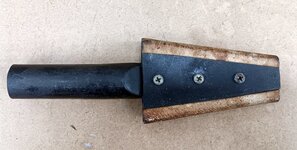
I’ll bite. Guessing that’s some sort of machine spindle taper cleaner like an early version of a Spin-L-mate.
Now some of you are going to need to look that up because a spin l mate is nothing like a Russian mail order bride.
Now some of you are going to need to look that up because a spin l mate is nothing like a Russian mail order bride.
X2 on this. See if you can match the sizes to the following chartI’ll bite. Guessing that’s some sort of machine spindle taper cleaner like an early version of a Spin-L-mate.
Now some of you are going to need to look that up because a spin l mate is nothing like a Russian mail order bride.
lg
no neat sig line
Haha. Not me but yeah I imagine many won't be familiar with these. These things were expensive for what they are IMO. I was lucky to find all of mine new on ebay for much less.I’ll bite. Guessing that’s some sort of machine spindle taper cleaner like an early version of a Spin-L-mate.
Now some of you are going to need to look that up because a spin l mate is nothing like a Russian mail order bride.
I've got 2 other sizes other than these.


Eric Brown
ALLIANCE MEMBER
- Joined
- Jun 14, 2024
- Messages
- 689
Wondering if it is for lead pipe soldering. Use a torch to heat the lead and then this tool to widen the end so another section could be inserted. Just a guess.Found this in an old toolbox. It's about 8 to 10 inches end-to-end. The light brown portions appear to be leather.
Any ideas what it might be?

neophyte
Well-known member
No !Wondering if it is for lead pipe soldering. Use a torch to heat the lead and then this tool to widen the end so another section could be inserted. Just a guess.
Lead is typically “annealed” at a very low temperature, and foes not need to be heated to be malleable.
For flanging lead pipe, the tool sort of looks like pic.
Attachments

Eric Brown
ALLIANCE MEMBER
- Joined
- Jun 14, 2024
- Messages
- 689
Consider the tool you showed is Probably a Stanley #19 which was invented in 1911. Lead pipes were used by the Romans, but started to see use in the US around the 1850's. By the 1900 lead pipes were being used in many larger cities.No !
Lead is typically “annealed” at a very low temperature, and foes not need to be heated to be malleable.
For flanging lead pipe, the tool sort of looks like pic.
So perhaps this was a type of tool used before the Stanley version. Still a guess.
(I just noticed it has Philips screws. So maybe newer).
neophyte
Well-known member
The tool I posted is made by Virax in France, although similar tools were used elsewhere.Consider the tool you showed is Probably a Stanley #19 which was invented in 1911. Lead pipes were used by the Romans, but started to see use in the US around the 1850's. By the 1900 lead pipes were being used in many larger cities.
So perhaps this was a type of tool used before the Stanley version. Still a guess.
(I just noticed it has Philips screws. So maybe newer).
Lead doesn’t require any type of material between the form and the lead when forming though, and this is common with most plumbing swaging tools.