
You are using an out of date browser. It may not display this or other websites correctly.
You should upgrade or use an alternative browser.
You should upgrade or use an alternative browser.
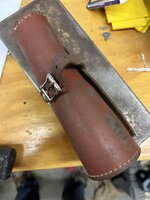
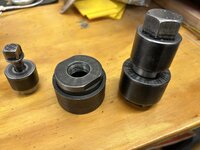
What is this?
- Thread starter Buford T. Justice
- Start date

bwringer
Well-known member
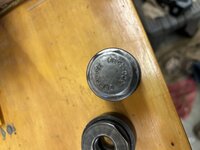
Knockout punch set, methinks.
OP
Buford T. Justice
Well-known member
Thanks guys.
RPH
Well-known member
Not just knockouts but Greenlee knockouts!
OP
Buford T. Justice
Well-known member
Educate me please!
micromind
Well-known member
Those are for up to 10 ga. metal which is around 1/8".
I very often use mine with an impact. A ratchet or wrench will wear you arm out........
I very often use mine with an impact. A ratchet or wrench will wear you arm out........
JoeMcGov
Well-known member
Educate me please!
They’re used for punching holes a lite gauge metal for electrical conduit fittings. You have the small kit that’s sized for 1/2” thru 1-1/4”.
Yep, yep and yep.
Moving to the Electrical section
Moving to the Electrical section
WillyBoy
Well-known member
I have a set like that I inherited. I hardly ever need it but when I do, it's invaluable.
Speaking of value, price a new set with the same number of pieces.
Speaking of value, price a new set with the same number of pieces.
The Slug Busters are preferred but any type is better then none, but I can punch KO's up to 4", when the manufacturer stamps out crappy knockouts, it is handy to have a KO punch to clean them up, hole saws do work but prefer the KO punches.
Step dad has a set in a leather case with a buckle like the OPs. I will likely inherit them as well.I have a set like that I inherited. I hardly ever need it but when I do, it's invaluable.
Speaking of value, price a new set with the same number of pieces.
RPH
Well-known member
I bought my set of greenlee punches during a machine tool electrician apprenticeship. Only difference my case is black, I believe I paid $28.00 for them.
Greenlee makes many different shapes and sizes for all kinds of sheet metal work.
Greenlee makes many different shapes and sizes for all kinds of sheet metal work.
wyliesdiesels
Well-known member
yeah hole saws are messy. punches are way betterThe Slug Busters are preferred but any type is better then none, but I can punch KO's up to 4", when the manufacturer stamps out crappy knockouts, it is handy to have a KO punch to clean them up, hole saws do work but prefer the KO punches.
Stuart in MN
Well-known member
Note there are Greenlee punches sized specifically for electrical conduit, as well punches in regular fractional inch sizes.
BreeStephany
ALLIANCE MEMBER
Greenlee and others make punches for DIN size holes / control punches for punching out control cabinets for pushbuttons, control displays, etc.Note there are Greenlee punches sized specifically for electrical conduit, as well punches in regular fractional inch sizes.
I love my 1/2"-2" slugbuster hydro punch set. A 2-1/2"-4" hydro punch is on the wishlist, I will likely end up going with a Milwaukee M18 10-ton punch, but given the $1000+ price tag for a 1/2"-4" set, I'm always keeping my eyes open for a used Greenlee hydro kit.
Damn....that was PAINFUL to watch.....from the wide open drill motor, to trying to turn the spindle to the punch with a fooking crescent wrench.
FFS, slow down and give the damn drills time to cut. And get out your impact to drive that spindle on the cutter. And to top it off, denting the stainless table banging it on the crescent wrench?!?
rabidsquirrel
Well-known member
Damn....that was PAINFUL to watch.....from the wide open drill motor, to trying to turn the spindle to the punch with a fooking crescent wrench.
FFS, slow down and give the damn drills time to cut. And get out your impact to drive that spindle on the cutter. And to top it off, denting the stainless table banging it on the crescent wrench?!?
You'd be surprised how many people in the trades have no idea how to use a drill properly... I easily get 10x the life out of hole saws compared to others I work with.
BreeStephany
ALLIANCE MEMBER
It used to surprise me... then I've watched the last year and a half as the company I work for has burned through countless corded Super Hawgs, cordless Super Hawgs and Hole Hawgs and far too many cordless drills to count, not to mention the number of 7/8" bits we've gone through.You'd be surprised how many people in the trades have no idea how to use a drill properly... I easily get 10x the life out of hole saws compared to others I work with.
It surprises coworkers when I can take a 1-1/4" NailEater and drill through 18+" of wood with my cordless drill and do it with one battery... too many coworkers don't seem to understand the concepts of sighting a route for drilling, often times hitting COUNTLESS nails, clearing the hole so that you reduce chips in the hole, thus reducing resistance and overall strain on the tool, and certainly seem to not understand how to use a file to sharpen drill bits... they just run them until the tool is dead or the pilot point on the drill bit is completely gone.
One of the reasons I provide my own tools is that I actually CARE about the tools I am using and want them to LAST. I've seen far too many apprentices who just abuse the tools the company provides until they are completely dead and then ask why they don't have better tools...
I've had the same corded Hole Hawg and Super Hawg for almost 20 years and MANY of the same drill bits and they are still going strong!
I try to teach the importance of caring for tools, but just continue to watch them throw them about the jobsite, throw them in the gang box at the end of the day and repeat until they are dead.
pb014
Active member
A little oil would help.
sparky 1971
Well-known member
That's a good knockout set from when Greenlee actually made the centering marks somewhat easy to see. I have a 1/2-2" manual set on my service truck and a 1/2-4" hydraulic set in the shop and lining everything up requires a flashlight and cheater glasses. Even when I was younger and could see perfect I needed a flashlight.
BreeStephany
ALLIANCE MEMBER
Both of my hydraulic slugbuster sets have centering marks on them and I believe all of the dies for the Milwaukee 1/2" - 4 sets have them as well. For the smaller holes, its not really been a problem, but I think all 3" & 4" dies should have them, because you can definitely make some pretty terrible looking conduit work pretty quickly if you aren't paying attention to alignment.That's a good knockout set from when Greenlee actually made the centering marks somewhat easy to see. I have a 1/2-2" manual set on my service truck and a 1/2-4" hydraulic set in the shop and lining everything up requires a flashlight and cheater glasses. Even when I was younger and could see perfect I needed a flashlight.
sparky 1971
Well-known member
All of mine have the marks, but they are really hard to see on the 1/2-2-1/2. I can see the marks in the OP just fine. My 3, 3-1/2, and 4 have the marks, but they are on top. You have to look straight down on it to see them.Both of my hydraulic slugbuster sets have centering marks on them and I believe all of the dies for the Milwaukee 1/2" - 4 sets have them as well. For the smaller holes, its not really been a problem, but I think all 3" & 4" dies should have them, because you can definitely make some pretty terrible looking conduit work pretty quickly if you aren't paying attention to alignment.
BreeStephany
ALLIANCE MEMBER
That definitely was PAINFUL to watch, especially for having drilled / punched MANY holes through heavier gauge stainless in enclosures and switchgear in food processing / washdown environments.Damn....that was PAINFUL to watch.....from the wide open drill motor, to trying to turn the spindle to the punch with a fooking crescent wrench.
FFS, slow down and give the damn drills time to cut. And get out your impact to drive that spindle on the cutter. And to top it off, denting the stainless table banging it on the crescent wrench?!?
My standard practice for punching anything anymore is to drill a 1/4" hole using a good drill bit, then to use a Greenlee carbide cutter to cut a 1/2" trade size (7/8" actual) hole and then to use my hydro punch to punch the hole size I need. Holes less than 1-1/4", I'll generally just use a carbide cutter.
Whenever I drill stainless, I go slow, let the carbides do their work, use LOTS of medium / blue Boelube and have lots of blue disposable towels to wipe up the cutting lube as I cut the holes.
When I first really started working on cabinets in the trade, I had drill bits, a step bit and my hydro punch. If there were a LOT of holes to be made (i.e. gutters, etc.) I would generally drill a 3/8" hole on all of the centers at once with my magnum drill, then use my hydro punch, the 1/2" die draw stud and 1/2" die to cut a 1/2" trade size hole and then step the holes up to the size I needed from there.
A LOT less abuse on your drill, drill bits and especially step bits... last time I replaced my 1-3/8" Greenlee step bit, it was over $80.
sparky 1971
Well-known member
If it's larger than a 1" hole, I go straight for the 1" carbide cutter to make my initial hole. It just gives me more wiggle room to get everything lined up. I couldn't tell you the last time I punched a hole 1-1/4 or smaller. I can tell you that it was before I found the carbide cutters. Recently I've picked up a 1-1/2 and 2" carbide, so those ko punches might collect dust as well. I'll still use the larger punches if there are a few holes in the box just to make sure everything is straight, but if it's one hole, it's a carbide and the cordless hole hawg.That definitely was PAINFUL to watch, especially for having drilled / punched MANY holes through heavier gauge stainless in enclosures and switchgear in food processing / washdown environments.
My standard practice for punching anything anymore is to drill a 1/4" hole using a good drill bit, then to use a Greenlee carbide cutter to cut a 1/2" trade size (7/8" actual) hole and then to use my hydro punch to punch the hole size I need. Holes less than 1-1/4", I'll generally just use a carbide cutter.
Whenever I drill stainless, I go slow, let the carbides do their work, use LOTS of medium / blue Boelube and have lots of blue disposable towels to wipe up the cutting lube as I cut the holes.
When I first really started working on cabinets in the trade, I had drill bits, a step bit and my hydro punch. If there were a LOT of holes to be made (i.e. gutters, etc.) I would generally drill a 3/8" hole on all of the centers at once with my magnum drill, then use my hydro punch, the 1/2" die draw stud and 1/2" die to cut a 1/2" trade size hole and then step the holes up to the size I needed from there.
A LOT less abuse on your drill, drill bits and especially step bits... last time I replaced my 1-3/8" Greenlee step bit, it was over $80.
And if the studs ever breaks/gets lost, replace it with a ball bearing version.A little oil would help.
I only have the 1/2" & 3/4" carbide hole saws and I like them, work quite well into cast aluminum peckerheads.If it's larger than a 1" hole, I go straight for the 1" carbide cutter to make my initial hole. It just gives me more wiggle room to get everything lined up. I couldn't tell you the last time I punched a hole 1-1/4 or smaller. I can tell you that it was before I found the carbide cutters. Recently I've picked up a 1-1/2 and 2" carbide, so those ko punches might collect dust as well. I'll still use the larger punches if there are a few holes in the box just to make sure everything is straight, but if it's one hole, it's a carbide and the cordless hole hawg.
Won't use anything but a ball bearing model.And if the studs ever breaks/gets lost, replace it with a ball bearing version.
sparky 1971
Well-known member
I did these 2" with a carbide cutter just because it was my new toy. Everything worked out pretty well except for the bit walking without me realizing it in time on the center 2" in that 24X24. Lesson learned. Next time I have to line up a few, the ko cutter will come out. It's actually sitting there just to the right of the transfer switch, but not in the pic. The carbide cutters are 10X faster than fiddle farting around with pilot holes, working holes, and lining up the marks, especially when it's just a hole or two.I only have the 1/2" & 3/4" carbide hole saws and I like them, work quite well into cast aluminum peckerheads.

