To avoid these ads, REGISTER NOW!

What meters do electricians use?

William Payne

Well-known member
Joined
Mar 15, 2010
Messages
7,758
Location
Wanganui, New Zealand
That Applent is a VERY solid meter. That used to be the best value in LCR meters because it is very well built and was affordable for the time it was released. The Der EE is the new best value since it was released about 2yrs ago. You can get by without Kelvin probes (some of the Agilent ones are not kelvin) but it is better to have them if you can!


Sounds like the hobbyist component tester is going to be your best bet. It will do a lot of stuff for you when it comes to identifying parts and checking their characteristics.

Awesome I'll probably just buy the pro one anyway.
 
To avoid these ads, REGISTER NOW!

Rossco

Well-known member
Joined
Jun 29, 2011
Messages
873
Location
Great White North
The Electricians at work are actually issued Fluke Meters as a standard by the company.

Power range for a meter job is up to but not limited to 600 Volt.

Pretty much says it all really.
 

cajunfirehawk

Well-known member
Joined
Nov 29, 2011
Messages
2,566
Location
Ms Gulf Coast
Fluke 87v owner here, but recently picked up a brymen bm235 $100 EELV blog edition for more of a everyday beater multi-meter :beer:
 

Attachments

  • 20160821_093224.jpg
    20160821_093224.jpg
    53.3 KB · Views: 36
  • 21E6mEe.jpg
    21E6mEe.jpg
    130.8 KB · Views: 42

pedrodagr8

Well-known member
Joined
Aug 25, 2013
Messages
613
Awesome I'll probably just buy the pro one anyway.

Turthfully, unless you need the precision, the ability to be NIST calibrated, or the closed case style or the Der EE DE-5000 then you are better off getting the hobbyist options It will give you more features and options, just without those other aspects. Those other aspects are QUITE important in more professional environments but for the home user, you truthfully get more value out of the hobbyist option I showed you. Or hey, you can get both! :lol:

Fluke 87v owner here, but recently picked up a brymen bm235 $100 EELV blog edition for more of a everyday beater multi-meter :beer:

That Brymen BM235 is a great little meter. That and the BM257S are two of the best budget meters you can get in the $100-150 price range.
 
OP
M

md21722

Well-known member
Joined
Nov 30, 2015
Messages
1,840
Location
Mt Juliet, TN
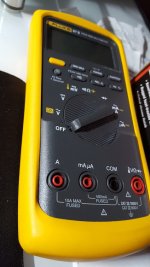
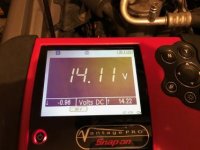
Well its been a year and I finally got some better meters than my old Craftsman. I bought a Snap On Vantage Pro for automotive use and a Fluke 87V for all around use. They read within .03VDC of each other. :) The last straw for the Craftsman was it reading 10.8V on a battery with the car off and 2.8VDC on a charger that output 4.2V. Fresh battery didn't help. I plan on getting some of the other meters mentioned in this thread over time. Thanks y'all.
 

Attachments

  • FullSizeRender.jpg.jpg
    FullSizeRender.jpg.jpg
    16.7 KB · Views: 25
  • IMG_0126.JPG.jpg
    IMG_0126.JPG.jpg
    19.8 KB · Views: 26
Last edited:
OP
M

md21722

Well-known member
Joined
Nov 30, 2015
Messages
1,840
Location
Mt Juliet, TN
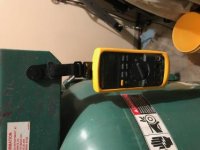
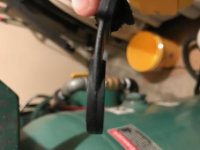
The accessory package works great too. This magnet is pretty small for how good it works.
 

Attachments

  • IMG_0127.JPG.jpg
    IMG_0127.JPG.jpg
    15 KB · Views: 27
  • IMG_0128.JPG.jpg
    IMG_0128.JPG.jpg
    11.4 KB · Views: 23
  • IMG_0129.JPG.jpg
    IMG_0129.JPG.jpg
    10.4 KB · Views: 25

Infinia

Banned
Joined
Oct 2, 2016
Messages
845
Location
SoCal
I think most electricians or at least HVAC guys use a single clamp meter. I forget their favorite brand 'Fieldpiece' or something like that. When taking voltage or capacitance measurements, they also handily use the clamp function to hang the meter nearby.;) . Absolute accuracy like on a 87V is really not that important, although more useful data like delta V is pretty darn accurate using the same DMM range setting, surprisingly even on a super cheap DMMs.
As a side note, all the rage* on another forum is the low cost Uni-T 210e mostly for DC current using the clamps hall effect sensor mainly debugging 12V auto stuff or solar power..I think its more useful for AC currents since the selector function button is geared towards AC. The compactness of the UT210e clamp DMM is certainly an asset esp. in tight breaker / control panels. The construction and clamp operation seen on TV teardowns looks and feels decent. For 30 bucks ~ looking at it, "it is what it is". Recommendend for pros use? Nope, DIY home-gamers thumbs up. I believe Amazon has the current best pricing.

*Even in the recent past, having both DC/AC on any clamp DMMs were only found on high end meters. So this is revolutionary esp. at this price point not to mention also having AC true RMS.
 
Last edited:
To avoid these ads, REGISTER NOW!

Rob_b

Well-known member
Joined
Jul 28, 2009
Messages
209
Location
Ontario Canada
Technician here....work with 5vdc to 480VAC.some very large power draw systems more than 2K amp..Fluke 87V, fluke 325 clamp, fluke 705 mA generator, Fluke 771 mA clamp and Fluke 435 II process meter...all calibrated yearly and have never had to be adjusted (that I know of). What is your life worth....if you don't trust your meters, they're not worth the price you paid.
 

AngryBeaver

Well-known member
Joined
Jul 12, 2017
Messages
1,705
Location
Lake Milton Ohio
HVAC and Generator tech here plus lots of electrician work without the title... lots of AC and DC troubleshooting and lots of power generation work.

Fluke 87 and a 600amp clamp is what I'm supposed to have.

I have the Fluke 87V and Fluke 376 clamp meter with an iflex 2500A flexible bundle clamp as my "Main meters". I rarely use either of them unless I'm doing critical grid work, or need to see multiple sets of inrushs. the current clamp is big and only gets used for checking amperage on units running in parallel since it has the flexible whoseyourdady to go around 5-7 pieces of 4/0 cable at one.

I use a basic electricians fluke set with a 332 clamp and 116 or 117 the most. both fit in one case, small and compact and will do 90% of what most people will ever need, and then some. both meters, in a soft case with two sets of leads, and a temp probe is 350-400new. scored this one new in box at a pawn shop for 200 and its served me well the last 4 or 5 years. just as accurate as the 87V.

I also have a T5-600 that gets used mainly for the current clamp because its an open end, narrow current clamp and is excellent for taking readings inside of control panels, pump panels, etc. but the max wire size is about #2 wire. I rarely use it as a "DMM" unless I'm at a festival/concert type job where there are a ton of food and electronic power needs. it fits in your back pocket, or even cargo pocket with ease.

leads need to be checked with your meter... leads can leak once the rubber breaks down. I've seen enough mishaps from old beat up leads to not trust anyones but my own. you don't need leads bleeding out voltage inside of switchgear! My meters are calibrated every year and leads changed every two, unless something happens to them, then sooner.
 
Last edited:

BreeStephany

ALLIANCE MEMBER
Joined
May 19, 2012
Messages
851
Location
Oregon
I've been using a Fluke 87V and Fluke i410 ac/dc current clamp for the past decade or so and never had an issue with the combo. The Fluke 87V is a rock solid durable and accurate meter.

I just picked up a Fluke 289 and admit that its a lot of meter, but am quickly learning and falling in love.
FlukePNG_zps8icgydyc.png


I worked as an industrial electrician and mostly worked in 208 & 480 systems, did a ton of troubleshooting and always dreamed up how nice it would be to have a 289. My 87V did the job for almost everything I did, but when I found the 289 for the price I did, I had to jump on it.

I am now working toward my airframe & powerplant certs and can see a lot of areas where the 289 would come in handy, especially working in heavys.
 

cgrutt

Well-known member
Joined
Mar 4, 2016
Messages
8,341
Sorry didn't read through all the posts, but I'm still using a Fluke 77, LOL. Damn I'm getting old...
 

Dagny

Well-known member
Joined
Jul 25, 2014
Messages
3,013
Location
Northern Wi.
I like the fluke leads with the tee handle and little alligator clips on the ends. I prefer analog meters that are getting harder to find. The more expensive micronta meters are nice.
 

rockettgpw

Well-known member
Joined
Jun 20, 2013
Messages
1,500
Location
Sunshine Coast Qld down under
My tool bag go to meter is a Fluke T5-600, great meter but the fixed in position leads tend to need re-terminating every few years. I have an (almost vintage) fluke 86 for bench work and a Fluke 36 clamp that only get used occasionally for higher current work. I have been tapering away from pro work so my gear is ageing and behind the times

Most critical for all meter work is to check your readings on a known source before assuming the "dead" situation is accurate. Same applies to test lamps and voltsticks always check your test gear before and after measurement to avoid false "safe" indications.
 

OH_Varmntr

Well-known member
Joined
Apr 2, 2017
Messages
320
Location
Ohio
Fluke 1AC non-contact tester.
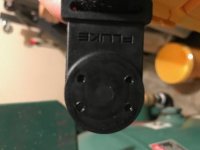
Fluke T5-600 is on me at all times for general use.
Fluke 381 remote viewing amp clamp for heavier loads.
Fluke 787 for precision.
Fluke 773 milliamp process clamp meter for analog circuit testing/troubleshooting.
Fluke that I can't remember the number for T/C and RTD testing/troubleshooting.

We have a lot of induced voltages that will light up a pen and show upwards of 90 volts to ground, but when attaching a resistive-load tester like a Wiggy, it's not real power.

So like rockettgpw stated, the most critical for all meter work is checking a known source before and after testing a questionable circuit.
 
To avoid these ads, REGISTER NOW!
Top Bottom