To avoid these ads, REGISTER NOW!

What should I heat my workshop with??

rjneuzel

Member
Joined
Oct 1, 2011
Messages
7
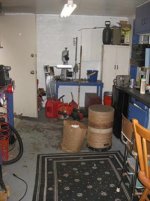
Hey guys, I have a small workshop that is 9 1/2' x 20'. It used to be a carport but somewhere down the line someone converted it to a workshop area. In the winter it is freezing cold so I rarely go out there. But would love to! I have been looking at a propane heater like this:
http://www.outdoorpros.com/Prod/Mr-...-Tank-Top-Propane-Patio-Heater/82815/Cat/1541

When I am out there I am only there for a few hours at a time. And should I leave a window or door cracked or because it is such a short amount of time would it be ok??
Do you think this would be fine or would you recommend something else?
Thanks and I look forward to any input.
Thanks
Rob
 

Attachments

  • IMG_0539 copy.jpg
    IMG_0539 copy.jpg
    19.9 KB · Views: 105
  • IMG_0540 copy.jpg
    IMG_0540 copy.jpg
    23.2 KB · Views: 87
To avoid these ads, REGISTER NOW!

Gary S

Well-known member
Joined
Dec 27, 2008
Messages
2,972
Location
Bismarck, ND
A space that small should be easy to heat if it is insulated well. The safest and cleanest heat would be a small 120v 1500W electric heater. You can get one at your local Menards for under $15, and you don't need to worry about opening a door or window to lose heat.

Everybody's definition of freezing cold is different. If you live in California or Florida, 50 degrees is freezing cold. If you live in the middle of the US continent, 20 degrees might be freezing cold. If you live up north like I do, -20 to -40 is freezing cold. Up here where -40 is common, a 1500w heater will heat an insulated space that size. Remember that it isn't about how much heat you pour into a space, it is about how much heat you retain in there.

Unvented propane will **** up the oxygen in your workshop and turn it into water to rust your tools. Electric is clean heat.
 

paullie

Well-known member
Joined
May 30, 2011
Messages
339
Location
NE Kansas
let me tell you a story about propane heaters.

Once upon a time i lived in a trailer park, My "shop" was an 8x16 wood shed that I built there, It was very "tight" and insulated very well. One day, in the winter, while running a heater just like the one in your link i went to light a smoke with a match. The match lit and then went out in about a second????? I tried again and again, then my ******* realized that there was not enough oxygen for the match to burn. So i opened the door before i passed out and died.

I'd say electic will work good for ya
 
OP
R

rjneuzel

Member
Joined
Oct 1, 2011
Messages
7
Thanks for the replies. We live in Kentucky so we have weather from 90+ degrees to 0 degrees. And that could be within 24 hours! I have used a small space heater and it doesn't do very well. There is no insulation at all. All four walls are cinder blocks and a concrete floor. In the winter it is about the same temperature outside as it is in the shop. But without the wind.
I was looking for a little more output than small space heater. Is there a better electric heater that would work better than the 15 dollar one? When I did use a little heater, I would run it for about 4-5 hour before I wanted to work and the temp my increase by 10 degrees. Which on a cold day isn't enough.
Thanks for the help!!
 

Gary S

Well-known member
Joined
Dec 27, 2008
Messages
2,972
Location
Bismarck, ND
Before trying to heat that space, I'd insulate it. Right away you would find that it is 20-30 degrees warmer inside than outside even before you attempt to start adding heat.

Up here in the really cold weather, my unheated and detatched garage stays 40-50 degrees warmer inside than outside temperatures overnight. If I need it warmer than that, I start up the heaters, and what heat I do pay for stays inside where I want it.
 

Charles (in GA)

Well-known member
Joined
Jan 11, 2006
Messages
12,489
Location
50 mi south of Atlanta
The way I see this is the block is transferring heat to the outside, but you probably have little to no air intrusion. It won't take much insulation to stop the heat transfer to the block. You don't have the space to be studding the wall on the inside, losing several inches of width in a 9 ft wide space is not an option. What I would try is using the large foil backed rigid foam sheets such as the ones with foil on one side. and face the block with it, glued on with construction glue. Cover this over with sheets of plywood, say 3/8" and use a nail gun to anchor it into the block, or put wood strips between the sheets of foam and then anchor the plywood to the strips. I suspect that will make a huge difference, the foam will stop the heat transfer thru the block. The foam is a rather effective insulation.

Depending on the roof structure, you may or may not be able to use regular fiberglass batts on the top of the ceiling.

Charles
 

Ghost Rider

Member
Joined
Jul 27, 2012
Messages
20
Location
Dayton Ohio
A kerosene heater should work for your situation as should the Mr. Heater in your link. As already mentioned, you have to consider the air quality in the space and have adequate ventilation. For a few hours at a time and with no insulation or vapor barrier, you are probably good. But there may be some unknown variables in your space which may make these heaters not such a good choice. Be aware of carbon monoxide.
 
Last edited:

Kevin54

MEMBER EMERITUS
Joined
Jan 12, 2005
Messages
29,341
Location
Urbana, Ohio
I would get one of the electric oil filled radiators to heat it with. On a shop that small having something "ventless" is not a good idea. I already posted it in one other thread, but my wife heats her 20' x 20' building with the oil filled radiator and she can keep it at a very comfortable 70 degrees on the medium setting. As far as electric usage, I really don't see a huge jump in price. And what's nice is that the oil in there gets up to temp, shuts off, but still radiates out the heat until it drops down to a certain temp, them clicks back on.

oil-filled-radiators-847.jpg
 

Milton Shaw

Well-known member
Joined
Feb 11, 2011
Messages
4,868
If you go with any unvented combustion heater, get a CO alarm and make sure you keep good batteries in it. If you are attached also have one in the room the doors open into. You can get a lot of CO and CO2 in a house before you are aware of it. Be careful and be safe.
 

jvitez

Well-known member
Joined
Nov 30, 2009
Messages
2,429
Location
Big Sky Country, Canada
Without going into minutia, your choices are two-fold with some sub-folder decisions......

1. Insulate or not? A decision should be based on a few parameters: how long do you plan to live in this house? How much time and money do you have to move things out to insulate? What is you local energy cost? If very high, insulation pays off much faster.

2. How much total heat input do you need? A secondary issue is actually the source of heat.

Now, my opinions: insulation almost always makes sense if you plan to stay for a few years. The best way without losing too much space is 1.5 inches of extruded polysytrene foamboard (Styrofoam SM, Owens-Corning Celfort, etc). This would give R7.5. Not huge, but would make a big difference in the huge thermal mass of a concrete block wall. You could glue the foamboard to the concrete, but then you need to cover it with drywall as a fire protector.

How much heat? For an uninsulated space and rapid heating your could need even up to 20 watt/sq ft. Your space is 190 sq ft. Your 1500 watt electric heater didn't do it, and that's 7.9 watt/sq ft. Do you have two electric circuits there? Could you add another one if not? Then you could run two 1500W electric portable heaters and get rapid warm up.

The type of electric heater makes little difference. If you're sitting at a bench for a long time, then radiant heat will warm you and not heat the air as much which would be a reasonable alternative. If you're moving around in the space, you need to heat the whole air space, so fan forced heaters move the heat around the best. The electric oil filled heater in Kevin54's post is excellent if you're constantly heating a space, but passive convection takes longer to heat than fan forced if you're heating intermittently.

If you want propane, it will put moisture in the air with all it's attendant issues. The best propane heater for your space would be this:

http://www.mrheater.com/product.aspx?catid=41&id=116

It has a low oxygen fuel cutoff (take paullie's post to heart!), and can be run with a 20 lb propane tank. I have the smaller Portable Buddy heater myself. It heats well in a small space. The Big Buddy on high would be 27 watts/sq ft so would heat things up fast.

Lots of options, and they all have pros and cons.
 

BD1

Well-known member
Joined
Mar 18, 2007
Messages
4,602
Location
north side
Do any walls attach to the house ? Could you open the wall and use the house heated air [forced air] ? You could use a energy efficient window. Open when you want heat. :dunno:
 

philjafo

Well-known member
Joined
Aug 31, 2012
Messages
244
Do any walls attach to the house ? Could you open the wall and use the house heated air [forced air] ? You could use a energy efficient window. Open when you want heat. :dunno:

Hmmm... Gas cans, chemical sprayers, I don't think I would want to mix that air with the air in my house, not to mention it wouldn't pass building code.
 

5lima30

Well-known member
Joined
Nov 11, 2010
Messages
2,442
Location
Mountains of Western NC
Before trying to heat that space, I'd insulate it. Right away you would find that it is 20-30 degrees warmer inside than outside even before you attempt to start adding heat.

Up here in the really cold weather, my unheated and detatched garage stays 40-50 degrees warmer inside than outside temperatures overnight. If I need it warmer than that, I start up the heaters, and what heat I do pay for stays inside where I want it.

^^^This!^^^^^:thumbup:
 
OP
R

rjneuzel

Member
Joined
Oct 1, 2011
Messages
7
ok guys, You have convinced me to insulate. I am going to go to Home Depot after work tonight and see how much the foil insulated board is. So I can just glue the foil board to the walls? Then, once that is done, should I cover it with plywood or drywall? If Plywood, what thickness? Then once I get this done, I can re-evaluate the heat. Maybe what I have would be sufficent enough then.?

The garage is not connected to the house. The ceiling is insulated from where I insulated the attic of the garage several years ago. So all I would need to insulate is the walls. Which will take some effort but I don't mind if it will make a big difference.
Thanks guys!
Rob
 

BD1

Well-known member
Joined
Mar 18, 2007
Messages
4,602
Location
north side
Hmmm... Gas cans, chemical sprayers, I don't think I would want to mix that air with the air in my house, not to mention it wouldn't pass building code.
House forced air system is under positive pressure. The air should always be going into the area but no return. That is why no returns in bathroom or kitchen. The safety type gas cans do not emit any fumes.
You really do not want the cheap gas containers around a open flame heater either. Purchase a heater UL approved for garage use.
 
To avoid these ads, REGISTER NOW!

jvitez

Well-known member
Joined
Nov 30, 2009
Messages
2,429
Location
Big Sky Country, Canada
rjneuzel: I have no personal experience with foil board, though it seems a bit gimmicky to me. I'd just use regular old extruded polystyrene (Styrofoam SM, Celfort, etc. )

Please cover it with drywall. Foam board burns easily and gives off poisonous fumes, so need the fire protection of drywall.
 

pb57

Well-known member
Joined
Jul 8, 2012
Messages
154
Location
Sioux City Iowa
I just built my new shop, 28X34 with 12' sidewalls. blown in insulation with sheetrock walls. I put in two 7.5kw berko electric heaters on switch makes sense from my rural electric company. My rate is .04 cents a kw so they both run for .60cents an hour. I cant believe more on here dont have the same program from their electric company. My water heater is also on the switch makes sence program. Paul
 
OP
R

rjneuzel

Member
Joined
Oct 1, 2011
Messages
7
Thanks for the replies.
I was looking at the regular foam board. It is R-30. The foil board is plus 3. Which I am not sure what that means. So I was just thinking of using the pink R-30 foam board.
1. Think that would be ok to just use R-30 pink foam board??
2.should I put a plastic vapor barrier on top of that?
3.should I cover it with plywood or drywall?
Thanks for the help
 

rj440

Well-known member
Joined
Jan 18, 2012
Messages
98
I have a question regarding the venting for a propane heater. I'm assuming a big leaky building has enough venting? My son has an auto repair shop, it's about 20' x 60' and 20' tall, uninsulated with pretty big gaps around the bay doors. In the winter he has a propane heater going in there but I assume between the size and leaks it's fine?

On another note, I use a construction heater in my shop to heat it, I have it set all winter to around 60 so anytime I go out I can work on the car right away. Filler, primer, paint, etc. doesn't stick well to cold metal so this way I don't have to worry. It does add a bit to the hydro bill but not too bad. But you do need a bigger plug like you have for your dryer and a 30 amp breaker although some use a 20
 

jvitez

Well-known member
Joined
Nov 30, 2009
Messages
2,429
Location
Big Sky Country, Canada
rjneuzel:

1. Think that would be ok to just use R-30 pink foam board??

Certainly. But R30? That would be 6" of foam board, ie $$$. Put in as much as you can afford, but really R10-15 would work for you with your relatively moderate climate (at least by my prairie standard!)

2.should I put a plastic vapor barrier on top of that?

Check with you local building inspector for local recommendations, but generally no need if it's XPS (extruded polystyrene). It has quite a low permeability so can act as a vapour barrier itself. You need to use red sheathing tape (called Tuck tape in Canada) over the joints. If you use EPS (expanded polystyrene, much cheaper but softer) then you need a plastic vapour barrier.

3.should I cover it with plywood or drywall?

Drywall only. You need a fire retardant over foam board as the burning fumes kills you quickly if there's ever a fire.

Is the pink foamboard you're mentioning Owens Corning Celfort?
 

Rickcnc

Well-known member
Joined
Mar 4, 2011
Messages
127
Location
Ontario, Canada
rjneuzel:


3.should I cover it with plywood or drywall?

Drywall only. You need a fire retardant over foam board as the burning fumes kills you quickly if there's ever a fire.

Is the pink foamboard you're mentioning Owens Corning Celfort?

I just had this conversation with my building inspector. I didn't need a fire retardant, but I do need a "thermal barrier". He indicated steel, drywall, plywood or OSB would be fine
 
OP
R

rjneuzel

Member
Joined
Oct 1, 2011
Messages
7
Thanks. The pink foam board said on it R-30. It was about 3/4 inch thick. I'll have to go to Home Depot and take a picture of it. I don't remember seeing Owens Corning Celfort on it but it may have been. I just noticed the R-30. Seems like it was about $12-$15 for a 4x8 sheet.
Thanks for your help!
 

Ghost Rider

Member
Joined
Jul 27, 2012
Messages
20
Location
Dayton Ohio
Better check that again. 3/4 inch foam should not be even close to R30. If there is some new stuff like that, please confirm and let us know.
 
OP
R

rjneuzel

Member
Joined
Oct 1, 2011
Messages
7
Ok. So it was R-3.0. I didn't see the point originally! LOl makes a little bit of difference doesn't it! :)
So should I just stick with the foil insulation?
Thanks,
Rob
 

GeorgiaHybrid

Well-known member
Joined
Sep 9, 2008
Messages
3,763
Location
Extreme NW Georgia
Guys, he might as well cover the foam with ply or osb if he wants to. I doubt that he will have a fire where the fumes from the foam will kill him before he escapes from a 9x20 outbuilding.
 

jvitez

Well-known member
Joined
Nov 30, 2009
Messages
2,429
Location
Big Sky Country, Canada
Again, I wouldn't waste my time with foil, as it seems to give equivocal results. Get 2 or 3 inch XPS which at R-5 per inch will be R10-15, get proper adhesive specifically for gluing polystyrene, and have at it. Cover it with whatever you wish. Then post back and tell us how it's working! I bet you'll find a 1500 W electric heater now becomes adequate.
 

jvitez

Well-known member
Joined
Nov 30, 2009
Messages
2,429
Location
Big Sky Country, Canada
Sorry, unvented propane heaters put moisture in the air.

Burning NG or propane produces substantial amounts of water vapour. That's why high efficiency NG or propane furnaces (previously called condensing furnaces) have a plastic drain running to your sewer line. High efficiency furnaces take so much heat out of the flue gas that the water vapour condenses into liquid water. That's why mid efficiency unit heaters work better in intermittently heated garages: no need to worry about freezing up your heat exchanger when the temps drop.

Vented heaters blow the water vapour outside along with the flue gases, whereas unvented heaters blow it into your space.

In my old well insulated 22x24 garage, using a 30K btu propane torpedo heater for a few hours would cause glistening condensation on all the interior walls and ceiling. King of pretty in a sparkling type of way, but not good for the long term.
 

timmrick

New member
Joined
Jan 19, 2019
Messages
1
Location
Colorado
REZNOR - DIY Beaware!

I just installed a new Reznor heater in my garage/workshop. The burner will not stay lit for more than about 4 minutes, all indicator lights show normal.


REZNOR refuses to provide any technical support or warranty for DIY installations.
 
To avoid these ads, REGISTER NOW!
Top Bottom