To avoid these ads, REGISTER NOW!

What size conduit for MHF

Joined
Feb 6, 2014
Messages
19
Location
Opelousas, LA
Hey guys I had a 24x30 metal building put up a few months ago and I'm getting ready to run power to it from the main panel in my house. I've decided to put a 100 amp subpanel in the shop and feed it using 2-2-4-6 mobile home feeder aluminum wire and a 90 amp breaker in the main panel. It's about an 85 foot run with a 90° on each end where the conduit comes out of the ground.

Here's the thing, I had initially planned on running #2 copper to the shop so I stubbed 1.25" conduit in the slab and ran it to the house, will this conduit be large enough to fit the aluminum mobile home feeder? Any tips/tricks on pulling the wire from the house to the shop? Thanks :thumbup:
 
To avoid these ads, REGISTER NOW!

wyliesdiesels

Well-known member
Joined
Aug 14, 2012
Messages
20,004
Location
Modesto, CA
Nope. U need 2"!

And have u done load calcs to see if youre allowed to use a reduced neutral?

How much 240v stuff will u be using?

What equipment do u have?
 

CNGsaves

Well-known member
Joined
Sep 26, 2012
Messages
13,233
Location
KS and OK
With Al 2-2-2-4 MHF being so cheap (it's $1.62/ft at Home Depot), why would you be considering lesser cable??

Model # 55417399
Internet # 205001803

Were you trying to squeeze the MHF in your existing 1.25" conduit to the house??

I'd re-think and make that small conduit for low voltage like internet/CATV/phone/security/etc. Include a RG6 and 3 CAT5e cables to be used as needed. Also, include a pull string just in case you upgrade to fiber in your lifetime !! ;)

This will force you to dig new trench for the 2" conduit for electrical of MHF above. :sad: Could save a little and forgo the conduit for electric as the MHF is rated for direct bury. However, if you ever think you'll need more power than MHF can provide, then go with the new trench and 2" conduit buried to depth required by your AHJ.
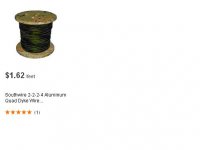
 

Attachments

  • MHF_Al_2-2-2-4_Southwire_at_HD_buck62_ft.JPG
    MHF_Al_2-2-2-4_Southwire_at_HD_buck62_ft.JPG
    10.4 KB · Views: 95
Last edited:

jgorm

Well-known member
Joined
Jan 5, 2015
Messages
463
Location
San Diego
Is MHF wet rated? I used #2 THWN Cu to hook up my 90a subpanel. It cost more, but copper is better:)
 

Syberia

Well-known member
Joined
Jan 13, 2014
Messages
1,451
Location
Perris, CA
MHF is wet/direct burial rated. If both are installed and terminated correctly, how is copper "better," beyond being a bigger drain on your wallet?
 

pattenp

Well-known member
Joined
Jun 4, 2008
Messages
10,175
Location
Virginia - USA
The 2-2-4-6 MHF should fit 1.25" conduit. It has compacted conductors with no outer jacket.

Actually 2-2-2-4 MHF should fit 1.25" conduit. I'm sure it will be a pain to pull. Use a lot of wire lube.


*
 
Last edited:
OP
B
Joined
Feb 6, 2014
Messages
19
Location
Opelousas, LA
Nope. U need 2"!

And have u done load calcs to see if youre allowed to use a reduced neutral?

How much 240v stuff will u be using?

What equipment do u have?

I got a quote from an electric supply co that recomended the 2-2-4-6 for100A service, says they sell it all day long (I know that doesn't mean squat), was just asking some of you with experience if it's even possible to fit the MHF in the conduit I have already in place. If I can fit it, then I'll start working on the load calcs to determine 2-2-2-4 vs 2-2-4-6.

Can someone point me to a resource that will show me how to calculate my non-continuous loads such as air compressor, saws, welders, etc? They won't all be running at the same time but I'm not sure what the NEC calls for when calculating the total load of the panel. The only 240v stuff I plan on having is an air compressor and maybe a welder one day.

Most of the load will be lights, shop fans, circular or table saw, fridge, freezer, battery charger for boat, nothing major. I doubt I'll even come close to needing 90A service but want it there for the future.
 

pattenp

Well-known member
Joined
Jun 4, 2008
Messages
10,175
Location
Virginia - USA
I wouldn't worry about the #4 neutral if it was mine. I can't imagine you'll be pulling enough 120V power to over load the #4.
 

wyliesdiesels

Well-known member
Joined
Aug 14, 2012
Messages
20,004
Location
Modesto, CA
Sure u can try the 2-2-4-6 in that conduit but it wont be fun!

And #2 AL is max 90a in your application....

And #4 AL is good for 65a so u would have to have a large imbalance between your 120v loads to overload it, but using the reduced neutral may or may not be to code....
 

Aceman

Well-known member
Joined
Jan 28, 2007
Messages
2,513
Location
Eastern Oregon
I would skip the MHF since the pipe is only an 1.25". I'd buy individual (USE RHH RHW, etc rated) AL conductor from a REAL electrical supply house.

I would still run 2-2-4-6 though, there is no reason for a fullsized neutral especially if you have any 240v loads out there.
 
To avoid these ads, REGISTER NOW!
OP
B
Joined
Feb 6, 2014
Messages
19
Location
Opelousas, LA
I'll probably go with the individual USE-2/RHH/RHW type wires instead of the bundled MHF.


On another note, how do you correctly calculate the total load of the subpanel when you have continuous loads vs non continuous and how does that come into play when sizing the subpanel and selecting the proper conductors? For example I'll have multiple saws, air compressor, blower, fridge, etc that will never be on at the same time, do I still add those up towards the grand total load that can be supplied by the subpanel? Just asking for someone to point me in the right direction so I can do some more research.

QajHU3C.png


Just for example I'm coming up with a potential max of 77 total amps, but if I get a 50A welder then I'll be over the 90A rating of the subpanel feed conductors and breaker. How do I account for these different types of loads?
 
Last edited:

pattenp

Well-known member
Joined
Jun 4, 2008
Messages
10,175
Location
Virginia - USA
USE-2 only wire is to be terminated outside the structure because the insulation is not fire resistant. This is why MHF can go inside because it also carries a RHH/RHW-2 rating which is fire resistant insulation.

Your loads that you listed I assume won't be all on at the same time. Continuous loads are to be figured at 125% and non-continuous at 100%.


Aluminum THHN/THWN such as Southwire SIMpull will give you a little more room in the pipe.
http://www.southwire.com/ProductCatalog/XTEInterfaceServlet?contentKey=prodcatsheet327


*
 
Last edited:

Aceman

Well-known member
Joined
Jan 28, 2007
Messages
2,513
Location
Eastern Oregon
Here's a sample calc I did when studying for my supervisors(masters) license a couple years ago.

The capital letters (A & B) are each phase with the amp listed for each load. The lower case (a & b) are the neutral currents. 240v loads will have current on both (A & B) phases but no neutral current. 120v loads will have current on either (A or B) and then neutral current on the corresponding (a or b).

Listing your loads like this will let you see how to balance the loads out. The way you're doing it, you're figuring everything on one phase. That isn't how it'll be installed.

I added 25% for the continuous loads(lights, etc), but left the extra 25% off the neutral currents.
 

Attachments

  • 055.jpg
    055.jpg
    136.5 KB · Views: 135
Last edited:
OP
B
Joined
Feb 6, 2014
Messages
19
Location
Opelousas, LA
Aceman thanks for showing those example phase calculations, I'll need to balance out the load for sure.

Your loads that you listed I assume won't be all on at the same time. Continuous loads are to be figured at 125% and non-continuous at 100%.*

You are correct they will not all be on at the same time. Lets say I do add another 50 amp load the the panel, the calculated total load will now be 127 amps, which exceeds the capacity of the panel and also the feed conductors. The thing is, all of these won't be on at the same time.

My question is, when sizing conductors and panels, do you just use a best guess for calculating the "actual demand" vs "total demand" amperage? When I say actual demand, I mean worst case scenario loads that will be active at the same time vs all loads connected to the panel.

I appreciate the help, just trying to understand the proper way to size conductors and panels.

-Keith
 

inphx

Well-known member
Joined
Feb 23, 2012
Messages
1,276
Location
Phoenix/Scottsdale AZ
I have an accessory building that will undergo inspection soon - i used 2-2-2-4 AL MHF Mobile Home Feeder in 2" conduit for a 120' run from the main panel - BUT at the accessory building end i had placed a while ago 1 1/2" rigid in the foundation for building entrance - so the last 10" of the run reduces from 2" PVC to the 1 1/2" rigid.

Is 1 1/2" rigid code compliant for 2-2-2-4 AL MHF at 90 Amps?

Thanks!
 

alfredeneuman

Well-known member
Joined
Mar 3, 2011
Messages
4,580
Location
Fullerton, CA
It's not a case of whether if a cable will physically fit in the conduit or not.

BY CODE, a single cable in conduit is allowed to occupy 53% of the conduit. You'll have to measure the diameter of the cable.

For schedule 40 PVC, in inches:

1" - 0.441
1-1/4" - 0.770
1-1/2" - 1.052
2" - 1.744
2-1/2" - 2.488
 

pattenp

Well-known member
Joined
Jun 4, 2008
Messages
10,175
Location
Virginia - USA
It's not a case of whether if a cable will physically fit in the conduit or not.

BY CODE, a single cable in conduit is allowed to occupy 53% of the conduit. You'll have to measure the diameter of the cable.

For schedule 40 PVC, in inches:

1" - 0.441
1-1/4" - 0.770
1-1/2" - 1.052
2" - 1.744
2-1/2" - 2.488

MHF is not considered a cable when sizing conduit, it's not jacketed, it's an assembly of individual conductors and 2-2-2-4 MHF is okay in 1.5" conduit. Should use lube when pulling.
 

Aceman

Well-known member
Joined
Jan 28, 2007
Messages
2,513
Location
Eastern Oregon
What does this mean? Thanks.

It means where there are 240v loads in a panel, current is only flowing on the phase conductors, not the neutral. Only 120v loads have current flowing on the neutral. This isn't even getting into the fact that loads on opposing phases operated simultaneously cancel the neutral currents out reducing it even further.

So, if some of the load is 240v in a panel, it stands to reason the neutral can be slightly smaller because those loads are not adding any neutral current. Less current=possibly smaller wire.

There is nothing wrong with running a full size neutral, I just don't see the gain from installing one if it's not necessary.

If this panel had all 120v loads, then a fullsize neutral would be the way to go.

Does that help?
 

pattenp

Well-known member
Joined
Jun 4, 2008
Messages
10,175
Location
Virginia - USA
What does this mean? Thanks.

It means 240V loads don't put any load on the neutral. If all loads in the building are 120V then the neutral will carry more load and should most likely not be reduced. But that doesn't mean the neutral can't be reduced in all cases. You need to know the neutral loads to make that determination.
 
To avoid these ads, REGISTER NOW!
Top Bottom