To avoid these ads, REGISTER NOW!

What to do with a high water table?

bldgengineer

Active member
Joined
Apr 11, 2010
Messages
26
Location
Eastern shore of Maryland
I plan on breaking ground on my 30x50 attached garage around april and where I live has a high water table so I dug a 3 foot hole in the ground in the approximate area of the build. This is what I'v found:
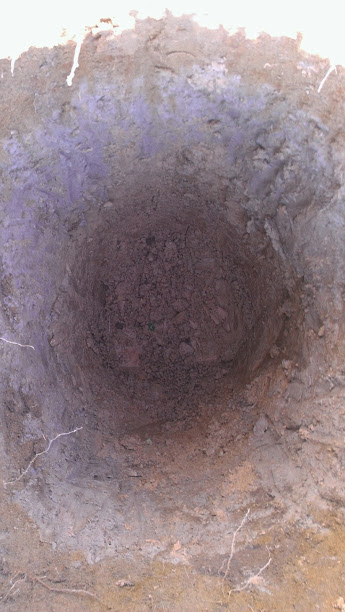
IMAG0010.jpg


Now a couple of days ago it rained and this is what I saw:
IMAG0015.jpg


Yesterday the water level was even higher at about 6 inches from the top of the hole and this was after only getting a total of 1/4" of rain.

I plan on doing the digging and foundation work myself. The plans call for the new footings and stem walls to attach to the existing garage foundation. Does anybody know how to deal with this kind of high water while forming footing and building cmu stem walls?

Any suggestions would be extremely helpful! Thanks!
 
Last edited:
To avoid these ads, REGISTER NOW!

betterbillt

Active member
Joined
May 31, 2011
Messages
44
The pictures aren't super clear. The soil looks like clay. Clay will act like a cup and hold the water. Water will usually end up in a hole if you leave it there long enough. You might need to dig a little farther down and see if the soil changes.

You really should do a perk test.

I've used a sump pump in really wet situations.
 

betterbillt

Active member
Joined
May 31, 2011
Messages
44
I have seen people take samples in a mason jar and add water and shake it for a while and the different type of sediment will settle out at different levels. Might help you see what you are dealing with.
 

Gary S

Well-known member
Joined
Dec 27, 2008
Messages
2,972
Location
Bismarck, ND
Set the house higher, for one thing, especially if it's in any kind of a channel or low point.


Good advice. At least you know before building that you have a high water table. Use that knowledge to stay out of trouble for the future. You can't lower the water table, so raise the buildings.
 

ConCretin

Well-known member
Joined
Jan 20, 2011
Messages
3,378
Location
Central Maine
Some additional information would be helpful. Will the garage sit on monolithic slab or frost walls? Since you dug a test hole, I'll assume it's frost walls.

If you are adding on to your house, raising the structure isn't an option. If your not, adding extra gravel under your slab to raise the structure will get expensive.

Since the water table is well below finished floor, it will be primarily a construction issue. The water won't bother anything after the foundation is backfilled.

I'd suggest over excavating by 6" or so and placing a crushed stone sub base. Dig one or two sumps and keep the water pumped out.

You don't want to churn up the existing soil and ruin it's bearing capacity or place concrete over mud.
 

K'ledgeBldr

Well-known member
Joined
Aug 22, 2011
Messages
1,925
Location
Johns Creek, GA
You'd definitely want to do a raised slab, if at all possible. But, if your matching the existing then concentrate on good positive drainage around and away from the foundation.
According to the frost map, Annapolis has an 18"-20" frostline. Not too bad considering. But, if doing a raised slab is out- consider a frost protected shallow foundation.
As far as the high water table, there are a few things that you could do, or a combination of those.
Other than the typical perimeter drain- provided you have someway of positive drainage;
there is a drain-able substrate configuration that you could use along with an interior perimeter drain that is connected to the exterior drain. But, if you don't have a means of positive drainage then you may have to employ a drywell and/or a sump with pump.
I really don't like to use a mechanical means if I can use gravity (mechanical; definition: it will fail at some point).

Of course, your first stop should be the building authority- they may already have guidelines in place for your conditions because of soil and/or water tables. They may employ other or different techniques than the ones I mentioned- and they maybe antiquated. But, if it what they want...
 

Will67

Well-known member
Joined
Nov 17, 2006
Messages
852
Location
Hell's half acre
In Almeda California the depth to groundwater is about two feet below surface grade. This area is covered with buildings, ranging from single family dwellings to multi level buildings....so shallow groundwater is not an impeadment to building.

I would make sure you install a very good vapor barrier to stop water vapor intrusion thru slab.
 
To avoid these ads, REGISTER NOW!

Milton Shaw

Well-known member
Joined
Feb 11, 2011
Messages
4,836
I was in Columbus Ohio several weeks ago for a funeral. The grave was full of water from a high water table and recent rains, they had pumped it out three times that day and still could not bury the casket because of water. It will be in a concrete vault to keep it from floating up later but even that has to wait for the water to go down before they could eventually put the casket in the ground. Concrete is heaver than water so make sure you have enough weight of slab and footings to keep things from floating away in heavy rain. A lot of states are requiring concrete vaults for burials since so many caskets floated up from Katrina. Just thought I would add this information about high water tables.
 

NitroPress

Well-known member
Joined
Jul 26, 2011
Messages
1,329
Location
Aurora, CO
Concrete can be made to float, plenty of concrete floating harbours etc out there!
Not to mention entire ships, like the one that lies in sections on the beach in Aptos, the ten used as floating breakwaters at Powell River, BC and the concrete trimaran I was given a ride in around 1975.

Or, more on topic, the Japanese hotel Frank Lloyd Wright designed - it floats on concrete pontoons and is resistant to earthquakes.
 
Last edited:

brownbagg

Well-known member
Joined
Mar 20, 2006
Messages
5,208
sand or gravel in footing, maybe a french drain to daylight if you have the slope
 

rasit

Well-known member
Joined
Sep 17, 2009
Messages
387
Location
SE Pennsylvania
Since the water table is well below finished floor, it will be primarily a construction issue. The water won't bother anything after the foundation is backfilled. Dig one or two sumps and keep the water pumped out.

+1... that's the way to do it. During excavation keep positive drainage in mind so when it rains the site doesn't turn to sh*t...gravel/stone is your friend
 

buening

Well-known member
Joined
Dec 17, 2007
Messages
1,338
Location
Decatur, IL
Some additional information would be helpful. Will the garage sit on monolithic slab or frost walls? Since you dug a test hole, I'll assume it's frost walls.


Since the water table is well below finished floor, it will be primarily a construction issue. The water won't bother anything after the foundation is backfilled.

I'd suggest over excavating by 6" or so and placing a crushed stone sub base. Dig one or two sumps and keep the water pumped out.

You don't want to churn up the existing soil and ruin it's bearing capacity or place concrete over mud.

I agree, mainly a construction issue. It is still possible to pour concrete in water (google "tremied concrete"), but its recommended to pump the water out of the areas that will have concrete poured in.

Other than the typical perimeter drain- provided you have someway of positive drainage;
there is a drain-able substrate configuration that you could use along with an interior perimeter drain that is connected to the exterior drain. But, if you don't have a means of positive drainage then you may have to employ a drywell and/or a sump with pump.
I really don't like to use a mechanical means if I can use gravity (mechanical; definition: it will fail at some point).
Typicall IF the water table is that high then the land isn't perched up above adjacent land for positive drainage. Most likely is either in a low-lying area or near a stream. If the land is above adjacent land, then most likely it isn't a high water table but merely soil absorbing the water from the rain, as its supposed to do. IMO, if you indeed did have a year-round high water table, you would have seen water almost immediately when you dug the hole.

In Almeda California the depth to groundwater is about two feet below surface grade. This area is covered with buildings, ranging from single family dwellings to multi level buildings....so shallow groundwater is not an impeadment to building.

I would make sure you install a very good vapor barrier to stop water vapor intrusion thru slab.

Agree, it won't affect you structure assuming standard construction principles are followed. Use the water vapor and plenty of free draining aggregate for your base.
 

Ajwelds

Member
Joined
Jan 3, 2012
Messages
9
Location
Central Oklahoma
If you are drilling piers dump bentonite into the hole & reverse your auger. The bentonite will seal off the pores in the earth . You will need to pour asap. I don't know where you live but in Oklahoma it's about $8-9 for a 50# bag.
 
To avoid these ads, REGISTER NOW!
Top Bottom