To avoid these ads, REGISTER NOW!

Wheel balancer part help

gregs

Well-known member
Joined
Mar 16, 2007
Messages
1,646
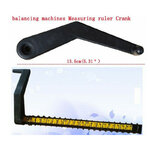
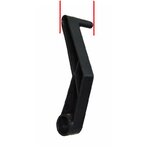
I recently acquired a used basic import computer wheel balancer. It looks like most share a lot of parts and are sold under various names (atlas,mayflower,etc). I am working out some problems with it to see if its serviceable. One part that is broken, is the plastic arm that is connected to the measuring scale for the wheel offset. The tip that touches the wheel is whats broken off and I dont have the old piece to figure out the length. Hoping someone has a similar machine that could measure it from the back of the arm to the end of the tip. I figure I could use a small bolt/nut for now. Not sure how critical the measurement is for getting accurate results.

wheel balancer arm.jpgwheel balancer arm1.jpg
 
To avoid these ads, REGISTER NOW!

39CAMC

Well-known member
Joined
Feb 26, 2019
Messages
473
Location
St. Louis, MO
Not sure how critical the measurement is for getting accurate results.

Lets see if I can explain this to make any sense....A balanced tire/wheel assembly is a balanced assembly, period So, if you balance an assembly to "zero" on a calibrated machine it will read zero (or very close) on another calibrated machine.

So, the measurements you enter into the machine do not effect the final balance, but they do effect how much weight it tells you to put and where to put it.

That was a really long way of saying that a nut/bolt that is semi close in length to what was originally there will be fine.

DaveW
 

FredWanaker

Well-known member
Joined
Mar 27, 2021
Messages
1,470
Location
NorCal
why not include the brand name, model and a photo so those of us who are good at searching the internet have more to go on. New ones of those might be out there.
 

infinkc

Well-known member
Joined
Jan 19, 2012
Messages
862
Can always just put a wheel on it with a known offset and measure the distance missing to make something
 

rlitman

Well-known member
Joined
Oct 18, 2010
Messages
24,759
Location
Long Island
...if you balance an assembly to "zero" on a calibrated machine it will read zero (or very close) on another calibrated machine...
To be clear, calibration is immaterial when it comes to reading zero. If the wheel is balanced, it will read zero, no matter how miscalibrated the machine is. Calibration only determines how good a recommendation the computer will make to get you to zero.

To the OP's question, the offset is probably the least sensitive measurement, even though it throws off two numbers in the computer (the location of both weight circles for a dynamic balance). If you can get some good pictures of that part from another machine, I'm sure you could easily eyeball it to well within 1/2" by looking at the proportions, and that should be fine. FYI, this measurement doesn't even affect static balance at all.
 
OP
G

gregs

Well-known member
Joined
Mar 16, 2007
Messages
1,646
Thanks for the replies. The pictures I included are of the actual replacement part that is available. I got the machine with some problems the previous owner couldn't resolve. I have already solved one of the big problems and starting to work on the other which is repeatability. I want to make sure everything works before I spend any money on it. Just figured that another member here would have a similar machine to take a measurement from. It looks like most of the import balancers use this same part.
 

FredWanaker

Well-known member
Joined
Mar 27, 2021
Messages
1,470
Location
NorCal
then I would put a known balanced tire on it and spin it. See if it reads zero. Easy to check at the shop that balances a wheel for you. Balance then rotate 90 degrees and spin again. Should still read zero, if not their machine is out of calibration, or the wheel is deformed from too tight of lug nuts.
 

rlitman

Well-known member
Joined
Oct 18, 2010
Messages
24,759
Location
Long Island
Thanks for the replies. The pictures I included are of the actual replacement part that is available. I got the machine with some problems the previous owner couldn't resolve. I have already solved one of the big problems and starting to work on the other which is repeatability. I want to make sure everything works before I spend any money on it. Just figured that another member here would have a similar machine to take a measurement from. It looks like most of the import balancers use this same part.
Without that part in my hard, I cannot take measurements, but you can using your second picture.
Measure the length of the lower part of that arm from end to bend, and multiply by 0.4
Then get a 1/4-20 carriage bolt that's an inch longer than that, plus two nuts, and attach your new adjustable finger, set to the length you calculated. It will be more than close enough.
 

rlitman

Well-known member
Joined
Oct 18, 2010
Messages
24,759
Location
Long Island
So why not just buy the correct part ?????
This is GJ. Why would you spend $8.54 and wait a month for the part to come in, when you could go to the hardware store and spend $3 and fix it today?

OTOH, I see them also being sold in two-packs. Makes me wonder if this breaks a lot. Sounds like a design issue.
 
OP
G

gregs

Well-known member
Joined
Mar 16, 2007
Messages
1,646
This is GJ. Why would you spend $8.54 and wait a month for the part to come in, when you could go to the hardware store and spend $3 and fix it today?

OTOH, I see them also being sold in two-packs. Makes me wonder if this breaks a lot. Sounds like a design issue.
Exactly. And I have plenty of hardware so the cost would be $0
 
OP
G

gregs

Well-known member
Joined
Mar 16, 2007
Messages
1,646
Without that part in my hard, I cannot take measurements, but you can using your second picture.
Measure the length of the lower part of that arm from end to bend, and multiply by 0.4
Then get a 1/4-20 carriage bolt that's an inch longer than that, plus two nuts, and attach your new adjustable finger, set to the length you calculated. It will be more than close enough.

So I am guessing you say multiply by 0.4 because the "finger" looks like its slightly shorter than that area in the picture?
 

rlitman

Well-known member
Joined
Oct 18, 2010
Messages
24,759
Location
Long Island
So I am guessing you say multiply by 0.4 because the "finger" looks like its slightly shorter than that area in the picture?
I put a piece of paper on my monitor, made pencil marks for the longer length, and then eyeballed how many of the shorter part fit between the marks (more than 2 and less than 3). It's really not all that critical a dimension. You could duct tape a AA battery on the end and it would work well enough.

found this image online with dimensions...
"On the Wheel balancer, there is an aluminum alloy measuring spring ruler for measuring the parameters of tire A value. Its plastic handle, due to the frequent pulling for years and the aging of plastic material, will break the handle. The whole Wheel balancer cannot be used as long as the plastic handle is replaced. Wheel Balancer can be restored to use"

LOL. I don't think those are the dimensions required here, nor would I trust them.
 
OP
G

gregs

Well-known member
Joined
Mar 16, 2007
Messages
1,646
The one picture with dimensions may be some what helpful. All the dimensions are vastly different and some from the text dont match the picture dimension. LOL.

However the dimension of 20mm at the bottom does match mine and the 45mm is plausible.
 
OP
G

gregs

Well-known member
Joined
Mar 16, 2007
Messages
1,646
I put a piece of paper on my monitor, made pencil marks for the longer length, and then eyeballed how many of the shorter part fit between the marks (more than 2 and less than 3). It's really not all that critical a dimension. You could duct tape a AA battery on the end and it would work well enough.


"On the Wheel balancer, there is an aluminum alloy measuring spring ruler for measuring the parameters of tire A value. Its plastic handle, due to the frequent pulling for years and the aging of plastic material, will break the handle. The whole Wheel balancer cannot be used as long as the plastic handle is replaced. Wheel Balancer can be restored to use"

LOL. I don't think those are the dimensions required here, nor would I trust them.
I notice you post in other threads regarding wheel balancers. Is this an industry you work in?
 
To avoid these ads, REGISTER NOW!
OP
G

gregs

Well-known member
Joined
Mar 16, 2007
Messages
1,646
Looks like I solved the other main issue with the balancer. Yay!

I found that a 3/8 bolt threads into the plastic arm and I adjusted it to 45mm and it seems to work just fine.

Now I have to find a 3.5 oz weight so that I can do the calibration.
 

CraigStu

Well-known member
Joined
May 22, 2014
Messages
4,086
Location
Blacksburg, Va
Get some of the stick-on weights. They usually have some marks cast(?) into the surface for OZs or grams so you can cut your own 3.5 weight. A tip for you when you want a perfect zero balance. Whatever amount of weight the balancer calls for on the first spin, install 1/2oz or so less than that. Spin again and 90% of the time you will add that 1/2oz or so at one end or the other of your first weight. This way you can fudge the position a little as you get the amount needed dialed in. This is really helpful w/ stick-on weights since, if you need to move the initial weight, you will ruin the sticky stuff and usually throw it out.
 
OP
G

gregs

Well-known member
Joined
Mar 16, 2007
Messages
1,646
I had thought about the stick on weights. But they specify using a steel wheel with the 3.5oz / 100g hammer on weight. Thought maybe it was more sensitive to having the weight at a specific place when calibrating it.
 
OP
G

gregs

Well-known member
Joined
Mar 16, 2007
Messages
1,646
Thanks for the tip on balancing. Once I have it working like it should then I need to spend some time learning how to use it correctly and any tips and tricks as well.
 

jsaw

Well-known member
Joined
Oct 11, 2008
Messages
1,795
Location
Geneva, N.Y.
Get some of the stick-on weights. They usually have some marks cast(?) into the surface for OZs or grams so you can cut your own 3.5 weight. A tip for you when you want a perfect zero balance. Whatever amount of weight the balancer calls for on the first spin, install 1/2oz or so less than that. Spin again and 90% of the time you will add that 1/2oz or so at one end or the other of your first weight. This way you can fudge the position a little as you get the amount needed dialed in. This is really helpful w/ stick-on weights since, if you need to move the initial weight, you will ruin the sticky stuff and usually throw it out.


Now that is a good idea! Our machine at work, most times is happy if you put on 1/2 oz. less than it asks for, but when it is not, it is easier to ad weight than it is to take it off. Plus less weights get wasted
 

jsaw

Well-known member
Joined
Oct 11, 2008
Messages
1,795
Location
Geneva, N.Y.
Now that is a good idea! Our machine at work, most times is happy if you put on 1/2 oz less than it asks for, but when it is not, it is easier to ad weight than it is to take it off. Plus less weights get Wasted
 

CraigStu

Well-known member
Joined
May 22, 2014
Messages
4,086
Location
Blacksburg, Va
A couple more thoughts. 1- You will also want to figure out if there is a bullseye, or similar mode on your balancer. By bullseye I mean a mode that will display down to 1gram. A lot of balancers are set up to show zero (perfect balance) on a sliding scale of how far off from an actual zero. I haven't done any balancing for 10 years so don't remember the actual #s. Basically, in standard mode, the machine rounds off the small out of balance and shows zero when it isn't zero. IE a passenger car would show zero when it is up to 5grams out. A truck might have a 10grams leeway. You want to work down to 1gram. 2- In addition to using that position arm for it's intended use it can also be used to get an idea if the tire or wheel is out of round. Just hold it an 1/8inch edge off the wheel or tire and spin by hand. Hopefully that 1/8inch gap remains all the way around. You can have a wheel perfectly balanced but, if it is out of round, you will feel it. Unless there is a particluar need to do otherwise, when we had a customer w/ a shimmy problem the least out of round wheel/tires are put on the front and more out of round on the rear axle.
 
OP
G

gregs

Well-known member
Joined
Mar 16, 2007
Messages
1,646
I did look at the manual and it does have a function for less than 5 grams I guess you can do after its "balanced" to begin with.

Quick question on using the cones to mount the wheel on the spindle. Do you typically put a cone on first then the wheel or vice versa? I have 4 different size cones and two handles. One is flat to go against the cone and the other is belled to go against a wheel. Does it make a difference to accuracy?

Lastly I need a wheel weight tool / pliers. I see there are many different styles. Anybody have a favorite? Do you typically use some of the other features some have like the cutter, crimper? Or just the pliers to remove and the hammer head to install?
 

rlitman

Well-known member
Joined
Oct 18, 2010
Messages
24,759
Location
Long Island
I did look at the manual and it does have a function for less than 5 grams I guess you can do after its "balanced" to begin with.

Quick question on using the cones to mount the wheel on the spindle. Do you typically put a cone on first then the wheel or vice versa? I have 4 different size cones and two handles. One is flat to go against the cone and the other is belled to go against a wheel. Does it make a difference to accuracy?

Lastly I need a wheel weight tool / pliers. I see there are many different styles. Anybody have a favorite? Do you typically use some of the other features some have like the cutter, crimper? Or just the pliers to remove and the hammer head to install?
The cone goes on the shaft, pushed out by the spring. The wheel goes on the cone, and the cup and nut forces the wheel towards the hub, with the cone keeping it centered.

The KD pliers are the best out there. FAR better than the Snap On (I have both).
 
OP
G

gregs

Well-known member
Joined
Mar 16, 2007
Messages
1,646
I will look at those pliers.

My machine does not have an exposed spring on the shaft. Instead it has a spring inside the hub with a cover that is retained with a large snap ring. Does the same thing just a different way. The manual shows both ways to mount the wheel, just wondering if one way is better than the other.
 
OP
G

gregs

Well-known member
Joined
Mar 16, 2007
Messages
1,646
No luck finding a 3.5oz weight locally. I did pick up two 1.75oz weights. Not sure if that will be ok or not. All the manuals I read say to use the 3.5oz calibration weight and none give any options to use more commonly found weights.
 
OP
G

gregs

Well-known member
Joined
Mar 16, 2007
Messages
1,646
So I talked with someone at Coats about the calibration weight. The model 775 is similar technology. They said to only use the correct 100g weight when calibrating it. Something about different planes spreading the weight out.
 

rlitman

Well-known member
Joined
Oct 18, 2010
Messages
24,759
Location
Long Island
So I talked with someone at Coats about the calibration weight. The model 775 is similar technology. They said to only use the correct 100g weight when calibrating it. Something about different planes spreading the weight out.
They want the weight centered about a known location. Personally, I wouldn't sweat it. I see many threads about people buying a "new" balancer and wanting to start out by calibrating it, but it's usually a waste of time. Static balance works off a tachometer that doesn't care about calibration, and dynamic balance isn't as sensitive as people imagine.

As I said above, calibration ONLY alters the weights the computer recommends to get you to zero, and is hardly ever a problem. If the machine says your wheel is balanced, it is, regardless of the calibration state. When people mess up with a balancer, it's almost always in centering (or debris preventing the wheel from sitting flat on the hub), or bad inpout data. The dial indicator check for runout will easily spot a mis-mounted wheel. Bad input to the computer could be wrong diameter, width, offset, or perhaps you've got two different diameters because you have clip on weights inside and slick on weights outside. The "width" FYI is the distance between the weight circles and not necessarily the rim width (this is critical when using stick on weights!!!), so a rim caliper may mislead you. The offset is measured to the inner weight circle. This would be touching off the rim if clipping on weights, or just inside there if sticking them on.

Why don't you try balancing a wheel through it's paces and see how it goes, before you go down this needless calibration path? Spin the wheel and see how it looks. If it's not rolling zero, see where it's calling for weight. Is it asking for weights where the existing weights are, opposite them, or somewhere else entirely? Strip off all the weights and spin it again. If applying the recommended weights gets you to within 5g of zero on the first try, no amount of calibration will get you closer.
 
OP
G

gregs

Well-known member
Joined
Mar 16, 2007
Messages
1,646
Thanks for all the insight. I am just trying to cover all my bases since the po had worked on it and had many things apart and replaced a few. I always try to get back to square one before trying to solve problems that may or may not be there.

I have been using a tire and wheel that had been balanced within the last year but not driven much at all since it was balanced. I did notice that the tire has a slight flat spot from it sitting.

One thing I have noticed is that if I take it off the balancer, turn the shaft, and put it back on in a different spot the readings will change. One location will call for no weight on the outside but after I relocate it then it will call for .5oz. Nothing has changed except its maybe 90 degrees different on the shaft. The readings will be mostly consistent if I spin it 3-4 times at each location.
 

rlitman

Well-known member
Joined
Oct 18, 2010
Messages
24,759
Location
Long Island
...One thing I have noticed is that if I take it off the balancer, turn the shaft, and put it back on in a different spot the readings will change. One location will call for no weight on the outside but after I relocate it then it will call for .5oz. Nothing has changed except its maybe 90 degrees different on the shaft. The readings will be mostly consistent if I spin it 3-4 times at each location.
Again, that's not calibration, and recalibration will not fix that. As I said, it's very important to have the wheel sit flat and centered on the balancer hub. Clean up any rust or dirt on the wheel and hub (hang a wire brush on your balancer). With my bigger LT tires, I also need to pay attention to hold the wheel more upright as I tighten the nut. When "relocating" the wheel, just loosen the nut enough that you can hold the hub still in your hand and push the wheel with your palm 90 degrees or so before re-tightening the nut. Done this way, 1/2 oz difference means you may need to work on your technique, but isn't terrible. 1/4 oz difference is totally normal (don't bother chasing a 1/4 oz). More than 1/2 oz is a sign that the wheel isn't on right.

Now you see why I feel that most shops can't get this right?
 
OP
G

gregs

Well-known member
Joined
Mar 16, 2007
Messages
1,646
I took some time to check some more on the balancer. I disassembled the covered spring that’s inside the “drum” and cleaned it out making sure the cover slides easily. Also cleaned up the shaft and the various cones as they had some surface rust from sitting and smoothed a couple of dings. I remounted my “reference” wheel again which is an aluminum wheel with a good flat smooth back and used the next larger cone. Spun it up and it came back exactly as it did before .5 oz on the inside in the same place. So I’m pretty happy with the repeatability now.

Still going to do the calibration. I have a steel wheel from a Ford Ranger that’s in decent condition . The center hole is not perfectly formed and I can see light around the cone on either side. When I put it on the balancer I can see that it’s not true. Not sure how true I should expect a steel wheel to be? I moved it around a few times trying to find the best spot. Running the balancer it want’s .75 oz on the inside. Also happens to be in the same position as the hole for the valve stem. Thought that was kinda weird? Should I spend some time trying to “true” the wheel for the calibration? Will it make a difference?
 
To avoid these ads, REGISTER NOW!
Top Bottom