
You are using an out of date browser. It may not display this or other websites correctly.
You should upgrade or use an alternative browser.
You should upgrade or use an alternative browser.
Which Scotchbrite scouring pads for automotive use?
- Thread starter Jacobson
- Start date
cvairwerks
Well-known member
Any time you need to scuff the surface for cleaning or paint prep. BTW... 3M literally has dozens of variations of composition, size and abrasiveness, depending on needs.
For example, for valve cover gasket replacement, you want to scrub clean the mating surface.
Which grit or color needed? That's all I can think of. When else do you need these pads?
I use a ton of them, white, maroon, lt gray, dk gray, green, etc., depending on the task at hand. For your application it would depend on substrate material (aluminum? cast iron?) and what material you are trying to cut through (gasket? adhesive?).
Careful of getting the grit anywhere you DON'T want it.
bob15
Well-known member
For VC's, the maroon will work fine.
I have maroon, green and gray and find I use the maroon the most, both the hand pad and the ones for a die grinder. Bristle it is typically green.
I have maroon, green and gray and find I use the maroon the most, both the hand pad and the ones for a die grinder. Bristle it is typically green.
kabinenroller
Well-known member
Use the manufacturer’s recommendations:
I use white on glass all the time, absolutely no issues.
I use white on glass all the time, absolutely no issues.
BillK
Well-known member
Scotchbrite pads should not be anywhere near any type of engine, period. The residue is very abrasive and will kill engine bearings. You definitely don't want to use it on aluminum parts. I don't know about other manufacturers but it is not supposed to be allowed in GM dealership shops.
The proper procedure uses gasket scrapers.
Just my opinion.
The proper procedure uses gasket scrapers.
Just my opinion.
I use them for a lot of different things these days especially for cast iron machine top surface cleaning like a table saw top or a drill press or band saw table clean up.
I keep green and maroon and buy a box at a time as needed.I also buy tan and I think I have a few light gray here here as well. Green, maroon and gray if I am worried about metal removal and tan for where a bit of metal removal won't matter. I, personally, have no need for the fine and ultra fine options. If push came to shove I could get by with green and tan.
100% of the time, if I pull a new pad out, I cut it in quarters.
The application the OP described, I would clean the cover as needed and then wash it in a tank but the cylinder head I would be reluctant or just wouldn't do it because there is far too much chance to introduce an abrasive into the engine internals.
I keep green and maroon and buy a box at a time as needed.I also buy tan and I think I have a few light gray here here as well. Green, maroon and gray if I am worried about metal removal and tan for where a bit of metal removal won't matter. I, personally, have no need for the fine and ultra fine options. If push came to shove I could get by with green and tan.
100% of the time, if I pull a new pad out, I cut it in quarters.
The application the OP described, I would clean the cover as needed and then wash it in a tank but the cylinder head I would be reluctant or just wouldn't do it because there is far too much chance to introduce an abrasive into the engine internals.
wafrederick
Well-known member
Subaru is another one that does not recommend the scotchbrite pads,use the white bristle pads on the head gasket surfaces.The scotchbrite pads also take off too much material at a fast rate on a die grinder
TinkerLogic
Well-known member
- Joined
- Jul 16, 2021
- Messages
- 47
In the last couple shops I worked in we had these gray scuff pads that came in large rectangles and they were perforated down the middle to rip them in 1/2.
In the bodyshop they were used to scuff during prep and to "change grits" I would stick a regular piece of sandpaper for the DA sander on to the scuff pad and use that on contours.
In the bodyshop they were used to scuff during prep and to "change grits" I would stick a regular piece of sandpaper for the DA sander on to the scuff pad and use that on contours.
David99
Well-known member
Here is the text of a bulletin released by General Motors regarding the use of Roloc discs by 3M.
(note- found online so I cannot verify it's 100% as it was originally - I thought I saved a copy but can't find it!)
#87-61-24: INFO. USE OF 'SURFACE CONDITIONING DISCS' - (Apr 2, 1998)
SUBJECT: INFORMATION - USE OF "SURFACE CONDITIONING DISCS"
MODELS: 1998 AND PRIOR PASSENGER CARS AND TRUCKS
THE USE OF "SURFACE CONDITIONING DISCS" -
WHEN CLEANING ENGINE GASKET SEALING SURFACES, AND/OR CLEANING PARTS FROM AN ENGINE WHICH ARE TO BE REUSED; SURFACE CONDITIONING DISCS (TYPICALLY A WOVEN FIBER PAD DESIGN) WHICH CONTAIN ABRASIVES, SUCH AS A HIGH AMOUNT OF ALUMINUM OXIDE, ARE NOT RECOMMENDED.
THE USE OF SUCH SURFACE CONDITIONING DISCS DISLODGE ALUMINUM OXIDE (FROM THE DISC) AND METAL PARTICLES, WHICH CAN LEAD TO PREMATURE ENGINE BEARING FAILURE.
THE PRESENCE OF ALUMINUM OXIDE IN ENGINE OIL HAS BEEN SHOWN TO CAUSE PREMATURE ENGINE BEARING FAILURE. IN SOME CASES THIS FAILURE OCCURS IN AS LITTLE AS 1,000 MILES (2,200 KM) OR LESS AFTER THE REPAIR HAS BEEN MADE.
SURFACE CONDITIONING DISCS MAY GRIND THE COMPONENT PART MATERIAL AND IMBED IT INTO THE DISC. THIS CAN RESULT WHEN MORE AGGRESSIVE GRINDING OF THE GASKET SURFACE TAKES PLACE. PROCEDURE: A NEW PRODUCT FROM 3M(R) AUTOMOTIVE AFTERMARKET DIVISION, THE ROLOC BRISTLE DISC*, IS NOW AVAILABLE WHICH ADDRESSES SOME OF THE ABOVE CONCERNS.
* WE BELIEVE THIS PRODUCT TO BE RELIABLE. THERE MAY BE ADDITIONAL MANUFACTURERS OF SUCH PRODUCTS. GENERAL MOTORS DOES NOT ENDORSE, INDICATE ANY PREFERENCE FOR OR ASSUME ANY RESPONSIBILITY FOR ANY ITEMS WHICH MAY BE AVAILABLE FROM THIS FIRM, OR FOR ANY SUCH ITEMS WHICH MAY BE AVAILABLE FROM OTHER SOURCES.
CAUTION:
TO AVOID PERSONAL INJURY FOLLOW STANDARD SAFETY PRECAUTIONS, INCLUDING THE USE OF SAFETY GLASSES, SHOULD BE OBSERVED DURING SURFACE PREPARATION.
READ THE SAFETY INSTRUCTIONS INCLUDED WITH THE PRODUCT BEFORE USE.
REMOVE BY HAND, WITH A SCRAPPER (PLASTIC SCRAPPER ON ALUMINUM SURFACES), THE BULK OF MATERIAL ON THE COMPONENT SURFACE BEFORE USING THE 3M(R) ROLOC BRISTLE DISC.
NOTICE: DUE CARE MUST BE TAKEN TO AVOID THE ENTRY OF ANY MATERIAL INTO THE ENGINE BLOCK OIL AND COOLANT PASSAGES WHEN CLEANING COMPONENT SURFACES.
THE PRESENCE OF FOREIGN MATERIAL IN ENGINE OIL HAS BEEN SHOWN TO CAUSE PREMATURE ENGINE BEARING FAILURE.
COVER OR BLOCK ALL ENGINE PORTS (ENGINE OIL AND COOLANT) AND OPEN AREAS (CYLINDER BORES, LIFTER VALLEY, ETC.) TO PREVENT POSSIBLE CONTAMINATION WHEN WORKING ON THE ENGINE.
VACUUM UP ALL CONTAMINANTS (I.E. DIRT, GASKET MATERIAL, ETC.).
IMPORTANT: ENGINE COMPONENTS, CLEANED WITH 3M ROLOC BRISTLE DISC, SHOULD BE THOROUGHLY CLEANED BEFORE RE-INSTALLING THEM ON THE ENGINE BLOCK.
THE USE OF A VACUUM, SPRAY CLEANER GM P/N 12346139 OR 12377981, PARTS CLEANER, ETC. TO REMOVE ALL TRACES OF CONTAMINANT IS SUGGESTED.
THE DISCS (SEE FIGURE 1--3M(R) ROLOC DISC IDENTIFICATION) ARE AVAILABLE IN DIFFERENT GRIT LEVELS, WITH SUGGESTED APPLICATIONS AS FOLLOWS:
3M(R) PART COLOR/ SUGGESTED NUMBER** DESCRIPTION*** APPLICATION QUAN. --------- ------------- ------------ ----- WHITE 120X GRIT ALUMINUM BOX OF ROLOC BRISTLE DISC (MILD 10 07532 1" DIAMETER ABRASIVE) 07528 2" DIAMETER 07529 3" DIAMETER
YELLOW 80X GRIT ALUMINUM OR BOX OF ROLOC BRISTLE DISC CAST IRON/ 10 07531 1" DIAMETER STEEL 07525 2" DIAMETER (MEDIUM 07527 3" DIAMETER ABRASIVE)
GREEN 50X GRIT CAST IRON/ BOX OF ROLOC BRISTLE DISC STEEL (HARSH 10 07530 1" DIAMETER ABRASIVE) 07524 2" DIAMETER 07526 3" DIAMETER
*** THE ABOVE 3M(R) ROLOC BRISTLE DISCS ARE TO BE USED WITH THE CORRECT DISC PAD ASSEMBLIES LISTED BELOW.
CAUTION:
NON-3M(R) BACK-UP PAD'S MAY HAVE A DEEPER THREADED CAVITY WHICH CAUSES THE BUTTON (ON THE DISC) TO CONTINUE TO TIGHTEN DOWN DURING USE. THIS CAN CAUSE THE BUTTON TO SEPARATE FROM THE DISC RESULTING IN DISC FLY OFF AND POTENTIAL OPERATOR HARM.
3M(R) PART NUMBER** DESCRIPTION QUAN. --------- ------------------------- ------ 05538 1" ROLOC DISC PAD ASSEMBLY BOX OF 05539 2" ROLOC DISC PAD ASSEMBLY ONE (1) 05540 3" ROLOC DISC PAD ASSEMBLY
NOTICE: WHEN USING ANY ABRASIVE MATERIAL, PARTICULARLY ON ALUMINUM SURFACES, CARE MUST BE TAKEN TO AVOID DAMAGE TO THE SURFACE AREA. EXCESSIVE MATERIAL REMOVAL MAY RESULT IN DAMAGE TO SEALING SURFACES.
** THESE COMPONENTS CAN BE OBTAINED FROM LOCAL 3M(R) SUPPLIERS. THE BRAND NAMES "3M" AND "ROLOC" ARE TRADEMARKS OF MINNESOTA MINING AND MANUFACTURING COMPANY, ST. PAUL, MINNESOTA 55144.
PARTS INFORMATION:
PART NUMBERS DESCRIPTION ------------ ----------- 12346139, 12377981 SPRAY CLEANER
PARTS (SPRAY CLEANERS ONLY) ARE CURRENTLY AVAILABLE FROM GMSPO.
FIGURES: 01 ATTACHMENTS: 00
FIGURE 1 - 3M(R) ROLOC BRISTLE DISC IDENTIFICATION 1 - SHAFT (TYPICAL) 2 - BACK-UP PAD 3 - ROLOC BRISTLE DISC
Figure 1
GENERAL MOTORS BULLETINS ARE INTENDED FOR USE BY PROFESSIONAL TECHNICIANS, NOT A "DO-IT-YOURSELFER". THEY ARE WRITTEN TO INFORM THOSE TECHNICIANS OF CONDITIONS THAT MAY OCCUR ON SOME VEHICLES, OR TO PROVIDE INFORMATION THAT COULD ASSIST IN THE PROPER SERVICE OF A VEHICLE. PROPERLY TRAINED TECHNICIANS HAVE THE EQUIPMENT, TOOLS, SAFETY INSTRUCTIONS AND KNOW-HOW TO DO A JOB PROPERLY AND SAFELY. IF A CONDITION IS DESCRIBED, DO NOT ASSUME THAT THE BULLETIN APPLIES TO YOUR VEHICLE, OR THAT YOUR VEHICLE WILL HAVE THAT CONDITION. SEE A GENERAL MOTORS DEALER SERVICING YOUR BRAND OF GENERAL MOTORS VEHICLE FOR INFORMATION ON WHETHER YOUR VEHICLE MAY BENEFIT FROM THE INFORMATION.
COPYRIGHT 1998. GENERAL MOTORS CORPORATION. ALL RIGHTS RESERVED.
GM bulletins are intended for use by professional technicians, NOT a "do-it-yourselfer". They are written to inform these technicians of conditions that may occur on some vehicles, or to provide information that could assist in the proper service of a vehicle. Properly trained technicians have the equipment, tools, safety instructions, and know-how to do a job properly and safely. If a condition is described, DO NOT assume that the bulletin applies to your vehicle, or that your vehicle will have that condition. See your GM dealer for information on whether your vehicle may benefit from the information.
WE SUPPORT VOLUNTARY TECHNICIAN CERTIFICATION
(note- found online so I cannot verify it's 100% as it was originally - I thought I saved a copy but can't find it!)
#87-61-24: INFO. USE OF 'SURFACE CONDITIONING DISCS' - (Apr 2, 1998)
SUBJECT: INFORMATION - USE OF "SURFACE CONDITIONING DISCS"
MODELS: 1998 AND PRIOR PASSENGER CARS AND TRUCKS
THE USE OF "SURFACE CONDITIONING DISCS" -
WHEN CLEANING ENGINE GASKET SEALING SURFACES, AND/OR CLEANING PARTS FROM AN ENGINE WHICH ARE TO BE REUSED; SURFACE CONDITIONING DISCS (TYPICALLY A WOVEN FIBER PAD DESIGN) WHICH CONTAIN ABRASIVES, SUCH AS A HIGH AMOUNT OF ALUMINUM OXIDE, ARE NOT RECOMMENDED.
THE USE OF SUCH SURFACE CONDITIONING DISCS DISLODGE ALUMINUM OXIDE (FROM THE DISC) AND METAL PARTICLES, WHICH CAN LEAD TO PREMATURE ENGINE BEARING FAILURE.
THE PRESENCE OF ALUMINUM OXIDE IN ENGINE OIL HAS BEEN SHOWN TO CAUSE PREMATURE ENGINE BEARING FAILURE. IN SOME CASES THIS FAILURE OCCURS IN AS LITTLE AS 1,000 MILES (2,200 KM) OR LESS AFTER THE REPAIR HAS BEEN MADE.
SURFACE CONDITIONING DISCS MAY GRIND THE COMPONENT PART MATERIAL AND IMBED IT INTO THE DISC. THIS CAN RESULT WHEN MORE AGGRESSIVE GRINDING OF THE GASKET SURFACE TAKES PLACE. PROCEDURE: A NEW PRODUCT FROM 3M(R) AUTOMOTIVE AFTERMARKET DIVISION, THE ROLOC BRISTLE DISC*, IS NOW AVAILABLE WHICH ADDRESSES SOME OF THE ABOVE CONCERNS.
* WE BELIEVE THIS PRODUCT TO BE RELIABLE. THERE MAY BE ADDITIONAL MANUFACTURERS OF SUCH PRODUCTS. GENERAL MOTORS DOES NOT ENDORSE, INDICATE ANY PREFERENCE FOR OR ASSUME ANY RESPONSIBILITY FOR ANY ITEMS WHICH MAY BE AVAILABLE FROM THIS FIRM, OR FOR ANY SUCH ITEMS WHICH MAY BE AVAILABLE FROM OTHER SOURCES.
CAUTION:
TO AVOID PERSONAL INJURY FOLLOW STANDARD SAFETY PRECAUTIONS, INCLUDING THE USE OF SAFETY GLASSES, SHOULD BE OBSERVED DURING SURFACE PREPARATION.
READ THE SAFETY INSTRUCTIONS INCLUDED WITH THE PRODUCT BEFORE USE.
REMOVE BY HAND, WITH A SCRAPPER (PLASTIC SCRAPPER ON ALUMINUM SURFACES), THE BULK OF MATERIAL ON THE COMPONENT SURFACE BEFORE USING THE 3M(R) ROLOC BRISTLE DISC.
NOTICE: DUE CARE MUST BE TAKEN TO AVOID THE ENTRY OF ANY MATERIAL INTO THE ENGINE BLOCK OIL AND COOLANT PASSAGES WHEN CLEANING COMPONENT SURFACES.
THE PRESENCE OF FOREIGN MATERIAL IN ENGINE OIL HAS BEEN SHOWN TO CAUSE PREMATURE ENGINE BEARING FAILURE.
COVER OR BLOCK ALL ENGINE PORTS (ENGINE OIL AND COOLANT) AND OPEN AREAS (CYLINDER BORES, LIFTER VALLEY, ETC.) TO PREVENT POSSIBLE CONTAMINATION WHEN WORKING ON THE ENGINE.
VACUUM UP ALL CONTAMINANTS (I.E. DIRT, GASKET MATERIAL, ETC.).
IMPORTANT: ENGINE COMPONENTS, CLEANED WITH 3M ROLOC BRISTLE DISC, SHOULD BE THOROUGHLY CLEANED BEFORE RE-INSTALLING THEM ON THE ENGINE BLOCK.
THE USE OF A VACUUM, SPRAY CLEANER GM P/N 12346139 OR 12377981, PARTS CLEANER, ETC. TO REMOVE ALL TRACES OF CONTAMINANT IS SUGGESTED.
THE DISCS (SEE FIGURE 1--3M(R) ROLOC DISC IDENTIFICATION) ARE AVAILABLE IN DIFFERENT GRIT LEVELS, WITH SUGGESTED APPLICATIONS AS FOLLOWS:
3M(R) PART COLOR/ SUGGESTED NUMBER** DESCRIPTION*** APPLICATION QUAN. --------- ------------- ------------ ----- WHITE 120X GRIT ALUMINUM BOX OF ROLOC BRISTLE DISC (MILD 10 07532 1" DIAMETER ABRASIVE) 07528 2" DIAMETER 07529 3" DIAMETER
YELLOW 80X GRIT ALUMINUM OR BOX OF ROLOC BRISTLE DISC CAST IRON/ 10 07531 1" DIAMETER STEEL 07525 2" DIAMETER (MEDIUM 07527 3" DIAMETER ABRASIVE)
GREEN 50X GRIT CAST IRON/ BOX OF ROLOC BRISTLE DISC STEEL (HARSH 10 07530 1" DIAMETER ABRASIVE) 07524 2" DIAMETER 07526 3" DIAMETER
*** THE ABOVE 3M(R) ROLOC BRISTLE DISCS ARE TO BE USED WITH THE CORRECT DISC PAD ASSEMBLIES LISTED BELOW.
CAUTION:
NON-3M(R) BACK-UP PAD'S MAY HAVE A DEEPER THREADED CAVITY WHICH CAUSES THE BUTTON (ON THE DISC) TO CONTINUE TO TIGHTEN DOWN DURING USE. THIS CAN CAUSE THE BUTTON TO SEPARATE FROM THE DISC RESULTING IN DISC FLY OFF AND POTENTIAL OPERATOR HARM.
3M(R) PART NUMBER** DESCRIPTION QUAN. --------- ------------------------- ------ 05538 1" ROLOC DISC PAD ASSEMBLY BOX OF 05539 2" ROLOC DISC PAD ASSEMBLY ONE (1) 05540 3" ROLOC DISC PAD ASSEMBLY
NOTICE: WHEN USING ANY ABRASIVE MATERIAL, PARTICULARLY ON ALUMINUM SURFACES, CARE MUST BE TAKEN TO AVOID DAMAGE TO THE SURFACE AREA. EXCESSIVE MATERIAL REMOVAL MAY RESULT IN DAMAGE TO SEALING SURFACES.
** THESE COMPONENTS CAN BE OBTAINED FROM LOCAL 3M(R) SUPPLIERS. THE BRAND NAMES "3M" AND "ROLOC" ARE TRADEMARKS OF MINNESOTA MINING AND MANUFACTURING COMPANY, ST. PAUL, MINNESOTA 55144.
PARTS INFORMATION:
PART NUMBERS DESCRIPTION ------------ ----------- 12346139, 12377981 SPRAY CLEANER
PARTS (SPRAY CLEANERS ONLY) ARE CURRENTLY AVAILABLE FROM GMSPO.
FIGURES: 01 ATTACHMENTS: 00
FIGURE 1 - 3M(R) ROLOC BRISTLE DISC IDENTIFICATION 1 - SHAFT (TYPICAL) 2 - BACK-UP PAD 3 - ROLOC BRISTLE DISC
Figure 1
GENERAL MOTORS BULLETINS ARE INTENDED FOR USE BY PROFESSIONAL TECHNICIANS, NOT A "DO-IT-YOURSELFER". THEY ARE WRITTEN TO INFORM THOSE TECHNICIANS OF CONDITIONS THAT MAY OCCUR ON SOME VEHICLES, OR TO PROVIDE INFORMATION THAT COULD ASSIST IN THE PROPER SERVICE OF A VEHICLE. PROPERLY TRAINED TECHNICIANS HAVE THE EQUIPMENT, TOOLS, SAFETY INSTRUCTIONS AND KNOW-HOW TO DO A JOB PROPERLY AND SAFELY. IF A CONDITION IS DESCRIBED, DO NOT ASSUME THAT THE BULLETIN APPLIES TO YOUR VEHICLE, OR THAT YOUR VEHICLE WILL HAVE THAT CONDITION. SEE A GENERAL MOTORS DEALER SERVICING YOUR BRAND OF GENERAL MOTORS VEHICLE FOR INFORMATION ON WHETHER YOUR VEHICLE MAY BENEFIT FROM THE INFORMATION.
COPYRIGHT 1998. GENERAL MOTORS CORPORATION. ALL RIGHTS RESERVED.
GM bulletins are intended for use by professional technicians, NOT a "do-it-yourselfer". They are written to inform these technicians of conditions that may occur on some vehicles, or to provide information that could assist in the proper service of a vehicle. Properly trained technicians have the equipment, tools, safety instructions, and know-how to do a job properly and safely. If a condition is described, DO NOT assume that the bulletin applies to your vehicle, or that your vehicle will have that condition. See your GM dealer for information on whether your vehicle may benefit from the information.
WE SUPPORT VOLUNTARY TECHNICIAN CERTIFICATION
cvairwerks
Well-known member
Must have been written by someone that doesn't read the data sheets. All the bristle disks they recommend are nothing more than a plastic resin used to bind aluminum oxide and ceramic particles.....Here is the text of a bulletin released by General Motors regarding the use of Roloc discs by 3M.
(note- found online so I cannot verify it's 100% as it was originally - I thought I saved a copy but can't find it!)
#87-61-24: INFO. USE OF 'SURFACE CONDITIONING DISCS' - (Apr 2, 1998)
SUBJECT: INFORMATION - USE OF "SURFACE CONDITIONING DISCS"
kaymccampbell
Well-known member
I've always just used a sharpened scraper.
TinkerLogic
Well-known member
- Joined
- Jul 16, 2021
- Messages
- 47
As far as gasket removal....
It depends on the surface, but no matter how I get it off I go back over it with a spray cleaner. It might be overkill but I don't leave so much as a fingerprint on a gasket surface.
It depends on the surface, but no matter how I get it off I go back over it with a spray cleaner. It might be overkill but I don't leave so much as a fingerprint on a gasket surface.
Wrench97
Well-known member
Surface cleaning discs aka rolocs and 3m scotch brite pads are 2 different things.
I've not heard of the hand use pads leaving abrasives behind like the power driven discs do.
Maroon and Green are the ones I use the most.
I've not heard of the hand use pads leaving abrasives behind like the power driven discs do.
Maroon and Green are the ones I use the most.
dnschmidt
Well-known member
Carbide scrapers (SuperScraper) was the original since copied by Lisle, ASTRO and others are the first weapon of choice. The 3M bristle discs (yellow for cast iron and white for aluminum) are used for the second dirge. Scotchbrite Rolocs are always forbidden as their stated purpose is to remove metal. Hand Scotchbrite pads aren't that bad and to make the loss of abrasive less of a problem use oil along with the pad to hold the swarth. The white pads have zero abrasive so they are a non-issue. They depend upon the weave to remove whatever it is you're trying to remove. Maroon (aluminum oxide) works good on cast iron and grey (silicon carbide) is better for aluminum. No problem with either hand pad if you're going to clean the part after use in a parts washer. On the engine it's possible but you've got to be careful and use oil as I've already suggested to prevent the spent abrasive from getting into the engine.
While we are on Skotchbrite topic: I have a Snap On socket which had some rust and a lot of Chrome came off. Which color Skotchbrite pad would you use to completely remove the remnants of chrome? (it can not be warrantied, but I want to keep it: I rarely use 1 1/16 size (this is my only 6 point deep in this size)
... thinking about cleaning it and may be even putting some nailpolish on top - do not want to get any chrome flakes into my skin...
... thinking about cleaning it and may be even putting some nailpolish on top - do not want to get any chrome flakes into my skin...
WWheeler
Well-known member
3M Scotch Brite Roloc disc set (all colors) and 3M Scotch Brite Roloc Brake Hub Cleaning Disc Kit. Use them all the time for cleaning rust/corrosion, hub faces, etc but not on gasket surfaces.
3M Scotch Brite roloc bristle discs in green & yellow for gasket surfaces that have stuck on gasket sealer and can't be reached with a scraper. A little common sense goes a long way. I've never had a leak post install (yet) on any gasket no matter how I cleaned it.
3M Scotch Brite roloc bristle discs in green & yellow for gasket surfaces that have stuck on gasket sealer and can't be reached with a scraper. A little common sense goes a long way. I've never had a leak post install (yet) on any gasket no matter how I cleaned it.
dnschmidt
Well-known member
No hand pad is going to get the job done. A coarse Roloc (brown) on an angle grinder certainly will.While we are on Skotchbrite topic: I have a Snap On socket which had some rust and a lot of Chrome came off. Which color Skotchbrite pad would you use to completely remove the remnants of chrome? (it can not be warrantied, but I want to keep it: I rarely use 1 1/16 size (this is my only 6 point deep in this size)
... thinking about cleaning it and may be even putting some nailpolish on top - do not want to get any chrome flakes into my skin...
Funny how it goes. I remember years ago watching a TV show with a well know and respected engine man scuffing main bearings with a maroon scotch brite pad during assembly. I forget his reasoning, but I sure wouldn't do it!
YouTube (and, "ahem", forums) can be horrific sometimes, especially for the novice looking for advice. I've seen many videos where some idiot is showing how to clean a gasket surface, on the engine, and whips out his shiny new M12 angle grinder with a Roloc abrasive pad and goes at it.
Cringe worthy.
I like the KTC carbon steel gasket scrapers. I'd not even use the carbide SuperScrapers on aluminum. Unless one has a deft touch, too much chance for underlying material removal.
Cringe worthy.
I like the KTC carbon steel gasket scrapers. I'd not even use the carbide SuperScrapers on aluminum. Unless one has a deft touch, too much chance for underlying material removal.
Last edited:
dnschmidt
Well-known member
The only thing you need to worry about with the SuperScrapers on aluminum is not going at it at too steep of an angle. The closer to flat you can get the better the result. If you have to use a power tool the white bristle disc is without a doubt the best choice. With respect to YouTube it's about 75% misinformation and 25% pearls of wisdom. Sorting out what's what can be an issue however.I'd not even use the carbide SuperScrapers on aluminum. Unless one has a deft touch, too much chance for underlying material removal.
VolvoRyan
Well-known member
Have you tried CRC Tech Grade Gasket Remover? Pretty much the most nasty chemical you can buy in a spray can. It'll eat nitrile gloves... and then your fingers. It will soften a lot of things up.
Then, use good gaskets that don't require sealants to seal.
-Ryan
Then, use good gaskets that don't require sealants to seal.
-Ryan
Worse than scotch brite or roloc discs is sand blasting. It's surprising how many people sand blast engine blocks or cases and other internals. Sandblasting imbeds abrasives right into the pours of aluminum or cast iron and it slowly washes out into the oil where it prematurely eats the bearings. It's why walnut shells were invented. The only cure is painting the innards with a rebuilding paint like gyptal.
I haven't done much engine building for some time but that happens in a small area at the end of the shop 60 ft away and through 2 doors from all machining, blasting, buffing and grinding etc.
I haven't done much engine building for some time but that happens in a small area at the end of the shop 60 ft away and through 2 doors from all machining, blasting, buffing and grinding etc.
oldschoolcraft
Well-known member
So what are the proper places to use a die grinder on a car?
I'm finally ordering some discs and tapered bristle discs for my M12 die grinder. I plan to also buy the purple hub lug cleaning kit to use it on a brake job. I assumed I could clean the rest of the hub with some of these other attachments.
I'm finally ordering some discs and tapered bristle discs for my M12 die grinder. I plan to also buy the purple hub lug cleaning kit to use it on a brake job. I assumed I could clean the rest of the hub with some of these other attachments.
wafrederick
Well-known member
Scotchbrite pads are a huge no for gasket removal.They take off too much material at a fast rate on a die grinder.Plus the little pieces can get in the oil which the oil filter cannot trap them resulting in premature engine failure.I watched a video Dave's Auto Center put out on this.It was on an engine block with the pan gasket surface.Put a straight edge on the pan gasket surface,light shown through between the strait edge and pan gasket surface of the engine block
Last edited:
Hohn
Well-known member
That's honestly a great question to think about. I think the farther away you are from anything that requires precision or cleanliness, the safer you are. Under the car in rusty areas is probably a safe use as long as you can control the tool well. Under the hood where a wayward movement can sever wiring or fuel lines, not such a good idea.So what are the proper places to use a die grinder on a car?
I'm finally ordering some discs and tapered bristle discs for my M12 die grinder. I plan to also buy the purple hub lug cleaning kit to use it on a brake job. I assumed I could clean the rest of the hub with some of these other attachments.
Control is the reason I went away from my former right angle die grinder with a 2" pad and went to a right angle "air sander" with a Roloc backer.
You wouldn't believe how much more control you have when the pad is really close to the tool:
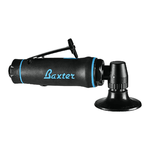
For anything where precision or cleanliness matters, I would STRONGLY discourage the use of a high speed tool. Hand tool or slow speed power at most. Gasket surfaces can of course can easily be cleaned with a high speed Roloc. But they can also have the flatness destroyed and make it difficult or impossible to seal and necessitate a new part just because a tech was tool lazy to spend a couple more minutes properly removing the gasket without damaging the substrate.
Hohn
Well-known member
My rule is always use a scraper softer than the substrate. Aluminum parts needs a plastic scraper, but even then you have to be careful because a lot of plastic parts are glass-filled and glass is harder than aluminum. Usually the glass is in the form of microscopic fibers and won't harm the substrate. But I still advise caution.YouTube (and, "ahem", forums) can be horrific sometimes, especially for the novice looking for advice. I've seen many videos where some idiot is showing how to clean a gasket surface, on the engine, and whips out his shiny new M12 angle grinder with a Roloc abrasive pad and goes at it.
Cringe worthy.
I like the KTC carbon steel gasket scrapers. I'd not even use the carbide SuperScrapers on aluminum. Unless one has a deft touch, too much chance for underlying material removal.
oldschoolcraft
Well-known member
So then what, if anywhere, would you use a carbide scraper since that's harder than steel, I think?My rule is always use a scraper softer than the substrate. Aluminum parts needs a plastic scraper, but even then you have to be careful because a lot of plastic parts are glass-filled and glass is harder than aluminum. Usually the glass is in the form of microscopic fibers and won't harm the substrate. But I still advise caution.
So then what, if anywhere, would you use a carbide scraper since that's harder than steel, I think?
You can still them on aluminum, but you have to be careful. Don't push down into the surface.
Everyone seems to have their preference. I have and I've used plastic scrapers, razor blades, more tradition metal scrapers and carbide.
I'm sure there is a technical and scientific reason to use one over the other based on the surface material, but just use common sense and understand that you're not trying to remove metal, but rather simply clean the surface of usually grease and left over gasket material.
Especially if you're using these on an engine block or a head, where straightness and overall sealing ability are critical.
Hohn
Well-known member
I don't use carbide or harder scrapers unless damaging the substrate is the purpose.So then what, if anywhere, would you use a carbide scraper since that's harder than steel, I think?
There are times when it's good to have the tool be harder. For example, on a needle scaler the needles need to be harder than the steel. That's sort of the point.
But for scraping any precision machined surface NO WAY.
It's a matter of using some common sense and experience. If anything puts debris in the engine, it has to be cleaned out. Even the blue paper shop towel will leave debris when wiping surfaces.
oldschoolcraft
Well-known member
In the last 24H it has become necessary for me to change my transmission pan, and one video I watched had the mechanic using a carbide scraper to scrape the old gasket off the aluminum transmission body. Made me think of this thread. Now I'm not sure how to scrape that off if there's any residue left behind.I don't use carbide or harder scrapers unless damaging the substrate is the purpose.
There are times when it's good to have the tool be harder. For example, on a needle scaler the needles need to be harder than the steel. That's sort of the point.
But for scraping any precision machined surface NO WAY.
Maybe a plastic hotel keycard (like an old credit card)? I did learn about plastic "super scrapers" during my research into scrapers a few months ago, but hadn't bought any yet. Maybe I buy a cheap one from HF for now to get this done.
Wrench97
Well-known member
Carbide scrapers are great but require experience when using, for a trans pan gasket it should come off pretty easy use a razor blade scraper.
If the trans has a reusable type gasket available from the dealer spend the extra and buy one.
If the trans has a reusable type gasket available from the dealer spend the extra and buy one.
toolenthusiast
Well-known member
- Joined
- Jan 21, 2017
- Messages
- 723
That stuff is mostly acetone, so nitrile gloves aren’t the move. Latex, neoprene, and butyl are resistant to acetone.Have you tried CRC Tech Grade Gasket Remover? Pretty much the most nasty chemical you can buy in a spray can. It'll eat nitrile gloves... and then your fingers. It will soften a lot of things up.
You can find all sources of great resources for glove selection by googling “glove chemical resistance chart”
Coach James
Well-known member
Hohn
Well-known member
I use the HF scraper with a similar plastic blade.