goodfellow
Well-known member
I have a nice MIG and TIG machine, but for joining large hunks of metal I'm still reaching for my old stick machine. It's easy, cheap and just perfect for a quick repair with a minimum of preparation and setup.

I have a nice MIG and TIG machine, but for joining large hunks of metal I'm still reaching for my old stick machine. It's easy, cheap and just perfect for a quick repair with a minimum of preparation and setup.


Stick Welding is still the preferred method in the field for construction, U.A Pipefitters,Union Boilermakers.Union Ironworkers,all use smaw, along with agtaw.gtaw,fcaw,agw, Procedures are taught in test booths,to members by each Union with no cost to members....39yr member U.A
I enjoyed going to the Union Ironworker school more than I did going to the job site. I passed six cert tests, but they only let me keep papers to one of them.
Stick Welding is still the preferred method in the field for construction, U.A Pipefitters,Union Boilermakers.Union Ironworkers,all use smaw, along with agtaw.gtaw,fcaw,agw, Procedures are taught in test booths,to members by each Union with no cost to members....39yr member U.A
I enjoyed going to the Union Ironworker school more than I did going to the job site. I passed six cert tests, but they only let me keep papers to one of them.
pipefitter?
boilermaker here, local 154. The knowledge gained in those test booths is priceless.
Ironworker School! ok that explains why Ya knew about 7018/lohy now get that belt back on....and spud a hole...Ya heard me ??
Yer right Brother....both times

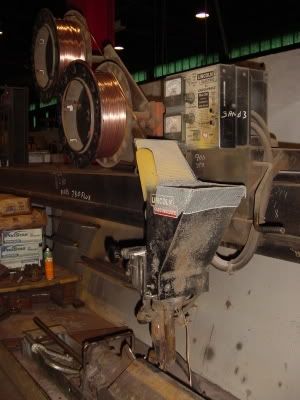
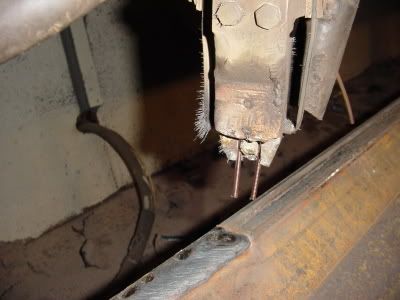
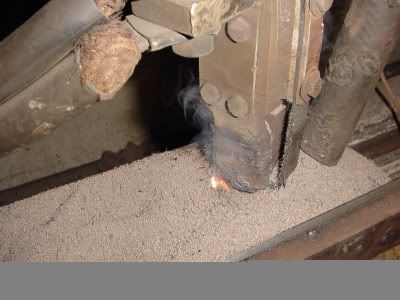
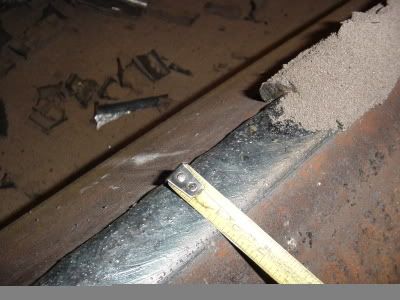
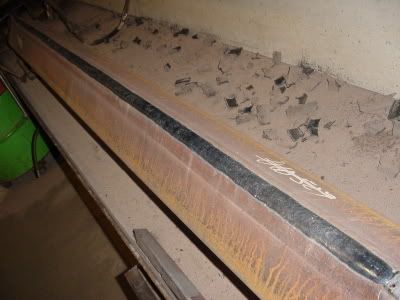
Here's a pic of some sub-arc I've done. This particular application uses two rolls of 1/8" ER70s wire feeding at the same time.
Stick Welding is still the preferred method in the field for construction, U.A Pipefitters,Union Boilermakers.Union Ironworkers,all use smaw, along with agtaw.gtaw,fcaw,agw, Procedures are taught in test booths,to members by each Union with no cost to members....39yr member U.A

But, I'd prefer a mig any other time, any thickness. All this "stick for the thick stuff" is odd to me. I've welded 4" (101.6mm) plate with 1/16" metal-core wire numerous times. Now, that's not full-thickness penetration obviously. But, put a chamfer (bevel) on there and you're good to go. I used to run 1" (25mm) fillet welds to joind 2" thick cutting edges to corner bits on buckets. It's a 7-pass weld but it's also at a very high stress area. Oh, this at on top of a 1" groove weld. These were done with .052 solid wire then. Now, our plant uses 1/16" metal core. For this wire, I'd run about 275-320 ipm, 310-340 amps and 32 volts. The machine - Lincoln Idealarc DC-600 with LN-7 wire feeder. We weld 2" thick plate with a variety of weld sizes with this combination daily. Look at any heavy manufacturing facility in the world...I'd bet few use stick other than shipyards.
I like TIG, too...although MIG is sooo much quicker and easier for most applications.
I'd say environment and application are the two biggest factors in process choice. I think most racing sanctioning bodies specify TIG for rollcages?
I use what I have available at the time. I have a Lincoln PowerMig 255c out in my little garage.
I voted MIG.
I think most people say MIG for thin stuff, stick for the thick stuff because a lot of people don't have huge high amp MIG welders to weld the thick stuff. More often than not I think lots of DIY guys have a little 110 or 220 v MIG, and a buzz box stick welder.
I'm not a welder, but I work in the world of building submarines. While there is alot of automated welding, there is still tons (literally) of welding by hand. Stick welding still rules the day.
I think most people say MIG for thin stuff, stick for the thick stuff because a lot of people don't have huge high amp MIG welders to weld the thick stuff. More often than not I think lots of DIY guys have a little 110 or 220 v MIG, and a buzz box stick welder.