
You are using an out of date browser. It may not display this or other websites correctly.
You should upgrade or use an alternative browser.
You should upgrade or use an alternative browser.
Whole house surge protector
- Thread starter Jsf721
- Start date
mike93lx
ALLIANCE MEMBER
I used one in my last house that mounted to the side of the panel, I think Siemens 80kJ. My current panels are flush mount homeline, so I am using units that are designed to mount in 2 breaker slots. They are only 22kJ each, so I threw two in each panel to get up around the same total.
I've seen recommendations to be up around 75kJ, so that was my goal.
The install of either are quite simple, and you can shut off your main breaker when doing them, but the feed lugs will still be hot, which makes some people nervous.
If you paid someone to do it, I'd expect the cost of the unit x2, plus $100 trip, plus $100-200 labor. If you had other stuff that needed to be done, now would be a good time
I've seen recommendations to be up around 75kJ, so that was my goal.
The install of either are quite simple, and you can shut off your main breaker when doing them, but the feed lugs will still be hot, which makes some people nervous.
If you paid someone to do it, I'd expect the cost of the unit x2, plus $100 trip, plus $100-200 labor. If you had other stuff that needed to be done, now would be a good time
Some downsides:
Tons of scam products to sort through.
Unclear when the device is used up and needs to be replaced.
Still need surge devices inside the home to protect equipment from surges created internally.
Still need lightning arrestor.
I like the Intermatic IG series with replaceable modules.
Tons of scam products to sort through.
Unclear when the device is used up and needs to be replaced.
Still need surge devices inside the home to protect equipment from surges created internally.
Still need lightning arrestor.
I like the Intermatic IG series with replaceable modules.
mike93lx
ALLIANCE MEMBER
Mine have always had indicator lights.Unclear when the device is used up and needs to be replaced.
I'd only ever use a big-name product for this, personally.
I do still use some surge protectors in the house, but many of the real money devices, like a/c's, furnaces, dishwashers, ranges, etc are not practical or even possible to protect at the point of use
RoninB4
Well-known member
After a surge (lightning strike?) toasted a big screen tv, a phone, lamp, and the router I had a repairman come out to replace the router under warranty from the phone/cable company. I asked him about surge protectors and he said that I could get one but nothing was going to protect from a line strike or a surge past a certain point. I asked him what he did at home and he said he just unplugged everything he didn't want to risk. I've done the same since then with no further damages to any appliances. My shop in the basement has two fused knife switches (bought surplus) wired in series to protect the RPC, sub-panel, and expensive machinery. Just my solution.
Many similar sites and information on the topic:
 www.taporellinefitting.com
Differences between Surge Arrester and Lightning Arrester
Surge Arrester: is a device used to protect the electrical installations and equipment from electrical surges and transient voltage caused by electrical faults, switching, short circuits, sparks, and lightning, etc. Surge arresters are installed inside the panels to cancel out the surges.
ddurrett896
Well-known member
I use this. Installed simple, just snaps in an empty spot. Recommend moving as close to the main as possible.
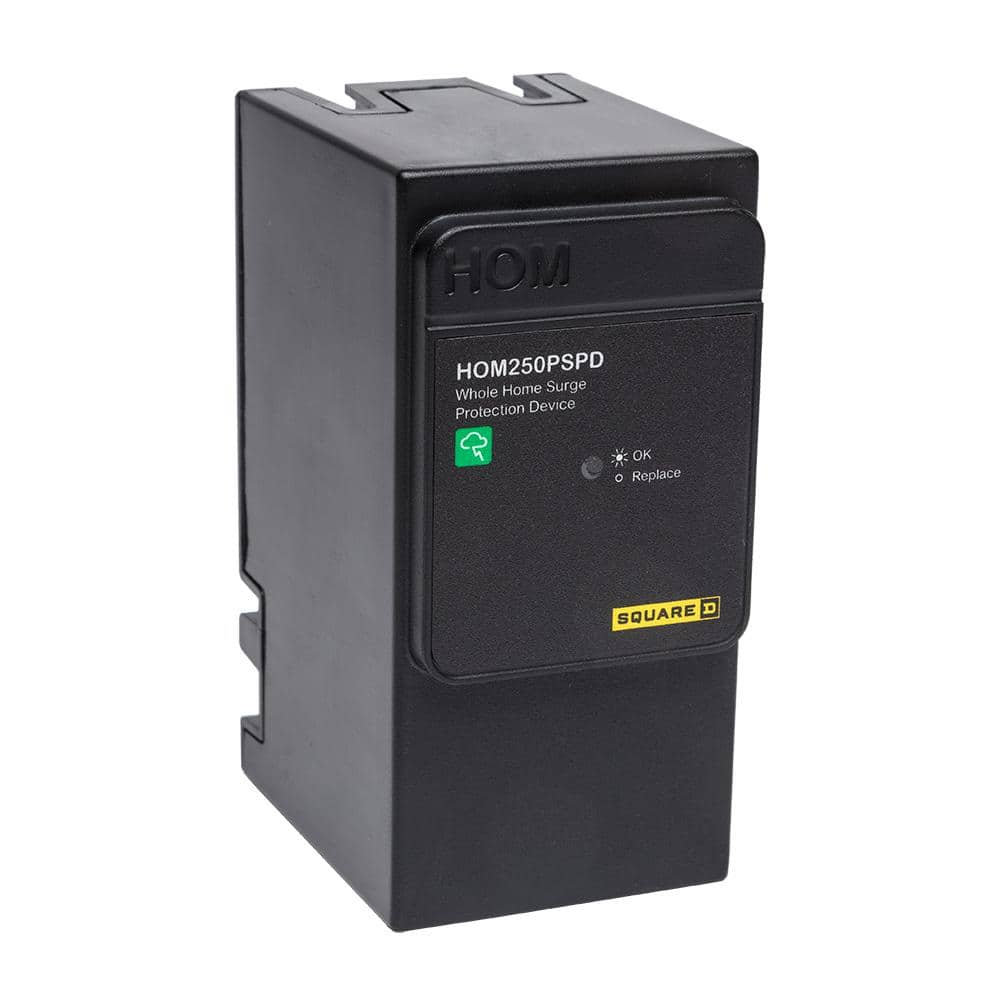
Square D 50kA Plug-On Neutral Whole Home Surge Protection Device for Square D Homeline Load Centers HOM250PSPD HOM250PSPD - The Home Depot
Protect all the appliances and electrical systems in your home by selecting this Square D Homeline Plug-On Neutral Whole House Surge Protective Device.
www.homedepot.com
turbowoodworker
Well-known member
My poco installed mine. I think install was free and we pay a monthly fee, thinking $2-3/ month. Way better than me trying to install. I think the poco even has an insurance plan with mine. If it fails to protect from damage from a strike, damaged appliances are on them.
mike93lx
ALLIANCE MEMBER
I'm using the 22.5k versions of those. Got them for something like $35 each on ebayI use this. Installed simple, just snaps in an empty spot. Recommend moving as close to the main as possible.
Square D 50kA Plug-On Neutral Whole Home Surge Protection Device for Square D Homeline Load Centers HOM250PSPD HOM250PSPD - The Home Depot
Protect all the appliances and electrical systems in your home by selecting this Square D Homeline Plug-On Neutral Whole House Surge Protective Device.www.homedepot.com
No protector does protection. Effective protectors are only connecting devices to the other item that does all protection. Single point earth ground.what do I need to know ? I think I know the Upside but are there any downsides ?
An AC utility demonstrates this single point earth ground concept using good, bad, and ugly (preferred, wrong, and right) examples in Tech Tip 8.
Ineffective Type 3 protectors work by somehow 'blocking' or 'absorbing' a surge. How does its thousands joules 'absorb' a surge that can be hundreds of thousands of joules? It doesn't. How does its 2 cm protector part 'block' what three miles of sky cannot? And so those must be more than 30 feet from the main breaker box and earth ground. To try to do less protection; create a lesser threat to humans.
Only Type 1 and Type 2 protectors are robust enough to make that low impedance (ie less than 10 foot) connection to what does all protection. Earthing electrodes. What requires most attention? That low impedance connection to and quality of single point earth ground. Electrodes typically meet and exceed what the electrical code requires.
Lightning can be 20,000 amps. So a minimal 'whole house' protector is 50,000 amps. Since effective protectors remain functional for many decades after many direct lightning strikes. With specification numbers that say so. That number defines protector life expectancy over many decades. Since that number says it 'absorb' less energy. If it fails anytime in ten plus years, then a larger one (ie 100,000 amps) might be necessary. Effective protectors do not fail - as indicated by its "protector good" light. Only profit centers are grossly undersized.
Each layer of protection is defined only the earth ground. Above is your 'secondary' protection layer. Also inspect your 'primary' protection layer. Those earth ground installed by utilities out at the street.
'Whole house' protection must be properly earthed to protect some of the least robust appliances in a house - those Type 3 (plug-in) protectors. Since this can be a problem with tiny joule Type 3 protectors when used without a properly earthed Type 1 or Type 2.
Metal-Marc
Well-known member
Man, that's a whole lot of words. LoLNo protector does protection. Effective protectors are only connecting devices to the other item that does all protection. Single point earth ground.
An AC utility demonstrates this single point earth ground concept using good, bad, and ugly (preferred, wrong, and right) examples in Tech Tip 8.
Ineffective Type 3 protectors work by somehow 'blocking' or 'absorbing' a surge. How does its thousands joules 'absorb' a surge that can be hundreds of thousands of joules? It doesn't. How does its 2 cm protector part 'block' what three miles of sky cannot? And so those must be more than 30 feet from the main breaker box and earth ground. To try to do less protection; create a lesser threat to humans.
Only Type 1 and Type 2 protectors are robust enough to make that low impedance (ie less than 10 foot) connection to what does all protection. Earthing electrodes. What requires most attention? That low impedance connection to and quality of single point earth ground. Electrodes typically meet and exceed what the electrical code requires.
Lightning can be 20,000 amps. So a minimal 'whole house' protector is 50,000 amps. Since effective protectors remain functional for many decades after many direct lightning strikes. With specification numbers that say so. That number defines protector life expectancy over many decades. Since that number says it 'absorb' less energy. If it fails anytime in ten plus years, then a larger one (ie 100,000 amps) might be necessary. Effective protectors do not fail - as indicated by its "protector good" light. Only profit centers are grossly undersized.
Each layer of protection is defined only the earth ground. Above is your 'secondary' protection layer. Also inspect your 'primary' protection layer. Those earth ground installed by utilities out at the street.
'Whole house' protection must be properly earthed to protect some of the least robust appliances in a house - those Type 3 (plug-in) protectors. Since this can be a problem with tiny joule Type 3 protectors when used without a properly earthed Type 1 or Type 2.
Here's a simpler explanation.
rlitman
Well-known member
Lightning can carry 200,000 A. It doesn't matter what class SPD you look at, it will not stop a lightning strike or even diminish it. Period. As for how many amps can be carried by the wiring in your whole house, it is limited by the wire's impedance, which is where I suppose that 20kA number might be from.... How does its 2 cm protector part 'block' what three miles of sky cannot? ...
Lightning can be 20,000 amps. So a minimal 'whole house' protector is 50,000 amps. ...
But that's an important distinction. Because you're not trying to stop a lightning strike. That's what a lightning rod does, but that's another story. You're only trying to stop the surge current that may be conducted or induced into your wiring by a NEARBY strike, and those energy levels are generally absorb-able. Remember that while these currents sound (and are) extreme, the energy measured in joules comes from the sum over time (definite integral) of the power, and the time value is VERY small.
Innovate1
Well-known member
Typical max surge at a residence is 6kV and 3kA (2 ohms source impedance). Sure some can be more from very close or direct hit but that's an industry standard test for equipment and nothing is going to protect from a direct hit. UL required test is 4 kV. The test can take a day or more because of the number of hits in various arrangements (line to line, line to ground, ...) We have the equipment at work and do this test regularly. Time of the pulse is about 50 uS (0.00005 seconds). Of course more capacity is better and will survive more hits. Most surge protectors have Metal Oxide Varistors in them that clamp the voltage to around 800 volts during the surge so pass about 2500 amps momentarily during a 6 kV surge test. Units with more amp rating will probably clamp to lower voltage levels. Easiest (and reasonable protection IMHO) are the ones from the panel maker that fit where the breakers go. That's what I did in my Homeline panels - Unfortunately only after I had some equipment damage during a storm when I added a 200 ft run to a detached garage and network cables between. The network cable was part of the issue so put protectors on both ends of those too and another protector in the sub panel. The subpanel one is connected to a knockout at the panel as the breaker location one did not include separate ground and neutral connections. All good so far since.
Last edited:
Man. What a lot of video bull that even includes lies. Overloading, compromised wires, etc do not create a surge: a voltage that is approaching or exceeding 1000 volts.Man, that's a whole lot of words. LoL
Where does it even mention a minimal size for a 'whole house' protector? 50,000 amps. So much time wasted to impress the emotional with music and fancy graphics. Essential numbers withheld.
World's best Type 1 or Type 2 protector does nothing if a low impedance (ie less than 10 feet) connection to 'single point earth ground' is missing or too long Even all four words have significance. None mentioned by a video that targets consumers with short attention spans. Provides no critical numbers.
Where do they mention THE most critical item is every protection system - earthing electrodes? That is only the 'secondary' protection layer. Where is a 'primary' protection layer discussed? Informed consumers always need those and other relevant numbers. Videos are for consumers who 'feel' they have been informed - when not.
What did they say that is relevant? 'Whole house' protectors are now required by code. They do not say how robust. Earthing is never mentioned They even forget to mention fires created by Type 3 protectors when not protected by a properly earthed (ie hardwire less than 10 feet long) 'whole house' protector. Or that a 'whole house' protector does maybe 99.5% of the protection for about $1 per appliance. Whereas Type 3 (plug-in) protector might do 0.2% more protection for tens of times more money.
Multiple examples of why text typically says so much. And videos say so little.
All that forgets a fundamental concept. Surges are a current source. That means voltage increases, as necessary, so that it can blow through anything that might 'block' it. Surges are not measured in volts. Volts only exist when something foolishly tries to 'block' or 'absorb' that surge. Such as a plug-in (Type 3) protector.Typical max surge at a residence is 6kV and 3kA (2 ohms source impedance).
What happens when a tiny thousands joule protector tries to 'block' or 'absorb' that current? That protector's let-through voltage is 330 volts. But voltage increases to well over 1000 volts when a typically destructive (larger) current exists. Resulting in an unacceptable and catastrophic failure.
Effective protector is defined in amps - not joules or voltage. A potentially destructive current is lightning - maybe 20,000 amps. So a minimal protector is 50,000 amps. Effective protectors discuss current - not voltages. So that direct lightning strikes only create hundreds of volts. Then best protection, already inside all appliances, is not overwhelmed. Then Type 3 protectors, that must somehow 'block' or 'absorb' a surge, do not do this.
An IEEE brochure demonstrates what can happen when a Type 3 protector in one room has no low impedance connection to earth. It earthed that surge 8,000 volts destructively through a TV in an adjacent room. Above that 6Kv number. To be effective, a protector must make a low impedance (ie less than 10 foot) connection to single point earth ground. Obviously, wall receptacle safety ground is not earthed electrodes.
Protection is about how a surge current (not voltage) connects low impedance (ie hardwire has no sharp bends or splices) to earth ground electrodes.
mcbane
Well-known member
At the time I installed my new service, I put a Eaton CHSPT2ULTRA at the 200A panel at the house and another at the 200A panel at the shop. Was the best bang for the buck, at least at the time. Supposedly good for 108kA, and currently $127 at HD.
Eaton has a FAQ about installation since some electricians and inspectors are inclined to install in a manner contrary to the instructions. Eaton wants the very short 14 ga wires to go directly to a dedicated 50A breaker and apparently some inspectors want to downsize that breaker and some electricians want to extend the 14 ga wires in order to put the breaker at a more convenient place. Eaton suggests directing the inspector to the code section that says listed products must be installed in accordance with the instructions that are part of the listing, as provided by the device manufacturer.
Interestingly, Eaton doesnt mention that most 50A breakers arent listed for 14 ga wire and cant clamp down on wire that small. I stripped twice the normal length of wire, folded it back on itself, and tightened the breaker terminal screw. Inspector didnt complain and Im not going to worry about it.
BTW, I only know of one time when an older whole house surge protector actually protected things. After a lightning storm my surge protector was partially melted and covered in soot, but no appliance in the house was damaged. I am guessing that without the surge protector I would have lost something (as had happened several times before I installed that protector).
Eaton has a FAQ about installation since some electricians and inspectors are inclined to install in a manner contrary to the instructions. Eaton wants the very short 14 ga wires to go directly to a dedicated 50A breaker and apparently some inspectors want to downsize that breaker and some electricians want to extend the 14 ga wires in order to put the breaker at a more convenient place. Eaton suggests directing the inspector to the code section that says listed products must be installed in accordance with the instructions that are part of the listing, as provided by the device manufacturer.
Interestingly, Eaton doesnt mention that most 50A breakers arent listed for 14 ga wire and cant clamp down on wire that small. I stripped twice the normal length of wire, folded it back on itself, and tightened the breaker terminal screw. Inspector didnt complain and Im not going to worry about it.
BTW, I only know of one time when an older whole house surge protector actually protected things. After a lightning storm my surge protector was partially melted and covered in soot, but no appliance in the house was damaged. I am guessing that without the surge protector I would have lost something (as had happened several times before I installed that protector).
Innovate1
Well-known member
Interesting that that one goes on a breaker. The one on my subpanel had directions to connect directly to the bus bars (after the main). The wires shouldn't be extended - you want as short and direct a path as possible. Longer is better than nothing but due to the high currents and very fast pulse longer wires have significant effect. And having a common ground point for everything is important.At the time I installed my new service, I put a Eaton CHSPT2ULTRA at the 200A panel at the house and another at the 200A panel at the shop. Was the best bang for the buck, at least at the time. Supposedly good for 108kA, and currently $127 at HD.
Eaton has a FAQ about installation since some electricians and inspectors are inclined to install in a manner contrary to the instructions. Eaton wants the very short 14 ga wires to go directly to a dedicated 50A breaker and apparently some inspectors want to downsize that breaker and some electricians want to extend the 14 ga wires in order to put the breaker at a more convenient place. Eaton suggests directing the inspector to the code section that says listed products must be installed in accordance with the instructions that are part of the listing, as provided by the device manufacturer.
Interestingly, Eaton doesnt mention that most 50A breakers arent listed for 14 ga wire and cant clamp down on wire that small. I stripped twice the normal length of wire, folded it back on itself, and tightened the breaker terminal screw. Inspector didnt complain and Im not going to worry about it.
BTW, I only know of one time when an older whole house surge protector actually protected things. After a lightning storm my surge protector was partially melted and covered in soot, but no appliance in the house was damaged. I am guessing that without the surge protector I would have lost something (as had happened several times before I installed that protector).
That protector is connecting a transient to earth ground. Whereas an 18 AWG wire is maybe rated for 10 amps continuous (because it can safely conduct 20 amps continuous), that same wire can also safely conduct a 50,000 amps surge.Eaton has a FAQ about installation since some electricians and inspectors are inclined to install in a manner contrary to the instructions. Eaton wants the very short 14 ga wires to go directly to a dedicated 50A breaker and apparently some inspectors want to downsize that breaker and some electricians want to extend the 14 ga wires in order to put the breaker at a more convenient place.
An example of why a 14 AWG wire is sufficient. Since transients are a microseconds event. Other electrical concepts apply that are not discussed - to keep it simple.
We don't tell technicians this. We also do not tell them that a 20 amp circuit breaker might take as long as one or two hours to trip on a continuous 25 amp current. Technicians (electricians) need not know that.
Code also does not discuss impedance. But impedance is everything in that connection to earth ground. Is why Type 3 protectors must be so far away from a main breaker box and earth ground. And why separation between protector and electronics INCREASES protection.
That wire from a protector to bus bar, folded back upon itself, has increased impedance (reduced protection). Sharp bend increases impedance. Encourages a surge to find earth ground via some other path (ie an appliance).
Some manufacturers say install that protector on a 20 or 30 amp breaker. That numbers is actually more of a ballpark. 50 amps implies their protector is even more robust. It can short a larger current to earth without threatening human life.
An 'every foot shorter' wire connection protection. Sharp bends on a hardwire from breaker box to earth ground, by going over a foundation, means sharp bends (increased impedance) reduce protection. Separation between protector and electronics increases impedance; increases protection.
Wires from a 'whole house' protector to each circuit breaker and ground bus should be as short as possible. But leave enough wire to make changes and adjustments. An extra six or 12 inches is not too bad. Moving breakers around to locate that protector closer to mains is nice; but also does little. But sharp bends in that wire should be fully avoided - are unnecessary.
Protector in a sub-panel is ineffective. A subpanel typically does not have a direct (ie less than 10 foot) connection to earth ground electrodes. Since earth ground does all protection, then that protector is made ineffective. And it must be single point earth ground. Same earth ground that connects to a main breaker box.
Examples of concepts, required by code (for human protection), do not define what must exist for appliance protection. And to put those manufacturer suggestions into perspective.
Surges are so fast that a 20 amp breaker or a 50 amp breaker does not trip or affect protection. That breaker exists should a protector do something that is unacceptable - fail catastrophically and short circuit.
Innovate1
Well-known member
Time to open curves are published by the manufacturers for fuses and breakers. That's useful information in some situations.We don't tell technicians this. We also do not tell them that a 20 amp circuit breaker might take as long as one or two hours to trip on a continuous 25 amp current. Technicians (electricians) need not know that.
Not entirely true. NEC Sec. 250-54 requires the resistance of a single ground rod to be less than 25 ohms or install 2 rods. It's easier to just install two rods so most times that's what gets done.Code also does not discuss impedance. But impedance is everything in that connection to earth ground. Is why Type 3 protectors must be so far away from a main breaker box and earth ground. And why separation between protector and electronics INCREASES protection.
True for subpanels in the same building but not for other buildings. Subpanels in other buildings have their own ground rods (or should have) and the voltage between the two ground rods located some distance apart during a lightening event can be significant. So a subpanel surge protector is very effective in this situation. This is the issue I had when I added a detached garage before adding protectors in both panels (and data lines between buildings).Protector in a sub-panel is ineffective. A subpanel typically does not have a direct (ie less than 10 foot) connection to earth ground electrodes. Since earth ground does all protection, then that protector is made ineffective. And it must be single point earth ground. Same earth ground that connects to a main breaker box.
You are correct that most codes are for safety and not as concerned with equipment failure. UL, for example, is generally not concerned with if the equipment fails during testing as long as it remains safe.
Innovate1
Well-known member
Industry standards say otherwise. IEC 61000-4-5 is a common industry standard for testing equipment surge withstand capability. The actual standards require subscriptions to obtain but there are lots of places that give the basic details.All that forgets a fundamental concept. Surges are a current source. That means voltage increases, as necessary, so that it can blow through anything that might 'block' it. Surges are not measured in volts. Volts only exist when something foolishly tries to 'block' or 'absorb' that surge. Such as a plug-in (Type 3) protector.
https://en.wikipedia.org/wiki/IEC_61000-4-5
TI has quite a bit of detail here.
https://training.ti.com/demystifying-surge-protection-iec-61000-4-5-standard
What a protector part (by itself) does says nothing about how the entire system works or performs. No protector does protection. Using your reasoning, then numbers for a resistor define how well a radio will receive radio signals.
Those iEC numbers say which protector is used where. It says nothing about how or where hundreds of thousands of joules harmlessly dissipate.
Even completely misunderstood is code requirements for earth ground. Resistance of an electrode to earth only says what is require to protect humans. Is measured in resistance. Since electricians typically cannot measure this, then the "out" says, "You don't have to measure it. Just install two electrodes." It can be more than 25 ohms.
That says nothing about "impedance" nor says anything about what (how many electrodes) are required for that soil. IEC 61000-4-5 also says nothing about that - that is essential to have effective protection.
It must be "single point earth ground" so that equipotential exist. Another parameter that is critical for effective protection. And not relevant to IEC 61000-4-5 or anything else posted in denial.
Protection is a system. IEC 61000-4-5 only says what one part of that system might do. Does not even say what is sufficient or required.
Effective protection ALWAYS answers this question. Where do hundreds of thousands of joules harmlessly dissipate? No protector answers that. A protector is only a connecting device (just like wire) to what answers that question. Connecting to something else that defines protection.
That IEC video is further vague and misleading. There is no one ground. The word 'ground' must be preceded by an adjective. Safety (equipment) ground in a wall receptacle does nothing to make any protector effective. To protect profits, tiny joule protectors forget to include the adjective that defines a relevant ground. Earth ground. Protectors that are ineffective (Type 3) must be more than 30 feet from the main breaker box and earth ground. So that their connection to safety ground does LESS protection. To avert this.
Nothing in IEC61000-4-5 says anything about why this happens. IEC 61000-4-5 does not discuss protection. It only defines what a protector part might do electrically. That should have been obvious.
IEC61000-4-5 says nothing about ground. Effective protection always answers this question. Where do hundreds of thousands of joules harmlessly dissipate? Earth. IEC61000-4-5 says nothing about what effective protection does. Effective protection means no surge is anywhere inside a structure. That also should be obvious.
A protector is only as effective as its low impedance (not 25 ohm resistance) connection to and the quality of single point earth ground. All four words have relevance. None are discussed in IEC61000-4-5 or in the National Electrical Code. Since neither are intended to nor discuss what defines effective surge protection. And neither discuss equipotential.
Those iEC numbers say which protector is used where. It says nothing about how or where hundreds of thousands of joules harmlessly dissipate.
Even completely misunderstood is code requirements for earth ground. Resistance of an electrode to earth only says what is require to protect humans. Is measured in resistance. Since electricians typically cannot measure this, then the "out" says, "You don't have to measure it. Just install two electrodes." It can be more than 25 ohms.
That says nothing about "impedance" nor says anything about what (how many electrodes) are required for that soil. IEC 61000-4-5 also says nothing about that - that is essential to have effective protection.
It must be "single point earth ground" so that equipotential exist. Another parameter that is critical for effective protection. And not relevant to IEC 61000-4-5 or anything else posted in denial.
Protection is a system. IEC 61000-4-5 only says what one part of that system might do. Does not even say what is sufficient or required.
Effective protection ALWAYS answers this question. Where do hundreds of thousands of joules harmlessly dissipate? No protector answers that. A protector is only a connecting device (just like wire) to what answers that question. Connecting to something else that defines protection.
That IEC video is further vague and misleading. There is no one ground. The word 'ground' must be preceded by an adjective. Safety (equipment) ground in a wall receptacle does nothing to make any protector effective. To protect profits, tiny joule protectors forget to include the adjective that defines a relevant ground. Earth ground. Protectors that are ineffective (Type 3) must be more than 30 feet from the main breaker box and earth ground. So that their connection to safety ground does LESS protection. To avert this.
Nothing in IEC61000-4-5 says anything about why this happens. IEC 61000-4-5 does not discuss protection. It only defines what a protector part might do electrically. That should have been obvious.
IEC61000-4-5 says nothing about ground. Effective protection always answers this question. Where do hundreds of thousands of joules harmlessly dissipate? Earth. IEC61000-4-5 says nothing about what effective protection does. Effective protection means no surge is anywhere inside a structure. That also should be obvious.
A protector is only as effective as its low impedance (not 25 ohm resistance) connection to and the quality of single point earth ground. All four words have relevance. None are discussed in IEC61000-4-5 or in the National Electrical Code. Since neither are intended to nor discuss what defines effective surge protection. And neither discuss equipotential.