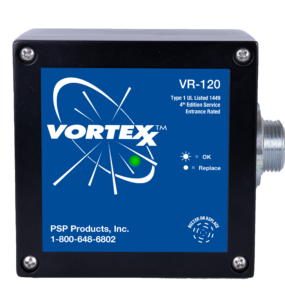
To avoid these ads, REGISTER NOW!

Whole house surge protector

joe_pinehill1

Well-known member
Joined
Feb 23, 2013
Messages
537
Location
Northern Virginia
We had a near miss lightning strike. It popped all the gfi breakers in the panel, and fried a gfci outlet. Any recommendations for a whole house suppressor?
 
To avoid these ads, REGISTER NOW!

mike93lx

ALLIANCE MEMBER
Joined
Dec 9, 2013
Messages
37,487
Location
Richmond, VA
What brand panel do you have?

I have two square d homelines and a Siemens, all have two pole spd's installed. In the Siemens, it has two 20a outputs, so it doesn't even eat up spaces, but the homelines do
 

Diesel Dan

Well-known member
Joined
Jul 21, 2013
Messages
2,459
Location
TN
Installed a SquareD QO surge breaker years ago, luckily never needed it...yet.
 

mike93lx

ALLIANCE MEMBER
Joined
Dec 9, 2013
Messages
37,487
Location
Richmond, VA
Installed a SquareD QO surge breaker years ago, luckily never needed it...yet.
Any connected equipment warranty (for whatever it is worth) will be limited to anywhere from a few to several years. Might be worth swapping it out depending on age, plus they wear out from surges
 

Diesel Dan

Well-known member
Joined
Jul 21, 2013
Messages
2,459
Location
TN
Any connected equipment warranty (for whatever it is worth) will be limited to anywhere from a few to several years. Might be worth swapping it out depending on age, plus they wear out from surges
I'll check into that, probably ~6 yrs old now.
No codes or warranty reasons, just figured it a worthwhile upgrade.
 

rlitman

Well-known member
Joined
Oct 18, 2010
Messages
24,594
Location
Long Island
intermatic.com they make the best ones.
CD
I would say they are excellent, and Intermatic is also what I have on my main panels (I have Square D cubes on my AC disconnects). Personally, I chose them for their superior value. With Intermatic, you're getting a very good product at a fair price in a market that is dominated by snake oil ripoffs.

Right now, I would reserve the "best" designation for SSI's SpecPro products, but since they only make commercial TVSS, I wouldn't argue with your claim in regards to a best all-around residential product. But I will add this: the closer an SPD is to the bus, the more advantage it has in stopping voltage rise. So, if your panel manufacturer offers an SPD product that connects directly to the bus without any pigtails, it is seriously worth considering, even if it has a lower rating than a breaker connected Intermatic, by the numbers.

...Might be worth swapping it out depending on age, plus they wear out from surges
I'm not particularly worried about collecting on the warranty. Whatever surge protector you choose MUST have a status indicator to let you know if it is still working at full capacity.
 

mike93lx

ALLIANCE MEMBER
Joined
Dec 9, 2013
Messages
37,487
Location
Richmond, VA
I'm not particularly worried about collecting on the warranty. Whatever surge protector you choose MUST have a status indicator to let you know if it is still working at full capacity.
I dont worry about it, but hey, if I have to swap them out at some point anyway, might as well have warranty coverage. $50 every 3-5 years to protect an expensive a/c, pool heater, or fridge is pretty cheap insurance.
 

geneg

Well-known member
Joined
Oct 19, 2020
Messages
467
Location
Midwest
I dont worry about it, but hey, if I have to swap them out at some point anyway, might as well have warranty coverage. $50 every 3-5 years to protect an expensive a/c, pool heater, or fridge is pretty cheap insurance.
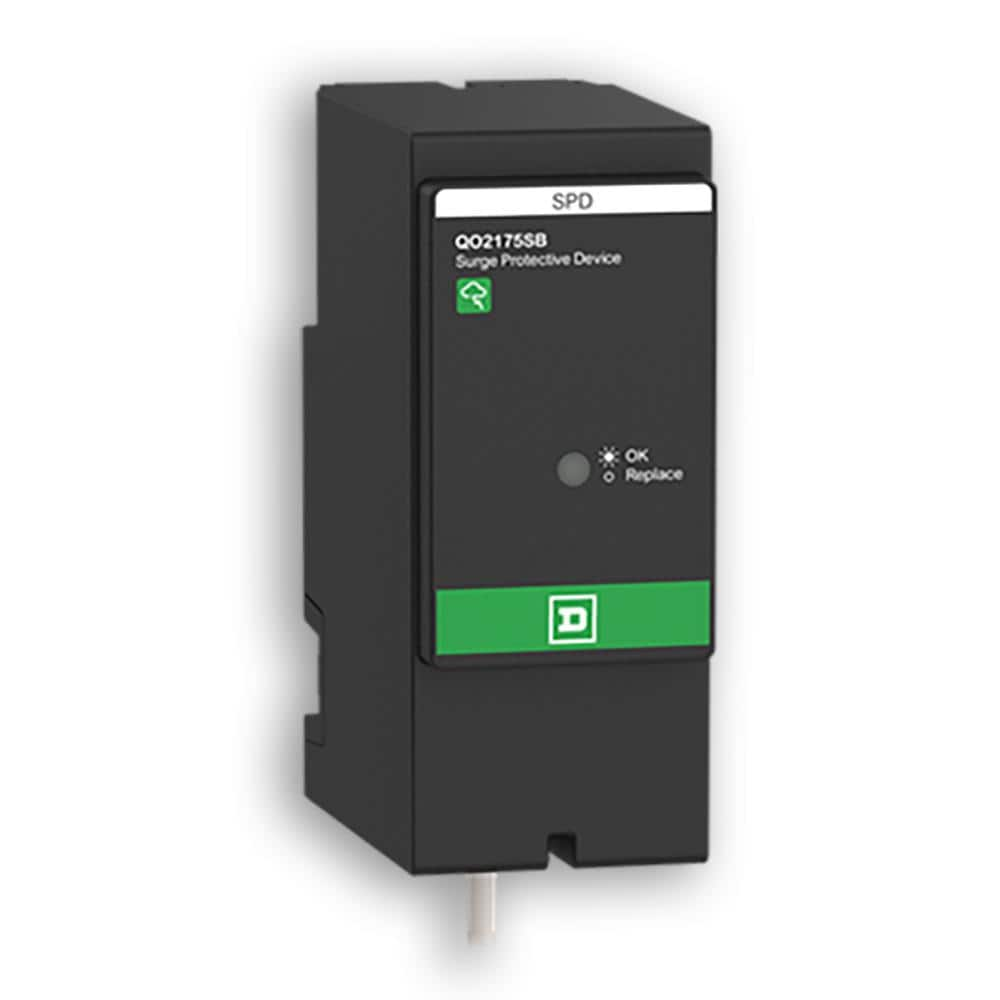
I installed a Square D QO in the panel in 2020, but still have local to devices units on the tv, desktop computer, modem & router, and my Wife's sewing machines that cost more than my first several new cars. Guess I'm a belt & suspenders person.

Square D has different models for QO, Homeline, & plug in neutral panels. They do take up 2 breaker spaces
 

mike93lx

ALLIANCE MEMBER
Joined
Dec 9, 2013
Messages
37,487
Location
Richmond, VA
Square D has different models for QO, Homeline, & plug in neutral panels. They do take up 2 breaker spaces
I have two in each of my homeline panels, plus one in a Siemens sub and am adding them onto each of my three a/c's next weekend. I'm a full send kind of guy
 

dcg9381

Well-known member
Joined
Jun 20, 2018
Messages
11,713
Location
Austin, TX
What's the experience been with these? Basically nothing survives a direct strike.
I've had CAT6 seriously damaged by "nearby" strikes, but I haven't gone to all the extra work to re-install grounding cat6 cables.
 
OP
J

joe_pinehill1

Well-known member
Joined
Feb 23, 2013
Messages
537
Location
Northern Virginia
I like this Square D option. I have a Square D panel, simple installation. These surge protectors are preventative, they can't hurt, and you don't know if they really help.

 
Last edited:
OP
J

joe_pinehill1

Well-known member
Joined
Feb 23, 2013
Messages
537
Location
Northern Virginia
What's the experience been with these? Basically nothing survives a direct strike.
I've had CAT6 seriously damaged by "nearby" strikes, but I haven't gone to all the extra work to re-install grounding cat6 cables.
Yes nothing survives a direct strike. But if the lightning hits near by, even a few miles away, the EMI pulse could travel down the power lines and randomly go to your house, if you have slightly better ground. Lightning goes where ever it wants, its hard to predict. A surge protector may save you from loosing items with a PC board, which today is about everything that plugs into a socket.
 
To avoid these ads, REGISTER NOW!

gregs

Well-known member
Joined
Mar 16, 2007
Messages
1,590
Do the "wired" ones just connect to a existing double pole breaker?

My panel is pretty full and flush mounted in a bedroom of all places. I do have a separate outside disconnect box between the meter and panel, any issues with installing one there?
 

cybrdyke

Well-known member
Joined
Sep 9, 2014
Messages
3,444
Location
USA
That energy also travels down phone lines, cable TV lines, etc., and can just as easily damage equipment through those entry points. If you really are concerned, then these lines need to be protected as well.
CD
 
  • Like
Reactions: Max

gregs

Well-known member
Joined
Mar 16, 2007
Messages
1,590
Just power for me. Got rid of cable and landline phones and use a wireless hot spot for internet. And I did disconnect the lines outside for the above reason.

Going to pull the cover off the disconnect outside to see what it looks like inside since I cant remember. I actually have 2 disconnects, 1 for the house and 1 for the shop next to the meter. So I will need 2 surge protectors.

Is there a certain way to size them? Or is bigger better?
 

mike93lx

ALLIANCE MEMBER
Joined
Dec 9, 2013
Messages
37,487
Location
Richmond, VA
Is there a certain way to size them? Or is bigger better?
I couldn't find anything definitive, so I just went for multiple units to get a higher rating, and to be able to locate them near equipment that is fa away from the main and/or particularly expensive
 

rlitman

Well-known member
Joined
Oct 18, 2010
Messages
24,594
Location
Long Island
...Is there a certain way to size them? Or is bigger better?
For residential purposes, there are two types to consider. A Type I SPD is rated to be safe to use upstream of the main breaker without external over-current protection between it and the pole transformer. A Type II SPD requires upstream protection (circuit breaker or fuse).

Both really should have internal fuses, so it's just that the Type I uses much higher interrupt rated (and costlier) fuses that can handle a short themselves (and maybe be potted to not explode), while the Type II is cheaper to make.

So, you can safely use a Type I in any panel in your system, while you could save a few bucks and use Type II in things like AC disconnects and subpanels.

As for bigger being better, well, maybe (probably). There's a LOT of marketing hype with these, and protection is not directly related to the rating. In theory, the joule rating should give you an idea of the lifetime surge capacity of the unit, where lots of small surges or a small number of large ones will erode the MOVs over time. The way it is supposed to work is that once the MOV fails, the fuses blow, removing them from the circuit and extinguishing the "working" indicator light, letting you know it is time for replacement.

For commercial power, it gets complicated, because of the much higher short circuit currents and surge voltages you can encounter.
 
Last edited:

Max

ALLIANCE MEMBER
Joined
Jun 16, 2018
Messages
3,326
Location
Georgia
That energy also travels down phone lines, cable TV lines, etc., and can just as easily damage equipment through those entry points. If you really are concerned, then these lines need to be protected as well.
CD
I lost a cable modem (and the port on my router that was connected to the modem) to lightning. While I still had a cable modem I inserted a 1G switch between the two as a sacrificial buffer just in case. But with my move to a 5G modem I don’t need to do that any more.
 

walta

Well-known member
Joined
Jan 13, 2017
Messages
2,310
Location
Dutzow Missouri
How old do you let it get before replacing the whole house surge protector?

They are based on MOVs (Metal Oxide Varistor) that degrade with every spike they absorbed.

I put one in 25 + years ago and its lights said it was still good when I sold the house.

The new house service is all underground to the ground mounted transformer and its feed is underground for 150 feet.

Walta
 

rlitman

Well-known member
Joined
Oct 18, 2010
Messages
24,594
Location
Long Island
How old do you let it get before replacing the whole house surge protector?

They are based on MOVs (Metal Oxide Varistor) that degrade with every spike they absorbed.

I put one in 25 + years ago and its lights said it was still good when I sold the house.

The new house service is all underground to the ground mounted transformer and its feed is underground for 150 feet.

Walta
Well, what I said above was:
"The way it is supposed to work is that once the MOV fails, the fuses blow, removing them from the circuit and extinguishing the 'working'indicator light, letting you know it is time for replacement."

I've had several (all big brands) fail with the lights still on, but never saw this on a residential sized SPD, just commercial 277/480Y. Some started buzzing, and others failed silently but showed up glowing on my thermal scan.

As for how long they last, the higher the impedance between the surge source and the SPD, the less energy that arrives to be dissipated. So, if you have a small service, or a poorly located SPD, or poor grounding, then even a small SPD may last a VERY long time. OTOH, when you have a commercial service (thousands of amps), and a well sited SPD, then even a large SPD may be consumed quickly on a bad grid.
 
OP
J

joe_pinehill1

Well-known member
Joined
Feb 23, 2013
Messages
537
Location
Northern Virginia
I installed a Square D QO2175SB in of the two panels. I moved up the breakers on one side. I have two panels, I'll do the second this weekend. The bottom of the second panel is all heavy gauge wire, and the breakers will take more time to re-bend and dress wire. Preventative maintenance, you just don't know if it really helps.

A few months ago I bought a small UPS unit for the cable and router equipment. The unit has surge protection also. After dealing with modem resets, since I bought the UPS, the internet has been solid, no drops in service.
 

Attachments

  • IMG_6501.jpg
    IMG_6501.jpg
    701.5 KB · Views: 17
Last edited:

gregs

Well-known member
Joined
Mar 16, 2007
Messages
1,590
I have several UPS's in the house and one in my shop. I even have our main TV plugged into one and the other tv related devices.
 

wyliesdiesels

Well-known member
Joined
Aug 14, 2012
Messages
19,998
Location
Modesto, CA
What's the experience been with these? Basically nothing survives a direct strike.
I've had CAT6 seriously damaged by "nearby" strikes, but I haven't gone to all the extra work to re-install grounding cat6 cables.
This is not true. Thousands of microwave towers take thousands of strikes every year and suffer from no damage whatsoever. Its all about how good the grounding and bonding is.

As someone who has worked on microwave towers, including the grounding, bonding, electrodes, etc., as well as PSAPs (public safety answering points), which have towers, Ive seen first hand how to prevent damage from strikes...

If you wanna know some of the tricks, try reading the motorola R56 manual
 

wyliesdiesels

Well-known member
Joined
Aug 14, 2012
Messages
19,998
Location
Modesto, CA
Yes nothing survives a direct strike. But if the lightning hits near by, even a few miles away, the EMI pulse could travel down the power lines and randomly go to your house, if you have slightly better ground. Lightning goes where ever it wants, its hard to predict. A surge protector may save you from loosing items with a PC board, which today is about everything that plugs into a socket.
this isnt true... see above
 

dcg9381

Well-known member
Joined
Jun 20, 2018
Messages
11,713
Location
Austin, TX
This is not true. Thousands of microwave towers take thousands of strikes every year and suffer from no damage whatsoever. Its all about how good the grounding and bonding is.
How about nothing "residential" survives a direct strike? Surge protectors, I get it with nearly "inductive" surge (because I've dealt with thousands in damage from a strike across the street and no surge protection). Will these protectors save things with a direct residential strike and typical residential grounding?
 

wyliesdiesels

Well-known member
Joined
Aug 14, 2012
Messages
19,998
Location
Modesto, CA
How about nothing "residential" survives a direct strike? Surge protectors, I get it with nearly "inductive" surge (because I've dealt with thousands in damage from a strike across the street and no surge protection). Will these protectors save things with a direct residential strike and typical residential grounding?
only because of poor bonding and grounding.... hell ive come across houses with no electrodes whatsoever, no bonding on the plumbing etc etc

its all about the potential everything is at....

Ever seen video of a skyscraper in NY taking direct lightning hits? they dont suffer any damage because they have the proper bonding, grounding, electrodes (both on the roof for taking the strike and in the basement along with GES running up the building).....
 
Last edited:

rlitman

Well-known member
Joined
Oct 18, 2010
Messages
24,594
Location
Long Island
...Ever seen video of a skyscraper in NY take direct lightning hits? they dont suffer any damage because they have the proper bonding, grounding, electrodes (both on the roof for taking the strike and in the basement along with GES running up the building).....
Those skyscrapers may have a footprint of a square city block, but once you get up a few floors the floorplan will have a single riser smaller than one elevator shaft for ALL the electrical bus connections, so the breaker for any piece of critical equipment will literally be within arm's length of the very same grounding electrode that's carrying every last amp down from every single strike the broadcast antenna takes every time a storm rolls by. You've got to have real good faith in your bonding.

On the note of that faith, I was involved in siting a lightning protection system, and one consideration that had to be reviewed was dangerous earth step potential around the grounding electrode. There's a tremendous voltage gradient on the ground surrounding where the downlead meets the electrode. Enough that two feet on the ground spaced shoulder's width apart could be hundreds of volts apart if too close and oriented wrong during a strike. It makes me wonder how safe it is to be standing in those electrical rooms during a strike.
 
To avoid these ads, REGISTER NOW!
Top Bottom