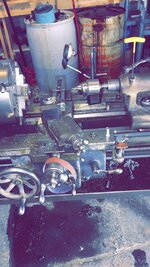
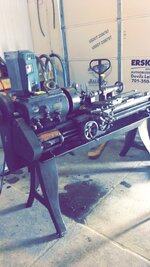
If you have a metal lathe and milling machine of sufficient size along with tooling for each, you can literally make almost anything given the time and skill (sadly I am lacking in both of these, but working on it).
See edit above.


If you have a metal lathe and milling machine of sufficient size along with tooling for each, you can literally make almost anything given the time and skill (sadly I am lacking in both of these, but working on it
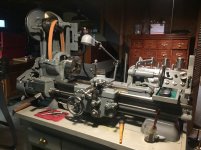
1902 pratt and whitney toolmakers lathe.
just begun the re assembly process.
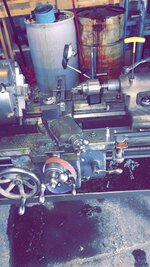
What do you guys recommend putting on the gears that are in the quick change gear case on my lathe (Logan 11")? Cannot really oil well once installed so was wondering if a light film of grease or heavy weight oil?
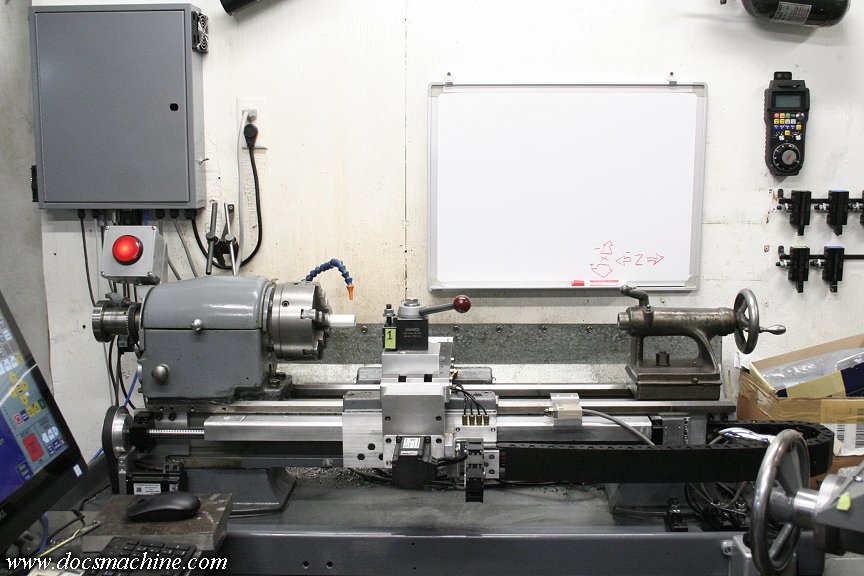
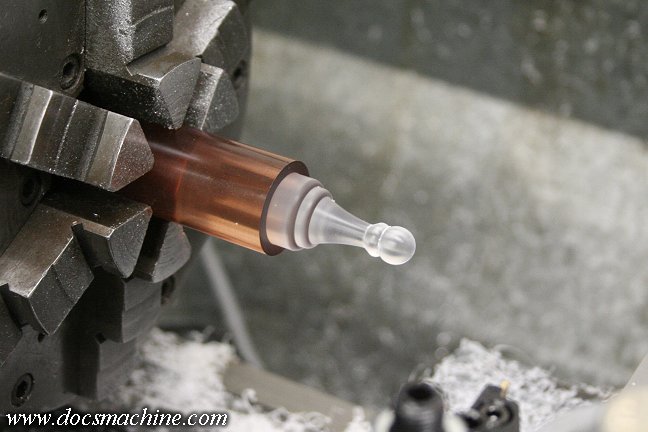 ) and their CNC12 software, running on the 24" Dell all-in-one touchscreen Win10 PC barely seen at the far lower left.
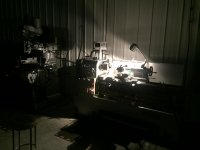
Here's a project I've been working on for a while: A 1956 Logan 11" lathe, converted to CNC:
I'm only just now getting the final details sorted out, but it's very close to fully functional now.
Doc.
Anyone have a lower double head stock gear for an 11" Logan lathe part number LA 1006. Have one missing a tooth and would like to replace.
 steps to become a forensic anthropologist
@Doc, nice conversion, I'm curious how you determine the X, Z offset for the tool point? Do you have a jig and use dial indicators from a known position or do you have a more advanced electronic "setter". Also curious if its a conversational control or straight up G-code.
I've been a manual machinist for 20+ years, but this is the first CNC machine I've ever really used, so when I say the conversational programming is pretty "straightforward"... if I can understand it, anyone can. Have you searched using google images to find a pic of a similar one? It appears to have an L style spindle nose due to the scanner nut holding the chuck on. L0, L00, etc.
I'd think the left end cover would be a good clue?You start at the top of this page and see if you can find a match.
http://www.lathes.co.uk/


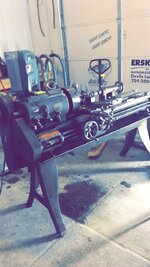
Picked up my first lathe recently. 1960’s ish South Bend 9A.
Nice find Randall! At the far end of the ways at the front you will find the serial number. You can send it to Grizzly (they have all of South Bend's records) with $25, and they will send you a pdf of the original "build sheet" and sales card. Very interesting - found out my old 9inch was sold in November of 1935 to a engineering professor at the University of Texas at Arlington.
Steve Wells keeps a database of SB serial numbers, along with lots of other interesting info:
http://www.wswells.com/
The database:
http://www.wswells.com/sn/sn_db.htm
Mine is 61781. There are links to the serial number card and a picture.
If yours is not on the list yet, please drop him a message with the serial number and whatever other info you have.
Great Info. Thanks! Serial is 51050, will have to add to the list.
I have been all over that site, still have some more to go through. I really wanna know and its driving me nuts
Someone on the Practical Machinist stated "it looks European".
I saw that. I'm still searching through the lathes.uk.co site. Hopefully i can find out what it is. Thanks for posting it there. I also did but it took a few days to be approved
It looks like a Hendey lathe. I could be wrong, but they were built in England.
No, Hendey lathes were built in Torrington, Connecticut ... at least every one I ever saw.
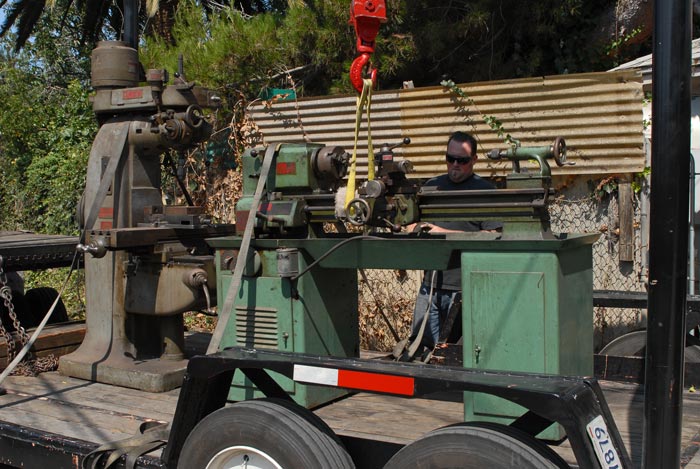
Here's my Standard Modern 13 x 34 lathe getting ready to go in the mini garage for clean up.
I picked it up at the Navy ship yard auction. They were stored outside so it took considerable clean up to remove the surface rust. But it was well worth it, these sell for 23k new.
I made a large electrolysis tank and removed the rust off of anything that could be removed from the lathe.
It came with a three jaw chuck, a four jaw chuck, 12" face plate quick change tool post, taper attachment, steady rest, follow rest.
Its a really nice lathe with plenty of power 2 HP three phase, and it will thread either standard or metric.
It also had a VFD installed from the factory so it will run on single phase power. two speed and reverse at the flip of a switch.
Standard Modern lathes are made in Canada not Taiwan or China.
I paid about a fourth of what a Grizzly comparable lathe would of cost me.
I also picked up a Bridgeport Mill clone (Taiwanese) at the same time.
I'll save that for another post.
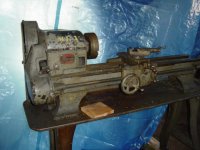
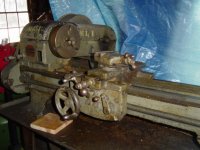
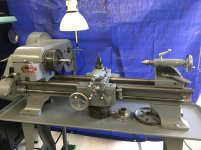
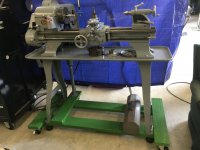

Some years ago before I retired, I used to occasionally attend local machine shop going-out-of-business auctions just to get a look at neat machine tools.
One summer, over lunch, I went to a tool and die shop auction about 1/2 mile from work. Auctions are fun as one never knows what might be there, or how much some lunatic might pay for a piece of junk!! Anyway, as is the way of life at auctions, some lots stir little or no interest, and a “no interest” item at this auction was an old Model 200 Logan lathe, 10 in. swing, 24 in. btc. It was ugly as sin … dirty, grungy, some rust … and the spindle bearings were rough, so, I figured it was probably a boat anchor. No tooling except the 3-jaw chuck. However, a quick visual inspection found minimal wear on the bed ways and lead screw.
I wasn’t really interested as I already had a lathe, but figured I’d bid once or twice “just for fun”… usually a dumb thing to do! Well, I took the lathe home with me for $125!
It’s been sitting in a storage shed in Ohio for about 10 years. This past fall I decided to drag it with me to Virginia and do a refurbishment as a winter project. As a general rule, I try to mount as many of my shop tools, cabinets, and benches on casters as possible. The base frame for this lathe was build using 2x6 lumber, steel casters, and hockey-puck levelers.
I think it turned out pretty good. It will be fun to get it aligned and try it on a few projects.
Amazing how these old workhorses can stick around all these years and still be useful