Apperatly you didn't read the replies about getting delivery and service trucks and trailers in to those locations, especially when you add snow. We have more than one member here that would flip out if you put a tire in their lawn.
People that work in a office building never run into why it can be a problem.
You can put in any door or approach you want. Just expect to pay more. You can pay me now or you can pay me later.
Why does it bother you that it can be a problem......
We have CDL exams that require a driver to back a trailer through a defined path, and, if I recal, around a corner to a simulated loading dock. I don’t remember the details, as I took the test a couple of decades ago.
If your delivery guy can’t do that, how did he get his CDL?
Nice try at deflection, by the way.
Maybe next time I build a house I should specify 6’ wide hallways and 4’ wide doors, along with an 8 lane driveway.
Don’t want to inconvenience the Amazon guy, you know.
If you really want to dig into things why not ask why the roads in Kentucky, Tennessee, and West Virginia are so narrow, twisty, and devoid of proper shoulders.
My driveway is better than most of them.
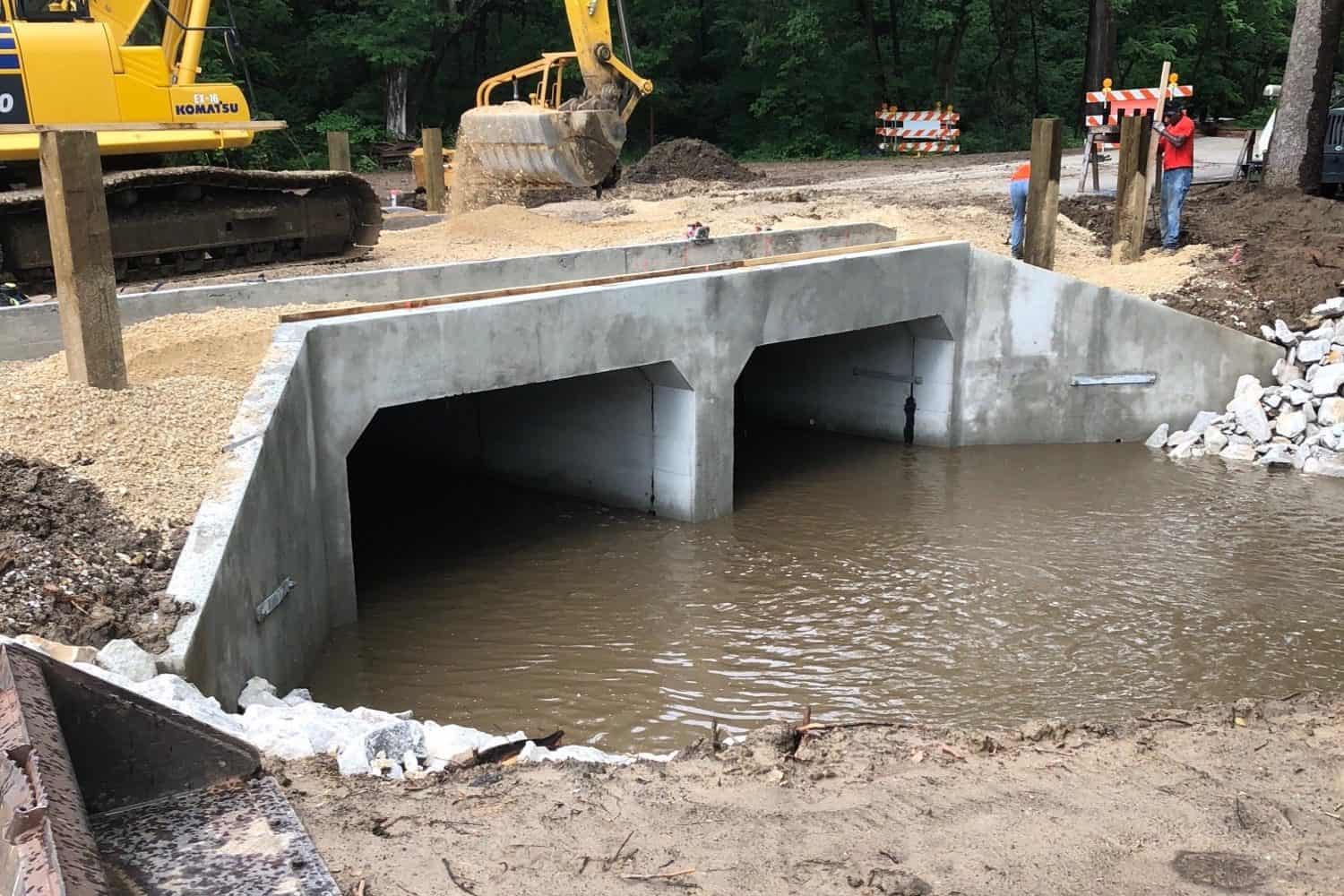
To the other posters that never heard of a culvert under a driveway: any area with regular precipitation of any extent will likely have some sort of drainage ditch alongside the public highways to control runoff. Here in Tucson, these ditches are rare because ti is so arid, so I don’t see many drainage ditches, just swales where runoff is allowed to cross the pavement and flow in more or less natural washes.
Driveways cross those man made ditches in wet climates that run parallel to the road, so a culvert is required to allow the water to flow, and not flood the road or the property above yours. Generally, a culvert is required for any “curb cut” where a driveway is installed to access your property.
In cities with storm drainage systems, all the runoff is handles underground, so you obviously wouldn’t need a culvert under your driveway.


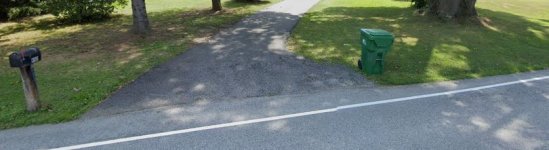

 They clipped half the trees, & dented their cars, but mostly they backed over the buried cable pedestal near the end of the drive...
 I had satellite at the time so I didn't care......