To avoid these ads, REGISTER NOW!

Why do Scotchlocks have such a bad reputation?

KenC

Well-known member
Joined
Dec 20, 2009
Messages
2,578
Most of the Insulation Displacement Connectors I'm familiar with go at the end of a cable, have a mechanical structure around the IDC engagement point, and are engineered as part of an overall system. Example include Ethernet connectors, computer and electronic ribbon cables, and telephony applications. They are commonly used with 24 ga and smaller wire and are used for signalling rather than carrying power.. These IDC connectors work well.

Common Scotchlok connectors used in automotive applications tend to be poorly matched to the wire they are used with, are used with 16 ga, 14 ga and even 12 ga wire, have little mechanical support other than the piece of steel cutting through the insulation, and have no moisture control. They are commonly expected to carry significant amounts of power. As previously noted, if the wrong connector is used they can damage the conductors in the wire. They are often poorly installed, making the situation even worse. And, of course, most of the "Scotchloks" in use are actually low cost/low quality clones, often poorly made.

There are enough differences between Scotchloks and engineered IDC systems for electronics that I don't feel they can be directly compared.
I'd bet the red above is the source of a majority of the issues. Wrong alloy used in the clones metal parts causing corrosion. Sizing is erratic/wrong causing conductor damage. etc etc. IDC tech is not all bad, in my previous life we used thousands of ribbon cable terminations for DB25 applications. Maybe 1 in 1000 had a problem, and that was due to user error. But, all were purchased from a reputable source.


d
 
To avoid these ads, REGISTER NOW!

Lassen Forge

Well-known member
Joined
Apr 26, 2014
Messages
15,127
Location
The romantic hills of central Umbria, Italy,
They corrode, cause wiring damage, and the connection (if you're lucky) only fails. The corrosion sets up resistance in the line being connected (and the connected to wire after a while) and then they get hot. Then they melt or catch fire.

I've seen them used to tap into vehicle electrics for trailer connections. Same problem, they admit water, corrode, get hot, melt or fail. When we had a car come in with an "electrical gremlin", especially lighting or accessory circuits, I'd scam for these little fuc... er... connectors. When you fixed the problem they caused, the gremlins 90% of the time would vanish.

It doesn't take a lot of time or effort (usually) to do the job right. These are Q&D timesavers for the untrained.And gods, I have no use for the damned things....
 
Last edited:
OP
J

JackOfDiamonds

Well-known member
Joined
Jul 31, 2020
Messages
706
Location
Idaho (USA)
I can appreciate that some of the problem might be overdriving the connectors past their ratings.

12V wiring in cars often pushes the wire ratings way past what's normal in other applications. It's pretty normal to have a 30A fuses on tiny little wires. Compare that with the fat 10ga wire you will see on something like a 30A clothes dryer circuit. I assume this is because the wire runs are short in a car, and the duty cycles are usually low, but it still means a lot of amps going through the connector if you are using the connector for a current-carrying application.

The Scotchlock connectors are only rated for usually 7 amps for an 18ga wire. In other words, it appears a Scotchlock is NOT rated to the maximum rating of a typical car circuit that uses that particular wire size. If you use a 7A scotchlock on a 20A circuit, then we can see the problem, and this could cause people to assume the problem is the connector, but they are just using the connector outside it's rating.

When I tapped into my ignition wire for my fog lights, the only electrical load on the scotchlock was the coil of a relay, and the only current running through the tapped wire was probably signal-level as well (but there's no way to know). But if I were tapping into a wire to run incandescent trailer lights or brakes, the load could easily go past the 7 amp rating. Same with pulling power for a radio or audio amplifier. Or if the wire I was tapping were the cigarette lighter plug, which could pull 30A sometimes, that could be a problem too even if my load were tiny.

Since you can't always tell the current running through the wire you are tapping, that's definitely problematic for automotive applications. On the other hand, crimp connectors are seemingly always rated to carry the full current rating of the wire, and probably beyond.
 

dscheidt

Well-known member
Joined
Apr 26, 2017
Messages
2,888
When I tapped into my ignition wire for my fog lights, the only electrical load on the scotchlock was the coil of a relay, and the only current running through the tapped wire was probably signal-level as well (but there's no way to know)

if you don't know how to figure out the load on a wire in vehicle harness, you have no business modifying it. And that pretty much describes every person who uses scotchlok or similar on automotive wiring....
 

Sumboodie

Well-known member
Joined
Mar 20, 2021
Messages
10,676
Location
AK
I've used thousands of these for long rows of strip lights where I just pulled the wires all the way through the fixtures with no joints. I know of no failures. I've had several that wouldn't go on properly out of the box, but after that, nothing.


When I was in high school I worked for Uhaul installing trailer hitches and wiring. Those blue pieces of **** they had had us using were an entirely different story and were junk the day they left the factory. The failure rate on those was probably around 25% but it has been 35 years ago so I may not remember everything correctly.
Wonder why...
"For industrial/occupational use only. Not for consumer sale or use."
 

CoogarXR

Well-known member
Joined
Jan 11, 2016
Messages
6,852
Location
Ohio
I personally don't use them. Mainly because I have found them to be the problem when diagnosing wiring issues.

One well-documented issue that comes to mind is on the somewhat-rare fox-body cougar convertible. The conversion company that made stock cougars into convertibles used scotchloks when tapping into the factory harness. They are always intermittent. Rear windows won't roll down? Go jiggle the harness. Now they work? Crusty Scotchloks.
 

cgrutt

Well-known member
Joined
Mar 4, 2016
Messages
8,221
Not sure if this has been mentioned or not but they just look unsightly / sloppy for no other reason. I installed automotive electronics for about eight years out of high school and while I was going to college. I worked for a very high end stereo shop (mostly dealt with German luxury and sports cars but handled everything else from pick up trucks to exotics) we took alot of pride in making sure everything looked as good behind the scenes as well as what was left visible to customers. We would never use Scotchloks. Never.

I can see them being used for commercial lighting as mentioned but have no place in an automobile or boat IMO. I've fixed alot of trailer wiring that had a ton of Scotchloks back in the day. I'm talking 1980s/90s. Just my opinion.
 

bobg03

Well-known member
Joined
Aug 29, 2020
Messages
3,420
Location
conway sc
They remind me of the days when aftermarket remote starters came into play, many were installed using the "**** and tape" process which was great until a few years down the road (usually involving a new owner) when the vehicle would develop electrical gremlins...

Ah the good old days where the pioneers that got skilled at diagnosing honed their future skills.
 

whateg01

Well-known member
Joined
Mar 13, 2006
Messages
11,227
Location
doo dah, kansas, usa
Then you should probably stay away from them even though anyone can buy as much as they want straight from Amazon. Do you really think that label means anything?
Of course it means something. Just like "any donations are for time and companionship between consenting adults only"!
 

Sumboodie

Well-known member
Joined
Mar 20, 2021
Messages
10,676
Location
AK
Then you should probably stay away from them even though anyone can buy as much as they want straight from Amazon. Do you really think that label means anything?
What's up your ****?

Just was wondering what about them would warrant that note.
 
To avoid these ads, REGISTER NOW!

Lorydr

Well-known member
Joined
Sep 10, 2015
Messages
658
Location
Piqua, oHIo
These I've used for years. Don't have to strip the wires. They have sealant to protect from the elements.

41M-2+IlKwL._AC_SY300_SX300_.jpg
 

tool_scrounge

Well-known member
Joined
Jul 20, 2010
Messages
4,180
Location
Southern California
They damage the wire you are tapping and cause corrosion problems. Having replaced about a million of them that were causing issues on stereo, alarm, and trailer wiring they should never be used. Look into these https://www.posi-products.com/index.html to do the same thing faster and better, without damaging wires or causing a place for corrosion to form.
Wow - that was a very timely post. I have a perfect application for them. McMaster Carr will deliver some tomorrow. Thanks
 

AA/FC

Well-known member
Joined
Dec 9, 2010
Messages
2,080
Scotchlocks are the root of all evil. All of the worlds problems can be traced back to failed Scotchlocks if you dig deep enough. lol.

On a serious note:
I know of a large truck up-fitter company that will fire anyone (guys who build trucks in their shop) if they are caught in possession of Scotchlocks.... even if they're just in their tool box..... Scotchlocks are NOT allowed on the property.

Scotch locks can barely last a month or two on commercial trucks, in winter months, on salty roads.

They MIGHT be fine in Tucson..... but I doubt it. lol. Even if the connector doesn't rot away from salt, eventually the connection will become loose and cause problems. In my experience, anyway...

Yes, I have personally had to rewire commercial truck bodies with rotten wiring, especially with rotten Scotch Locks. Up here in the northern salt belt everything eventually rots.... some things rot quicker than others..... Scotchlocks are always the first to rot away, if used.

A side story: Years ago I use to think there was ONE location where scothlocks would be okay to use..... When installing an electric trailer brake controller into a truck, you need to tap into the wire that is connected to the "cold side" of the brake light switch under the dash board. This is usually a tight confined area so anything to make this connection easier would be great.... and considering the inside of the vehicle shouldn't see much (if any) salt, this location SHOULD be fine for a Scotchlock. Not to mention, with no need to CUT the existing brake wire, the Scotchlock simply allows to tap into a wire with the squeeze of a pliers. Presto! Well, I've personally had Scotchloks fail in that application, too. Not from corrosion or rot, but from vibration and/or movement. The electrical connection simply becomes loose over time.

I would never tell anyone how to work on their own stuff.... To each their own. But if you're being paid by a customer to work on their vehicle, I would recommend using a different method to make electrical connections.

Just my $0.02
 
Last edited:

reader2580

Well-known member
Joined
Dec 31, 2014
Messages
14,516
Location
Minneapolis, MN
I bought a used trailer that ended up needing a complete overhaul. Most of the lights didn't work due to corroded Scotchlocks. I replaced all of the wiring and used heat shrink crimp connectors.
 

BrandonV

Well-known member
Joined
Jun 9, 2023
Messages
4,030
Location
Arizona
The issue comes down to several factors. First, "Scotchlok" is a broad term used to refer to a range of IDC products from 3M (some better than others). These days, it’s often used generically, much like the way people say Kleenex for tissue. Most of the "t-taps" I encounter aren’t even made by 3M, which means they could be lower quality right from the start (think AutoZone house brand). As others have mentioned, environmental factors, vibrations, installer habits, and errors all play a role in the effectiveness of these connections.

As someone whose job revolves around ensuring reliable connections, I’ve found that the majority of failures happen when splices are made under poor conditions - such as using the wrong or poorly calibrated tools, or not following instructions properly. Additionally, low-quality splices are a common cause of failure.

I agree however, t-taps should not be the go-to solution unless there's no better alternative for making a splice or connection.

These I've used for years. Don't have to strip the wires. They have sealant to protect from the elements.

41M-2+IlKwL._AC_SY300_SX300_.jpg

I have mixed feelings about B connectors. They were originally designed for splicing 24-gauge telephone wire at the telco, using a special pressing tool (which I still have plenty of). Over time, they became popular among low-voltage access control and alarm technicians for thicker gauge wire, even though the phone company stopped using them years ago due to their poor splicing performance (try measuring the resistance if you get a chance). I haven’t seen a proper crimping tool for these connectors since GMP stopped selling their clone of the original Bell System tool.

In my experience, most technicians don’t rely on the IDC functionality at all and simply use the B connector as a cover for manually twisted connections.

The replacement Scotchlok connectors (UR & UY) were also banned by the phone company for causing bad splices. These days, we mainly use TYCO Picabond connectors which have a good track record.
 

Wrench97

Well-known member
Joined
Jun 23, 2018
Messages
12,071
Location
Southeastern Pa
While I've had better luck with Posi taps
1731708304082.png
I did have them wreak havoc on the 1394 data bus from the dash cam installers and later the ELD installers seems certain model trucks had the taps installed exactly where the drivers spilt their coffee/tea/sodas and it ran behind the dash..........................
 

kbuhagiar

Well-known member
Joined
Dec 27, 2005
Messages
1,743
Location
Escondido, CA
I have mixed feelings about B connectors. They were originally designed for splicing 24-gauge telephone wire at the telco, using a special pressing tool (which I still have plenty of). Over time, they became popular among low-voltage access control and alarm technicians for thicker gauge wire, even though the phone company stopped using them years ago due to their poor splicing performance (try measuring the resistance if you get a chance). I haven’t seen a proper crimping tool for these connectors since GMP stopped selling their clone of the original Bell System tool.

In my experience, most technicians don’t rely on the IDC functionality at all and simply use the B connector as a cover for manually twisted connections.

The replacement Scotchlok connectors (UR & UY) were also banned by the phone company for causing bad splices. These days, we mainly use TYCO Picabond connectors which have a good track record.
Back when I worked for PacBell (1979 - 1984), the 'B' connectors ('beans') had already been outlawed, and you were suspended immediately if any were found on your truck/van or otherwise in your possession. The problem wasn't so much the connector itself, but their misuse (sound familiar?), as the techs were using needle-nose pliers to compress them, rather than the proper 'B' connector tool.
 

Miss the Pontiacs

Well-known member
Joined
Nov 7, 2016
Messages
16,442
Location
Saskatchewan Canada
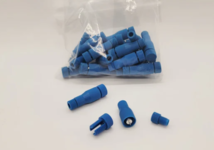
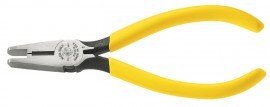
IMG_1636.jpegIMG_1855.jpegWhen this thread surfaced I didn’t realize that that connector was referred to as a Scotchlock. This is what I remembered being a Scotchlock and the item below along with the Klein plier used to give it that little squeeze.
 
Last edited:

BrandonV

Well-known member
Joined
Jun 9, 2023
Messages
4,030
Location
Arizona
Back when I worked for PacBell (1979 - 1984), the 'B' connectors ('beans') had already been outlawed, and you were suspended immediately if any were found on your truck/van or otherwise in your possession. The problem wasn't so much the connector itself, but their misuse (sound familiar?), as the techs were using needle-nose pliers to compress them, rather than the proper 'B' connector tool.

I believe it. Making things installer-proof is definitely a real challenge. I just retested in my garage using two 'B' connectors. One was stripped and twisted, while the other used the intended IDC-only method on genuine AT&T wire. Honestly, I got the same resistance reading for both. Granted I was using the proper Bell System tool with 24 gauge telecom wiring. I think at one point I tried using the ratcheting crimper from Dolphin and had inconsistencies. Regardless I hate them as these days I see them mostly for low voltage where you're dealing with all sorts of random insulation types and gauges and not just two standardized conductors.
 
Last edited:

Chukster

Well-known member
Joined
Jan 25, 2012
Messages
2,593
Location
Cary, NC
Tell that to all the corroded under dash wiring I have replaced because of them. I'm pretty sure something in them makes wire corrode, I've never seen any other type of connection cause 8-10" of wiring inside the insulation turn green and brittle under a dashboard. Plus they damage the wires 98% of the time. Apparently every single one I've seen in use was installed incorrectly, and I bet I have removed at least 10k of them. I used to fill a coffee can with them before tossing them out, no idea how many times I filled it but it was a lot.

I am not saying IDC connectors are all bad, just Scotchlock. I use IDC style connectors all day on ribbon cables in industrial test equipment, no issue.

Here's an IDC product for your car that actually works and doesn't cause corrosion, I used thousands of them on Harley Davidsons over 10 years without any issue. Don't even need tools to install it. https://www.posi-products.com/posiplug.html
OK, I'll defer to your long experiences.

But I'll stand by my comment about people using products badly and then calling the product bad. (kinda like bagpipes vs. trumpets. Some beginner can play a trumpet badly, and most will bear with a few bad notes, etc & call it learning curve. Bagpipes are an instrument that if a beginner plays badly, the whole instrument family is pronounced bad. And yes, as a matter of fact I did take bagipe/chanter lessons.)
 

whateg01

Well-known member
Joined
Mar 13, 2006
Messages
11,227
Location
doo dah, kansas, usa
OK, I'll defer to your long experiences.

But I'll stand by my comment about people using products badly and then calling the product bad. (kinda like bagpipes vs. trumpets. Some beginner can play a trumpet badly, and most will bear with a few bad notes, etc & call it learning curve. Bagpipes are an instrument that if a beginner plays badly, the whole instrument family is pronounced bad. And yes, as a matter of fact I did take bagipe/chanter lessons.)
If a product is designed to be used to John q public but isn't designed to deal with the skill set of John q public, then yes, it's a badly designed product.
 
To avoid these ads, REGISTER NOW!
Top Bottom