To avoid these ads, REGISTER NOW!

Why is this?

Teken

Well-known member
Joined
Jan 2, 2010
Messages
8,214
Location
The Bad Lands
Can someone give me a little insight as to why certain appliences have a ground point at the end of the plug, while others do not?

Some examples of which are in my home:

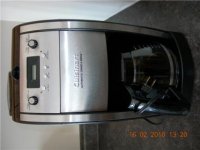
- Water kettle = Has a three prong out let.

- Coffee maker = No ground prong.

- Forman grill = Has a three prong out let.

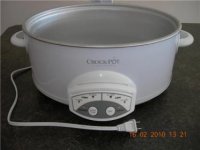
- Crock pot = No ground prong.

- Blender = No ground prong.

- Microwave = One has a ground, the second doesn't

- Hand blender wisk = No ground prong.

The list goes on and on . . . In my mind everything should be properly grounded regardless of the application or eletrical device.

As you can see by my example some of these devices hold water / liquids and one would think it would require a ground just in case? :headscrat

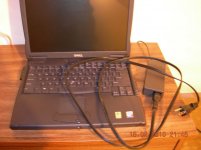
Your thoughts and insight as to why this may be the case for some items and not for others is greatly appreciated. Below I have included a few photo's to illustrate the products in question.

Regards

EVIL Teken . . . :willy_nil :bigun2:
 

Attachments

  • 1.jpg
    1.jpg
    14.5 KB · Views: 11
  • 2.jpg
    2.jpg
    12.6 KB · Views: 9
  • 3.jpg
    3.jpg
    13.8 KB · Views: 9
  • 4.jpg
    4.jpg
    15.3 KB · Views: 9
  • 5.jpg
    5.jpg
    145.7 KB · Views: 9
To avoid these ads, REGISTER NOW!

Mickey O

Well-known member
Joined
Oct 25, 2009
Messages
6,153
Location
Chicago, IL
I think the ground prong was added to piss people off with receptacles without a ground and for the manufacturers of 3 prong receptacles to make money. You really only need the ground prong on metal cased appliances/tools etc (except toasters).
 
OP
T

Teken

Well-known member
Joined
Jan 2, 2010
Messages
8,214
Location
The Bad Lands
almost all newer appliances and tools are double insulated so they removed the grounding prong

Correct me if I am wrong, this only insulates the user from the potential of electrocution?:headscrat If the said device has a ground prong, would it not serve as a more secure method (in case) the device / products body frame became uninsulated? :headscrat
 

Mickey O

Well-known member
Joined
Oct 25, 2009
Messages
6,153
Location
Chicago, IL
Correct me if I am wrong, this only insulates the user from the potential of electrocution?:headscrat If the said device has a ground prong, would it not serve as a more secure method (in case) the device / products body frame became uninsulated? :headscrat

If it's covered in plastic it doesn't matter, if the case was rubber coated and the rubber wore out and exposed metal, and the neutral wire opened (broke or disconnected), and the hot was somehow in contact with the exposed metal, and the device was on you could get shocked or electrocuted, a very rare occurrence, does seem to happen with garage door tracks somehow every now and again.
 

Mickey O

Well-known member
Joined
Oct 25, 2009
Messages
6,153
Location
Chicago, IL
Could you elaborate on this point a little further?

I remember reading about a few cases of this happening, I don't remember the specifics though, a google search might yield some results. I think in one of the case it was reverse polarity.
 

BioHazard

Banned
Joined
Feb 3, 2010
Messages
743
I think it also has to do with being CE and/or UL listed
Bingo. THEY decide what kind of plug it should have, not the manufacturer.

Kind of like how a 10 gauge extension cord with a normal plug end is rated (by UL) at 15 amps MAX. But, if that same cord has RV or welder plugs on the end, it's good for 30 amps. Makes a lot of sense right?
 
OP
T

Teken

Well-known member
Joined
Jan 2, 2010
Messages
8,214
Location
The Bad Lands
But, am I not correct in my thinking that having a ground plane is simply safer and better at the end of the day? :headscrat

Here are a few more examples with no rhyme or reason. Something that doesn't contain water, or require a high current load, all plastic from head to toe. :shocking::shocking:
 

Attachments

  • DSCN5274.jpg
    DSCN5274.jpg
    79.1 KB · Views: 12
  • DSCN5273.jpg
    DSCN5273.jpg
    88.2 KB · Views: 13
  • DSCN5272.jpg
    DSCN5272.jpg
    127.5 KB · Views: 12

BioHazard

Banned
Joined
Feb 3, 2010
Messages
743
Yes it does, a 10 with a 15A plug may be used where heavily loaded to reduce voltage drop.

That is NOT the point. "They" say it is UNSAFE to draw more than 15 amps from a 10 gauge cord *IF* it has the 15 amp plug end. There is no actual reason why, besides the fact that the plug end says so. If the neutral pin was turned sideways, all the sudden it's safe for 20 amps. What a miracle...

Additionally, if you're so heavily loaded that you need a 10 gauge cord, you shouldn't be plugging into a 15 amp outlet...(likely fed with 14ga wire)
 
Last edited:

Mickey O

Well-known member
Joined
Oct 25, 2009
Messages
6,153
Location
Chicago, IL
But, am I not correct in my thinking that having a ground plane is simply safer and better at the end of the day? :headscrat

Here are a few more examples with no rhyme or reason. Something that doesn't contain water, or require a high current load, all plastic from head to toe. :shocking::shocking:

No, in some case there is simply no purpose for the ground and it would only add extra cost to the item, in other case such as a metal cased toaster or a resistive heater a ground wire could end up actually causing a shock or electrocution. And with regards to no rhyme nor reason there usually is a reason, with electronics there is potential between the hot and the ground.
 

Torque1st

MEMBER EMERITUS
Joined
Sep 14, 2008
Messages
5,668
Location
KC Metro, Kansas
I have designed a few products for UL, VDE, IEC, and CSA listing. There are specific clearances and type/thicknesses of insulation specified in all of those standards. That said, I have seen numerous products that "meet" one of those standards that are totally unsafe, usually UL listed. I feel the Canadian, German, and European standards are much better. UL may have improved, I have not been using those standards for many years.

It is usually cheaper for the manufacturer to make a product without a grounded plug. Some products need a ground because they are not double insulated or they need the ground for Electro Static Discharge protection or RFI emissions per the FCC.

Double Insulation:

Double insulated or class 2 electrical appliances are products that have been designed in a way so as not to require a safety connection to electrical earth.

These products are required to prevent any failure from resulting in dangerous voltage levels becoming exposed causing a shock etc. This must be done without the aid of an earthed metal casing. Ways of achieving this include double layers of insulating material or reinforced insulation protecting any live parts of the product.

There are also strict requirements relating to the maximum insulation resistance and leakage to any functional earth or signal connections of such appliances. Products of this type are required to be labelled "Class II" (Europe), "double insulated" (USA) or bear the double insulation symbol which is a square inside of a square.
 
OP
T

Teken

Well-known member
Joined
Jan 2, 2010
Messages
8,214
Location
The Bad Lands
The only device we have to prevent this is a G.F.C.I, which constantly reads for a difference between the hot and neutral and trips if its present. I would encourage any members here (that are qualified or confident enough to do it safely) to install them in your bathrooms and kitchens.

100% agree, but one would think something with water in it should be grounded! I can't see why my fan would require a ground, and the next fan across the basement does not . . . As I indicated all the devices are UL, CE, CSA, approved and all are made in the last 5 years.

- Perhaps as some mentioned a ground is required or installed to reduce the amount of EMI, RFI, etc. This I agree and have seen in many things I work on in my trade.

- Perhaps the design was not sufficient enough (casing) and a ground prong was the cheaper method to meet codes.

- Perhaps the vendor does this on all their products to ensure a extra measure of safety ( with ground prong ) others do not as some have mentioned to save costs.

I don't know to be honest and find it just plain odd, and confusion . . .
 
To avoid these ads, REGISTER NOW!

Torque1st

MEMBER EMERITUS
Joined
Sep 14, 2008
Messages
5,668
Location
KC Metro, Kansas
You are worrying too much! Just buy good products and enjoy using them. Let the product designers and standards organizations worry about the details. Just remember the GFI and don't cut off or defeat the ground plug.
 

BioHazard

Banned
Joined
Feb 3, 2010
Messages
743
Part of it could simply be that the MFG has a good supply of grounded cords and it's cheaper to just use them than do a 2 prong. I have opened things up before with a factory ground prong that wasn't actually wired to anything.

Also, having the extra pin can help a cord stay stuck in the wall more firmly, that may be a consideration with some MFGs.
 
OP
T

Teken

Well-known member
Joined
Jan 2, 2010
Messages
8,214
Location
The Bad Lands
Too funny, I actually checked one of the devices and you're dead on. The actual grounded plug is not attached to anything its simply snipped. Makes you wonder if things really are as they appear . . .

Makes you go Hmmmmmmmmmmmmm :headscrat:fingersx::monkey_po
 

sberry

Banned
Joined
Jun 18, 2005
Messages
35,747
Location
Brethren, Michigan
That is NOT the point. "They" say it is UNSAFE to draw more than 15 amps from a 10 gage cord *IF* it has the 15 amp plug end. There is no actual reason why, besides the fact that the plug end says so. If the neutral pin was turned sideways, all the sudden it's safe for 20 amps. What a miracle...

Additionally, if you're so heavily loaded that you need a 10 gauge cord, you shouldn't be plugging into a 15 amp outlet...(likely fed with 14ga wire)
Who is they that says its unsafe?
There is no actual reason why, besides the fact that the plug end says so. If the neutral pin was turned sideways, all the sudden it's safe for 20 amps. What a miracle...
I will agree with this but the plug is the reason. Most 15A recepts are on 20A circuits anyway. Using 20A plugs isn't to protect the cord, its to protect the tool from being underpowered, the user of a common circuit doesn't know if its wired 15 or 20 or if it had shared loads on it.
 

sberry

Banned
Joined
Jun 18, 2005
Messages
35,747
Location
Brethren, Michigan
There are lots of uses for heavy cord with a common end on it. The end type isn't about protecting the cord. Its about keeping a tool that requires a specific supply from being plugged in to a general outlet. In some cases with dedicated circuits the 10 may be suitable with 50A ends.
 

sberry

Banned
Joined
Jun 18, 2005
Messages
35,747
Location
Brethren, Michigan
You might be right and I might be wrong but show me where its written. This is a good discussion and its how people learn, myself included. At some point it will click. It can be easy to jump to a conclusion, takes time to understand.
 

jmauld

Well-known member
Joined
Feb 13, 2005
Messages
672
Location
NC
Double Insulation:

Double insulated or class 2 electrical appliances are products that have been designed in a way so as not to require a safety connection to electrical earth.

You should be careful not to confuse Class 2 and Class II. They are two different animals. Unfortunately, they are also confusing since they are so similar.
 
Last edited:

jmauld

Well-known member
Joined
Feb 13, 2005
Messages
672
Location
NC
That is NOT the point. "They" say it is UNSAFE to draw more than 15 amps from a 10 gauge cord *IF* it has the 15 amp plug end. There is no actual reason why, besides the fact that the plug end says so. If the neutral pin was turned sideways, all the sudden it's safe for 20 amps. What a miracle...

Additionally, if you're so heavily loaded that you need a 10 gauge cord, you shouldn't be plugging into a 15 amp outlet...(likely fed with 14ga wire)

It's potentially unsafe due to the fact that it could be plugged into a 15 A circuit. The rating is there to protect the house circuit from being overloaded. Plus the plug itself is probably only rated for 15A, so it is also a limiting factor.
 
Last edited:

BioHazard

Banned
Joined
Feb 3, 2010
Messages
743
It's potentially unsafe due to the fact that it could be plugged into a 15 A circuit. The rating is there to protect the house circuit from being overloaded.
I'll give you that, but, that's what circuit breakers are for. :) I just think it's ridiculous that a 25' 10ga extension cord comes with a UL sticker claiming "15 amps max". It doesn't say "or 20 if plugged into the right circuit". They shouldn't sell 10ga extension cords with 5-15 ends on them, it's just silly...

Plus the plug itself is probably only rated for 15A, so it is also a limiting factor.
I don't think that's the case, there is no difference between a NEMA 5-15 and 5-20 except for the sideways neutral blade. The hot/ground is the same. Although yeah, the 30A plugs are bigger.

I know they're made with different plugs so people only plug them into certain outlets, but that's my whole point in this - the reason any appliance has a particular type of plug is because UL is trying to idiot proof it. I don't like it when the MFGs/regulatory authorities automatically assume I'm an idiot just because everybody else is...:lol_hitti
 
Last edited:

sberry

Banned
Joined
Jun 18, 2005
Messages
35,747
Location
Brethren, Michigan
It isn't going to hurt anything or make it unsafe to put a larger conductor on 15A ends. It can help tool performance especially at long distances or for hi current motor starts.
 

rwhite692

Well-known member
Joined
Mar 4, 2008
Messages
1,850
Location
Central Valley, CA
If its double insulated, it simply isn't necessary. Fact is, lots of things are all plastic nowdays, with no real metal chassis to ground.

Charles

Charles has it right. If there is no metal chassis in the appliance to connect to ground, then a ground wire is not necessary since it serves no purpose whatsoever.

Note that a manufacturer of higher-amperage small appliances may choose to use a 3-prong cord with ground, however, simply because these cord assembly configurations are often simply easier for the manufacturer to source from their suppliers, in the needed heavier guage wire configurations.
 

Mickey O

Well-known member
Joined
Oct 25, 2009
Messages
6,153
Location
Chicago, IL
Charles has it right. If there is no metal chassis in the appliance to connect to ground, then a ground wire is not necessary since it serves no purpose whatsoever.

Note that a manufacturer of higher-amperage small appliances may choose to use a 3-prong cord with ground, however, simply because these cord assembly configurations are often simply easier for the manufacturer to source from their suppliers, in the needed heavier guage wire configurations.

Show me a toaster with a three prong outlet.
 
OP
T

Teken

Well-known member
Joined
Jan 2, 2010
Messages
8,214
Location
The Bad Lands
:headscrat
 

Attachments

  • GE-4slice-toaster[1].jpg
    GE-4slice-toaster[1].jpg
    45.3 KB · Views: 12
  • cceto103a_1_1[1].jpg
    cceto103a_1_1[1].jpg
    8.4 KB · Views: 11
  • tfm2_ejec6[1].jpg
    tfm2_ejec6[1].jpg
    49.4 KB · Views: 7
Last edited:

Mickey O

Well-known member
Joined
Oct 25, 2009
Messages
6,153
Location
Chicago, IL
I would appreciate it, if you could explain that to me . . . :headscrat

I don't know, I didn't think anyone would ask.


Kiddin', okay I'll try an give you a possible situation. First we'll cover the basics. With a ground you'll have 3 wires a black (could be red, purple, yellow, etc, just not white or grey) that's the hot, a white (possibly grey) that's the neutral and a green that's the ground. Between the black and white wire you'll get 120 volts, between the black and green you'll get 120 volts, between the white and green you should get 0 volts unless the polarity is reversed, for this lets assume the polarity is correct.

Excuse the following run on sentence, I'm too lazy to break it up.

The wire inside the toaster is resistive and has full line voltage going into it, that's how it toasts. Lets say you put a piece of bread in the toaster and it gets stuck as sometimes happens, your toast is burning, rather than unplug it you pick up the toaster by the plastic handles and shake it around, no luck but while shaking it around the neutral opens (breaks or becomes disconnected) and the resistive wire starts to cool off, it's no longer glowing bright orange, cool, it's safe to stick a butter knife in there and pull out your toast, you have one hand on the metal part of the toaster and the other on the metal butter knife, you stick it in the opening to pry out your toast out and come in to contact with the resistive wire that still has power going to it (it never turned off automatically because the circuit opened), you have just completed the circuit and are now being shocked maybe even electrocuted.

I could think of dozens of possible situations, especially with kids playing around. I have got to think that those toasters with the ground must have the metal exterior isolated.
 

jmauld

Well-known member
Joined
Feb 13, 2005
Messages
672
Location
NC
I'll give you that, but, that's what circuit breakers are for. :) I just think it's ridiculous that a 25' 10ga extension cord comes with a UL sticker claiming "15 amps max". It doesn't say "or 20 if plugged into the right circuit". They shouldn't sell 10ga extension cords with 5-15 ends on them, it's just silly...
No, a product should never rely on the circuit breaker to provide protection for it. It needs to provide it's own safety. I was talking about the plug on the end of the cord when I was talking about the plug not being rated for more than 15A.

I don't think that's the case, there is no difference between a NEMA 5-15 and 5-20 except for the sideways neutral blade. The hot/ground is the same. Although yeah, the 30A plugs are bigger.

I know they're made with different plugs so people only plug them into certain outlets, but that's my whole point in this - the reason any appliance has a particular type of plug is because UL is trying to idiot proof it. I don't like it when the MFGs/regulatory authorities automatically assume I'm an idiot just because everybody else is...:lol_hitti
Not UL, I believe NFPA 70 dictates the plugs. That is written by a different organization than UL.
 
Last edited:
OP
T

Teken

Well-known member
Joined
Jan 2, 2010
Messages
8,214
Location
The Bad Lands
I appreciate everyone taking the time to chime in on the topic at hand. The more I learn, the more I come to realize I know less, and less . . . :lol_hitti
 

jmauld

Well-known member
Joined
Feb 13, 2005
Messages
672
Location
NC
I appreciate everyone taking the time to chime in on the topic at hand. The more I learn, the more I come to realize I know less, and less . . . :lol_hitti

I think it's a good discussion, if for nothing more than to raise people's awareness of electrical safety, which most of us on this site should be aware of.

If you really want to get an idea of how complicated this subject is and how much you* don't know, borrow a copy of the National Electrical Code Handbook. I think it does a good job of explaining some of the requirements in the NEC. 1400 pages worth. :bowdown:

* by you, I really mean me. :)
 
To avoid these ads, REGISTER NOW!
Top Bottom