junkyardwarrior, the unit works pretty good. I've only had it about a month, but here's my review:
Pros:
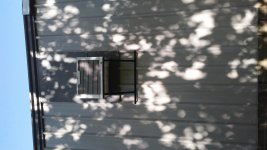
Relatively easy install. I really took my time and did a lot of extra steps to ensure water tightness, but it turned out great. It's probably rained 20 of the last 30 days and not a drip inside the building. The unit is really heavy, about 160 lbs, and me and my brother struggled to lift it into the chassis above our heads. Just something to keep in mind.
For my red iron building with paper thin insulation, it's probably undersized. When I first installed it the temperature wasn't very high yet, maybe in the 80s at the peak of the day, and the building would pretty easily hold in the mid or high 70's (I never tried lower). The compressor would cycle periodically (I never timed it or paid close attention), but it seemed like very normal operation. Humidity was controlled good at daytime and got slightly high at nighttime due to the unit not running often at night.
Now that it is ridiculously hot, in the 90s and approaching 100 (July and August are brutal here), the unit will not maintain 70's while the sun is beating down on the building. Again, I've not payed real close attention to it, but I believe for the middle part of the day, when the sun is beating down on the building, the compressor is on basically all day and it will hold 80's. The humidity, of course, is under great control since it runs so much. It feels pretty comfortable.
Cons:
I did not realize the unit didn't have a programmable thermostat. So I either have to set it and forget it (and forget a low power bill), or constantly try to go down there a couple times a day to adjust it. I am on time of use billing, so between 3-6pm in the summertime I pay a lot more for electricity, I really wish I could shut the unit off at these hours. And wish I could lower the temp set point at night for more humidity control at night without it running non stop during the day.
I think that's the only con that I can think of right now...lol
With your well insulated building, I think the unit would work well. If you had an attic space that was insulated and vented it would probably work REALLY well. It all depends what you want. If you want a perfect 74 deg all the time this may not be for you. I installed this unit primarily for humidity control, as I used to go out to my shop and it would literally be wet inside. I wanted to save my tools/equipment. A bonus is a great improvement in comfort. I worked in my shop last July one day with 3' fans blowing on me, and it was in the 90's outside. The temp in the shop was about 110 and the humidity was 90+ %. Talk about uncomfortable. After working on the Jeep all day you'd thought I had just come out of a swimming pool. Now, I just spent the last 2 days working on cars in the shop and while the temp was in the 80s in there, the humidity was about 40-50%, and it was extremely comfortable. Yeah I broke a sweat, but I never felt "hot".
I spoke about my power bill above, this is going to vary, of course. I'm extremely lucky and have a ridiculously low power bill. If this wasn't the case, I may have been more concerned about the unit running all the time. Basically, I was expecting the performance I am getting. I figured from June through September the unit would run all day. You'd probably call me a liar if I told you what I pay a month for a 2,400 sf house that is all electric, plus I power my shop equipment on weekends and evenings, etc. My house is really well built, well insulated, the attic is well ventilated, etc. The guy who built it put a lot of effort into making it cost effective to live here. I didn't actually look back at my last June power bill, but I think this year it was maybe $10-20 higher. I'll try to remember to go back and compare. I've had the AC in the shop set at 77 since I installed it.
I don't really heat my shop. I can deal with cold by layering up, and it doesn't really get very cold here, and not for too long. Last winter I did use a tubular propane heater thingy for about 30 minutes in the late morning just to warm it up a little bit. Then during the day it stayed bearable. You can't use this type of heat too long due to the burning propane. The AC I bought also has heat strips, which I haven't even tried (probably oughta make sure they work........). It is not much heat, I think like 10,000btu or so. I don't really intend on using it, I just figured if I'm going through the effort of the install I might as well get the unit with heat for another $100. I'll probably use it a little bit on extremely cold days, or if I plan to use the weekend for working in the shop. Take the edge off in the morning and it should then stay bearable all day. I'm sure the heat strips will drive the electric bill up fast.
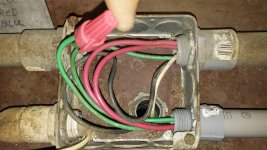
If I were to do it again, I don't think I'd do anything different other than the programmable thermostat. I'd maybe try to find a slightly bigger unit, 24,000 or 25,000 btu but it probably wouldn't make hardly any difference. My issue is poor insulation and heat soaking the building. It is what it is, there's no easy or cheap way for me to change that so this was the best option for me. I have good humidity control, bearable temps, and so far not a big change in power bill. FYI, I spent $700 on the unit and probably another $100 in parts (sheet metal, peel and stick flashing, metal flashing, hardware, lumber, caulking/sealant, 220v outlet/box/wiring, etc). I don't know what a central unit would cost but I'd imagine $2000 minimum even on the cheap.
I also foamed the upper corners of the shop, where there were gaps. You could see daylight through them. I think this helped slightly, of course, sealing up the building a little better. I then bought an insanely expensive brush seal for the top of the roll up door to close the ~3" gap, and I haven't noticed any difference but I'm sure it helped ever so slightly. They sure are proud of that brush seal lol, I think it was $150 for 12ft. I'm not happy with my install of the brush seal, too much pressure on the door, it's difficult to roll up. I need to redo that and try to close the gaps at the top corners of the door better, where the jamb brush seal meets the header brush seal. I already had jamb brush seals that I installed prior due to water running down the door track and into the shop.
I hope this helps. Any further questions shoot me an email (I don't get on here often). my username at gmail