To avoid these ads, REGISTER NOW!

wire splicing - car stereos, control circuits, etc. Which method do you use?

HoosierBuddy

Well-known member
Joined
May 9, 2006
Messages
2,932
Location
Southern Indiana
Hey guys,

I was swapping out the aftermarket stereo in one of my old cars last night. Luckily I still had the old manual that had the wiring color codes for the old Sony and (surprisingly) the new JVC's color codes are exactly the same, so it was as simple as snipping off the connector on the old stereo and splicing in 11 wires to the new main connector.

Of course you're dealing with wires in the car, under the dash...so not a lot of room.

I've always just stripped back 1/2" insulation on each wire, split the strands down the middle on the two wires to be connected and push them together and then twist the strands, then use a soldering pencil and low-temp solder and then slide a heat shrink tube over the joint and heat that up with a lighter.

It's just really slow to do it that way. I'm wondering if there's a better way and if so what you guys would do in the same situation?

Phil
 
To avoid these ads, REGISTER NOW!

DetachedGarage

Well-known member
Joined
May 2, 2019
Messages
254
Location
Wisconsin
I installed stereos all the way through high school. We used your same method, but instead of soldering we used crimp caps. Much faster than soldering and never had one fail.

100-pcs-Cable-End-100pcs-Closed-End-Crimp-Caps-Electrical-Wire-Terminals-Connectors-Cap-For-AWG.jpg
 

vavet

Well-known member
Joined
Mar 6, 2012
Messages
5,330
Location
Ashland, VA
I like the lineman's splice. It's not always easy to do if you don't have plenty of length or room to work, but that's my go to.
 

slow

Well-known member
Joined
Feb 26, 2006
Messages
2,596
Location
near Orlando
buy a matching connector, so you just plug into the factory harness then you can do all of your work on the bench, with maybe 1 extra "remote" wire that connects to your harness. I always used to use solder. now I may use a uninsulated crimp connector and heat shrink after buying a good production crimp tool. I always use heat shrink vs tape.
 

mc4life27

Well-known member
Joined
Jul 2, 2014
Messages
404
Use either solder and heat shrink with aftermarket harness then it becomes plug and play. Or use 3m seamless **** connectors. Crip caps maybe fast but cause the harness to catch in the dash and sometimes the come off if not crimped correctly. I use to manage a stereo shop and was east coast sales account manger for Scosche ind witch they make the aftermarket wire harnesses so I have just a little first hand knowledge


Sent from my iPhone using The Garage Journal mobile app
 

QwikKotaTx

Well-known member
Joined
Aug 10, 2013
Messages
967
Location
Seabrook, TX
I only use the crimps when I can't solder or if it's temporary. I recently used them on a speaker install connecting stranded wire to solid wire so I could push the connection into the factory harness instead of splicing the OEM wiring. Felt very half-****. Wife says the high notes hurt her ears so I'm glad I didn't spend too much time on the install. May throw the speakers in my truck.

Sent from my SM-G900V using Tapatalk
 

Bretny

Well-known member
Joined
Jul 31, 2017
Messages
3,918
Location
Dutchess county NY
Soldering is a waste of time once you find heat shrink crump connectors. I wouldnt bother with the heat shrink ones behind the dash.
 

6PTsocket

Well-known member
Joined
Mar 12, 2014
Messages
4,593
Splitting the wire strands in 2 and twisting is similar to what I saw in the front of a Mopar service manual. The difference was they loossened all the strands and meshed the two wire ends together and twisted. It was only slightly thicker than the wire. Then solder and shrink. I play it by ear and use solder, **** splices and fast on's as needed. I avoid electrical tape and only use the self fusing silicon stuff where it is dry and clean.

Sent from my SM-G900V using Tapatalk
 

SGKent

Banned
Joined
Feb 12, 2010
Messages
1,959
Location
Citrus Heights CA
I installed stereos all the way through high school. We used your same method, but instead of soldering we used crimp caps. Much faster than soldering and never had one fail.

100-pcs-Cable-End-100pcs-Closed-End-Crimp-Caps-Electrical-Wire-Terminals-Connectors-Cap-For-AWG.jpg


^^^^ this is the easiest method. Soldering is fine if you will have a plug that remains in the car when you pull the stereo. Be aware that even the good electrical tapes often unwind under hot dashes, and what doesn't unwind vulcanizes making it hard to remove tape. Soldering often leaves small barbs/thorns that one must protect against with thicker tape or heat shrink and tape because the barbs/thorns can come thru thinner heat shrink or tape.
 

Black300zx

Well-known member
Joined
Apr 8, 2019
Messages
782
Location
Elkton, Md
I always have been partial to crimp-caps as well. With as cramped as the cavities behind the radios can be, crimp-caps lend themselves well to neatly and compactly bundling the wires together to ease installation & removal. As long as you have a good set of crimpers (not the combo stipper/crimpers which have the dies between the handles), a crimp joint can be very reliable, especially in dry/protected areas.

Solder/heatshrink and self-sealing solder ****-splices are great options as well, but I always found them more difficult to neatly bundle up behind a dash where typically you need to flex the harness significantly.
 

FakeNewsRealHP

Well-known member
Joined
Oct 27, 2018
Messages
83
Location
Midwest
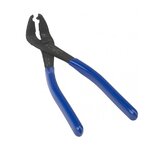
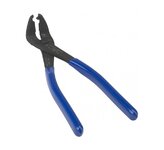
For car stereos I use crimp caps and OTC angled crimp tool. Let’s you get in there nicely with short wires and single din openings!36f57db1ef9643c5d25292d4d33874ac.jpg
 

Attachments

  • 36f57db1ef9643c5d25292d4d33874ac.jpg
    36f57db1ef9643c5d25292d4d33874ac.jpg
    50.4 KB · Views: 0
To avoid these ads, REGISTER NOW!

bushmechanic

Well-known member
Joined
Mar 17, 2014
Messages
4,820
I simply build the harness with Weatherpack or Deutch connectors if a drop-in conversion isn't available. Sometimes I just use a supplementary harness, and drop the factory wiring down to retain it elsewhere for future use.

Obviously, that receiver always gets power and ground straight to the battery.

It's a good idea to make sure the factory stuff can still be installed later if required on most cars. One of mine is built for overland use, so everything behind the dash is cleaned up and waterproof. I pulled a while trash bag of wires out of that thing.

That's the exception, though. Everything else retains as much factory wiring as possible, even if I don't use it.
 

MFolks

Well-known member
Joined
Feb 3, 2013
Messages
1,045
Location
Springfield Mo.
In the F-4 Phanton II aircraft(at least for the USAF),the relay boxes had similar crimps,but covered under a heat shrink type cap,wires paralleled,non insulated crimps,then shrunk down tight.
 

Leaflessshadetree

Well-known member
Joined
Aug 1, 2013
Messages
7,175
Location
Don't ask.
When possible I buy or make an adapter harness. If I have to make splices I either use a crimp sleeve or make a lash splice (wrapping the wires with a strand of thinner wire) then solder and cover with adhesive lined shrink tube.

images
 

alien

Well-known member
Joined
Nov 18, 2015
Messages
379
buy a matching connector, so you just plug into the factory harness then you can do all of your work on the bench, with maybe 1 extra "remote" wire that connects to your harness. I always used to use solder. now I may use a uninsulated crimp connector and heat shrink after buying a good production crimp tool. I always use heat shrink vs tape.

This is how I have been doing it for years. Never had an issue in 40 years doing it this way on cars, motorcycles, industrial electrical connections (where legal).
 
Last edited:

mfewtrail

Well-known member
Joined
Apr 14, 2011
Messages
675
Another option that might be useful for some are posi-lock connectors. I use those sometimes on temporary installs.
 

seanc_mt

Well-known member
Joined
Jul 20, 2015
Messages
285
Solder is never used in factory cars, airplanes, equipment etc.... ever. Crimp connections when done right are far superior. But like everything a crappy crimp ***** and a crappy solder job *****. That said.....

Uninsulated crimp connections and heat shrink will out last the wire it's connected to.
 

Stuart in MN

Well-known member
Joined
Sep 8, 2005
Messages
23,159
Location
Minneapolis
Whenever this question is asked it turns into a big debate between soldering and crimping. I think the best method is a crimp but it all depends on the type of crimp connector used, the crimping tool, and the expertise of the installer. The same thing with soldering - it can also make a good long lasting joint, but only if the person doing the work knows what they're doing.
 

aeopav

Active member
Joined
Jun 14, 2010
Messages
33
Location
N. Central TX (DFW)
Solder is never used in factory cars, airplanes, equipment etc.... ever. Crimp connections when done right are far superior. But like everything a crappy crimp ***** and a crappy solder job *****. That said.....

Uninsulated crimp connections and heat shrink will out last the wire it's connected to.


Not true. I've worked in aviation for over 30 years and have been an avionics tech for most of it. I've seen plenty of soldered connectors. Installed numerous ones myself on modifications for GPWS/GPS on 727's as an example.
 

theoldwizard1

Well-known member
Joined
Feb 22, 2011
Messages
43,246
Location
SE MI
I have been retired a few years now, but I doubt that this has changed.

Up into the 2000s ALL automotive wire harness harnesses that used 18-12 (?) gauge stranded wire, where only 2-4 wires were joined simply twisted the wires together ! IIRC, only 1.5 to 2 wraps were required. The joint was then wrapped in "friction" tape, again 1.5 to 2 wraps. Usually these joints were buried in a loom containing more wires and then wrapped in "harness tape" and/or convolute tubing.

I know when more than 3 or 4 wires were joined, they would crimp a ring on the twisted wires. Still covered with "friction" tape.

Since I started in the business about 40 years ago, wire gauges and insulation thicknesses have gotten smaller and smaller. I am guessing less splicing is done and more "end to end" runs are used.

I just did a trailer wiring harness this way (simply twisting bare wires) but I did use "marine" (dual wall) heat shrink.
 

theoldwizard1

Well-known member
Joined
Feb 22, 2011
Messages
43,246
Location
SE MI
now I may use a uninsulated crimp connector and heat shrink after buying a good production crimp tool. I always use heat shrink vs tape.

I always use Solistrand brand crimps (now sold by TE, but the design goes back to the days of AMP). I use the cheapest crimpers I can find. Never an issue.

I almost always use "marine"/dual wall heat shrink.
 
OP
H

HoosierBuddy

Well-known member
Joined
May 9, 2006
Messages
2,932
Location
Southern Indiana
Thanks everyone who posted!

I did not realize that all these crimp connectors were considered the "go to" solution now. I'll be stocking my garage's electrical material storage area (aka, the middle cabinet over my work bench) with some of those uninsulated crimp connectors and will pick up a good crimping tool. I already have shrink tubing of every conceivable size.

PHil
 
To avoid these ads, REGISTER NOW!
Top Bottom