To avoid these ads, REGISTER NOW!

Wired smoke/fire detectors

green.bubbly

Well-known member
Joined
Dec 14, 2008
Messages
2,156
Location
Lafayette, LA
Anything special about wiring smoke/fire detectors? I want to install 5 detectors and have them all go off if one detects an issue.

Do the detectors have to be on a separate circuit or can they get power from any circuit.

I am assuming I must use 12/3 wire with the red wire being the interconnected wire between the units.

Any thing else?
 
To avoid these ads, REGISTER NOW!

Lawson4450

Well-known member
Joined
Apr 2, 2010
Messages
419
Location
somerset NJ
my installed system is all wireless but i have a monitoring company along with a burglar alarm and i dont need to worry about it being heard thru out the house because the speaker screams lol you cant miss it ive set it off a few times by accident.

You should have it on a seperate circuit as matter of fact it may be code, i know in multi family dwellings in NJ you have to do it that way and also have a lock on the breaker so it cant be shut off. If we test an alarm in the basement we have to be able to hear it all thru the home. In a private dwelling new construction I believe its a requirement now as well.
 
Last edited:

machine_punk

Well-known member
Joined
May 14, 2011
Messages
2,540
Location
Napa Valley, California
I don't have much to add to your questions, but they are pretty easy to replace.

We needed a new one in our rental (The renter packed it and took it. Grrr. long story). I was dreading figuring out how to replace it, but it was a non-issue. there are $15 replacements for wired fire alarms at Home Depot. They seem to all have one or two standard power plugs (which come in the replacement detector). Just unscrew the old mounting ring, screw on the new mounting ring, plug the new detector in, and fit the detector into it's mounting ring.

M_P
 

ishiboo

Well-known member
Joined
Oct 27, 2010
Messages
9,481
Location
Oshkosh, WI
Anything special about wiring smoke/fire detectors? I want to install 5 detectors and have them all go off if one detects an issue.

Do the detectors have to be on a separate circuit or can they get power from any circuit.

I am assuming I must use 12/3 wire with the red wire being the interconnected wire between the units.

Any thing else?

Use 14/3, the smoke detectors barely use any energy... 12/3 would be a total waste.

Nothing special... on the Kidde at least, the white/black are the standard AC wires and the red is connected between all of them. You can buy relays that connect to external alarm systems as well.

I suggest installing them on a separate circuit, but the models you'll find are battery backup, so you could install them on something existing if necessary.
 

Gooch

Well-known member
Joined
May 30, 2009
Messages
676
Location
Petersberg, IA
DO NOT INSTALL WIRED SMOKE DETECTORS ON THEIR OWN CIRCUIT!!!!!


Putting them on their own circuit facilitates turning the circuit off if there is a problem with one of the units.

Putting them on a commonly used circuit will require fixing the problem correctly.

Find a 15 amp circuit, and take a piece of 14-2 to the first detector, then take 14-3 to the rest. the red wire is for the interconnect.
 

Teken

Well-known member
Joined
Jan 2, 2010
Messages
8,214
Location
The Bad Lands
Something else to consider, is to install a EOLR (End Of Line Resistor) to the smoke / co detector. This assumes this system is being monitored as well.

The intent is to ensure a measure of safety and security at all times with respect to the integrity of the fire system.

Should any of the units encounter a fault, bad wiring, etc. Using a EOL resistor will immediately detect such a fault.

Not using a EOL resistor will reflect a false sense of security for the home owner.

Teken . . .
 

Alchymist

Well-known member
Joined
Mar 1, 2009
Messages
4,423
Location
Central PA
Something else to consider, is to install a EOLR (End Of Line Resistor) to the smoke / co detector. This assumes this system is being monitored as well.

The intent is to ensure a measure of safety and security at all times with respect to the integrity of the fire system.

Should any of the units encounter a fault, bad wiring, etc. Using a EOL resistor will immediately detect such a fault.

Not using a EOL resistor will reflect a false sense of security for the home owner.

Teken . . .

I was under the impression that EOL resistors were only for security systems - thus an EOL resistor is of little value on a straight interconnected fire alarm system. To be used on a fire alarm system, the security system must monitor the fire alarm system. Is this not the case?
 

ishiboo

Well-known member
Joined
Oct 27, 2010
Messages
9,481
Location
Oshkosh, WI
DO NOT INSTALL WIRED SMOKE DETECTORS ON THEIR OWN CIRCUIT!!!!!


Putting them on their own circuit facilitates turning the circuit off if there is a problem with one of the units.

Putting them on a commonly used circuit will require fixing the problem correctly.

Find a 15 amp circuit, and take a piece of 14-2 to the first detector, then take 14-3 to the rest. the red wire is for the interconnect.

For the residence these are battery backed-up alarms, there would be no advantage to turning the breaker off.

The 14-3 should be run to an access point if you ever plan on integrating with an alarm system, as you need to connect to it.

Something else to consider, is to install a EOLR (End Of Line Resistor) to the smoke / co detector. This assumes this system is being monitored as well.

The intent is to ensure a measure of safety and security at all times with respect to the integrity of the fire system.

Should any of the units encounter a fault, bad wiring, etc. Using a EOL resistor will immediately detect such a fault.

Not using a EOL resistor will reflect a false sense of security for the home owner.

Teken . . .

If it's a Kidde or similar home interconnected system, these are RF units and there is no point in using an EOL resistor. Not contact closure/opening. Not even sure what would happen if you did. You don't make a direct connection to the interconnect circuit, you have to use a relay module. (Two, if you had smoke and CO interconnected as I do.)
 

Teken

Well-known member
Joined
Jan 2, 2010
Messages
8,214
Location
The Bad Lands
I was under the impression that EOL resistors were only for security systems - thus an EOL resistor is of little value on a straight interconnected fire alarm system. To be used on a fire alarm system, the security system must monitor the fire alarm system. Is this not the case?

Yes, as I stated above. This assumes the user is having the fire system monitored.

I can't really envision why anyone would have an alarm system and not have the smoke / CO portion not monitored.

But, many people do, so it is what it is . . . As it was also stated, employing a EOL resistor will enable fault detection. Not, deploying said device will give the user a false sense of security when there is not.

This is why it is called a life and safety device . . . :thumbup:

Teken . . .
 
Last edited:

Teken

Well-known member
Joined
Jan 2, 2010
Messages
8,214
Location
The Bad Lands
For the residence these are battery backed-up alarms, there would be no advantage to turning the breaker off.

The 14-3 should be run to an access point if you ever plan on integrating with an alarm system, as you need to connect to it.


If it's a Kidde or similar home interconnected system, these are RF units and there is no point in using an EOL resistor. Not contact closure/opening. Not even sure what would happen if you did. You don't make a direct connection to the interconnect circuit, you have to use a relay module. (Two, if you had smoke and CO interconnected as I do.)

Don't know where this wireless talk came from. I was speaking about *wired* smoke alarms. For the OP this is also what he is speaking of. Now, if he is going to use a wireless smoke / CO then of course this has no play in the conversation.

Teken . . .
 

ishiboo

Well-known member
Joined
Oct 27, 2010
Messages
9,481
Location
Oshkosh, WI
Don't know where this wireless talk came from. I was speaking about *wired* smoke alarms. For the OP this is also what he is speaking of. Now, if he is going to use a wireless smoke / CO then of course this has no play in the conversation.

Teken . . .

I never mentioned wireless either, where did you get wireless from?
 

ishiboo

Well-known member
Joined
Oct 27, 2010
Messages
9,481
Location
Oshkosh, WI
RF = Wireless . . .

Teken . . .

Nope. RF refers to a particular portion of the frequency band which is often wireless, but not necessarily. In the consumer world it's often used to refer to wireless, but RF is no more always wireless than a tissue is always a Kleenex :)

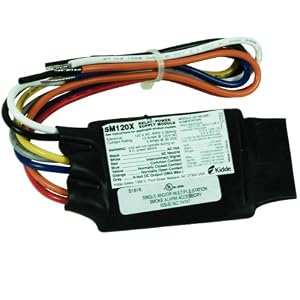
51SdwzMH28L._SL500_AA300_.jpg


Kidde also makes a wireless system, though I have no experience with it. I just installed the complete hardwire system in my house.

Yes, as I stated above. This assumes the user is having the fire system monitored.

I can't really envision why anyone would have an alarm system and not have the smoke / CO portion not monitored.

But, many people do, so it is what it is . . . As it was also stated, employing a EOL resistor will enable fault detection. Not, deploying said device will give the user a false sense of security when there is not.

It's simple, if I'm in the master suite and one of the furnaces starts emitting CO in the basement or bursts into flames, I want to know. I have R-38 between all the floors and it's not possible to hear the basement alarms on the second floor, and probably many of the first floor alarms from areas in the opposite end of the house. Interconnected is a step above individual alarms.

When I install a security system, I have the alarm connected to a steel box before it goes into the load center... I'll just stick the two modules in and be good to go with two separate signals to identify whether it's smoke or CO by assigning a zone to each. Security system is low on the priority list.
 
OP
G

green.bubbly

Well-known member
Joined
Dec 14, 2008
Messages
2,156
Location
Lafayette, LA
Thanks for all the information.

I will not have a monitored alarm system and no need for CO detection either. I live in the country and by the time the monitoring service gets the alarm signal and the fire department showing up, there will not be much left so no need to spend the 30 bucks per month.

I had mentioned the 12/3 since that is what I used through out the entire house. I could etiher run a new dedicated circuit using 14/3 or tie into another circuit using 12/3.

I did speak to an electrician this morning from my area in our area, it does not need to be a dedicated circuit but they mucy be interconnected.

I saw wireless systems mentioned a couple of times in this thread. Anyone familiar with them? Reliable? Pros-Cons?
 

Teken

Well-known member
Joined
Jan 2, 2010
Messages
8,214
Location
The Bad Lands
Nope. RF refers to a particular portion of the frequency band which is often wireless, but not necessarily. In the consumer world it's often used to refer to wireless, but RF is no more always wireless than a tissue is always a Kleenex :)

51SdwzMH28L._SL500_AA300_.jpg


Kidde also makes a wireless system, though I have no experience with it. I just installed the complete hardwire system in my house.


It's simple, if I'm in the master suite and one of the furnaces starts emitting CO in the basement or bursts into flames, I want to know. I have R-38 between all the floors and it's not possible to hear the basement alarms on the second floor, and probably many of the first floor alarms from areas in the opposite end of the house. Interconnected is a step above individual alarms.

When I install a security system, I have the alarm connected to a steel box before it goes into the load center... I'll just stick the two modules in and be good to go with two separate signals to identify whether it's smoke or CO by assigning a zone to each. Security system is low on the priority list.


Your missing my whole point. Lets stay on topic here for a moment shall we. I stated that ideally the OP should have is smoke / co monitored with his home security system.

If it is great . . .

Now, to bolster that system, is to install a EOL resister to the smoke / co interconnected system.

This will ensure that if there is a fault no matter what it is. It will be detected, and be made aware to the user / monitoring station.

With respect to RF, you will not hear anyone mistake a smoke / co detector with a frequency. It is always referred to as it being a wireless device.

Teken . . .
 
Last edited:
To avoid these ads, REGISTER NOW!

Teken

Well-known member
Joined
Jan 2, 2010
Messages
8,214
Location
The Bad Lands
I saw wireless systems mentioned a couple of times in this thread. Anyone familiar with them? Reliable? Pros-Cons?

Having and deploying them in your home is the smartest thing you can ever do. The following reasons for this are:

1. Mixing RF devices with wired interconnected smoke devices allows you flexibility. Anywhere were there is NOT existing wiring or where it is hard to do so. Using a wireless module will allow you to deploy them anywhere.

2. Wireless devices will not be affected by a surge / spike condition. Rendering your device useless if and when you need to count on them.

3. They are all interconnected the same as wired devices. One sounds and they all sound.

I use the First Alert One Link combination smoke / CO detectors. As stated above it provides you redundancy, scalability, and a isolated system.

All the while it can be monitored via a alarm company. Regardless of monitoring this hybrid system will provide you the most robust system with out any weaknesses.

Of course they are all battery operated and they also speak to indicate where the fire / CO is happening.

Teken . . .
 

ishiboo

Well-known member
Joined
Oct 27, 2010
Messages
9,481
Location
Oshkosh, WI
Your missing my whole point. Lets stay on topic here for a moment shall we. I stated that ideally the OP should have is smoke / co monitored with his home security system.

If it is great . . .

Now, to bolster that system, is to install a EOL resister to the smoke / co interconnected system.

This will ensure that if there is a fault no matter what it is. It will be detected, and be made aware to the user / monitoring station.

With respect to RF, you will not hear anyone mistake a smoke / co detector with a frequency. It is always referred to as it being a wireless device.

Teken . . .

No... you're missing the point. EOL resistors are used for security systems which use contact closures or resistance. In this way, the security system can determine if there's a wiring fault (broken wire OR short circuit). Chances of it happening are slim, but it's there.

These systems DO NOT wire directly to the security system, there is NO REASON for an EOL resistor because it's a different type of signal. They are not a normal security system add-on, they are designed #1 to interconnect with each other. The module I showed you a picture of converts things to a normal signal the security system can consume the signal.

This is why you do not see an EOL in any of their diagrams, installation instructions, etc. etc. etc.
 

Teken

Well-known member
Joined
Jan 2, 2010
Messages
8,214
Location
The Bad Lands
No... you're missing the point. EOL resistors are used for security systems which use contact closures or resistance. In this way, the security system can determine if there's a wiring fault (broken wire OR short circuit). Chances of it happening are slim, but it's there.

These systems DO NOT wire directly to the security system, there is NO REASON for an EOL resistor because it's a different type of signal. They are not a normal security system add-on, they are designed #1 to interconnect with each other. The module I showed you a picture of converts things to a normal signal the security system can consume the signal.

This is why you do not see an EOL in any of their diagrams, installation instructions, etc. etc. etc.

Are you saying that there is no one monitoring their smoke alarms with their alarm system panel?? :headscrat :wtf:

Monitoring your smokes is the same as monitoring the sump pump, low temp, water zone.

The difference comes down to whether the user is deploying a low voltage 2 / 4 wire system. Now since this is a 120 VAC system the wiring is indeed different but the same principles still apply.

Having the ability to monitor the the working status of a smoke / CO device is not just a nice to have. It is a measure of safety and knowing things are actually working!

Teken . . .
 

ishiboo

Well-known member
Joined
Oct 27, 2010
Messages
9,481
Location
Oshkosh, WI
Are you saying that there is no one monitoring their smoke alarms with their alarm system panel?? :headscrat :wtf:

Monitoring your smokes is the same as monitoring the sump pump, low temp, water zone.

The difference comes down to whether the user is deploying a low voltage 2 / 4 wire system. Now since this is a 120 VAC system the wiring is indeed different but the same principles still apply.

Having the ability to monitor the the working status of a smoke / CO device is not just a nice to have. It is a measure of safety and knowing things are actually working!

Teken . . .

I'm not saying "no one", I am saying with the residential standalone interconnected systems which is where this thread started.

You've also given more value to the EOL resistor than it actually has. The EOL resistor basically determines whether or not the wiring has failed (open or short) which granted the proprietary system does not support. However, this is a VERY unlikely failure. It does not determine whether or not individual alarms are functioning/etc.

It does not determine whether or not the alarms are functional or not using the interconnect protocol, they are individually self-diagnosing. The EOL resistor does not provide that your alarms either. It's simply a very basic wiring check.
 

Teken

Well-known member
Joined
Jan 2, 2010
Messages
8,214
Location
The Bad Lands
I'm not saying "no one", I am saying with the residential standalone interconnected systems which is where this thread started.

You've also given more value to the EOL resistor than it actually has. The EOL resistor basically determines whether or not the wiring has failed (open or short) which granted the proprietary system does not support. However, this is a VERY unlikely failure. It does not determine whether or not individual alarms are functioning/etc.

It does not determine whether or not the alarms are functional or not using the interconnect protocol, they are individually self-diagnosing. The EOL resistor does not provide that your alarms either. It's simply a very basic wiring check.

You have basically affirmed my whole point from the beginning . . . If the wired smoke alarm device is supposed to be interconnected. If that link is broken, how then will it alert all others?? :headscrat

It can't . . .

This is why deploying a hybrid wireless / wired smoke alarm system is the best route. This allows redundancy, isolation, and endless expansion.

That is all my point was . . .

Teken . . .
 

Lawson4450

Well-known member
Joined
Apr 2, 2010
Messages
419
Location
somerset NJ
yes I have the wireless system but I do have it monitored as I stated earlier. But my unit is connected to the alarm loud speaker and you can hear it next door lol, it tells you Warning fire leave immediatley or something like that and then tells me warning intruder alert leave the now or something like that. Of course I got broken into and my inlaws paid to have the alarm put in but I pay the service fee about 350 a or so a year.
 

Gooch

Well-known member
Joined
May 30, 2009
Messages
676
Location
Petersberg, IA
You have basically affirmed my whole point from the beginning . . . If the wired smoke alarm device is supposed to be interconnected. If that link is broken, how then will it alert all others?? :headscrat

It can't . . .

This is why deploying a hybrid wireless / wired smoke alarm system is the best route. This allows redundancy, isolation, and endless expansion.

That is all my point was . . .

Teken . . .

this is the exact reason you are suppose to follow the instructions on the devices, TEST MONTHLY
 
OP
G

green.bubbly

Well-known member
Joined
Dec 14, 2008
Messages
2,156
Location
Lafayette, LA
Having and deploying them in your home is the smartest thing you can ever do. The following reasons for this are:

1. Mixing RF devices with wired interconnected smoke devices allows you flexibility. Anywhere were there is NOT existing wiring or where it is hard to do so. Using a wireless module will allow you to deploy them anywhere.

2. Wireless devices will not be affected by a surge / spike condition. Rendering your device useless if and when you need to count on them.

3. They are all interconnected the same as wired devices. One sounds and they all sound.

I use the First Alert One Link combination smoke / CO detectors. As stated above it provides you redundancy, scalability, and a isolated system.

All the while it can be monitored via a alarm company. Regardless of monitoring this hybrid system will provide you the most robust system with out any weaknesses.

Of course they are all battery operated and they also speak to indicate where the fire / CO is happening.

Teken . . .


I am trying to figure out why I would even bother with wired units. Any downside to having 100% wireless units? Cost wise, they seem to be inline with wired units and with the cost of copper wire, why spend the money on wired units?
 

Gooch

Well-known member
Joined
May 30, 2009
Messages
676
Location
Petersberg, IA
I am trying to figure out why I would even bother with wired units. Any downside to having 100% wireless units? Cost wise, they seem to be inline with wired units and with the cost of copper wire, why spend the money on wired units?


gotta worry more about batteries.
 

Teken

Well-known member
Joined
Jan 2, 2010
Messages
8,214
Location
The Bad Lands
I am trying to figure out why I would even bother with wired units. Any downside to having 100% wireless units? Cost wise, they seem to be inline with wired units and with the cost of copper wire, why spend the money on wired units?

1. You need to follow code in your respective area. If it mandates 120 volt smokes than follow that route. Keep in mind this does not stop you from using the First Alert One Link interconnected smoke / CO system.

Simply install one of the First Alert One Link hard wired units on all floors, zone required by your local. Then, deploy the wireless ones in rooms, zones, floors you need extra coverage and linked them to the hard wired units.

This provides you with a hybrid system which can not be taken out, all at once from a surge / spike event.

2. Going with wireless does require that you spend a decent amount of money on good long lasting batteries. I always suggest using Lithium batteries for the longer run time. This isn't an area to be going cheap with the dollar store batteries.

3. Wireless smoke by their nature are susceptible to RF interference. As they run on the 900 mhz frequency. This is very remote but can happen so be aware.

Lastly, please keep in mind you do not need to deploy all combination smoke / CO detectors in all areas. I did this because I could afford to do so and it was a peace of mind well spent.

Selecting key areas for the combination smoke / CO detectors will allow you to meet any budget, while ensuring 100 coverage to protect you and your loved ones.

As the other member stated, monthly testing is required. In my case it is mandatory & required to maintain my insurance discount and UL rating. Audit logs must be submitted by me every quarter and they must be collaborated by my monitoring station upon submission to the insurance company.

This whole thing is quite a pain in the aszz at times. But, rest assured once you get into a good routine and keeping in mind you're saving more than 60% on your home insurance. :rocker:

The long term pain, is well worth the financial gain . . . :thumbup:

P.S.

It goes with out saying, for complete coverage deploying photo electric & ionizing smoke sensors is a must.

This will ensure all types of fire conditions are detected whether it be slow burning, with lots of smoke. Or fast ignition flames, with little smoke.


Teken . . .
 

Greatbear

Well-known member
Joined
Jan 17, 2008
Messages
1,702
Location
Columbia/Fulton, MD
I have a hybrid wired and wireless system at the house. Kidde recently came out with a wired/wireless detector that acts as a bridge between commonly available wired (3-wire) AC smoke detectors and their line of wireless models. Not wanting to get up in the attic for the umpteenth time for another wiring project, I replaced one of my wired detectors with the combo unit, then installed three wireless units in the bedrooms. The wired units will trigger all the wireless ones, and vice-versa.

There is a module available that interfaces the typical 3-wire smoke alarm system to a monitored security/fire system. Smoke detectors designed for such systems are 4-wire DC-powered with supervision. This means that the alarm control box provides the power for the units as well as monitors their operation. It's here where the end-of-line modules must be used as a part of connection supervision. The 4-wire detectors have a pair of power wires, and a set of normally closed relay contacts that open when the alarm is triggered. The EOL module is basically a relay powered by the same source as the detectors, and a set of normally open contacts held closed by the powered relay. All the detector outputs are wired in a series loop, with the EOL module providing a specific resistance in the loop. The panel sees the closed loop with the specific resistance as being normal. When a detector is set off, the circuit opens, setting off the alarm at the panel. The supervisory function works like this: If all or part of the detector loop loses power, the EOL relay opens, setting off the alarm. If any of the detectors lose power or malfunction, their relays open up, setting off the alarm. If the detection loop shorts, the specific resistance is lost, the alarm box sees the low resistance and sounds the alarm. If the EOL module fails in any way the alarm goes off.

The 3-wire AC detectors are not a supervised loop, but do have some fail-safe measures. The alarms will go off if one of the detectors is wired wrong or one of the power wires opens, but there is no supervision of the signal wire. If that is disconnected, only that detector will sound if triggered, or won't sound of the others are. Still, installed correctly the three wire AC (preferably with battery backup) detectors are very reliable and simple to install.
 

Highbeam

Well-known member
Joined
Feb 15, 2011
Messages
2,292
Location
Mt Rainier foothills, WA
Anything special about wiring smoke/fire detectors? I want to install 5 detectors and have them all go off if one detects an issue.

Do the detectors have to be on a separate circuit or can they get power from any circuit.

I am assuming I must use 12/3 wire with the red wire being the interconnected wire between the units.

Any thing else?

I was required to install hardwired, interconnected, fire alarms in my pole barn with 14 foot high ceilings. I just put them in last month.

I used a seperate circuit since I want to be able to shut them off by flipping the breaker off. I am not reaching 14 feet into the air to push a "hush" button. I had to search a bit to make sure that I did NOT get battery backups detectors.

I used 14/3 between the detectors and 14/2 down to the panel. This is the only 15 amp circuit in the panel. Oddly, the ground wire is not used by the detectors so it is physically possible to wire these up without 14/2. 14/3 is about twice as expensive as 14/2 per foot.

These things consume a fraction of an amp so the tiny 14 gauge wire is more than adequate.

I think it is silly to require fire alarms in a detached shop but since they were required I must install them so that I don't void my insurance.

I could not find heat detectors at the hardware store so I chose regular smoke alarms. They, so far, have not been sensitive to diesel exhaust, dust, or other smoke from regular garage activities.
 

ckadams00

Well-known member
Joined
Sep 12, 2011
Messages
1,273
Location
Seattle, WA
I don't have much to add to your questions, but they are pretty easy to replace.

We needed a new one in our rental (The renter packed it and took it. Grrr. long story). I was dreading figuring out how to replace it, but it was a non-issue. there are $15 replacements for wired fire alarms at Home Depot. They seem to all have one or two standard power plugs (which come in the replacement detector). Just unscrew the old mounting ring, screw on the new mounting ring, plug the new detector in, and fit the detector into it's mounting ring.

M_P

What kind of whacko:headscrat takes a smoke alarm from a rental unit?
 

cowboyjosh

Well-known member
Joined
Mar 11, 2010
Messages
1,066
DO NOT INSTALL WIRED SMOKE DETECTORS ON THEIR OWN CIRCUIT!!!!!


Putting them on their own circuit facilitates turning the circuit off if there is a problem with one of the units.

Putting them on a commonly used circuit will require fixing the problem correctly.

Find a 15 amp circuit, and take a piece of 14-2 to the first detector, then take 14-3 to the rest. the red wire is for the interconnect.

+1

In Colorado this is a requirement, the smokes have to be on something like the kitchen lights or other common circuit, some circuit that will inconvenience you if you shut if off to power down the smokes. In one AHJ that I know of they will fail your final electrical if you even mark on the panel which breaker the smoke alarms are wired to.

In my own dwelling I have the smokes the EC wired into the house and I also have Honeywell / System Sensor smokes wired into my monitored security system; so Im double covered.

As far as detectors go, I usually spec KIDDE, we rarely get a call back with KIDDE, whereas we had 9 volt batteries exploding a few years back in BRK / FIRST ALERTS.
 

matt151617

Well-known member
Joined
Dec 17, 2011
Messages
488
Location
New Jersey
The big downside I see to wireless units is cost. They aren't cheap compared to a regular smoke detector.

The main reason I haven't retrofitted my house with interconnected smoke detectors is the reviews on Amazon. Most people complained they were constantly going off for no reason. I put a regular battery powered one next to my basement door, one in my hallway, one in the bedroom, and a CO detector on the basement stairs. They'll alert me just fine and I'll be able to hear them.
 
To avoid these ads, REGISTER NOW!
Top Bottom