To avoid these ads, REGISTER NOW!

Wiring Connectors for Trailer Lighting

To avoid these ads, REGISTER NOW!
OP
P

pancho400cid

Well-known member
Joined
Sep 26, 2014
Messages
4,521
Location
Austin, TX
I'll look at those - this is for a general purpose trailer so won't be submerged normally like a boat trailer would.
 

cdestuck

Well-known member
Joined
Nov 13, 2013
Messages
1,462
Location
Altoona, Pa
Even if it's not a boat trailer it'll get wet and corrode as you have 2 dissimilar metals. I've repaired a lot of motorcycles that guys have added stuff and not soldered.
 

nehog

Well-known member
Joined
Jan 2, 2010
Messages
7,935
Location
Jaffrey, NH
I have used "Skotch-Lock" connectors (see link) several times,


For the love of dog, please don't use these on any automotive application. They are suitable for low voltage, dry locations only! Solder and shrink tube and have a connection that will last forever.
 

Chilliwack Murray

Well-known member
Joined
Dec 10, 2012
Messages
1,505
Location
Chilliwack BC
+1 on solder with heat shrink. Even better if you add a little RTV under the heat shrink to ensure the wire never gets wet. Once you solder the wire, the heat has damaged the wire in respect to it's natural corrosion resistance so you need to keep it dry.

One important point however, once the wire becomes coated in solder it loses all flexibility and any movement will be concentrated at the point the solder stopped. It's very common for the wire to break off inside the insulation at that point. If you cannot prevent movement, the best bet is well sealed heat shrink crimp connectors.
 

theoldwizard1

Well-known member
Joined
Feb 22, 2011
Messages
43,216
Location
SE MI
Crimp connectors are nice, but not required. Strip about 1" and twist together. Marine (dual wall) heat shrink is a must !
 

matt_i

Well-known member
Joined
Mar 14, 2008
Messages
10,730
Location
SE Michigan
Imo its a really good idea if you are taking the time to wire/rewire a trailer to do the best job that you can and not cheap out. Its 100% pure Murphy's law that the scotchlocked lights (or brakes?!?!?!) fail in the blinding snow/pouring rain/pitch dark or some combination of the above and then ye shall pay the price for not doing it while its warm and enjoyable to work outside with all of your tools and refreshing beverages close at hand.

If upgrading a boat trailer I recommend the completely sealed LED units. These are something wonderful if you forget to unplug the 4 pin harness before dipping the boat in our out as it is a "get out of jail free" card.
 
Last edited:

Falcon67

Well-known member
Joined
Jun 11, 2009
Messages
18,371
Location
Merkel, TX
Those SCOTCHLOK crimp deals are what Maxie used on our steel car hauler. Say what you will - there are certainly better wiring options - but the trailer is a 2004 model, no issues in the last 12 years.
 

Firebrick43

Well-known member
Joined
May 12, 2015
Messages
14,117
Location
West central Indiana
Maybe in Texas they work. North of the mason Dixon line they should be banned. Many of times I wanted to choke some previous hack. Once I found 12" of wire replaced with 2" inch sections all scotched locked together��

I prefer to use seamless bare **** splices with a lay of liquid electrical tape and a piece of heat shrink after it gets tacky but before it dries. Bomb proof if you use proper crimpers. Solder is fine as long as it's well supported
 

tfalk

Well-known member
Joined
Mar 30, 2015
Messages
319
Location
Somerset NJ
North of the mason Dixon line they should be banned.

A little over dramatic, don't you think?

I just rewired my 2003 US Cargo trailer, there were several scotchloc's inside the wiring box under the tongue. Not one of them were a problem or corroded. The only reason I rewired everything was to replace the trailer connector after it got cut - my fault. If they are protected correctly, they are not a problem. Why fault a product due to incorrect installation?
 

sberry

Banned
Joined
Jun 18, 2005
Messages
35,747
Location
Brethren, Michigan
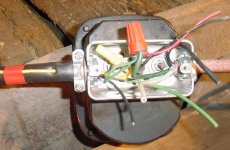
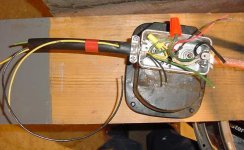
We don't use either, we orient the connections so the caps are up, use common wire nuts and after they are on shoot with penetrating spray with the little straw. I give any Jbox insides a whiz of spray and they last for decades. Anything submersible or exposed would get a wire nut filled with silicone first.
 

Attachments

  • tail lite 2.JPG
    tail lite 2.JPG
    35.3 KB · Views: 112
  • tail lite 4.JPG
    tail lite 4.JPG
    34.4 KB · Views: 89
  • tailight 250 back.JPG
    tailight 250 back.JPG
    31.7 KB · Views: 84
Last edited:

killahog

Well-known member
Joined
Aug 3, 2014
Messages
825
Location
Morrow County Ohio
I have to admit I have used the Scotch connector's in the past after failing to get the solder to fuse both wire together. What type of solder is best for this application? is flux needed before heating the wire?.
 

Brownsfan

Well-known member
Joined
Apr 16, 2012
Messages
5,975
Location
Cleveland Ohio
A little over dramatic, don't you think?

I just rewired my 2003 US Cargo trailer, there were several scotchloc's inside the wiring box under the tongue. Not one of them were a problem or corroded. The only reason I rewired everything was to replace the trailer connector after it got cut - my fault. If they are protected correctly, they are not a problem. Why fault a product due to incorrect installation?

Please dont ban them. I make too much money fixing issues caused by them. They DO NOT work in a northern climate where salt is used. Especially if exposed to the elements. I have seen them corrode so bad that the wire broke and now there is no lights. This is not an isolated incident by far. Pretty much weekly in the winter. They are just not a good connection period. I have seen them melt as well. Think about how they work. They cut into the wire insulation then the piece of metal hopefully gets enough of the actual wire. Even when used correctly they can and will cause issues.
 

dave89iroc

Well-known member
Joined
Mar 25, 2015
Messages
706
Location
outside Detroit, Michigan USA
Please dont ban them. I make too much money fixing issues caused by them. They DO NOT work in a northern climate where salt is used. Especially if exposed to the elements. I have seen them corrode so bad that the wire broke and now there is no lights. This is not an isolated incident by far. Pretty much weekly in the winter. They are just not a good connection period. I have seen them melt as well. Think about how they work. They cut into the wire insulation then the piece of metal hopefully gets enough of the actual wire. Even when used correctly they can and will cause issues.

agreed, anytime I have lighting issues, I look and see if it has a trailer plug wired with them, if it does, I cut it all out, wire the trailer plug correctly with solder and heat shrink, replace any blown fuses it may have caused, and guess what, everything usually works again
 

sberry

Banned
Joined
Jun 18, 2005
Messages
35,747
Location
Brethren, Michigan
I know heat tubing and solder is good but have seen a lot of good looking splices full of water and rotted out. I fixed a couple boogers on an old truck the other day, old splice was a problem and we didn't re wire but reconnect it.
I live in the **** too, salty filthy water and snow. I have a half a dozen pieces I re wired 25 years ago and never had an issue.
This was simple tail lights, was a great place to use up some old 2 conductor.
I spray the trailer connector as I assemble and again when its all together and they last forever and the little screws even come loose. The female on the truck gets a shot of spray on occasion, never have issues with them.
 

Attachments

  • tail lite box.JPG
    tail lite box.JPG
    40.3 KB · Views: 66
  • tail lite 3.JPG
    tail lite 3.JPG
    20.1 KB · Views: 59
Last edited:
To avoid these ads, REGISTER NOW!
OP
P

pancho400cid

Well-known member
Joined
Sep 26, 2014
Messages
4,521
Location
Austin, TX
Hey all.... some great (and funny) comments.

I live in TX and I would not use SL's on brakes. The main thing is I don't want to cut the wires in the vehicle. The trailer connections are generally easy enough to get at and not a big deal to service - although I agree best to overkill it and be done. I hate the idea of cutting a good factory wire in the vehicle to splice in wires for the trailer electrical receptacle.

I'm proficient with a soldering gun, so soldering is an option.
 

sberry

Banned
Joined
Jun 18, 2005
Messages
35,747
Location
Brethren, Michigan
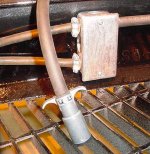
I need some other pics, we have several of these in service. It covers all the fixture studs and connections, as I said common wire nut filled with spray and when they are on truck bumpers with constant washing we simply smear a little silicone on the top and sides, even in connectors and let the bottom open with a drain, these boxes look new inside and the screws even come loose.
The pics above with this one were demo pics to show the various connections, my fave is simple cable connectors, they can even be reversed which I often do. Rolled black tubing is wonderful, super easy to push wire and often used when replacing whole looms on trucks, shove a piece from the fire wall to the bumper box. You can pole it with an awl, insert a wire and it will s3elf close a hole, used extension cord often makes for great pieces of fixture wire, super easy to tie up and clamp in to a box.
When I use a 4x4 usually use the left for a j box, I think maybe my helper wired this old truck and added an extra box, didn't really hurt and gave a place to hook trailer wiring with ease. Didn't even have to crawl under.
 

Attachments

  • tailight 250 back.JPG
    tailight 250 back.JPG
    31.7 KB · Views: 43
  • tailight 250.JPG
    tailight 250.JPG
    38.8 KB · Views: 50
Last edited:

sberry

Banned
Joined
Jun 18, 2005
Messages
35,747
Location
Brethren, Michigan
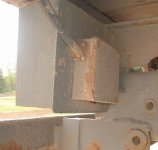
This one is under bumper but the good news is it has never needed service, got a quite a few connections and a good place to make them is all the better.
 

Attachments

  • bumper2.JPG
    bumper2.JPG
    23 KB · Views: 53
  • tailgate vices and storage.JPG
    tailgate vices and storage.JPG
    62.1 KB · Views: 53

joe_padavano

Well-known member
Joined
Feb 26, 2011
Messages
1,788
Location
Northern VA
Chalk up another for solder and heat shrink. My wife's horse trailer was a Scotch-Lok mess, thanks to the trailer repair shop that she had work on it. I ripped all that **** out and completely rewired the trailer using solder/shrink tubing and environmentally sealed junction boxes for semi trailers. Haven't had a wiring issue in 15 years, despite living in humid northern VA.
 

Falcon67

Well-known member
Joined
Jun 11, 2009
Messages
18,371
Location
Merkel, TX
I'll look under the box trailer when I get time, but I'm betting it's got SLs under it too. It stops on a dime, have to turn the brake controller waaay down or it'll yank the *** end off the truck. I'm not saying there isn't better, but I'm not going to go fix what isn't broke. The car hauler has dual axle brakes BTW. I re-packed the bearings last year and checked all the connections - no issues with power, stops just fine, lights all work, etc. IF I had to rewire it, I would likely use solder and crimp. Solder makes a nice connection, but I don't use solder in the race cars because vibration can cause issues unless the wire is supported at the splice. Exception would be a larger high current type wire. If it's super critical, I'll remove the terminal plastic shield as required, tin the wire ends, crimp and shrink fit.

FWIW - I spent 20 years in manufacturing precision measuring equipment. Any wiring harnesses were built to typical MIL specs, all with crimp connectors - not solder. Periodic pull tests were used to verify the crimping, both hand crimp and machine crimp.
 

zeke67

Well-known member
Joined
Jun 11, 2010
Messages
272
Location
Houston
When I build a new harness, it's solder and heat shrink. Even with crimp lugs, I will use uninsulated lugs, crimp, solder and heat shrink. This is the cleanest and least bulky way IMO. Solder properly, don't over heat the joint and don't over fill it.

I also use 3M crimp connectors, but I don't prefer them. They have their place if you don't have soldering skills, are doing some retro work that is already crimped, or are in a get-it-done situation (side of the road). There are lots of situations where factory installs use 3M crimp connectors. Examples include truck bodies, marine, electrical switch gear. The key is to use really good crimpers.

Scotch Locks have a place. They are not my go to. But, for emergency repairs they are great. Or or something you know you will redo later anyway. I'll give another vote for tapping into factory vehicle wiring for trailer lights. If it's my own vehicle, I will cut and solder. But if I'm helping a buddy and he bought a kit that has Scotch Locks and that's what he wants, that's what he gets. Saves me time and my own supplies.

Years back when I was a mechanic, I had a customer come in with a horse wagon they had just purchased. Not a trailer, a wagon they could tow with a vehicle and also be pulled by horses in a show type setting. The tongue wiring and remote battery wiring were a mess full of crimps and Scotch Locks. Most of the lights didn't work. I expected all of the wiring to be bad. And, at the same time I didn't think the customer would accept paying for it. I got under the wagon and discovered the wiring was the flat four wire ribbon. At each side marker location it had a little curled loop in it and the appropriate green or yellow wire was peeled of the ribbon and a Scotch Lock connected it to the side marker. White ground also peeled and looped. Very clean and nicely done. Once the tongue wiring was fixed back to these runs of ribbon cable everything worked fine. I was impressed with the workmanship and it tought me Scotch Locks have their place.
 

Hearse85Caddy

Active member
Joined
Dec 5, 2013
Messages
37
Location
Piedmont, S.C.
A nice 3M insulated crimp and marine shrink tubing are my go-to for most automotive wiring. I'll spend extra for the 3M crimps and use the harbor freight marine shrink tube with the sealant/glue - works well for me since i'm not such a great solder - er.

Scotch Locks can be used in a pinch, but they aren't sealed from the elements and I've seen too many cause poor/intermittent connections due to a partial crimp.
 

koditten

Well-known member
Joined
Apr 10, 2008
Messages
5,528
Location
Midland, Michigan
My secret recipe?

I solder the connection, coat with roofing tar and wire nut the joint. I've got trailers 15 years old running the original wire harness. Here in Michigan, that is pretty rare with all the salt used on the road in the winter.
 

cpttuna

Well-known member
Joined
Oct 31, 2014
Messages
13,238
Location
napoleon ohio
solder and heat shrink. I would also run the wires in tubing if possible. over time you want to protect the WHOLE wiring job.
 

Showkey

"MEMBER EMERITUS"
Joined
Aug 9, 2014
Messages
8,638
Location
Wausau WI
The trailer building industry is infamous for **** wiring from the factory. Every trailer I have owned needed rework. The last purchased enclosed trailer had a metal junction box from Home Depot with wire nuts and scotch locks on the brake wires.
Replaced the box with a plastic weather proof sealed box with sealed connectors with serviceable wire connectors inside.


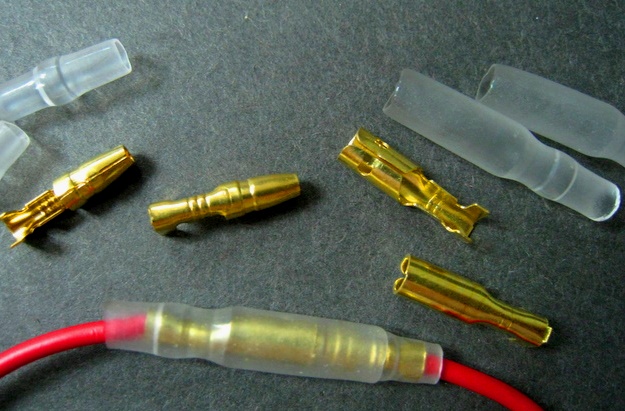
I used connectors like these if the area might need service in the future:

motorcycle-bullet-connectors.jpg


These type of connectors need the proper crimp tool.
 
Last edited:

az45

Well-known member
Joined
Mar 19, 2014
Messages
298
Location
Tucson
While you're rewiring your trailer, add back up lights. I'm not sure why they are not a standard, its the best thing I've ever done. You can buy all kinds of LED flush and pedestal lights online that hardly draw any amps.
 

Falcon67

Well-known member
Joined
Jun 11, 2009
Messages
18,371
Location
Merkel, TX
When I build a new harness, it's solder and heat shrink. Even with crimp lugs, I will use uninsulated lugs, crimp, solder and heat shrink. This is the cleanest and least bulky way IMO. Solder properly, don't over heat the joint and don't over fill it.

That's a solid connection, and electrically optimal but know that in a application where there is a lot of vibration that the solder joint at the connector will flex and eventually break. Unless the wire/harness bundle is solidly supported very close to the termination. Why on stuff like trailers and dragsters you'll only see crimp connections. Commercial applications - as in used every day all day - may see that issue while most of us occasional/recreational users may go years and never see a problem. Shrink wrap really, really helps and is worth the extra effort.

Except maybe race cars - I've been looking at dragsters to compare to the one I'm building and the norm for wiring is crimp and tie wrap wiring/bundles about every 2"~4". That's a hell of a lot of tie wraps over 235" wheel base. :)
 

bobcatdan

Well-known member
Joined
Jan 4, 2011
Messages
9,948
Location
Kaukauna,WI
Personality I like non insulated crimp terminals with heat shrink tube over it. Nice clean looking repair. Will hold up vibration much better then solder. Scotch locks and wire nuts have no business being close to anything in automotive wiring.
 

Tim C

Well-known member
Joined
Dec 21, 2012
Messages
263
So this is what I'm elbow deep in after work the last few days. 2010 trailer, pulled mostly in NC where we stay home when they call for white stuff

f587caf0d114b54c6e95d710a4051b6d.jpg
5b918cf4e17938a39bd42ea9e5bfe5c5.jpg

I have 12.5 volts on the electric brake wire at the back of the truck. Only 5.5 volts at the trailer brakes.

Sent from my XT1254 using Tapatalk
 

az45

Well-known member
Joined
Mar 19, 2014
Messages
298
Location
Tucson
Crazy. If you don't have time to do it right, you wont have time to do it over.

I'm embarrassed for whomever did that Cracker Jack wiring job.
 

Tim C

Well-known member
Joined
Dec 21, 2012
Messages
263
Crazy. If you don't have time to do it right, you wont have time to do it over.

I'm embarrassed for whomever did that Cracker Jack wiring job.
Yep. It's all getting crimped and heat shrinked. It also had a 16g wire feeding all four brakes. So I'm pulling a new wire for power and ground to the brakes.

Sent from my XT1254 using Tapatalk
 

Dustball

Well-known member
Joined
Jun 25, 2011
Messages
2,081
Location
Hudson, WI
When I rewired my trailer, I mounted junction boxes at the front, over the axles, and at the rear and used cord grips for cables entering/exiting the boxes. For connections to components such as lights and brakes, I soldered my cables to the component wires. I used Wago connectors for connections inside the junction boxes. For my brakes, I used a good heavy duty outdoor rated 12ga extension cord. All holes in the crossmembers that have cables have grommets in place. For cables running along the side of crossmembers, I drilled and tapped holes for screwed down cable tie mounts.

While you're rewiring your trailer, add back up lights. I'm not sure why they are not a standard, its the best thing I've ever done. You can buy all kinds of LED flush and pedestal lights online that hardly draw any amps.

I agree. The backup light wiring is already in the 7-pin trailer plug so might as well use it.
 

Attachments

  • CameraZOOM-20120910175624176.jpg
    CameraZOOM-20120910175624176.jpg
    153.1 KB · Views: 60
  • CameraZOOM-20120910175644951.jpg
    CameraZOOM-20120910175644951.jpg
    152.5 KB · Views: 54
  • backuplight.jpg
    backuplight.jpg
    139.4 KB · Views: 48

mikegt4

Well-known member
Joined
Sep 12, 2005
Messages
3,274
Location
sw ohio
Thats clean Dustball, nice work.
^^^this^^^
That is the type of workmanship that should be on ALL trailers but unfortunately the trailer industry is highly competitive with tight margins and customers (especially home owner level customers) buy by lowest price and are either uninterested or uninformed with quality issues..
 

Abj87

Well-known member
Joined
May 4, 2012
Messages
163
Crimp only with adhesive heat shrink. Soldering creates hard spots which will fatigue under high vibration situations.

Crimping is the preferred method by aerospace, medical and industrial applications.


Sent from my iPhone using Tapatalk
 
To avoid these ads, REGISTER NOW!
Top Bottom