To avoid these ads, REGISTER NOW!

Wiring Help

Shrek

Member
Joined
Oct 29, 2008
Messages
21
Wooohooo. After lurking for sometime and not having in thing put together enough to get the info I needed, I finally get to post my first thread on GJ. After drooling over many of the build threads on here I know I'm seeking out the right crowd to ask for help.

I'm planning on re-wiring my garage to accommodate more equipment and add 220 outlets for a welder and my air compressor. Using the DB Structures Space Planner that Ryan featured I've thrown together one I already have and where I would like outlets. Starting at the top left corner of the layout going clock wise we have the HVAC (220), Sub panel, Water heater (220), right hand wall: light switch (110), dual gain outlet box with 110 and 220, security light outside (110), 3 110 outlets spaced out along the wall, from the corner going up 1 220 for the air compressor and one 220 for the welder, dual gain box at the work bench, 110 outlet at the chest freezer. 5 4' florescent 2 bulb light fixtures and an outlet at the ceiling between the cars for a drop reel extension cord and a drop reel work light.

Currently have a chest freezer, 1950's GE fridge, common shop tools (grinder, drill, etc.) As far as 110 is concerned I plan on adding a floor standing drill press, bench grinder, perhaps a band saw and a belt sander.

I already have the 220 compressor and plan on adding a 250+ watt mig welder.
So with all of that back info here is what I'm in need of. Suggestions on the best way to divide these loads. (i.e. 20 amp breaker for wall with fridge, 20 amp breaker for lights, etc.)
Also suggested routes for running the wires. Also there are a few over head hvac ducts. Starts at the AC unit, runs along the wall to the right of the layout and the makes a 90" turn down above/a bit after the water heater and runs to the opposite side of the garage.

Oh yeah and the 5 florescent lights will be wired to the 2 light switches and the security light has it's own daylight sensor.

Thanks in advance for the pointers.

Your friendly neighborhood ogre,
Mr.Shrek
 

Attachments

  • Shrek'sGarage.JPG
    Shrek'sGarage.JPG
    29.2 KB · Views: 98
To avoid these ads, REGISTER NOW!

JustBob

Well-known member
Joined
Feb 10, 2010
Messages
183
Location
Mobile, Alabama
I am guessing the 240v outlet between the doors is for the welder?


Circuits numbered 1 through 10, each numbered square runs directly to a breaker in the subpanel.

1 to 6 = 20 amp breaker, 12 gauge wire
7 to 10 = 2 pole 240v breakers and wire sized for equipment load.

1. 12g wire instead of 14g wire to allow for adding more lights in the future
2. GCFI outlet, single circuit receptacle
3. 20 amp 12g circuit for allowing future upgrade to outside lighting
4. left side work zone outlets, 20 amp
5. back wall work zone outlets, 20 amp
6. chest freezer, ceiling outlet, 20 amp
7. 220v air compressor receptacle
8. 220v welder receptacle, front and back
9. 220v HVAC circuit
10. 220v hot water heater circuit

shrekdiagram.jpg


6 120v single pole breakers
4 220v double pole breakers
Depending on size of weldor, or future upgrades = 100 amp sub panel
16 spaces will be used, 20 spaces or more sub panel recommended

If wiring will be in wall, I would add another circuit with 2 more receptacles on the right hand wall just in case you decide to use some power tools in that location.
 
Last edited:
OP
S

Shrek

Member
Joined
Oct 29, 2008
Messages
21
Sweet! Thanks a lot. Also you were correct on the 220 between the garage doors being for the welder. I think I'll take your advice on the extra two outlets on the other wall.
 

Torque1st

MEMBER EMERITUS
Joined
Sep 14, 2008
Messages
5,668
Location
KC Metro, Kansas
All of the 120V garage outlets should be GFI except the single outlet (not duplex) for the chest freezer and the single outlet for the refrigerator. The next outlet down the line on the same circuit should be GFI. The HVAC and WH should be hard wired.

I would also suggest that the lights should go to the outside and between the vehicles for better lighting (one more fixture).
 

hilld

Well-known member
Joined
Jan 19, 2010
Messages
867
Location
Vancouver, WA & San Juan Island, WA
I am not 100% positive, but I don't think you can have the sub panel right next to the water heater. In commercial spaces, you have to keep 36" clearance around any panel, not sure how it works in residential, so you might want to check that out before it is too late.

Derek
 

hidollartoys

Well-known member
Joined
Jul 15, 2008
Messages
594
Location
K. C. Metro area
I am not 100% positive, but I don't think you can have the sub panel right next to the water heater. In commercial spaces, you have to keep 36" clearance around any panel, not sure how it works in residential, so you might want to check that out before it is too late.

Derek

Working clearance IS minimum 36" all applications.
 
OP
S

Shrek

Member
Joined
Oct 29, 2008
Messages
21
I was going off of where it already was located. Might be a code time to move it though...
 

Charles (in GA)

Well-known member
Joined
Jan 11, 2006
Messages
12,489
Location
50 mi south of Atlanta
30 inch width, 36 inch deep and 2 meter (6-1/2 ft) height, all clear. Panel does not have to be centered on the 30 inches, just has to be within the 30 inches and able to open the door 90 degrees. If panel sits partially behind the water heater, that is not OK.

Charles
 

mrb

Well-known member
Joined
Dec 31, 2008
Messages
3,734
All of the 120V garage outlets should be GFI except the single outlet (not duplex) for the chest freezer and the single outlet for the refrigerator. The next outlet down the line on the same circuit should be GFI. The HVAC and WH should be hard wired.

I would also suggest that the lights should go to the outside and between the vehicles for better lighting (one more fixture).

if he is under 2008 nec there are no more exceptions. All 15 and 20a 120v receptacles in a garage need to be gfci protected.
 

Torque1st

MEMBER EMERITUS
Joined
Sep 14, 2008
Messages
5,668
Location
KC Metro, Kansas
if he is under 2008 nec there are no more exceptions. All 15 and 20a 120v receptacles in a garage need to be gfci protected.

Maybe when the inspector is there...:evil:

Personally I will NOT have a GFI on a sump pump, refrigerator, or a freezer. Code be damned.
 
OP
S

Shrek

Member
Joined
Oct 29, 2008
Messages
21
if he is under 2008 nec there are no more exceptions. All 15 and 20a 120v receptacles in a garage need to be gfci protected.

Does that have to do with if the house was built after 2008? (1970's home)
 
To avoid these ads, REGISTER NOW!

JustBob

Well-known member
Joined
Feb 10, 2010
Messages
183
Location
Mobile, Alabama
Sweet! Thanks a lot. Also you were correct on the 220 between the garage doors being for the welder. I think I'll take your advice on the extra two outlets on the other wall.

Add the 2 receptacles for the right wall on circuit #2.

Torque is correct, NEC 2008 210.8(A) All 125-volt, single-phase, 15- and 20-ampere receptacles installed in the locations specified in (1) through (8) shall have ground-fault circuit-interrupter protection for personnel.
(2) Garages, and also accessory buildings that have a floor located at or below grade level not intended as habitable rooms and limited to storage areas, work areas, and areas of similar use

I am glad my shop is not covered under this...
 
Last edited:

Aceman

Well-known member
Joined
Jan 28, 2007
Messages
2,513
Location
Eastern Oregon
Depending on size of weldor, or future upgrades = 100 amp sub panel
8 space 16 circuit subpanel minimum, 12 space 24 circuit recommended

Either option means twin breakers right from the start, I'd try to avoid that. I'd personally use a Siemens 100 amp 20/20.

Then I'd leave a stud cavity available to one side or the other of this panel in case you need to add a sub.
 

sparky1562

Well-known member
Joined
Aug 30, 2008
Messages
115
Location
Nashville, TN
Maybe when the inspector is there...:evil:

Personally I will NOT have a GFI on a sump pump, refrigerator, or a freezer. Code be damned.

Hard wire them and the requirement goes away....

A lot of local authorities have amendended the NEC to exempt sump pumps in some cases.

All comercial Kitchens, or spaces defined as kitchens have to have be GF now. Try explaining that to the guy that has to depend on the refrigerator and freezer not tripping a GFI in the middle of the night! Mostly a reaction to some cases where someone was wet mopping a floor and was electrocuted by touching a piece of equipment that had a standing voltage on it.
 
OP
S

Shrek

Member
Joined
Oct 29, 2008
Messages
21
After taking some measurements in the garage there is not the proper clearance for the sub panel. The corner that is between the HVAC and the chest freezer is large enough for the water heater. Are there codes that would prevent me from moving the electric water heater into that space? This would one open up floor space and also provide the proper clearance for the new panel.
 

JustBob

Well-known member
Joined
Feb 10, 2010
Messages
183
Location
Mobile, Alabama
Either option means twin breakers right from the start, I'd try to avoid that. I'd personally use a Siemens 100 amp 20/20.

Then I'd leave a stud cavity available to one side or the other of this panel in case you need to add a sub.

Ace is right, glad you caught it... thats what I get for posting under the influence of the flu in the middle of the night! :wtf:

He will be using 16 spaces, so 20 space min, 24 would be better
 

Nostraquedeo

Well-known member
Joined
Oct 23, 2009
Messages
501
I would add TV outlet(s) and associated outlet(s), telephone outlet, and speaker wiring. I would also move the outlets in the ceiling to align with where the garage door openers will be, that might include adding another outlet. Also add the low voltage wiring for the garage door push button and the garage door safety sensors.

Instead of the threeway switch, you could use one with an occupancy sensor, this takes care of the times you forget to turn the lights out.

I would rework the lighting, the front side of the garage (Back of cars) is going to be dark. Add a couple lights.

Not sure how the HVAC system is operated, but include any wiring for the thermostat.

Not sure what happens around the garage, but make sure you have plenty of outlets on the outside. Think about Xmas lights, working outside, etc.

Not sure of attic conditions, but would add lighting up there if you use it for storage. You have to use an enclosed fixture, something where if the bulb breaks it does not land on insulation. I would use Jelly Jars for this. It's basically an incandescent or fluorescent light with a glass globe.
 

katit

Well-known member
Joined
May 5, 2006
Messages
862
Location
St. Louis, MO
I would add TV outlet(s) and associated outlet(s), telephone outlet, and speaker wiring. I would also move the outlets in the ceiling to align with where the garage door openers will be, that might include adding another outlet. Also add the low voltage wiring for the garage door push button and the garage door safety sensors.

Instead of the threeway switch, you could use one with an occupancy sensor, this takes care of the times you forget to turn the lights out.

I would rework the lighting, the front side of the garage (Back of cars) is going to be dark. Add a couple lights.

Not sure how the HVAC system is operated, but include any wiring for the thermostat.

Not sure what happens around the garage, but make sure you have plenty of outlets on the outside. Think about Xmas lights, working outside, etc.

Not sure of attic conditions, but would add lighting up there if you use it for storage. You have to use an enclosed fixture, something where if the bulb breaks it does not land on insulation. I would use Jelly Jars for this. It's basically an incandescent or fluorescent light with a glass globe.

You reading my mind. I will have inspection in 1hr and did pretty much everything mentioned here. In old garage (I call it practice garage) I had little less light then needed, I had garage opener wired on top of drywall (ugly). I had speaker wire in those plastic channels (OK but ugly :) ) Now I added network cable and cable tv run as well.
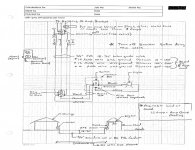
My opener (LiftMaster) have occupancy sensor feature built-in, so all it takes to plug light into socket on ceiling. But I still wired 3-way so I can turn light from home and leave it as needed without relying on liftmaster's one.

I would like to ask though, what box covers should I use for wires like garage door sensor? It's just a wire coming out of box and going to sensor. How to properly route it out of box? I plan on using blank cover and notch it on a side to get small wire out..
 
Last edited:

Nostraquedeo

Well-known member
Joined
Oct 23, 2009
Messages
501
I didn't use a box. I just drilled a 1/4" hole in the drywall, and fed the wiring thru the drywall at the correct height and caulked around it. Did the same in the attic right above the garage opener.
 

katit

Well-known member
Joined
May 5, 2006
Messages
862
Location
St. Louis, MO
Careful with speaker wire and such - I just failed inspection because speaker wire was not rated for in-door installation.

I wonder if I should install garage opener wire in-wall - it doesn't have any romex either..
 

alexjems41

New member
Joined
Mar 17, 2010
Messages
4
I am wanting to run electric from garage to shed. Want to have an outlet always hot and a light controlled by a switch. How do I do this?? Any help and diagram appreciated.
 

Nostraquedeo

Well-known member
Joined
Oct 23, 2009
Messages
501
^Here is a starting point. I showed it coming from and existing outlet in your garage. The availble load at your shed would be limited to the load on the circuit feeding the existing outlet.
 

Attachments

  • Garage to Shed.jpg
    Garage to Shed.jpg
    147.5 KB · Views: 29
To avoid these ads, REGISTER NOW!
Top Bottom