To avoid these ads, REGISTER NOW!

XHHW-2 in Conduit Run to Sub Panel Question

NP Carling26

Member
Joined
Sep 12, 2013
Messages
22
Location
Pennsylvania
XHHW-2/ or Mobile Home Feeder in Conduit Run to Sub Panel Question

Hi all. Just recently got my 30x40x14 pole barn up, and now wiring is in my sights. I believe I've come to a conclusion on what wire to run from my house main panel to the sub panel in the garage. The total run all said and done is approximately 100ft. I'm thinking 4 individual lengths of 2 AWG AL XHHW-2 wire in 1.5" conduit. I found this roll at Home Depot and was thinking of buying it an cutting 4 100' lengths. http://www.homedepot.com/p/Southwire-500-ft-2-Gauge-Stranded-XHHW-Wire-Black-11272207/204786553

If not from Home Depot, 500ft of XHHW-2 from one of the local suppliers. So here's my question. Is there any requirement in the NEC for each wire to have different color schemes to differentiate them? For wiring, I was just planning on using colored tape to identify the different ones, but wasn't sure if there had to be something more permanent. Next, on a more general note, does this set up sound about right for what I wanna do. Putting a 100A sub panel in pole barn, burying 1.5" conduit 24" underground, feeding it with a 90A in the main panel (though, if my research is correct, it should be rated for up to 100A from the main panel).

Thanks guys! Hoping to post some pics up soon! :beer:

Let it be noted that my township currently uses the 2008 NEC, so that is what I use to guide me.

Adde dpost at the bottom, now considering MHF with a 90A breaker.
 
Last edited:
To avoid these ads, REGISTER NOW!
OP
N

NP Carling26

Member
Joined
Sep 12, 2013
Messages
22
Location
Pennsylvania
Yes, I purposely choose AL due to it's cost benefits. From my understand 2 AWG Aluminum should at least be able to handle 90 amps.
 

cybrdyke

Well-known member
Joined
Sep 9, 2014
Messages
3,449
Location
USA
It's a good price. The going rate is a little over $200 / thousand ft. to the wholesalers.
 
Last edited:

cybrdyke

Well-known member
Joined
Sep 9, 2014
Messages
3,449
Location
USA
You can actually get it in every color, but hardly any supplier carries it in anything other than black.
Just tape it up good with colored tape and hope the tape doesn't come off in the pull.
CD
 

theoldwizard1

Well-known member
Joined
Feb 22, 2011
Messages
43,241
Location
SE MI
Is there any requirement in the NEC for each wire to have different color schemes to differentiate them?
Yes, but it does depend on the application/wire size, so it is not a hard and fast rule. A pro will have to answer this.

You do know you are basically making Mobile Home Feeder cable. But online that sells for $1.79/foot. Your 500', cut into 4 would be $1.15/foot.

... feeding it with a 90A in the main panel (though, if my research is correct, it should be rated for up to 100A from the main panel).
Use the 90A.
 

theoldwizard1

Well-known member
Joined
Feb 22, 2011
Messages
43,241
Location
SE MI
The best I can find from here

Q. What are the Code rules for identifying circuit conductors?

A. The neutral conductor of a branch circuit must be identified in accordance with 200.6 [210.5(A)]. Equipment grounding conductors can be bare, covered, or insulated. Insulated equipment grounding conductors size 6 AWG and smaller must have a continuous outer finish either green or green with one or more yellow stripes, in conformance with 250.119 [210.5(B)]. Conductors with insulation that’s green or green with one or more yellow stripes can’t be used for an ungrounded or neutral conductor [250.119] On equipment grounding conductors 4 AWG and larger, insulation can be permanently reidentified with green marking at the time of installation at every point where the conductor is accessible [250.119(A)]. Ungrounded conductors must be identified as follows [210.5(C)]:

The last part means white for neutral and black and red for hots. Because you are tapping off of an existing load center, it is considered a "branch circuit".
 
Last edited:

alfredeneuman

Well-known member
Joined
Mar 3, 2011
Messages
4,590
Location
Fullerton, CA
You don't 4 cuts of #2. You just need 3. The ground wire doesn't need to be as big as that.
You would #8 Copper or #6 Aluminum with green insulation for the ground wire.

You can use marking tape on #4 or larger conductors by Code
 

theoldwizard1

Well-known member
Joined
Feb 22, 2011
Messages
43,241
Location
SE MI
You don't 4 cuts of #2. You just need 3. The ground wire doesn't need to be as big as that.

Why bother ? 3 cuts will give you 4 - 125' lengths, more than enough for the OPs job.

Classic "measure twice cut once" ! If the OP needs 130', well he is screwed if makes those 3 cuts. Any length over 125' will have to be done your way.
 

alfredeneuman

Well-known member
Joined
Mar 3, 2011
Messages
4,590
Location
Fullerton, CA
His estimate is 100'. If he measures it beforehand, adds a foot for each bend and the additional required for makeup he will know exactly what the length of the run is.
If he gets it from a wholesale house, chances are they'll cut in to length from a big master reel.
#4 is the maximum size conductor of most ground and neutral bars. He'll have to buy additional lugs to go on each end.

It would end up saving $ in the long run.

Why spend any more than you have to?
 
Last edited:

Charles (in GA)

Well-known member
Joined
Jan 11, 2006
Messages
12,489
Location
50 mi south of Atlanta
It appears that Home Depot has ceased selling cut lengths of 2-2-2-4 MHF. The store sku they used in the past, 462-714 does not turn up in the searches any longer, and I checked the other day in one HD where they used to have it, and they no longer have a spool of it they are cutting off of, nor shelf tags (I didn't have time to chase someone down and ask, but it was apparent it was not there) The larger MHF (4/0-4/0-4/0-2/0) was there with a by the foot price and spool on a "merry go round" shoved under a shelf, but not the smaller stuff. They do still have 2-2-4-6 MHF by the foot, but that may not be suitable for what the OP needs and what he proposes is still cheaper, although somewhat more work.

Charles
 

theoldwizard1

Well-known member
Joined
Feb 22, 2011
Messages
43,241
Location
SE MI
So if the OP needs over 100' he is going to have to get it from an electrical supply house who will charge him a lot for not being a regular customer !


MHF 2-2-2-4 vs 2-2-4-6. Why? What application would ALLOW a 4 gauge neutral ? Or maybe I should say, what application would REQUIRE a 2 gauge neutral ?
 

wyliesdiesels

Well-known member
Joined
Aug 14, 2012
Messages
20,067
Location
Modesto, CA
In order to be able to use a reduced neutral, U would have to do load calcs to figure out what your neutral current would be...
 
To avoid these ads, REGISTER NOW!
OP
N

NP Carling26

Member
Joined
Sep 12, 2013
Messages
22
Location
Pennsylvania
Thats dumb. I wonder why they did that...

So if the OP needs over 100' he is going to have to get it from an electrical supply house who will charge him a lot for not being a regular customer !


MHF 2-2-2-4 vs 2-2-4-6. Why? What application would ALLOW a 4 gauge neutral ? Or maybe I should say, what application would REQUIRE a 2 gauge neutral ?

In order to be able to use a reduced neutral, U would have to do load calcs to figure out what your neutral current would be...

I am also seriously considering Mobile Home Feeder, because essentially it is made up of 4 USE-2/RHH/RHW-2 rated conductors. However, the 4 gauge neutral part definitely had me confused.

This is a local supply house to me, here is their 2-2-2-4 MHF, though I haven't checked to see if they still sell it: https://www.rexelusa.com/mblhm22241000rl/multiple-mblhm22241000rl-wire/product/131439

Here is the same supply house, and their 2-2-4-6 MHF, which seems much more commonly sold just by looking at the page.
https://www.rexelusa.com/urd-type-q...l/multiple-mblhm2246500rl-wire/product/134576

So I will probably end up going with MHF and use a 90A breaker, so next question.

I know the wire is rated for inside the house, but from what I have read I have run the wire in conduit all the way...true? Is there also any way I can go from rigid 1 1/2 PVC to flexible 1 1/2 PVC for the basement portion of the run?

Thanks.
 

theoldwizard1

Well-known member
Joined
Feb 22, 2011
Messages
43,241
Location
SE MI
This is a local supply house to me, here is their 2-2-2-4 MHF, though I haven't checked to see if they still sell it: https://www.rexelusa.com/mblhm22241000rl/multiple-mblhm22241000rl-wire/product/131439

Here is the same supply house, and their 2-2-4-6 MHF, which seems much more commonly sold just by looking at the page.
https://www.rexelusa.com/urd-type-q...l/multiple-mblhm2246500rl-wire/product/134576
"Commonly used" has nothing to do with whether that is the proper wire. See below.
In order to be able to use a reduced neutral, U would have to do load calcs to figure out what your neutral current would be...
It is commonly used because it costs less. Check with your local building inspectors to see if it can be used for your application.

I know the wire (MHF) is rated for inside the house, but from what I have read I have run the wire in conduit all the way...true? Is there also any way I can go from rigid 1 1/2 PVC to flexible 1 1/2 PVC for the basement portion of the run?
Technically, MHF only need to be inside conduit when it is above ground, although most experts suggest using conduit end to end. What kind of conduit does not matter, as long as it is approved to that application and you have the proper fittings. I strongly suggest that you use a Schedule 80 sweep when you transition from above to below ground.
 
OP
N

NP Carling26

Member
Joined
Sep 12, 2013
Messages
22
Location
Pennsylvania
"Commonly used" has nothing to do with whether that is the proper wire. See below.

It is commonly used because it costs less. Check with your local building inspectors to see if it can be used for your application.


Technically, MHF only need to be inside conduit when it is above ground, although most experts suggest using conduit end to end. What kind of conduit does not matter, as long as it is approved to that application and you have the proper fittings. I strongly suggest that you use a Schedule 80 sweep when you transition from above to below ground.

I have no problem spending the extra for 2-2-2-4, and even if I could get away with a 4 neutral, no real advantage other than cost savings. As for the conduit run, it's kind of a rough area I'm running through with roots and rocks and what not, so same deal, for the additional cost of the 50' of underground conduit I need, I have no problem spending it. As for inside the house, I'll just have to figure out what is best to do. I've got quite a few obstacles to navigate around in the basement, not to mention I'm a 6'5" guy who will be working to install conduit in a 6' clearence basement. :yikes:
 

brewchief

Well-known member
Joined
Sep 20, 2008
Messages
2,370
Location
Michigan
Re: XHHW-2/ or Mobile Home Feeder in Conduit Run to Sub Panel Question

If you have a bunch of stuff to work around in the house it may be worthwhile to use ser cable inside ghen transition to mhf outside before going underground. You add in a junction box and will have to splice the wires using split bolts or polaris connectors but it might be worth it.

Sent from my SM-G900V using Tapatalk
 

wyliesdiesels

Well-known member
Joined
Aug 14, 2012
Messages
20,067
Location
Modesto, CA
I know the wire is rated for inside the house, but from what I have read I have run the wire in conduit all the way...true? Is there also any way I can go from rigid 1 1/2 PVC to flexible 1 1/2 PVC for the basement portion of the run?

Thanks.

It needs to be in conduit where exposed above ground AND inside buildings. It is rated for direct bury but i recommend conduit feom panel to panel in case it needs to be replaced.

I would use 2" conduit. It will be easier!

And yes u can transition from PVC to liquid tight(FNMC). Get a female terminal adapter and thread the liquid tight fitting into it!

765539.jpg


15023.jpg


...Technically, MHF only need to be inside conduit when it is above ground, although most experts suggest using conduit end to end. What kind of conduit does not matter, as long as it is approved to that application and you have the proper fittings. I strongly suggest that you use a Schedule 80 sweep when you transition from above to below ground.

Including inside buildings...
 
Last edited:
OP
N

NP Carling26

Member
Joined
Sep 12, 2013
Messages
22
Location
Pennsylvania
It needs to be in conduit where exposed above ground AND inside buildings. It is rated for direct bury but i recommend conduit feom panel to panel in case it needs to be replaced.

I would use 2" conduit. It will be easier!

And yes u can transition from PVC to liquid tight(FNMC). Get a female terminal adapter and thread the liquid tight fitting into it!

765539.jpg


15023.jpg


Including inside buildings...

Yeah I was planning on conduit the whole way for the exact reason of if it ever need to be replaced. And the more I see everyone recommends 2", I'm probably gonna return the 1" I bought for data cables, and get 2" for electric and use the 1 1/2" for data.

Is there any preference bringing conduit inside of buildings? For the garage I just plan on bringing it up from the ground inside and pouring concrete, however, for the house I either have the option of bringing it in below ground and raising in the basement, or raising it above ground outside and bringing it in high in the basement, if you get what I mean. Any recommendations or stories as to why one way is better than the other?

Thanks for all the help, I really do appreciate it. Hopefully gonna get some pictures up soon!
 
Last edited:
OP
N

NP Carling26

Member
Joined
Sep 12, 2013
Messages
22
Location
Pennsylvania
Re: XHHW-2/ or Mobile Home Feeder in Conduit Run to Sub Panel Question

If you have a bunch of stuff to work around in the house it may be worthwhile to use ser cable inside ghen transition to mhf outside before going underground. You add in a junction box and will have to splice the wires using split bolts or polaris connectors but it might be worth it.

Sent from my SM-G900V using Tapatalk

After again looking at the run in my basement, this is sounding more and more appealing. Any other input on this, or anything special I should know if I choose to go this route? Could I make the joint in this puller fitting (the one going into the basement, on the outside of the house)? http://www.homedepot.com/p/Cantex-2-in-Type-LB-Conduit-Body-R5133668/202043420
 
Last edited:

wyliesdiesels

Well-known member
Joined
Aug 14, 2012
Messages
20,067
Location
Modesto, CA
Thats called an ell b and no u wont have enough room to splice 4 wires in there.

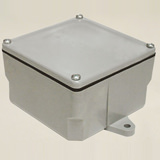
If youre using 2" pvc i recommend a 16x16x8 pvc j box

HC1M01.jpg
 
OP
N

NP Carling26

Member
Joined
Sep 12, 2013
Messages
22
Location
Pennsylvania

wyliesdiesels

Well-known member
Joined
Aug 14, 2012
Messages
20,067
Location
Modesto, CA
Oh yeah i forgot to mention that the SER will make things a lot easier in the basement.

Would the SER be running through insulation?
 

soj

Well-known member
Joined
Dec 3, 2007
Messages
729
Location
North Georgia
Sorry for the Thread Hi-Jack... but very related to what the OP is doing.

MHF 2-2-2-4 in 2" PVC conduit. Appx. 70-75' run, with 4 90* elbows. I understand somewhere in NEC there is something about max. # of turns, but my question is to those with practical experience with this or a similar layout. That is a really stiff cable, so is that pull (distance and # of turns) possible? If not, I need to try for a straighter route. It is all inside a metal building, for a sub panel on the opposite side of the building.

Again, excuse the hi-jack, but this info could help others in planning.
-jp
 

Aceman

Well-known member
Joined
Jan 28, 2007
Messages
2,513
Location
Eastern Oregon
Real world experience has taught me to only put two 90's in underground runs. If I need to get around something that would otherwise require a 45 or 90 degree elbow, I have the ditch dug in such a way that it sweeps around the obstruction so I can simply bow my conduit into place without actually using an elbow.

The NEC does allow up to 360 degrees of bend in a conduit run between pull points, but I will tell you that you are going to hate life if you install it that way.
 

pattenp

Well-known member
Joined
Jun 4, 2008
Messages
10,175
Location
Virginia - USA
With four 90 deg turns using 2" conduit the pull is doable using 2-2-2-4. With help you may find it not that difficult being only 75'.
 

Norcal

Well-known member
Joined
Mar 16, 2008
Messages
13,769
Real world experience has taught me to only put two 90's in underground runs. If I need to get around something that would otherwise require a 45 or 90 degree elbow, I have the ditch dug in such a way that it sweeps around the obstruction so I can simply bow my conduit into place without actually using an elbow.

The NEC does allow up to 360 degrees of bend in a conduit run between pull points, but I will tell you that you are going to hate life if you install it that way.

This, more bends equals more work, aggravation.
 
To avoid these ads, REGISTER NOW!
Top Bottom