
You are using an out of date browser. It may not display this or other websites correctly.
You should upgrade or use an alternative browser.
You should upgrade or use an alternative browser.
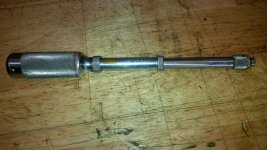
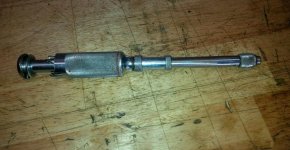
Yankee drill
- Thread starter dubdoc
- Start date
captain14
Well-known member
Yes Especially if you only needed a couple of holes at a time.
When my neighbor was in the Air Force and worked on aircraft, they removed/installed the body panels with the screwdriver version.
When my neighbor was in the Air Force and worked on aircraft, they removed/installed the body panels with the screwdriver version.
I'm old enough to have used one when I worked as a carpenter before cordless drivers were practical. Mainly used for starting holes for screws or nails when we did not want the wood to split. When the first Makita cordless drills came out we were happy campers but there were still occasions when the Yankee drill came in handy.
I still have my original Yankee drill and my original Makita (with very dead batteries). I also recently picked up a Bell System Yankee like yours.
I still have my original Yankee drill and my original Makita (with very dead batteries). I also recently picked up a Bell System Yankee like yours.
Downwindtracker 2
Well-known member
I have few of them, Miller Falls , Stanley, Craftsman and a import versions. Yankee drills and screwdrivers are cheap and easy to come by at fleamarkets. With door hinges, a STanley centering punch and then a Yankee works pretty good. They are also a handy tool when an overly enthusiastic drill motor could go too deep and damage the work. Most often I would use an egg beater drill there, though.
Private Lugnutz
Well-known member
I'm having a hard time reading the markings. Is it BELL SYSTEM A? Or B? And is it a pre-Stanley North Bros or Stanley "YANKEE"?... this appears to be a "Bell System tool".
coljar
Well-known member
I have one I bought at a sale I happened upon in Ontario fall before last. It was complete, in good condition, and I only bought it because I didn't have one. As was said above, seldom used today with battery tools being preferred.
Miss the Pontiacs
Well-known member
We were given that exact model when I started working. The only task I used it for was to drill just below the baseboard and at at the floorline. Using a very fine bit. You would then thread in a fine wire. Then go downstairs and find the wire. Measure out to the centre of the interior wall and drill upwards and hopefully not hit a fire stop. If you did you would drill through that as well. Making sure you got the desired length of bit in the wall for a wall phone.
Then go upstairs punch/drill a hole in the wall directly above where your yankee bit went through the floor and drop a weight, chain or whatever you preferred. If you went downstairs and everything aligned your weight would be hanging between the joists. Or you would pull out a fish wire and hopefully hook it with little effort.
I gave mine back when I didn’t have a use for it any longer. Wish I would have tucked it away for posterity.
Then go upstairs punch/drill a hole in the wall directly above where your yankee bit went through the floor and drop a weight, chain or whatever you preferred. If you went downstairs and everything aligned your weight would be hanging between the joists. Or you would pull out a fish wire and hopefully hook it with little effort.
I gave mine back when I didn’t have a use for it any longer. Wish I would have tucked it away for posterity.
RTM
Well-known member
If you get those with the original fluted bits, they drill fast, much faster than a similar sized twist bit. I grab them at the flea etc, and shake them. If quiet, pass. If noisy, buy for $1-3, sharpen the bits, give to a friend.
Miss the Pontiacs
Well-known member
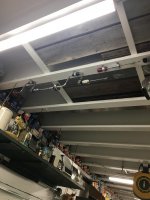
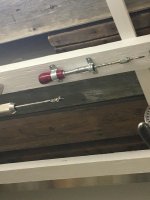
Here are a few drills I’ve collected. The wooden red brace, Yankee type and the gray gun type were my FILs. The wood black brace was given to me at work 45 years ago. The old breast model belonged to my Grandfather.
Attachments

Last edited:
Joe Huld
Well-known member
I found this in a bunch of old tools in Dad's garage. He was a Bell Telephone man and this appears to be a "Bell System tool". What is the history of these? Did they actually use them regularly? For what purposes?
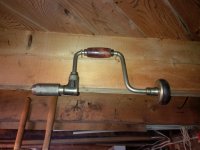
Every one of Ma Bell's phone installers had a Yankee 41 push drill like yours as well as a #2100 series bit brace, and judging from the number I see at garage sales, most followed them home when they retired.
Yankee made what are probably the best hand drills ever made and their spiral ratchet screwdrivers were never equaled.
The 41 and 44 push drills are a very handy tool . Even in this cordless age a lot of them are still in regular usage because they can get in places a cordless can't, are lighter, more compact, and never need charging.
The 2100 series bit brace likewise is treasured by modern woodworkers as evidenced by the prices they go for on eBay. The 10 inch (often Bell System marked) is the most frequently seen, 8 and 12 inchers are scarce but do show up, and the 6 and 14 inch sizes are outright rare.
Their 1500 series spiral ratchet egg beater style hand drills and the 1555 double ratchet breast drill are great tools that borrow the spiral ratchet mechanism from the screwdrivers. The double ratchet is useful in confined spaces where only a short movement of the handle in either direction will rotate the bit.
Then there is the 251 tap wrench, also using the screwdrivers spiral ratchet mechanism, nice for tapping machine screw threads when there is not room for a regular tap wrench.
Yes, I am a Yankee fan and I don't mean those guys throwing around baseballs!
WisJim
Well-known member
https://www.garagejournal.com/forum/attachment.php?attachmentid=1096656&stc=1&thumb=1&d=1611814386The old breast model belonged to my Grandfather.
That breast drill looks like Contal's patent #1,495,885, of May 27, 1924. And it is missing a chuck. It's a real interesting tool with 4 speeds and an odd gear arrangement.
Miss the Pontiacs
Well-known member
^^ That is it. Never did see a chuck. Who knows maybe one will surface someday. Thanks
Rangie
Member
What was the range of drills a Yankee could handle? Up to 1/8" maybe?
Is it a collet chuck or is there a flat on the drill shank?
Interesting!
Alec.
Is it a collet chuck or is there a flat on the drill shank?
Interesting!
Alec.
Every one of Ma Bell's phone installers had a Yankee 41 push drill like yours as well as a #2100 series bit brace, and judging from the number I see at garage sales, most followed them home when they retired.
Yankee made what are probably the best hand drills ever made and their spiral ratchet screwdrivers were never equaled.
The 41 and 44 push drills are a very handy tool . Even in this cordless age a lot of them are still in regular usage because they can get in places a cordless can't, are lighter, more compact, and never need charging.
The 2100 series bit brace likewise is treasured by modern woodworkers as evidenced by the prices they go for on eBay. The 10 inch (often Bell System marked) is the most frequently seen, 8 and 12 inchers are scarce but do show up, and the 6 and 14 inch sizes are outright rare.
Their 1500 series spiral ratchet egg beater style hand drills and the 1555 double ratchet breast drill are great tools that borrow the spiral ratchet mechanism from the screwdrivers. The double ratchet is useful in confined spaces where only a short movement of the handle in either direction will rotate the bit.
Then there is the 251 tap wrench, also using the screwdrivers spiral ratchet mechanism, nice for tapping machine screw threads when there is not room for a regular tap wrench.
Yes, I am a Yankee fan and I don't mean those guys throwing around baseballs!
You are correct on all counts and I have them all. Nice to use once in a while to remember simpler times.
Attachments
RTM
Well-known member
Chucks to upgrade the screwdrivers came up to 11/64
https://archive.org/details/YankeeToolBook/page/n23/mode/2up
Looks like the push drills were the same
https://archive.org/details/YankeeToolBook/page/n27/mode/2up
Better picture of sizes
https://archive.org/details/YankeeToolBook/page/n29/mode/2up
https://archive.org/details/YankeeToolBook/page/n23/mode/2up
Looks like the push drills were the same
https://archive.org/details/YankeeToolBook/page/n27/mode/2up
Better picture of sizes
https://archive.org/details/YankeeToolBook/page/n29/mode/2up
What is the best way to sharpen those flute bits?If you get those with the original fluted bits, they drill fast, much faster than a similar sized twist bit. I grab them at the flea etc, and shake them. If quiet, pass. If noisy, buy for $1-3, sharpen the bits, give to a friend.
RTM
Well-known member
Wow, amazed this is the only video easily found, guess not many people care anymore. I don’t do it with a power tool, just a hand held Diamond hone. You need to match the 70° angle, but also tilt your abrasive a bit away from the cutting edge to create a relief. If it’s just dull, it’s easy. If broken, the power tool might be a good start. You can easily sharpen a broken one back to life. Here is the text version I learned from, when people didn’t post videos via the internet (2003).
Pick out the biggest one you have and stare at the angles of the bevels. Also take note of how there is a ridge running perpendicular to the flutes. Keep these images in your minds eye. Hold the bit on a sharpening media (I use a small diamond hone) and hone away whilst preserving the bevel angle and the ridge. Do the other side. Schmear with paraffin. Put it back in the magazine and take out the next one. Repeat, until the last one is sharp
Pick out the biggest one you have and stare at the angles of the bevels. Also take note of how there is a ridge running perpendicular to the flutes. Keep these images in your minds eye. Hold the bit on a sharpening media (I use a small diamond hone) and hone away whilst preserving the bevel angle and the ridge. Do the other side. Schmear with paraffin. Put it back in the magazine and take out the next one. Repeat, until the last one is sharp
d42jeep
Well-known member
This one still has a few bits in the handle.
-Don
-Don
Last edited:
Wow, amazed this is the only video easily found, guess not many people care anymore. I don’t do it with a power tool, just a hand held Diamond hone. You need to match the 70° angle, but also tilt your abrasive a bit away from the cutting edge to create a relief. If it’s just dull, it’s easy. If broken, the power tool might be a good start. You can easily sharpen a broken one back to life. Here is the text version I learned from, when people didn’t post videos via the internet (2003).
Pick out the biggest one you have and stare at the angles of the bevels. Also take note of how there is a ridge running perpendicular to the flutes. Keep these images in your minds eye. Hold the bit on a sharpening media (I use a small diamond hone) and hone away whilst preserving the bevel angle and the ridge. Do the other side. Schmear with paraffin. Put it back in the magazine and take out the next one. Repeat, until the last one is sharp
Much obliged.


I inherited my Yankee drill and Brace and bits from a long time old phone installer too. He added that they were used for those reasons and the fact that they were quiet ways to go about their work in the office and home environment. They proved themselves in being quiet and invisible while doing their landline work.
I inherited my Yankee drill and Brace and bits from a long time old phone installer too. He added that they were used for those reasons and the fact that they were quiet ways to go about their work in the office and home environment. They proved themselves in being quiet and invisible while doing their landline work.
 I hadn't heard of that angle before. Being quiet in a busy office was probably a big plus.
Ray-CA
Well-known member
Got one and use it all the time. Makes a nice neat hole in the ends of material that I’m going to mount on my lathe. It’s easy to grab for starter holes in thin wood or near the ends to help prevent splitting. If I could find a couple more I’d buy them for my sons.
Ray
Ray