To avoid these ads, REGISTER NOW!

Year 2005 wiring for house. NEC?

Codyboy

Well-known member
Joined
Jan 31, 2019
Messages
1,762
Location
S.E. TEXAS
I built my house in 2005 /2006..

What would have been the NEC code to follow back then?
I know some areas are late to follow with new codes.
This is in Montgomery county , Texas.

Just to add, there is no permit, code or inspections as this is an unincorporated area. The only permit required at the time was for a septic system. And as far as I know that is all that it is required to date.

I ask because when I sell my house, what will an inspector for the buyer be looking for as to the NEC and wiring?
 
To avoid these ads, REGISTER NOW!

u2slow

Well-known member
Joined
Nov 20, 2011
Messages
3,630
Location
BC
I ask because when I sell my house, what will an inspector for the buyer be looking for as to the NEC and wiring?
If you declare that nothing has been done since original, then the Code in effect at the time of building would be applicable.

Note that home inspectors (for real estate purposes) have no authority. They only advise, and are not liable for anything they claim, or miss.

FWIW, I'm also in an unincorporated area, but building permits and electrical permits still apply. (Handled by two different agencies.)
 

LOW1

Well-known member
Joined
Jul 20, 2018
Messages
2,694
Location
ontario
GFIs?
Correct wire size from transformer to panel?
Proper wire size and breakers In the panel?
All switches and outlets working Properly?

One of these would be handy to test outlets with. The inspector may well have one:


mm08822

Well-known member
Joined
Jan 13, 2012
Messages
6,225
Location
NJ
Just an FYI, the punchlists that HI's create is many times based on current codes which typically have increased requirements from yesteryear.
They seem to neglect this detail b/c they are trying show how smart and valuable their service is. They like to play the safety card to convey a high risk but always defer to licensed contractor.
A structure built to the codes in effect at that time remain grandfathered thru time unless more recent mods have occurred. Even that occurring, doesn't force the entire structure to meet all codes at the time.
Get rid of the obvious hacks before you put the place on the market. Otherwise, people smell money when a sale is contingent and remediation is needed yesterday.

You can turn that report around and address the cheaper items to fix, and avoid the more important items. E.g. - adding gfcis instead of a new furnace or roof.
 

LOW1

Well-known member
Joined
Jul 20, 2018
Messages
2,694
Location
ontario
Not in CA? Every place I have been the poco stops at the transformer.
 

sparky 1971

Well-known member
Joined
Oct 9, 2018
Messages
8,112
Location
Central Iowa
Home inspectors don't really know much outside of the obvious. Make sure you have GFCI's in the kitchen, bath, garage and exterior receptacles as well as no double tapped breakers even if the breakers are Square D and will accept them. Outside of that, make sure there are no open splices and any junction boxes have covers on them, but I doubt you have a basement so that shouldn't be an issue.

As far as code, there was the '05, but it was probably the '02 that would have been followed, if anything at all. That would have required AFCI for 120 volt bedroom circuits. I don't remember if all kitchen countertop receptacles were to be GFCI then or if it was only within 6' of the sink. Everything else would have been the way it was always done.
 

mm08822

Well-known member
Joined
Jan 13, 2012
Messages
6,225
Location
NJ
Not in CA? Every place I have been the poco stops at the transformer.
Maybe north of the border.

Down south of it:
  • Overhead conductors are usually POCO owned and provided.
  • Underground laterals in new sub-divisions are installed by POCOs that I've seen. Maybe one-off builds could be different. (I know they are playing games with underground laterals pulling the meter pans off the wall. Their contractors did the install and didn't provide the required loop in the conductors next to the foundation.
  • Go to the POCO's website and get the electric service specs and you will most if not all info needed for your specific situation.
 
  • Like
Reactions: Max

LOW1

Well-known member
Joined
Jul 20, 2018
Messages
2,694
Location
ontario
So the homeowner has to run overhead wire? Is the homeowner renting a buck truck for this and doing the hookups themselves?

Or for underground, how is the homeowner getting the wire up the pole?
As a practical matter it means that the HO has to hire an electrician.

POCO requires that the HO install the line to the transformer but only the POCO can make the connection to the transformer. POCO of course has specs etc that must be complied with.

In Order to upgrade to a 200 amp service I had to provide and pay my electrician to run about 400 feet of new cable underground To the transformer. If I wanted to go overhead I would have had to supply and install the poles.

It could be worse. We are on an island so POCO is responsible for the underwater cable to the island. And when POCO replaced the transformer they flew it in with a helicopter. Since there are only three cabins on the island with electricity it will take awhile for POCO to earn back the cost of that repair.

One major problem is that it can take forever to get POCO to come out and do the connections that only it can do. They are good about repairs but not other things.
 

Innovate1

Well-known member
Joined
Jul 28, 2014
Messages
4,323
Location
Illinois near St. Louis, Missouri
As a practical matter it means that the HO has to hire an electrician.

POCO requires that the HO install the line to the transformer but only the POCO can make the connection to the transformer. POCO of course has specs etc that must be complied with.

In Order to upgrade to a 200 amp service I had to provide and pay my electrician to run about 400 feet of new cable underground To the transformer. If I wanted to go overhead I would have had to supply and install the poles.

It could be worse. We are on an island so POCO is responsible for the underwater cable to the island. And when POCO replaced the transformer they flew it in with a helicopter. Since there are only three cabins on the island with electricity it will take awhile for POCO to earn back the cost of that repair.

One major problem is that it can take forever to get POCO to come out and do the connections that only it can do. They are good about repairs but not other things.
Maybe in Canada but the OP is in the US and every place I have lived the POCO supplies and runs the wire to the meter base (probably for a fee). The homeowner is usually responsible for installing the meter base, ground rods, and everything beyond that. In the two locations I have needed a new meter base the POCO supplied it but I expect that varies.
 

PCustoms

Well-known member
Joined
Jul 23, 2011
Messages
23,684
Location
VT
Maybe in Canada but the OP is in the US and every place I have lived the POCO supplies and runs the wire to the meter base (probably for a fee). The homeowner is usually responsible for installing the meter base, ground rods, and everything beyond that. In the two locations I have needed a new meter base the POCO supplied it but I expect that varies.
Underground from pole to meter base is owner responsibility here.

Last year saw a house go up where the contractor trenched 200' across neighbors yard across the street and set the conduit/wire. Then the PoCo set 2 poles across the street from each other and ran the overhead wire. The contractor resumed the branch in the other side and down to the house.

PoCo came back and tied in the 2 poles, then tied into the original pole/transformer.
 
To avoid these ads, REGISTER NOW!

Chuckster in NJ

Well-known member
Joined
Jan 26, 2010
Messages
2,362
Location
Hunterdon County NJ
If you declare that nothing has been done since original, then the Code in effect at the time of building would be applicable.

Note that home inspectors (for real estate purposes) have no authority. They only advise, and are not liable for anything they claim, or miss.

FWIW, I'm also in an unincorporated area, but building permits and electrical permits still apply. (Handled by two different agencies.)
I had a call a few weeks ago from an attorney friend of mine, who was doing a real estate closing on a 20 year old home "in excellent condition" and the home inspector (for the buyer) said the house was "not up to code electrically" because they did not have AFCI protection on all receptacles…….... Other than that AFCI issue there were no "electrical violations"
I tell everyone that no 10 year old home meets CURRENT codes (including my home) and the buyer is looking for money so either do the work or take the cost of the home inspectors punch list of work off the sale price………. In most cases the buyer wants their closing fees paid by the seller. I have seen home inspector reports with dirty dish washer door gaskets, tops of doors not painted, sun bleached wood floors, torn screens, etc.
MOST home inspectors do a good job with detailed reports and pictures of any structural issues and don’t address the minor wear and tear BS.
 

PCustoms

Well-known member
Joined
Jul 23, 2011
Messages
23,684
Location
VT
I tell everyone that no 10 year old home meets CURRENT codes (including my home) and the buyer is looking for money so either do the work or take the cost of the home inspectors punch list of work off the sale price……….

I doubt the buyers have a clue...

They just know they hired a "professional home inspector" who wrote a multiple page report showing dangerous conditions
 
OP
C

Codyboy

Well-known member
Joined
Jan 31, 2019
Messages
1,762
Location
S.E. TEXAS
Home inspectors don't really know much outside of the obvious. Make sure you have GFCI's in the kitchen, bath, garage and exterior receptacles as well as no double tapped breakers even if the breakers are Square D and will accept them. Outside of that, make sure there are no open splices and any junction boxes have covers on them, but I doubt you have a basement so that shouldn't be an issue.

As far as code, there was the '05, but it was probably the '02 that would have been followed, if anything at all. That would have required AFCI for 120 volt bedroom circuits. I don't remember if all kitchen countertop receptacles were to be GFCI then or if it was only within 6' of the sink. Everything else would have been the way it was always done.
Yes this. GFCI and AFCI rules.

Only one of the garage receptacles has GFCI. The others don't but that shouldn't be too difficult to remedy.
All the other places , bathroom , kitchen outdoors have them.
Bedrooms don't have AFCIs . I suppose that wouldn't be too difficult either, just expensive due to each bedroom has 2 if not 3 circuits each. Lighting and receptacles are separate.
The garage is unfinished like a lot of garages around here so that romex is exposed. Not sure if that's an issue or not . I know there are tons of houses sold everyday with unfinished garages around d here so do t think it'll be an issue.
Does anyone have a copy they can post of the NEC from back then concerning gfci and afci?

The underground wiring from the pole to the house is fine. Parallel 4/0 , 400A service. Well it used to have a 400A meter but they've changed all those to 320's. Meter base stayed the same.
And yes the HO is responsible for installing that underground wire to the padmount or even risered up the pole. In an overhead area the POCO will run the ovh wire to the weatherhead but if you want underground it is your responsibility. That is at the utility I'm currently at.
The co-op where I'm moving to does the underground as well as the overhead to the house or meter pedestal which they provide and install for a price. But probably cheaper than you can build your own.
 

u2slow

Well-known member
Joined
Nov 20, 2011
Messages
3,630
Location
BC
the buyer is looking for money so either do the work or take the cost of the home inspectors punch list of work off the sale price………. In most cases the buyer wants their closing fees paid by the seller.

"As-is" is how most home sales go around here.
 

mm08822

Well-known member
Joined
Jan 13, 2012
Messages
6,225
Location
NJ
Go online to nfpa.org and create an account.

You can then access 2002 & 2005 versions of NFPA 70 on the web.I think you are really over-thinking this.

Call a realtor for a walk-through for opinions on what buyers are looking for and the their turn-offs. At the same time, ask about HI report trends latest CO requirements.
 

sparky 1971

Well-known member
Joined
Oct 9, 2018
Messages
8,112
Location
Central Iowa
Yes this. GFCI and AFCI rules.

Only one of the garage receptacles has GFCI. The others don't but that shouldn't be too difficult to remedy.
All the other places , bathroom , kitchen outdoors have them.
Bedrooms don't have AFCIs . I suppose that wouldn't be too difficult either, just expensive due to each bedroom has 2 if not 3 circuits each. Lighting and receptacles are separate.
Leave it alone. I really, really doubt he's going to know that bedrooms would have required AFCI protection in 2005.
The garage is unfinished like a lot of garages around here so that romex is exposed. Not sure if that's an issue or not . I know there are tons of houses sold everyday with unfinished garages around d here so do t think it'll be an issue.
Romex has to be protected from physical damage, but there's no definition of it so it's left up to interpretation. Leave it alone as well, I work in one city where they are ok with exposed romex as long as it's not going through the walls horizontally and anything on top of the trusses is within 12" of a side wall. Across the street in another city, they want everything in EMT, but will allow flex or mc cable 6' or less for exterior lights and receptacles.
Does anyone have a copy they can post of the NEC from back then concerning gfci and afci?
Don't worry about it. it's piddly stuff, let the inspector find it, then you can decide if you want to fix it.
The underground wiring from the pole to the house is fine. Parallel 4/0 , 400A service. Well it used to have a 400A meter but they've changed all those to 320's. Meter base stayed the same.
And yes the HO is responsible for installing that underground wire to the padmount or even risered up the pole. In an overhead area the POCO will run the ovh wire to the weatherhead but if you want underground it is your responsibility. That is at the utility I'm currently at.
The co-op where I'm moving to does the underground as well as the overhead to the house or meter pedestal which they provide and install for a price. But probably cheaper than you can build your own.

 

Chuckster in NJ

Well-known member
Joined
Jan 26, 2010
Messages
2,362
Location
Hunterdon County NJ
Hey OP, I just happen to have a 2002 NEC in excellent condition that you can have (just pay shipping) that I can ship out this week…… PM me your address.
I am a retired contractor/code official have no need for any of these books and would like to give them to someone who can use them, I also have some NEC illustrated code change books, NFPA fire alarm and sprinkler code books.
I just sold my entire collection of NECs dating back to 1968 on flea bay a few months ago.
 

Innovate1

Well-known member
Joined
Jul 28, 2014
Messages
4,323
Location
Illinois near St. Louis, Missouri
Just because the inspector finds something doesn't mean you have to fix it. Was selling a home and the inspector found a shower drain leak in the basement and wrote up that the water heater was rusty. Both were in unfinished basement. I wasn't aware of the very small leak and it was easy to access. Don't remember exactly how he worded the water heater issue. Buyers asked for them to be fixed. I fixed the leak and said the water heater was only minor surface rust on the outer case and it wasn't leaking so did not replace it. Still sold without making concession on price for it. I would just put in GFCI if it's lacking in the kitchen, garage, outside and deal with whatever else they find at that time.
 

mm08822

Well-known member
Joined
Jan 13, 2012
Messages
6,225
Location
NJ
The HI's list is just compilation of things found possibly less than optimal. It is not a mandatory punchlist of things to be fixed prior to sale.

Both parties can use it to negotiate various points.
 

wyliesdiesels

Well-known member
Joined
Aug 14, 2012
Messages
20,192
Location
Modesto, CA
As a practical matter it means that the HO has to hire an electrician.

POCO requires that the HO install the line to the transformer but only the POCO can make the connection to the transformer. POCO of course has specs etc that must be complied with.

In Order to upgrade to a 200 amp service I had to provide and pay my electrician to run about 400 feet of new cable underground To the transformer. If I wanted to go overhead I would have had to supply and install the poles.

It could be worse. We are on an island so POCO is responsible for the underwater cable to the island. And when POCO replaced the transformer they flew it in with a helicopter. Since there are only three cabins on the island with electricity it will take awhile for POCO to earn back the cost of that repair.

One major problem is that it can take forever to get POCO to come out and do the connections that only it can do. They are good about repairs but not other things.
ya'll do stuff way different north of the border.

for overhead service, an electrican would not be running the drop from the house to the pole at all anywhere. an electrician would not be touching the pole at all. thats not kosher here

for a padmount, its entirely up to the PoCo but most PoCos run the service lateral from the transformer to the pan. some have the homeowner (or sparky) run the conduit but not always...
 

dcg9381

Well-known member
Joined
Jun 20, 2018
Messages
11,970
Location
Austin, TX
OP
C

Codyboy

Well-known member
Joined
Jan 31, 2019
Messages
1,762
Location
S.E. TEXAS
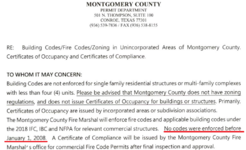
Looks like no codes were enforced in 2005.


1747069297205.png

Your biggest hurdle with prospective buyers will be their inspection. Even if you followed "~2005 NEC", you'd still be out of spec with modern NEC. Buyers can ask for whatever they want (Arc/GFI) - but it's all a negotiation.

Yeah like others have said I shouldn't even worry about it.
I guess my concern was if a house could be sold that the code wasn't met when it was built.
And yeah every county in Texas , even Harris county doesn't require permits or inspection for electrical work. The HO can do whatever they want basically. Just didn't know how that might effect resale.
Now if you're in a city or municipality, yeah you're gonna jump through hoops to replace a lightbulb. Jk. Almost.
But for now I'll just clean up any loose ends , install gfi for the garage , all the other required gfi stuff is already there.
 
To avoid these ads, REGISTER NOW!
Top Bottom