While I'm talking about heat, I have been asked a lot lately about my Jeep JK with the LS engine and cooling. This is a "hot" topic on many of the Jeep forums even without running an LS engine so I thought I would comment. As I drive around I see a LOT of JK's with winches mounted on top of the front bumpers, large plated stingers out in front of the Jeep's grille and then there's those angry grilles and mesh or inserts that people put on their JK's that do nothing more than obstruct airflow and make it harder for the car's cooling system to function. I'm not only talking about JK's with V8's but also stock drivetrains that are having heating issues.
Take a Jeep designed for 29" or 32" tires that weighs around 4500 pounds and the stock cooling system does it's job as designed because it requires a certain amount of energy to get down the road. The Jeep JK is already about as aerodynamic as a brick but in stock form it performs as designed. Now take and add 2-4 inches of lift and run 35-40 inch tires and you have an even less aerodynamic brick that you're trying to get to push through the air with more weight and rolling resistance. The Jeep will do it, even with the anemic 3.8 liter engine in the 2007-2011's but it adds stress to the system. This is one of the biggest reasons that I stayed at 35" tires for the first 8 years and 92k miles was because I was stressing the system as much as I dared and I was running a sunken winch as well as no obstructions to the grille.
The grille area on these JK's is not much. The opening only measures 11" in height and let's just call it 26" in width although it is slightly less, I'm being conservative. That is only 286 square inches of cooling surface area to expel the heat, or dissipate the heat. Technically it is less than that because you have 6 vertical bars that create the 7-slots that the Jeep is known for. Each vertical bar is 1.5" wide and 11" tall for 16.5 square inches each or 99 square inches of blocked area. Now you only have about 187 square inches to allow air to flow through the transmission cooler, A/C condenser (which is also putting off heat when the A/C is running) and then the radiator itself. The early JK's only used a 17" two-speed fan. Basically it reduces the voltage for low speed and feeds full system voltage for high speed but maximum airflow from that fan is only in the mid-2000 CFM range. The newer Pentastars have a better cooling fan that is PWM (Pulse Width Modulated) and 19" that is capable of over 3k CFM so much better performance. The Camaro SS fan that I am running is also a 19" PWM fan capable of around 4k CFM at 100%.
You can see just how the cards are already stacked against us JK owners before we start modding our babies. That is why it is so important to not design in any additional issues that will negatively affect the cooling system. While we're talking about mods we also can't forget about the engine bay itself and evacuating the hot air out of the engine bay. Many owners throw on a bunch of under-armor which also traps heat not allowing it to vent out the bottom as well as adds weight the engine has to overcome to push down the road. Another mod I see very heavily is the removal of the inner fenders when flat fenders are installed. This can potentially also create a restriction for hot air to escape if not done correctly. Inner fenders that fit tightly to the frame rails block off these gaps that were designed to allow for hot air to escape the engine bay so you can see how fast things multiply when dealing with heat and keeping the JK cool.
Now when you couple this with high elevation it gets even worse because as the air is thinner there is less of it to pull that heat away from the cooling radiator, although granted there is also less for combustion. Some people think this high elevation is good because it creates less heat in the engine but in fact as we go up in elevation we lose approx. 3% of output per 1k feet in elevation so your JK is having to work much harder at elevation to move its own weight with less performance.
Bottom line is when building your JK, or any car for that matter, think systems through so you're not fighting issues that you designed in down the road.
My Jeep for example is Black so it's a heat magnet and it's heavy @ 6k pounds. Granted I know of heavier ones with 40" tires and one-ton axles that are closer to 7k pounds but mines still heavy and it is lifted running 37" tires and has a lot of frontal area to push through the air. I am running OEM fenders and inner fenders, my winch is sunk down between the frame rails and my bumper does not block any grille area. I do have a fairly large transmission cooler and when I swapped in my 6.2 liter LS engine I also installed the A/C condenser for a manual shifted JK so it has more surface area as the automatic version condensers have a transmission cooler at the bottom of the A/C condenser, which I feel is not a great idea.
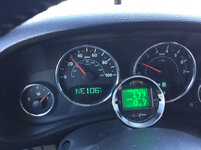
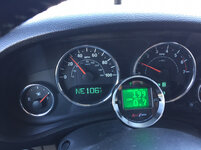
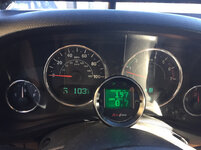
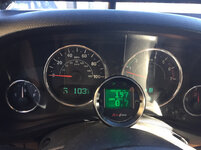
The past couple of days here in Northern Utah have been the hottest of the summer so far at 101-103 degrees. My lifted, Black JK has been running cool as a cucumber and performing flawless so it can be done. I have a 16-mile commute to work each day and driving to work in the morning at around 82-degrees ambient temperature my transmission temperature has been right at 135-degrees and my engine coolant temperature has been sitting right on the thermostat with temps of 194-197 degrees. That tells me I have adequate air flow through my grille as my cooling fan doesn't even come on.
Once I get off the interstate I have a couple of stoplights and about a mile section of 30 MPH where my cooling temps will climb slightly to around 208 when the fan comes on at around 15% and pulls the temp back down to 204 where it kicks off. This will continue to cycle and never rise above that 208 mark, which is far from hot on a modern engine.
Yesterday driving home in triple digit heat and stop & go traffic on I-15 with my A/C running it was cool inside my Black Jeep with the transmission temperature around 165-degrees and my fan running around 28-36% and keeping my engine under 200-degrees. My PWM fan is controlled 100% by the GM ECM as it is getting feedback from the other systems and the fan percent is set by prioritizing the inputs from A/C condenser pressure, transmission temperature as well as engine coolant temperature.
All in all, the GM LS engine does a great job in even a lifted, Black Jeep if done properly and some basic cooling system principles are followed.
Thanks for letting me ramble.