To avoid these ads, REGISTER NOW!

Zoomlock/Press on minisplit heatpump

American Locomotive

Well-known member
Joined
Jan 8, 2017
Messages
11,016
Location
Rhode Island
So my buddy recently had a dual-head LG system installed (well, 4 head condensing unit, but only two heads hooked up). They said they were having some issues, so I was taking a look at it. It seemed to be working okay, maybe. The outdoor unit's compressor seemed to be working pretty hard with only one head on and a ~45 degree ambient. At least compared to other minisplits I've worked with.

That made me think maybe some charge had leaked out.

So we started looking over some stuff. The documentation the installer provided said "Pressure tested @ 150 PSI for 10 minutes". So right off the bat that's a red flag.

I then grabbed some soapy bubbles and headed out to the ODU, was pretty shocked to see them using zoomlock/other press fittings on the outdoor unit. They were these pre-made flare-to-crimp connections. I looked them up, and they cost anywhere from $30-60 depending on size! I can maybe understand it on a conventional system where you'd have to braze, but on a minisplit? It literally takes less than a minute to flare a line set. They probably spent more time futzing around with the crimp tool and getting things cleaned, deburred and lined up than they would have just flaring the line directly.

But anyways, that's besides the point. I looked up the specs on the crimp fittings they used, and they said "Maximum Working Pressure: 700 PSI, Max Temperature: 250°F".

The LG documentation requests that you pressure test at 550 PSI for many hours, and that the compressor discharge temperature can hit near 170-180°F. I've read that minisplit R410a systems can hit 600+ PSI in normal operation. That seems to be cutting it really close, no? Seems kind of sketchy to me.

Are people really pressing minisplits together these days?
 
To avoid these ads, REGISTER NOW!

brewchief

Well-known member
Joined
Sep 20, 2008
Messages
2,371
Location
Michigan
I've seen and fixed some bad flare jobs, one 3 head system I didn't find a single flare that passed a go no go gauge.
Unfortunately lots of guys out there that can't manage to make a decent flare.

Personally I wouldn't use press fittings in that situation, easier to just make proper flare.

Sounds like it's within the ratings so it's probably not going to be the fitting that leaks but if the proper prep wasn't done then all bets are off.

I have press refrigeration fittings and tools on my truck, they really only get used when a joint needs to be made somewhere that I really don't want to light a torch.

On a mini split I would make a flare connection in the middle of a lineset before I pressed or brazed.

I pressure test at 400 psi typically, 30-40 minutes if possible and hit the joints with bubbles.

The design of mini split heads can make it pain to check the joints at the head after it's installed unless it goes straight out the back, wish there was a different design so the fittings stayed accessible.
 

chinboys

Well-known member
Joined
Jun 20, 2011
Messages
434
The use of new companies' press fit connectors needs the local municipality's approval for use which can exceed or be equal to your state's uniform construction code which again can exceed or be equal to the national codes.

Do yourself a favor and ask your building's department about such use.

I am a newly minted HVAC-R tech and as much as I want to use these linesets in my area, I can't.
Python is a PERT-AL-PERT line set and compression fitting system designed for both split system and mini-split system applications. It is intended for use in HVAC systems for industrial, commercial and residential applications.
 

PoorUB

Well-known member
Joined
Mar 29, 2021
Messages
11,730
Location
Fargo, ND
Are people really pressing minisplits together these days?
Yup!

When I worked at a HVAC supply we sold a ton of 1/4", 3/8", 1/2", and 5/8" Zoomlock flares fittings, and I mean a lot of them.

The reasoning was that Zoomlock makes a very nice heavy flare and the companies that used them had a lot less issues with leaks.
 

PoorUB

Well-known member
Joined
Mar 29, 2021
Messages
11,730
Location
Fargo, ND
Not to be overly negative but I don't much expect a mini split (or a current traditional split system) to make it much past the 10 year guarantee any more...
I agree! Another reason why I generally don't recommend them as a main heating source in the frozen north. Southern states and random use I am ok with them, but if you need one to heat a garage or home constantly I am not a big fan.

I used to sell them and of course parts for them too. I can't tell you the number of times a contractor just swapped out an outdoor unit because replacement parts were close to the same cost as a new unit.
 

Mr onetwo

Well-known member
Joined
Apr 6, 2011
Messages
2,010
Location
Coastal Maine
I couldn't agree more. They just are not as good as they are hyped up to be (sounds like EV's:unsure:) in low ambient conditions.I have 2 and never use them for heat below 30 degrees.For A/C and de-humidification they can't be beat.
 

fitter30

Well-known member
Joined
Jun 23, 2019
Messages
2,996
Location
Peace Valley,mo
There are industries practices and standards the difference is night and day. Practice boils down to we don't have to follow the manufacturer install manual there just trying to cover their ***. Manual make good toilet paper. Standard read it at least twice and follow the manual. Look on page 77 how Lg wants the system leak check and evacuated.
 

justinjoyal

Well-known member
Joined
Apr 30, 2015
Messages
888
Location
Quebec
I've read that minisplit R410a systems can hit 600+ PSI in normal operation. That seems to be cutting it really close, no? Seems kind of sketchy to me.

Are people really pressing minisplits together these days?
600+ psi is definitely not normal. The high-pressure cutoff point is often around 550psi and a system should not run that high.


The design of mini split heads can make it pain to check the joints at the head after it's installed unless it goes straight out the back, wish there was a different design so the fittings stayed accessible.
When properly installed the fittings are always accessible.

I couldn't agree more. They just are not as good as they are hyped up to be (sounds like EV's:unsure:) in low ambient conditions.I have 2 and never use them for heat below 30 degrees.For A/C and de-humidification they can't be beat.
You just gotta choose the right one. High efficiency heatpumps are very popular here in Quebec and we have no problem heating with them for most of the winter.
 

Mr onetwo

Well-known member
Joined
Apr 6, 2011
Messages
2,010
Location
Coastal Maine
You just gotta choose the right one. High efficiency heatpumps are very popular here in Quebec and we have no problem heating with them for most of the winter.
Wrong assumption.I have 2 of the latest hyper-heat models and they simply are not efficient or economical below 30F when compared to a properly designed gas condensing radiant system in a well insulated home....which I have. I did a direct comparison last fall and early winter and the heat pumps used 3 times the energy of my primary LP fired system and I didn't run them below about 15F.
 

justinjoyal

Well-known member
Joined
Apr 30, 2015
Messages
888
Location
Quebec
Wrong assumption.I have 2 of the latest hyper-heat models and they simply are not efficient or economical below 30F when compared to a properly designed gas condensing radiant system in a well insulated home....which I have. I did a direct comparison last fall and early winter and the heat pumps used 3 times the energy of my primary LP fired system and I didn't run them below about 15F.
Well, the hundreds of customers of mine who are happy with their improved comfort and reduced utility bills must be wrong then.
 

PoorUB

Well-known member
Joined
Mar 29, 2021
Messages
11,730
Location
Fargo, ND
But anyways, that's besides the point. I looked up the specs on the crimp fittings they used, and they said "Maximum Working Pressure: 700 PSI, Max Temperature: 250°F".
When Zoomlock came out they did a huge sales drive. One of the things they did was to crimp two 1/4" male flare fittings together with a stub of copper tube and put them in a pressure test. They would pump it up to 2,000 PSI and the fitting did not fail. I don't know what the failure pressure was, but it appears the connection is at least three times the recommended working pressure. The fun part about the test is the copper tubing would bulge out slightly from the pressure. I think the copper tubing will fail before the fitting.
 

rlitman

Well-known member
Joined
Oct 18, 2010
Messages
24,685
Location
Long Island

Jackfre

Well-known member
Joined
Dec 26, 2010
Messages
4,417
Location
N CA
Mr 1-2‘s experience is different than mine with operating temp/efficency, but he also has the best combination of systems for Coastal Maine or about anywhere really cold. The thing is, if you look at the total number of hours that it is below 15*f it is a pretty small number percentage wise of the total heating season.
 
To avoid these ads, REGISTER NOW!
OP
A

American Locomotive

Well-known member
Joined
Jan 8, 2017
Messages
11,016
Location
Rhode Island
My employer uses them, mostly in areas that would otherwise require a hot work permit and fire watch.

Although I have no data to back up my opinion, I do not trust the press fittings long term.
I more or less trust press fittings in residential plumbing (although I'm still weary), and I totally get using zoomlock in a refrigeration setting where you'd need a hotwork permit and fire watch. But I am just weary of the o-ring situation. I've seen plenty of o-rings leak in bolted-together automotive HVAC applications, and those are low pressure r134a systems.

Well, my direct empirical measurements and 30 years in the trade says otherwise.However, no two situations are the same.:beer:
I mean the thing is, the performance of minisplits is published by the manufacturer so can you objectively compare them based on electricity and fuel cost. At least here in New England, modern minisplits are much more economical to run than LPG-fired heat at least down until 5°F or so. Last I checked, running propane in an 80% furnace in this area was within spitting distance of straight electric resistance heat in terms of cost.
 

Mr onetwo

Well-known member
Joined
Apr 6, 2011
Messages
2,010
Location
Coastal Maine
I'm talking 95%+ efficient condensing equipment, not 80% . In my area my electric bill has more than doubled in the past 2 years while LP has gone up maybe 10%. Heat pumps are not the answer unless you are generating your own electricity thru solar IMHO.They are perhaps better if you have an old, poorly insulated house with a crappy old oil fired iron boiler with rads or baseboard running at 180 degrees....otherwise no thanks.
 

justinjoyal

Well-known member
Joined
Apr 30, 2015
Messages
888
Location
Quebec
I'm talking 95%+ efficient condensing equipment, not 80% . In my area my electric bill has more than doubled in the past 2 years while LP has gone up maybe 10%. Heat pumps are not the answer unless you are generating your own electricity thru solar IMHO.They are perhaps better if you have an old, poorly insulated house with a crappy old oil fired iron boiler with rads or baseboard running at 180 degrees....otherwise no thanks.

The "economical" factor of a mini-split VS others depends on utility costs and yes, results can be different from place to place.

However, to say they are not efficient below 30*F as Mr onetwo put it is simply inaccurate.
 
OP
A

American Locomotive

Well-known member
Joined
Jan 8, 2017
Messages
11,016
Location
Rhode Island
I'm talking 95%+ efficient condensing equipment, not 80% . In my area my electric bill has more than doubled in the past 2 years while LP has gone up maybe 10%. Heat pumps are not the answer unless you are generating your own electricity thru solar IMHO.They are perhaps better if you have an old, poorly insulated house with a crappy old oil fired iron boiler with rads or baseboard running at 180 degrees....otherwise no thanks.
It doesn't even matter that the electric rates are higher. I have a big ol' spreadsheet. Propane is starting out so much more expensive, that even with a 95% furnance, and the current New England 30-ish-cents-per-kWh winter rates, you will still save money.
 

rlitman

Well-known member
Joined
Oct 18, 2010
Messages
24,685
Location
Long Island
It doesn't even matter that the electric rates are higher. I have a big ol' spreadsheet. Propane is starting out so much more expensive, that even with a 95% furnance, and the current New England 30-ish-cents-per-kWh winter rates, you will still save money.
Propane is a waste gas from gasoline cracking. If you're near the refinery it can be dirt cheap so long as you're buying large enough quantities. Everywhere else you're paying huge markups for hazmat, transport, storage, etc.

For me, per BTU, resistance heating (100% efficiency) comes in under half the price of propane in BBQ cylinders, and that's assuming 100% efficiency radiant heating (sunflower infrared burner on top of cylinder).
 

SBAG

Well-known member
Joined
Aug 27, 2022
Messages
208
Heat pumps are not the answer unless you are generating your own electricity thru solar IMHO.
Yes. I am. But…I’m off grid (with a quite large system). So they still aren’t the complete answer for me as the winter has so few solar hours. Great for the shoulder seasons and as a dead of winter supplemental heat in certain spots and set to freeze protection mode in others.

Could be primary heat for those with a grid tied solar system.
 

purplezr2

Well-known member
Joined
Jun 1, 2010
Messages
5,300
Location
Central MN
The "economical" factor of a mini-split VS others depends on utility costs and yes, results can be different from place to place.

However, to say they are not efficient below 30*F as Mr onetwo put it is simply inaccurate.

What units do you typically install(brand and model), would be interesting to see a efficiency curve for the particular model.

I know mine seems to eat more energy when the temp drops below freezing. Seems that it has to defrost often and that uses a good amount of power.

Mine is also undersized for the space, I purchased it mostly to get air conditioning as I knew it wouldn't work well for the-20+ we get for weeks on end in my area.
 

justinjoyal

Well-known member
Joined
Apr 30, 2015
Messages
888
Location
Quebec
What units do you typically install(brand and model), would be interesting to see a efficiency curve for the particular model.

I know mine seems to eat more energy when the temp drops below freezing. Seems that it has to defrost often and that uses a good amount of power.

Mine is also undersized for the space, I purchased it mostly to get air conditioning as I knew it wouldn't work well for the-20+ we get for weeks on end in my area.

Mostly Gree.

The most popular wall units are the Vireo and the Sapphire. For central : Gree Flexx
 

pcmeiners

Well-known member
Joined
Aug 13, 2009
Messages
7,967
Location
In the only town in Pennsylvania, Bloomsburg.
"I did a direct comparison last fall and early winter and the heat pumps used 3 times the energy of my primary LP fired system and I didn't run them below about 15F."

Would love to know how your "special" propane is 3 times more efficient per million BTUs than everyone else's? Actually it is the opposite, propane is 3x more expensive to run than even a moderately efficient heat pump, with average fuel costs.

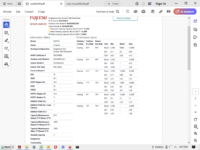
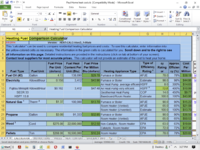
$10.99 ( very efficient Fujitsu hyper heat heat pump, linked below) vs 36.50 ( very efficient propane heater) per million BTU at national average electric and propane costs. This is the state of Maine's spreadsheet, not mine. I only filled in the present average costs ( as of January /24), and efficiencies

1713900472006.png


"However, to say they are not efficient below 30*F as Mr onetwo put it is simply inaccurate"

The most he can say in truth is heat pumps are not as efficient at very low temperatures as the are at higher temperature. Overall, in the heating season (and cooling ) they are far more efficient than propane, (even moderately efficiency heat pumps are far more efficient).


Another calculator......

 
Last edited:

Highbeam

Well-known member
Joined
Feb 15, 2011
Messages
2,292
Location
Mt Rainier foothills, WA
Efficiency drops pretty fast from the 400% used in that spreadsheet when outdoor temperatures fall. Like really fast. They're still quite efficient in the cold but it would be misleading to use 400% for comparison sake. You should choose a reasonable outdoor temperature for the cost comparison datapoint. Maybe the heating design temperature for the area? There may be a crossover point where it is cheaper to use propane.

I like my minisplit but burn lots of cheap wood for heat.
 

rlitman

Well-known member
Joined
Oct 18, 2010
Messages
24,685
Location
Long Island
Efficiency drops pretty fast from the 400% used in that spreadsheet when outdoor temperatures fall. Like really fast. They're still quite efficient in the cold but it would be misleading to use 400% for comparison sake...
Do you have any data to substantiate this nonsense? R410a boils at -55.3°F, and heating and cooling systems operate at PEAK efficiency when run at 100% duty cycle.
 

pcmeiners

Well-known member
Joined
Aug 13, 2009
Messages
7,967
Location
In the only town in Pennsylvania, Bloomsburg.
"Heat pumps are not the answer unless you are generating your own electricity thru solar IMHO." This is a myth.

"they're still quite efficient in the cold but it would be misleading to use 400% for comparison sake."

Heat pumps are not linearly efficient, and never will be; not misleading if you take the time to understand how the data results are presented by the industry ....

The only way anyone could possible compare fuel costs and efficiency is by averaging; granted propane costs are only for heating, but if a heat pump was only used for heating it still is cheaper than propane at average USA fuel costs, until you get lower than -15, and granted my Fujitsu heat pumps are very efficient.

400% is the AVERAGE efficiency of a Fujitsu low temp, high efficiency unit, and my unit still is 3x cheaper than propane at minus -6 temperature. $22.89 hp vs $31.02 for propane at 90% efficient. At minus --15, the HP is even with propane; when was the last time 95% of the US was at -15

1714082894664.png

"I'm talking 95%+ efficient condensing equipment, not 80% ."

Feel free to download the spreadsheet above and use 95% efficiency. Just Google and search on HEAT-CALC-Vsn-D_1-09.xls, I used 90% as few are using 95% efficient units due to initial costs and repair costs; actual very few are even using 90% efficient units with any fuel.
 

Attachments

  • 1714082620618.png
    1714082620618.png
    153.5 KB · Views: 3
Last edited:

rlitman

Well-known member
Joined
Oct 18, 2010
Messages
24,685
Location
Long Island
...Heat pumps are not linearly efficient, and never will be; not misleading if you take the time to understand how the data results are presented by the industry ....

400% is the AVERAGE efficiency of a Fujitsu low temp, high efficiency unit, and my unit still is 3x cheaper than propane at minus -6 temperature. $22.89 hp vs $31.02 for propane at 90% efficient. At minus --15, the HP is even with propane; when was the last time 95% of the US was at -15
Exactly. And sealed combustion heaters lose efficiency as temperatures decrease too, because that propane or NG burner is starting with colder outside air as the temperature outside drops.

Plus, even if the temperature does dip to -15, how many hours a year does that really happen for? Your chart above shows 239% efficiency at -6F, and in my neck of the woods, it would have to drop below 50% before propane would become more economical, so that "crossover" is never going to happen.
 

pcmeiners

Well-known member
Joined
Aug 13, 2009
Messages
7,967
Location
In the only town in Pennsylvania, Bloomsburg.
"Plus, even if the temperature does dip to -15, how many hours a year does that really happen for? " :thumbup:


"And sealed combustion heaters lose efficiency as temperatures decrease too, because that propane or NG burner is starting with colder outside air as the temperature outside drops."

Good point, I wonder if they figure that in in the fuel efficiency ? a good bit of heat go up the chimney from the air used in combustion, and heat loss from the intake of air from the outside.
 

Highbeam

Well-known member
Joined
Feb 15, 2011
Messages
2,292
Location
Mt Rainier foothills, WA
"Heat pumps are not the answer unless you are generating your own electricity thru solar IMHO." This is a myth.

"they're still quite efficient in the cold but it would be misleading to use 400% for comparison sake."

Heat pumps are not linearly efficient, and never will be; not misleading if you take the time to understand how the data results are presented by the industry ....

The only way anyone could possible compare fuel costs and efficiency is by averaging; granted propane costs are only for heating, but if a heat pump was only used for heating it still is cheaper than propane at average USA fuel costs, until you get lower than -15, and granted my Fujitsu heat pumps are very efficient.

400% is the AVERAGE efficiency of a Fujitsu low temp, high efficiency unit, and my unit still is 3x cheaper than propane at minus -6 temperature. $22.89 hp vs $31.02 for propane at 90% efficient. At minus --15, the HP is even with propane; when was the last time 95% of the US was at -15

1714082894664.png

"I'm talking 95%+ efficient condensing equipment, not 80% ."

Feel free to download the spreadsheet above and use 95% efficiency. Just Google and search on HEAT-CALC-Vsn-D_1-09.xls, I used 90% as few are using 95% efficient units due to initial costs and repair costs; actual very few are even using 90% efficient units with any fuel.
That particular fujitsu has some impressive specifications but they are not typical of most minsplits.

My mrcool DIY minisplit has 200% at 17F, 217% at 32F, 239% at 39F, 274% at 47F. I have it in excel because there is a crossover point with firewood which is my primary heat source. The performance curves for each minisplit are published in their documentation used for energy star ratings and for tax credits. Easy to find for each minisplit.

So as you spoke of with averages, you can't use your best case mini for comparison either.
 

pcmeiners

Well-known member
Joined
Aug 13, 2009
Messages
7,967
Location
In the only town in Pennsylvania, Bloomsburg.
"So as you spoke of with averages, you can't use your best case mini for comparison either."

The Fujitsu specs will be common with a couple years, perhaps low average.

Even a moderately efficient minisplit's running cost are more than 2x cheaper than propane ( the average purchased minisplit); the only fuel more expensive than propane is resistance and oil heating.
I have the running cost of a moderately efficient unit in the spread sheet I posted above, and firewood also. Firewood is fairly cheap, Coal used be be the cheapest, but the price went up 3x due to Chinese demand
 
Last edited:
To avoid these ads, REGISTER NOW!
Top Bottom