

Denwood
Well-known member
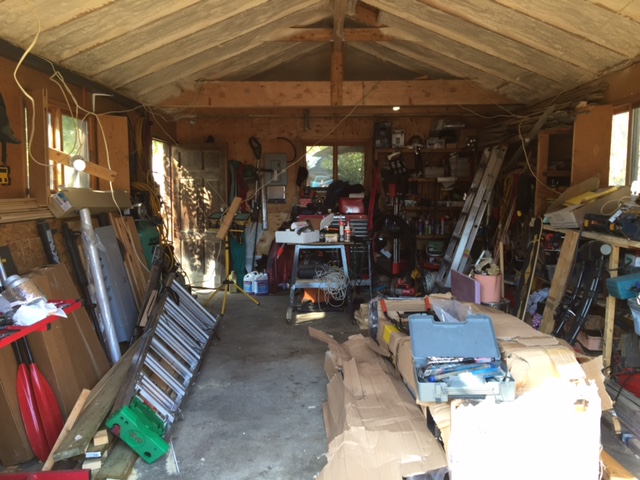
I figure every one of these satellite threads needs a before after of my shop from chaos to order 

The cleaned up shop has been in need of a basic dust management system for some time. The space is small, and needs to be multi-functional, so this system reflects those needs. I started with a 2 1/2 kit from Lee Valley tools. As you might guess, I only used part of the kit..the rest will go to my business shop.

After doing a 4" system at the office shop, I realized velocity would be much better with a 2 1/2" system powered by my Rigid vac at 179 CFM. To that kit, we add the Dust deputy. Trying things out on my table saw, I figure I should have sorted dust management out a long time ago. The dust deputy seems to end up taking 99% of the sawdust, meaning the vacuum suction stays much higher with a clean filter.

We have two of these Rigid 14 gallon vacs in two locations over the last 2-3 yrs, easily my favourite shop vac ever. They are relatively quiet, and move a ton of air. Looking over a few web reviews, they also seem to end up on top most of the time.

I wanted to keep things as simple, clean and compact as possible. The shop vac can be pulled out in seconds for use off-site, and the hose/attachments can be attached to any of the blast gates.
The Dust Deputy is tucked in behind the drill press. Hose is all 2 1/2". I bought a 50 ft roll, for both the home and business shop.
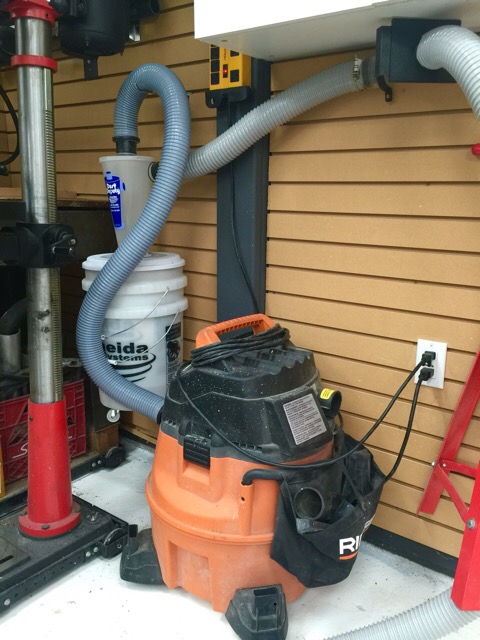
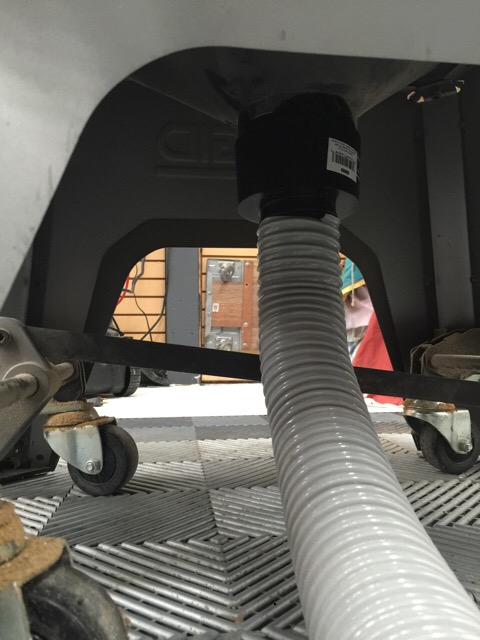
Attachment for the Rigid table saw via 2 1/2 to 4" adapter:
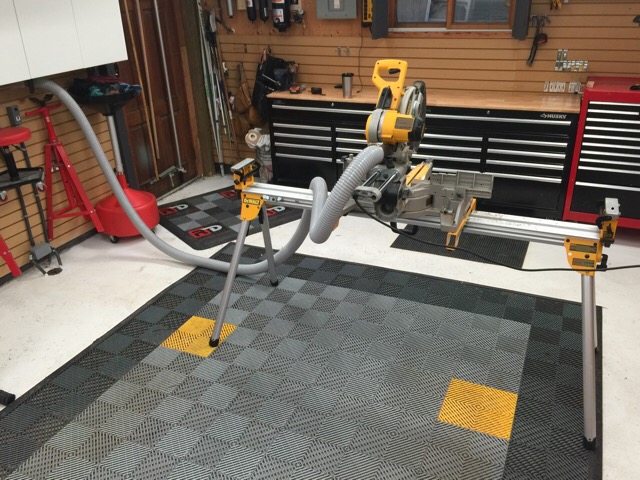
Chop saw setup, pretty much the same as radial arm saw connection:
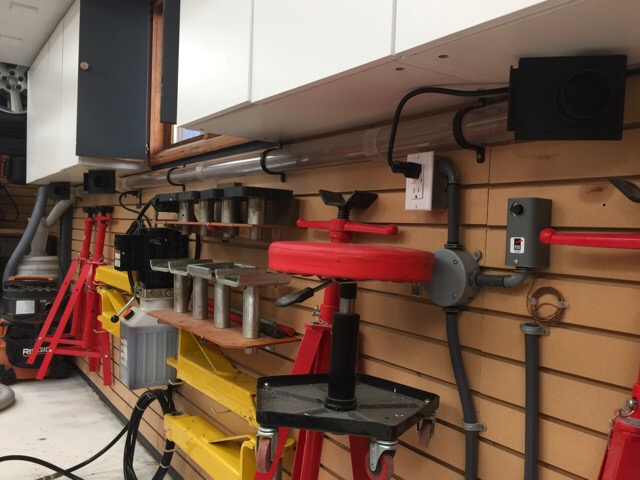
2 1/2" clear pipe and 3 blast gates tucked under cabinets:

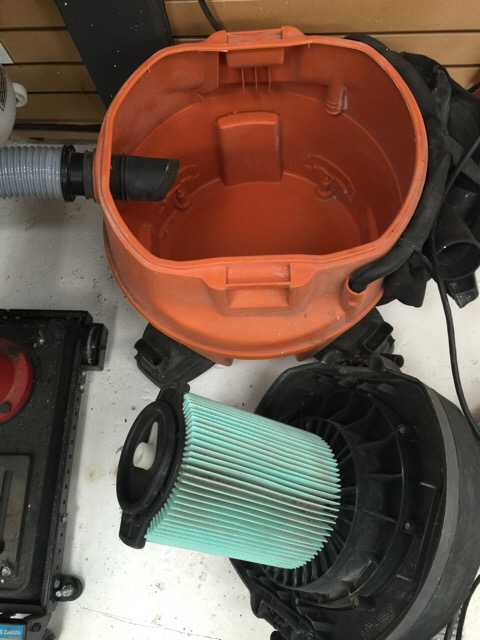
The vacuum ends up sucking up almost nothing:
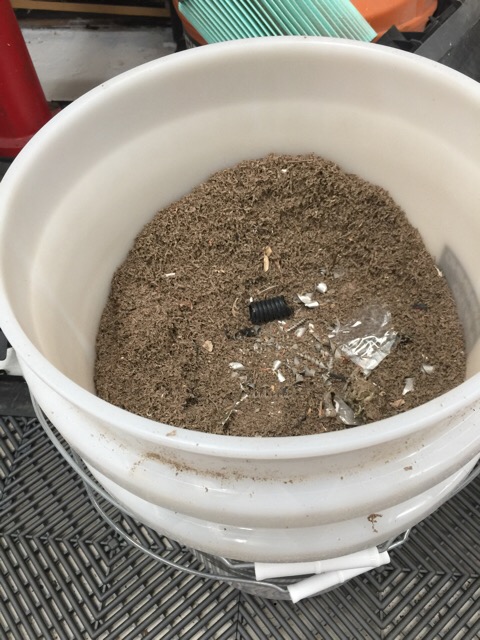
The cyclone bucket though is pretty full:
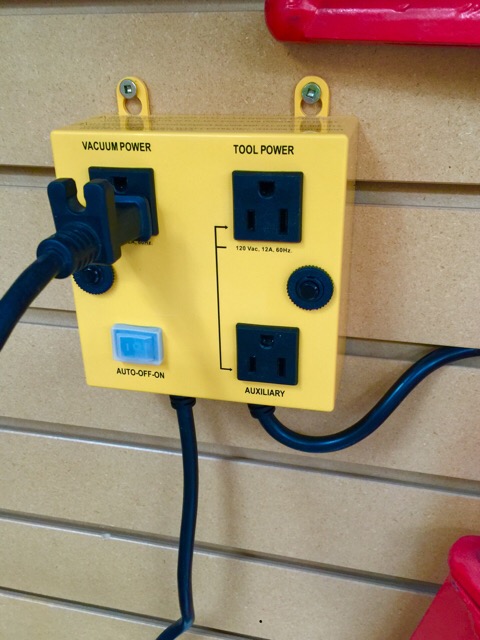
Analog Vaccum Controller
If you want an effective vacuum control using two circuits, this works well: http://ivacswitch.com/ivac-switch/ You plug the tool into this box, and when powered, it fires up the vacuum. It delays the vacuum power off by about 5 seconds to clear the lines. It can draw power from one or two 110V circuits...two being the preferred set up if you're drawing more than 15 amps for the vacuum and tools.
Fancy pants Automation Control of Vacuum
I decided to try my hand at writing a Smart App, and using automation to run the vacuum. If you're interested in setting this up for yourself, I posted the code, and instructions over at the SmartThings forum. You'd need a Smarthings Hub (about $100), the app I wrote, and a few smart plugs to make this work. Being that I already have the garage automated, the incremental cost was low.
Using this type of control, you don't need to run extension cords from a device like the iVac switch for each tool. You can also have more than just one device controlled using the Smart app..and you can set the turn off delay to whatever you like.
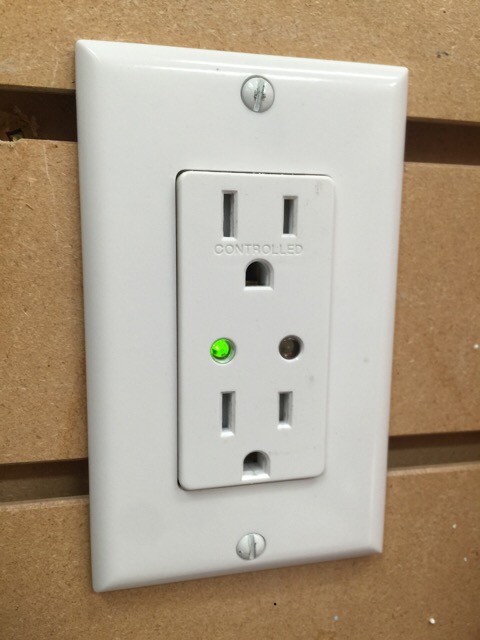
This Zwave receptacle can be controlled via Zwave wireless. The automation hub communicates with the controlled half of the receptacle, and switches it on and off based on what the Smart App I wrote tells it to do. The Rigid vacuum is connected to the controlled receptacle.
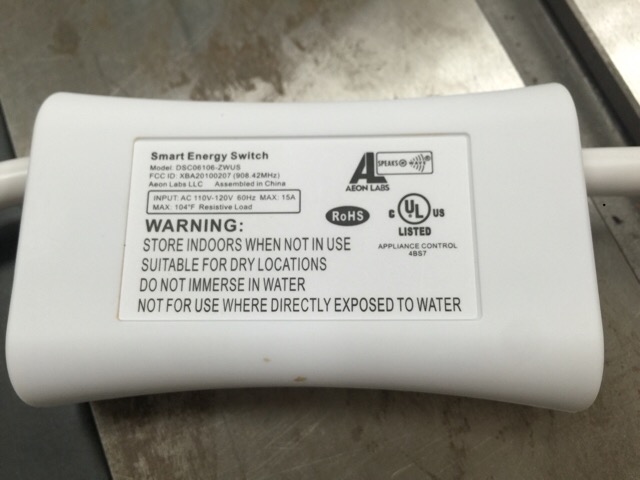
This Aeon-Labs-DSC06106 Smart Energy Switch reports energy use to the automation hub. So if a tool is connected to it, and powered up, the switch communicates the power increase to the hub (via zWave wireless) which in turn powers on/off the vacuum. This means you can plug any tool into any circuit, and the vacuum will turn on/off automatically. The downside to using this app is that there is a bit more delay than when using the iVac switch.
Table saw plugged in to Aeon Smart Energy Switch.
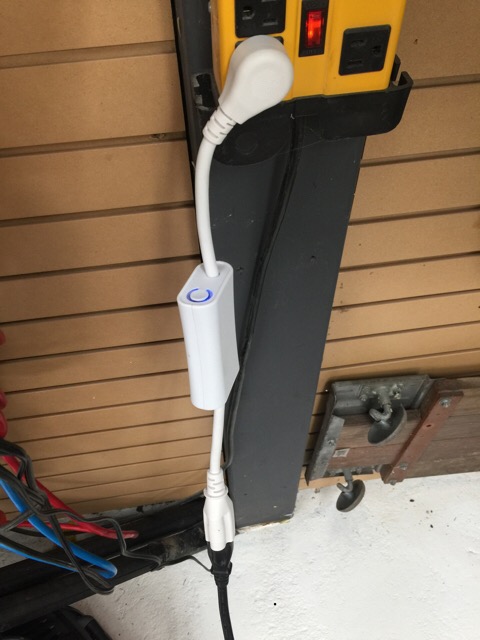
A close look.
My assistant showed up late to test things out

The cleaned up shop has been in need of a basic dust management system for some time. The space is small, and needs to be multi-functional, so this system reflects those needs. I started with a 2 1/2 kit from Lee Valley tools. As you might guess, I only used part of the kit..the rest will go to my business shop.
After doing a 4" system at the office shop, I realized velocity would be much better with a 2 1/2" system powered by my Rigid vac at 179 CFM. To that kit, we add the Dust deputy. Trying things out on my table saw, I figure I should have sorted dust management out a long time ago. The dust deputy seems to end up taking 99% of the sawdust, meaning the vacuum suction stays much higher with a clean filter.
We have two of these Rigid 14 gallon vacs in two locations over the last 2-3 yrs, easily my favourite shop vac ever. They are relatively quiet, and move a ton of air. Looking over a few web reviews, they also seem to end up on top most of the time.
I wanted to keep things as simple, clean and compact as possible. The shop vac can be pulled out in seconds for use off-site, and the hose/attachments can be attached to any of the blast gates.
The Dust Deputy is tucked in behind the drill press. Hose is all 2 1/2". I bought a 50 ft roll, for both the home and business shop.
Attachment for the Rigid table saw via 2 1/2 to 4" adapter:
Chop saw setup, pretty much the same as radial arm saw connection:
2 1/2" clear pipe and 3 blast gates tucked under cabinets:
The vacuum ends up sucking up almost nothing:
The cyclone bucket though is pretty full:
Analog Vaccum Controller
If you want an effective vacuum control using two circuits, this works well: http://ivacswitch.com/ivac-switch/ You plug the tool into this box, and when powered, it fires up the vacuum. It delays the vacuum power off by about 5 seconds to clear the lines. It can draw power from one or two 110V circuits...two being the preferred set up if you're drawing more than 15 amps for the vacuum and tools.
Fancy pants Automation Control of Vacuum
I decided to try my hand at writing a Smart App, and using automation to run the vacuum. If you're interested in setting this up for yourself, I posted the code, and instructions over at the SmartThings forum. You'd need a Smarthings Hub (about $100), the app I wrote, and a few smart plugs to make this work. Being that I already have the garage automated, the incremental cost was low.
Using this type of control, you don't need to run extension cords from a device like the iVac switch for each tool. You can also have more than just one device controlled using the Smart app..and you can set the turn off delay to whatever you like.
This Zwave receptacle can be controlled via Zwave wireless. The automation hub communicates with the controlled half of the receptacle, and switches it on and off based on what the Smart App I wrote tells it to do. The Rigid vacuum is connected to the controlled receptacle.
This Aeon-Labs-DSC06106 Smart Energy Switch reports energy use to the automation hub. So if a tool is connected to it, and powered up, the switch communicates the power increase to the hub (via zWave wireless) which in turn powers on/off the vacuum. This means you can plug any tool into any circuit, and the vacuum will turn on/off automatically. The downside to using this app is that there is a bit more delay than when using the iVac switch.
Table saw plugged in to Aeon Smart Energy Switch.
A close look.
My assistant showed up late to test things out
Last edited:

 light kit) to remotely turn on the DC.

