To avoid these ads, REGISTER NOW!

Snap-On tools and metal used

_brian_

Well-known member
Joined
Jun 23, 2019
Messages
360
Location
Wisconsin, USA
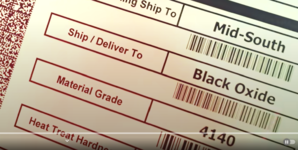
This thread is intended to address an issue that existed on a deleted thread. I stated that Snap-On uses nickel and boron in their tools, and was essentially called out as not understanding anything. No worries, I have a screen capture of the entire thread before it was removed so I Can prove everything I state here. So, i have the material i used for that statement here, please see the picture. I would like to ask, specifically to the user @Benito - you stated Snap-On uses 4140 on their sockets, and you are not guessing. Can you provide any sort of proof that? I am not saying you are wrong, but implying that Snap-On is lying to their customers is a big claim. It is a bit hard to take the word of some person I do not know over the company themselves. So my query here is for you, or anyone else who says the same, to kindly educate me and others on what Snap-On really uses.

This is the material that was provided by a Snap-On dealer (attached), and also discussed in this forum. I would like to get down to facts, so please interpret this thread as that, trying to get the facts. I would also like to offer the opportunity to join me on a call with Snap-On and address this. I cannot really call them and say that some guy I dont know says this and that, so it would be great if you can explain to them who you are and what you now. Again, I am not making any sort of insults or intending to break any forum rules, I am just asking for statements made to be proven so the truth can be known, to the best we can.

This is important to me at least, as I have been under the belief that Snap-On was telling the truth, using a different, and better, metal than others, part of the justification of a higher price of the tool. I look forward to any reply, from anyone, to assist in the answer on this. And @Benito - all respect man. You seemed to have a real issue with my statement. I would like to know the why behind it.
 

Attachments

  • snapon.jpg
    snapon.jpg
    132 KB · Views: 405
To avoid these ads, REGISTER NOW!
OP
B

_brian_

Well-known member
Joined
Jun 23, 2019
Messages
360
Location
Wisconsin, USA
I wanted to add exactly was was said, via image, so no one needs to take my word for it. This is what I am asking for some proof on.
 

Attachments

  • Screenshot from 2023-03-10 22-49-01.png
    Screenshot from 2023-03-10 22-49-01.png
    215.5 KB · Views: 377

d.mcfarland

Well-known member
Joined
Jun 18, 2012
Messages
6,567
Location
Western PA
Does the Snap-On dealer that had that chart have any additional material? I'm sure that those are all sales related materials provided to dealers to help them.
 
OP
B

_brian_

Well-known member
Joined
Jun 23, 2019
Messages
360
Location
Wisconsin, USA
Does the Snap-On dealer that had that chart have any additional material? I'm sure that those are all sales related materials provided to dealers to help them.
I agree, those are sales collaterals. but would they contain lies? I have been told so. Snap-On generally states they use a proprietary alloy, which is standard and common. Regardless, as stated, I am willing and happy to make a call to Snap-On direct and discuss this. I just need a reasonable source to discredit their own maternal, or I look like the idiot. I opt to believe them, but if someone disagrees, I want to know. But this is NOT my disagreement.

Are you suggesting that the supplied "sales related materials" contain false information? Not accusing at all, trying to get to the bottom of this. I can ask my local Snap-On guy too, I will be seeing him within the week. But I wont be made the fool, so I would like some support to deny what has been provided aside from a statement that it is wrong with no proof of any sort. I could though ask him to substantiate the chat shown, this I can and will do.

EDIT: this is his weekend and I respect that. Monday AM I will TXT him the chart and ask him on it.
 

d.mcfarland

Well-known member
Joined
Jun 18, 2012
Messages
6,567
Location
Western PA
Not discrediting at all. I'm sure it's normal advertising material. They pick and choose information that helps them obviously, so take it for what it is, marketing material.

I have heard that Snap-On does use a proprietary steel as well. I don't know anything specific at all.

When you see your driver for sure ask if they have more marketing/sales information that would be similar. Would be cool to see stuff like that.
 
OP
B

_brian_

Well-known member
Joined
Jun 23, 2019
Messages
360
Location
Wisconsin, USA
Not discrediting at all. I'm sure it's normal advertising material. They pick and choose information that helps them obviously, so take it for what it is, marketing material.

I have heard that Snap-On does use a proprietary steel as well. I don't know anything specific at all.

When you see your driver for sure ask if they have more marketing/sales information that would be similar. Would be cool to see stuff like that.
Absolutely. I have the recent catalog plus the supplemental and recent sales booklet, but non of them reference materials. I checked with full diligence. Again my intent is not to argue here, I would like to know the truth. I supplied my proof of my statements, I have not seen any proof of the statements that disagree. But with respect, I need to give other members time to respond, and in that time, I will do my asking. Plus my offer to have a call with Snap-On remains. If anyone agrees to do so, I will PM you my info and set up a call where you wont even need to disclose your phone number to me.
 

Ole Slewfoot

Well-known member
Joined
Feb 22, 2016
Messages
5,098
Location
Freedom, CA
In the 80s, so had a patent for boron alloyed steel to aid in cold forming, which does not cover most of their sockets.
But they make many kinds of sockets, impact and hand will have different formulation and or process, while the big ones are machined from bar stock.
There's no reason both cannot be true.
And whether a given socket has 0.05% boron in it, or some years maybe did seems like a dumb thing to get hung up over. The socket gives adequate service or it does not. Buy accordingly.
 
OP
B

_brian_

Well-known member
Joined
Jun 23, 2019
Messages
360
Location
Wisconsin, USA
In the 80s, so had a patent for boron alloyed steel to aid in cold forming, which does not cover most of their sockets.
But they make many kinds of sockets, impact and hand will have different formulation and or process, while the big ones are machined from bar stock.
There's no reason both cannot be true.
And whether a given socket has 0.05% boron in it, or some years maybe did seems like a dumb thing to get hung up over. The socket gives adequate service or it does not. Buy accordingly.
Interesting, thanks for your reply. I get hung up on being called out for not knowing what I speak of, but that is irrelevant here. I made my statement and I was blatantly disagreed with, and I simply ask for proof or some sort of justification or reasoning. I can take my hits, all good. I just want the truth. Someone here is dishonest, lying. It is either Snap-On themselves or a user here. Which is it. I dont care which it is, I just want to know.

I appreciate the input from others, but would like to hear from the originator. I provided what was said, and I provided my proof of the statement I made. You clearly disagree, so please, kindly, share.

EDIT: I cannot speak to your assertment of 0.05% boron. I do not have that information I have supplied what I have been provided. I will state with my limited knowledge that even in the small amount you state here can in fact make a difference when done properly. The difference between Cr-V and Cr-Mo is that minor, but seems to make a difference, aside from the hardening process which can in fact make it irrelevant.
 
Last edited:

Walkers

Well-known member
Joined
May 17, 2021
Messages
3,912
Location
Cave Creek Az
Excerpt from one of their 3,600 patents
”An alloy steel having superior ductility and a low rate of work hardening for use in severe cold forming processes to provide products with high static and dynamic strength, the alloy steel consisting essentially of from about 0.28% to about 0.33% by weight carbon, from about 0.25% to about 0.65% by weight manganese, up to about 0.15% by weight silicon, from about 0.0005% to about 0.0035% by weight boron, from about 0.4% to about 0.7% by weight nickel, from about 0.4% to about 0.6% by weight chromium, from about 0.15% to about 0.25% by weight molybdenum, and the remainder being iron with minor amounts of impurities and additional alloying elements; a high strength forged tool made from the alloy steel; and the method of forming high strength forged tools including the steps of providing a solid metal slug of the alloy steel, annealing the metal slug for spheroidization to a hardness in the range RB 70 to RB 76, cold forming the annealed metal slug into the final shape of the tool, and thereafter heat hardening the formed tool to a hardness in the range RC 48 to RC 52, the annealed yield strength being in the range of from about 39,290 PSI to about 43,290 PSI and the reduction of area being in the range of from about 70% to about 74%”

Link to a GJ thread on How it’s Made. https://www.garagejournal.com/forum...snap-on-wrenches-sockets-and-ratchets.253985/
 
OP
B

_brian_

Well-known member
Joined
Jun 23, 2019
Messages
360
Location
Wisconsin, USA
Excerpt from one of their 3,600 patents
”An alloy steel having superior ductility and a low rate of work hardening for use in severe cold forming processes to provide products with high static and dynamic strength, the alloy steel consisting essentially of from about 0.28% to about 0.33% by weight carbon, from about 0.25% to about 0.65% by weight manganese, up to about 0.15% by weight silicon, from about 0.0005% to about 0.0035% by weight boron, from about 0.4% to about 0.7% by weight nickel, from about 0.4% to about 0.6% by weight chromium, from about 0.15% to about 0.25% by weight molybdenum, and the remainder being iron with minor amounts of impurities and additional alloying elements; a high strength forged tool made from the alloy steel; and the method of forming high strength forged tools including the steps of providing a solid metal slug of the alloy steel, annealing the metal slug for spheroidization to a hardness in the range RB 70 to RB 76, cold forming the annealed metal slug into the final shape of the tool, and thereafter heat hardening the formed tool to a hardness in the range RC 48 to RC 52, the annealed yield strength being in the range of from about 39,290 PSI to about 43,290 PSI and the reduction of area being in the range of from about 70% to about 74%”

Link to a GJ thread on How it’s Made. https://www.garagejournal.com/forum...snap-on-wrenches-sockets-and-ratchets.253985/
Wow, thank you my friend. That is more detail than I would have ever expected. I cannot speak to what all that means, but I know the materials at least. That is a superior response.

NOTE: That is not the spec of 4140, so I think I found the issue here. I believe the source of the false information is clear.
 
Last edited:

Ole Slewfoot

Well-known member
Joined
Feb 22, 2016
Messages
5,098
Location
Freedom, CA
Also does not specify that it is, was, or will be in any given socket.

And if it were or has been used in some sockets, that in no way keeps 4140 or similar being used in others.
 

Fly YX

Well-known member
Joined
Jul 31, 2017
Messages
1,417
Interesting, thanks for your reply. I get hung up on being called out for not knowing what I speak of, but that is irrelevant here. I made my statement and I was blatantly disagreed with, and I simply ask for proof or some sort of justification or reasoning. I can take my hits, all good. I just want the truth. Someone here is dishonest, lying. It is either Snap-On themselves or a user here. Which is it. I dont care which it is, I just want to know.

I appreciate the input from others, but would like to hear from the originator. I provided what was said, and I provided my proof of the statement I made. You clearly disagree, so please, kindly, share.

EDIT: I cannot speak to your assertment of 0.05% boron. I do not have that information I have supplied what I have been provided. I will state with my limited knowledge that even in the small amount you state here can in fact make a difference when done properly. The difference between Cr-V and Cr-Mo is that minor, but seems to make a difference, aside from the hardening process which can in fact make it irrelevant

Not helpful I know but I could not help myself 😄
 

cgrutt

Well-known member
Joined
Mar 4, 2016
Messages
8,243
Also does not specify that it is, was, or will be in any given socket.

And if it were or has been used in some sockets, that in no way keeps 4140 or similar being used in others.
Believe making sockets was the underlying goal of the patent. Admittedly not sure which sockets are made with this formulation but I'd venture to guess some were. Interestingly, it turns out they were also apparently looking for better economics no surprise there. This formulation enabled them to cold form 3000 units per hour with 6% material loss vs machining only 200 units per hour with 50 to 60% material loss while at same time improving both static and dynamic strength.

In forming tools such as the socket wrench 160 using an alloy steel such as the prior art AISI 8630, the tool is typically machined at a rate of 200 pieces per hour with a material loss amounting to 50% to 60% of the initial starting material. The AISI 8630 alloy steel could be cold formed only if multiple step forming processes were utilized with repeated annealing and forming steps being performed sequentially. This method of forming tools such as the socket wrench 160 from the prior art alloy steel AISI 8630 was highly uneconomical.

By contrast, the alloy steel of the present invention can be cold formed at the rate of about 3,000 pieces per hour to form the socket wrench 160. The material loss is about 6% by weight of the starting material, substantially less loss than using the machining method on the prior art steel such as AISI 8630. Furthermore, the resultant socket wrench 160 formed from the alloy steel of the present invention is essentially stronger, and particularly about 10% stronger in static strength and about 40% stronger in dynamic strength.
 
To avoid these ads, REGISTER NOW!
OP
B

_brian_

Well-known member
Joined
Jun 23, 2019
Messages
360
Location
Wisconsin, USA
My expectations on my call to Snap-On.... I called them before regarding the composition of the "rubber" insert in the blue-Point spark plug sockets and got a lot of the "this is confidential" runaround. However, here, I have data that is publicly available which they cannot claim this for. What I do not have is a claim opposing it, or any proof to support it to present for comment. As long as both the truck driver and/or the call to corporate approve the conversation will be recorded and shared here.

EDIT: I am looking and do not see a method to share audio. If anyone knows more on this please share.
 

firebirdparts

Well-known member
Joined
Jun 8, 2016
Messages
10,602
Location
Kingsport, TN
It would be very interesting to get someone who actually works in manufacturing to tell us whatever they can tell us, but I don't see that ever happening.
1678550916855.png
I live near one of these, but I think they're pretty secretive, really. I haven't tried really hard to find out what they can tell the neighboring public. my assumption is always going to be that tool salesmen and tool users don't really know. We have to go by what's stamped on the tool, if we're lucky. If SO wants to lie to us, we have no ability to fight back.
 
OP
B

_brian_

Well-known member
Joined
Jun 23, 2019
Messages
360
Location
Wisconsin, USA
It would be very interesting to get someone who actually works in manufacturing to tell us whatever they can tell us, but I don't see that ever happening.
1678550916855.png
I live near one of these, but I think they're pretty secretive, really. I haven't tried really hard to find out what they can tell the neighboring public. my assumption is always going to be that tool salesmen and tool users don't really know. We have to go by what's stamped on the tool, if we're lucky. If SO wants to lie to us, we have no ability to fight back.
I honestly do not believe Snap-On would lie to us. I believe they are a good brand. I make my opinion clear, I believe the materials I have been provided from the brand over a user here that disagrees, especially as nothing to justify it has been provided. I dont buy much Snap-On, they are expensive. But I do believe in their products and quality. If they lie to their customers, that will kill their business. If for some reason they do this, we CAN fight back. Simply do not buy their tools due to false advertising. The WI Snap-On HQ is local to me, but I would not call it in Milwaukee. Close enough though, so it makes sense to generalize it as such.
 

Wakefield

Well-known member
Joined
Aug 26, 2010
Messages
5,132
Location
Arlington VA (but would like to get out to country
It seems to me that several tool makers claim to have proprietary formulas for the steels that are used in the tools,I think the steels are made by second party suppliers but are supposed to be to the specifications of the toolmaker. Also I think some of the USA/Pennsylvania/Ohio Valley steelmakers have shut down.
Does Wrighttool have its own "secret recipe"?
Wrenches,sockets,bits/tips all made of different formulas?
Exhaust valve steel hard to make/different steel welded on to form the head as compared to the stem?
 
OP
B

_brian_

Well-known member
Joined
Jun 23, 2019
Messages
360
Location
Wisconsin, USA
It seems to me that several tool makers claim to have proprietary formulas for the steels that are used in the tools,I think the steels are made by second party suppliers but are supposed to be to the specifications of the toolmaker. Also I think some of the USA/Pennsylvania/Ohio Valley steelmakers have shut down.
Does Wrighttool have its own "secret recipe"?
Wrenches,sockets,bits/tips all made of different formulas?
Exhaust valve steel hard to make/different steel welded on to form the head as compared to the stem?
Snap-On has always claimed the use of a "special" alloy steel, which has been one of their selling points. Wright Tool claims to use a premium alloy steel, and their tools forged in Ohio. There is no claim of anything special, and premium steel could easily be 4140 or any other, but they dont make any specific claims. Snap-On, however, claims what steel is used, at least for some, as shown in the material I shared, and others in these forums have shared. The issue at hand here is the assertion that they are "lying" and they simply use 4140 steel.

As you state here, Blue-Point is advertised like that... the tools are made by someone else to the specifications provided by Snap-On. Snap-On tools are claimed to be made by Snap-On, with a proprietary steel, as also shared by @Walkers, clearly showing a formula that is not 4140, but seems to match up to the information I have, a CrNiMoB formula. Could a company file a patent for something and make collaterals advertising it, and simply not do that? Well, sure. But do we really think that is the case?

I am no expert, and I believe that what you state here is correct in most cases simply by logic... most tools are made from a general supply of the same stock. They all call it "premium" steel, and often they come up with fancy names for the chrome and design, although it is all really the same thing. Like Capri Tools "Flawless MaxChrome plating". While I do not know for sure, that just seems like marketing to me, it is chrome plating, maybe polished a bit more than some, dont know. But given the price of the tools, I would not expect anything that is truly proprietary.

I want to answer the question... why does this matter at all to me? Well, first, because I was called a fool for stating what Snap-On has stated on their own materials. I believe what I said is correct simply because that is what Snap-On has said. If it is wrong, I am not the one who is incorrect, as it is reasonable to believe what a brand or company tells you. Second, if it is in fact true that Snap-On does not use a proprietary steel blend, then what do those who buy the tools pay the higher price for, aside from the name? While I only own a limited number of Snap-On tools, I would feel ripped off as I bought them partially based on false advertising. I believe the question is valid. I have also heard, but cannot find any source for proof, that what @KnurledNut stated is also true, that "virgin steel" is used.

Also @cgrutt yes, it is for sure possible that different sockets use different formulas. However, my source stated "sockets" and the disagreeing statement also states just "sockets". So as none of the sources make any statement to a specific socket type, so I assume "sockets" to mean "sockets". I would hope that if Snap-On used different formulas for different sockets, they would not make a blanket statement like that, but who knows. That could lead to false advertising, which opens the door to liabilities.
 
Last edited:

RPH

Well-known member
Joined
Dec 17, 2006
Messages
4,190
Location
Michigan Thumb
Steel is made to recipe by suppliers. Different suppliers of the same recipe of steel does react differently in the manufacturing process. Heat treat machines especially noticed a change of material in the process end. So studies are done to prove out vendor supplied recipe mix is durable. Many heat treat recipes were written for a particular supplier. Change your supplier and the results change. It is measurable and can be tracked through the whole process.
 

278horn

Member
Joined
Oct 10, 2012
Messages
18
I would think Snap On chrome sockets are a nickel alloy but impact sockets are 4140 for higher ductility. Basically the material is not as hard for impact sockets so they don't crack.

So both are right
 
OP
B

_brian_

Well-known member
Joined
Jun 23, 2019
Messages
360
Location
Wisconsin, USA
I would think Snap On chrome sockets are a nickel alloy but impact sockets are 4140 for higher ductility. Basically the material is not as hard for impact sockets so they don't crack.
I was wondering on this myself after reviewing the shared info above, and it makes total sense. The info I have relates to hand tools, so I initially did not even think of or consider impact sockets, as they are not hand tools.
 
OP
B

_brian_

Well-known member
Joined
Jun 23, 2019
Messages
360
Location
Wisconsin, USA
I would think Snap On chrome sockets are a nickel alloy but impact sockets are 4140 for higher ductility. Basically the material is not as hard for impact sockets so they don't crack.

So both are right
Do you happen to know.... in reference to the materials on impact sockets, claims as of recent years state that CrMo and CrV is not very relevant, as it is the heat treatment that allows for the socket to be impact. If this is true (again this is what is stated by the brands, not me), is it possible that a CrNiMoB alloy could be heat treated in a manner that allows it to be impact rated?

This is WAY out of my knowledge level. I know that brands such as Tekton state that CrV impact sockets are just as good as CrMo, as the heat treatment is the key. However, I am old, I tend to stick to the old guide that CrMo impact sockets are better than CrV, not in that the shattering is an issue, but for things like the life of the impact tool. That the CrV materials are harder on the anvil, reducing the life of the tool. This is off topic, yes, but it is related to the 4140 claim one impact sockets, if that is the case.

Also, I want to add this.... as was stated above, that 4140 is used on "at least for their really big sockets", that even Tekton that using CrV on impact sockets uses CrMo on the larger ones. I also find it interesting that Genius Tools, for example, sells a impact socket set using CrV at half the price of the same using CrMo. 32 pieces of CrV for $48, and 32 pieces of CrMo for $105. Both carry the same warranty, so what do we get for twice the price?

I hear that Snap-On impact sockets wear out very fast. I have no experience to support this. I know from experience that the chrome sockets seem bullet proof though, wear is not a concern, especially for me as a non professional user. I seen, but not not personally owned and experienced, wear out on the initial Icon chrome sockets which I thought was interesting.

I am asking all this for material to use in contacting Snap-On, both corporate and driver. The more information I have, the better of a question and conversation will result. Bringing impact sockets into this changes a lot, and I accept responsibility for that. The entire conversation from the start was on hand tools, but I should have continuously made that clear. I know that there are some brands that use CrMo on chrome sockets, so I never even questioned it.
 

William Payne

Well-known member
Joined
Mar 15, 2010
Messages
7,691
Location
Wanganui, New Zealand
Oh the marketing mumbo jumbo strikes again. Please go and research the chemical composition and metallurgy of different low alloy engineering steels and come back to this thread.

All that snap-on chart is doing is listing fancy elements that are in the steels. I could give you a list of steels that contain those elements.

They just want to sound fancy.
 

278horn

Member
Joined
Oct 10, 2012
Messages
18
Do you happen to know.... in reference to the materials on impact sockets, claims as of recent years state that CrMo and CrV is not very relevant, as it is the heat treatment that allows for the socket to be impact. If this is true (again this is what is stated by the brands, not me), is it possible that a CrNiMoB alloy could be heat treated in a manner that allows it to be impact rated?

This is WAY out of my knowledge level. I know that brands such as Tekton state that CrV impact sockets are just as good as CrMo, as the heat treatment is the key. However, I am old, I tend to stick to the old guide that CrMo impact sockets are better than CrV, not in that the shattering is an issue, but for things like the life of the impact tool. That the CrV materials are harder on the anvil, reducing the life of the tool. This is off topic, yes, but it is related to the 4140 claim one impact sockets, if that is the case.

Also, I want to add this.... as was stated above, that 4140 is used on "at least for their really big sockets", that even Tekton that using CrV on impact sockets uses CrMo on the larger ones. I also find it interesting that Genius Tools, for example, sells a impact socket set using CrV at half the price of the same using CrMo. 32 pieces of CrV for $48, and 32 pieces of CrMo for $105. Both carry the same warranty, so what do we get for twice the price?
s
I hear that Snap-On impact sockets wear out very fast. I have no experience to support this. I know from experience that the chrome sockets seem bullet proof though, wear is not a concern, especially for me as a non professional user. I seen, but not not personally owned and experienced, wear out on the initial Icon chrome sockets which I thought was interesting.

I am asking all this for material to use in contacting Snap-On, both corporate and driver. The more information I have, the better of a question and conversation will result. Bringing impact sockets into this changes a lot, and I accept responsibility for that. The entire conversation from the start was on hand tools, but I should have continuously made that clear. I know that there are some brands that use CrMo on chrome sockets, so I never even questioned it.

I'm just a former mechanic who is a machinist now, not a hand tool engineer nor a metallurgist. I have though machined Snap On and other domestic brand impact sockets without difficulty for aerospace customers to make special AN spanner sockets. Snap On chrome sockets are more difficult to machine even underneath the plating.

Impact sockets are designed to not shatter during use. Because if this, the material composition, ductility, hardness and other mechanical properties are different than a chrome "hand" socket. In 45 years I've broke sockets made by Mac, Cornwell, Matco, Craftsman and others but other than a torque adapter, never broke a Snap On socket. I have worn a few out and had them replaced though.

I would imagine Snap On invests more money in R&D of hand tools than any other manufacturer and pretty sure cutting costs is not the main focus of their design criteria. This probably isn't the case with other manufacturers. Just look at how many tool companies outsource and manufacture overseas where there usually isn't any strict control over material quality.

I've never worried if a tool was CrMo, CrV or any other similar alloy. It is the processing of the material start to finish that will have an impact on whether the tool will last.
 
OP
B

_brian_

Well-known member
Joined
Jun 23, 2019
Messages
360
Location
Wisconsin, USA
I'm just a former mechanic who is a machinist now, not a hand tool engineer nor a metallurgist. I have though machined Snap On and other domestic brand impact sockets without difficulty for aerospace customers to make special AN spanner sockets. Snap On chrome sockets are more difficult to machine even underneath the plating.

Impact sockets are designed to not shatter during use. Because if this, the material composition, ductility, hardness and other mechanical properties are different than a chrome "hand" socket. In 45 years I've broke sockets made by Mac, Cornwell, Matco, Craftsman and others but other than a torque adapter, never broke a Snap On socket. I have worn a few out and had them replaced though.

I would imagine Snap On invests more money in R&D of hand tools than any other manufacturer and pretty sure cutting costs is not the main focus of their design criteria. This probably isn't the case with other manufacturers. Just look at how many tool companies outsource and manufacture overseas where there usually isn't any strict control over material quality.

I've never worried if a tool was CrMo, CrV or any other similar alloy. It is the processing of the material start to finish that will have an impact on whether the tool will last.
I guess I generally dont "worry" about it either. Back in the day of buying Craftsman from the local Sears, the material was never an issue and not even disclosed. You just trusted the brand to deliver, and you used your experience and the experience of others to create that brand trust.

I understand the differences between the chrome and impact socket manufacturer process, I asked on that more to find out how the introduction of bringing in impact socket material to hand tools. For example, I know that some brands use CrMo for hand tools, including sockets, so I did not think twice in thinking the topic remained hand tools.

I also agree in that Snap-On likely spends a lot on R&D. While I am not a big Snap-On supporter, it is hard to deny that they make good tools. Not that I would call them the best for everything, but I think they are at very least up there with many of their tools. This is in part why I was not so easy to just agree with the statement of they just use 4140 on their sockets, which seem to take a beating more than most all other brands. However, then it seems the issue might have been talking impact tool materials vs hand tool materials, making the entire topic not even valid.

I like to learn about tools, not just ow they work, but also how to use them. This also including learning the different brands and what makes them different from others. When there is a true brand that is also the manufacturer, I have special interest there, as there is likely at least one factor that makes them different than the numerous other brands selling the same tool, or near the same tool, just rebranded. I would never bother asking anything on details of the metals used on Craftsman vs Gearwrench vs Tekton, etc... as they are using streamlined manufacturing process, so while there can be some differences, I think it is a reasonable assumption that the core (such as the metal used) is the same. I know Tekton states on their site that they use the metal for the produces they have made is what is best available at that location. So they use CrMo on some and CrV on others, based on what is there.

I think the topic here is essentially closed, the result being that there is in fact no disagreement, the issue is talking about completely different lines of tools, making the entire query invalid.
 

Walkers

Well-known member
Joined
May 17, 2021
Messages
3,912
Location
Cave Creek Az
Oh the marketing mumbo jumbo strikes again. Please go and research the chemical composition and metallurgy of different low alloy engineering steels and come back to this thread.

All that snap-on chart is doing is listing fancy elements that are in the steels. I could give you a list of steels that contain those elements.

They just want to sound fancy.
This only works if you post said materials, ’I could’ doesn’t mean squat.
 

William Payne

Well-known member
Joined
Mar 15, 2010
Messages
7,691
Location
Wanganui, New Zealand

scooby074

Well-known member
Joined
Oct 26, 2008
Messages
5,236
Location
Nova Scotia
This isnt a great hill to die on,its not worth getting ones ******* in a bunch . Does Snap on use some secret spec steel in their sockets? Maybe. Who knows. Their high quality tools which, at the end of the day is really all that matters.

I will say that it is very likely they do use something proprietary. I always could tell when someone dropped a Snapon wrench in the shop, they have a unique "ting" when they hit the ground. Their pry bars are also the most rigid ive used, even compared to top lines like Mayhew.

So yeah, their metallurgy is top notch and Id expect no less. Boron or not, who cares? And I cant imagine SO telling a complete stranger what materials theyre using, metal, rubber or other, the business is way too competitive.
 
To avoid these ads, REGISTER NOW!
Top Bottom