MattGarage
Well-known member
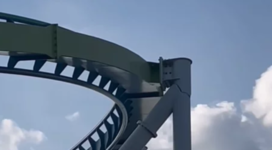
Here's a neat challenge for you welders! How would you fix this guy?

One of my employees says he is a Mex I Can, sometimes you do the best you can with what you have.Same way I saw a mexican dude fixing a tilt-a-whirl at a local traveling carnival a few years back - weld it overhead in the rain using a section of coat hanger. I remember thinking the two stacked pairs of sunglasses and wet bandanna acting as a face shield may not have been OSHA approved?
Remove and replace for the short term, welding is not the cause of the break, so the next step would be to X-ray the break then Inspect under a microscope to see where the metallurgy failed and caused the crack in an area that was not near the welded area.Here's a neat challenge for you welders! How would you fix this guy?
It reminds me of when a guy asked when the last time the bungee rope was changed. The last time it broke pendejo.Same way I saw a mexican dude fixing a tilt-a-whirl at a local traveling carnival a few years back - weld it overhead in the rain using a section of coat hanger. I remember thinking the two stacked pairs of sunglasses and wet bandanna acting as a face shield may not have been OSHA approved?
I've done 2 sunglasses before. Forgot my helmet and needed to git r dun.Same way I saw a mexican dude fixing a tilt-a-whirl at a local traveling carnival a few years back - weld it overhead in the rain using a section of coat hanger. I remember thinking the two stacked pairs of sunglasses and wet bandanna acting as a face shield may not have been OSHA approved?
Was the person who reported in the park or outside? And what fire department? She lived an hour away. Just really wondered when did a park employee get the report.On a side note, they should also review their safety protocol from what I read the person who witnessed this had to call the local fire department to get the ride stopped, this should not happen.
I would imagine they just dialed 911 so should have been local based on the GPS on the phone.Was the person who reported in the park or outside? And what fire department? She lived an hour away. Just really wondered when did a park employee get the report.
No engineer / firm will sign this off.Bevel the crack
Pull into alignment
Weld her up.
Grind weld flat.
Weld a sleeve with punched holes over the weld repaired area
None of that is cast anything. It's all plate or structural tube...., and either the casting was at fault, or the original design of that part of the structure is.
Bill S.
...
My question is who is doing their inspections, and what training do the have? ...
One would think there would be a lot of scrutiny concerning the rest of the rideYeah I'd be surprised if its not in the scrapyard before they open next season.
Yes, I realize I used the wrong verbiage at the time, we can only assume rolled steel, or extruded steel was used, yet a flaw in the material most likely caused a tiny stress crack, which grew larger and larger. The press release by the owners of the coaster, who praised the original builder and designer, state it was started at a weld, and that caused the crack, but if you look at the type of crack, and it's jagged trajectory, there is far more to it than just a faulty weld. Hence my original concerns with seamless vs welded tubing, and the root cause of the issue, which then caused the crack to start. I am equally concerned that their daily inspection(s) did not find this, as that damage did not happen suddenly, but over the course of days, maybe even weeks. I'm betting we, the general public, will never know. I'll be curious to see if it is replaced with an identical replacement, or if a new design, or some type of additional bracing or support structure is added. Again, I'd be worried if it was not.None of that is cast anything. It's all plate or structural tube.
...and any similar rides designed/built by the same manufacturer. Sure looks like the design failed vs. a flaw in the steel.One would think there would be a lot of scrutiny concerning the rest of the ride
I suggest the design didn't fail. The redundancy of the design allowed a part to fail yet no injuries or fatalities. Single point failure proofing at its finest. Hats off to the designers (who have designed boatloads of roller coasters and other amusement rides.)Sure looks like the design failed vs. a flaw in the steel.
I agree with your point about redundancy. However if it was dynamic stress that caused this member to eventually crack/fatigue rather then a latent defect in the steel, doesn't that imply a design problem?I suggest the design didn't fail. The redundancy of the design allowed a part to fail yet no injuries or fatalities. Single point failure proofing at its finest. Hats off to the designers (who have designed boatloads of roller coasters and other amusement rides.)
Yes "if", but I'm leaning towards the materials or fabrication or installation or some totally unexpected cause.I agree with your point about redundancy. However if it was dynamic stress that caused this member to eventually crack/fatigue rather then a latent defect in the steel, doesn't that imply a design problem?
"Ohio-based Clermont Steel Fabricators is known for making Bolliger & Mabillard roller coasters. On Wednesday, president Daniel Crumbaker said the company is not part of the repair, and declined further comment."Yes "if", but I'm leaning towards the materials or fabrication or installation or some totally unexpected cause.
This article has a little more background:
I noticed that you are being the “Monday Morning Quarterback”.Looks like the crack initiated at the upper point of the 'Y' branch weld. Noting the centrifugal force of the coaster is pushing on the joint, I would design the 'Y' to tie into the vertical column directly across from the horizontal attachment point (180° from current location)...which I would assume the designer would have placed it, but most likely due to ground placement constraints, they placed it at the only point that fit the layout.
