
You are using an out of date browser. It may not display this or other websites correctly.
You should upgrade or use an alternative browser.
You should upgrade or use an alternative browser.
Battery/Alternator Tester
- Thread starter zendriver
- Start date
Good price right now . . .
Buckaroo5
Well-known member
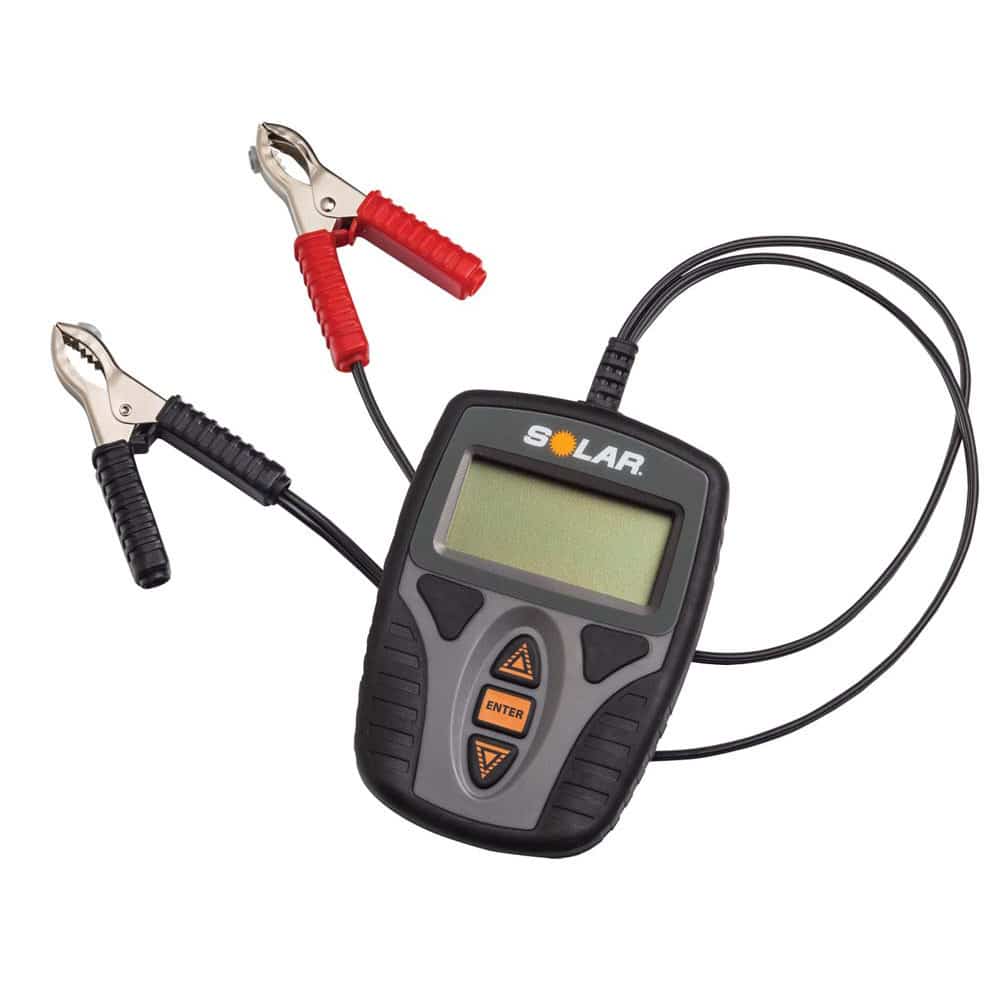
I have an older version of this Clore BA-9. It goes for about $57 on Amazon. It is a new style tester that measures capacitance vs the old style toaster type load testers like your HF. Works well. Can test batteries that are not fully charged.
 cloreautomotive.com
40-1200 CCA 12 Volt Digital Battery & System Tester - Clore Automotive
Get portability and performance when testing batteries and vehicle charging systems with the 40-1200 CCA 12 Volt Digital Battery and System Tester. 40-1200 CCA 12V Digital Battery and System Tester
cloreautomotive.com
ajchien
Well-known member
I have the cheapie HF 100amp carbon battery tester also. Funny thing, I once compared it against multiple multimeters and a Clore battery tester (the one buckaroo just linked), and the voltage reading of the HF one was way off from the others, by about 0.7 volts-ish. don’t know why, maybe the sticker was placed off, maybe it has degraded over time, or perhaps it is just a pos.
2ndGearRubber
Well-known member
You can put a load on the engine, but on anything modern (made in the last 15 years) you really need a scan tool.
For instance a 15yo hyundai/kia will "charge" perfectly fine at idle around 12.6.
For instance a 15yo hyundai/kia will "charge" perfectly fine at idle around 12.6.
nadogail
Well-known member
The inexpensive Harbor Freight tester will give you an analog relative indication; IMHO that is all I expect of a device that sells at that price point.I have the basic HF cheapie pile load tester, that's usually good, but I have a battery or charging issue, where the problem may be borderline.
Looking for an upgrade on a tester, under $100 bucks.
Ole Slewfoot
Well-known member
No tester that isn't a carbon pile which pulls 500+ amps making itself red hot will correctly diagnose an imminently failing high volt low capacity battery reliably. Even the fancy testers you have to run 2x in a row to get a pretty good result.
Wrench97
Well-known member
You also have to look for a aux battery in todays vehicles
DrinkMan
Well-known member
I have a Foxwell. It costs more than your budget but I found a lower cost version that is missing a couple of features (I assume, I can't figure out what is does not do to save the money). I also have the HF load tester that gets nice and hot.
https://www.amazon.com/dp/B01ANF1D7U/?tag=atomicindus08-20
https://www.amazon.com/dp/B01ANF1D7U/?tag=atomicindus08-20
Which should I get ?
richfinn
Well-known member
Get an amp clamp
I vote for the amp clamp too, I've been issued with all manner of fancy battery testing technology over the years.
DC Amp clamp and a voltmeter has always been my favourite method for diagnosing borderline batteries.
How does amp clamp work?I vote for the amp clamp too, I've been issued with all manner of fancy battery testing technology over the years.
DC Amp clamp and a voltmeter has always been my favourite method for diagnosing borderline batteries.
Is it easier than battery tester device?
Wrench97
Well-known member
Personal or pro use?
There is more equipment involved then just a clamp.
There is more equipment involved then just a clamp.
I was all ready to reply to my own zombie thread, that made it to a whopping 10 posts. 
If it matters, I ended up with HF stuff that tells me what I need to know.

 www.harborfreight.com
 www.harborfreight.com
If it matters, I ended up with HF stuff that tells me what I need to know.
12V Digital Battery and System Tester
Amazing deals on this 12V Digital Battery And System Tester at Harbor Freight. Quality tools & low prices.
www.harborfreight.com
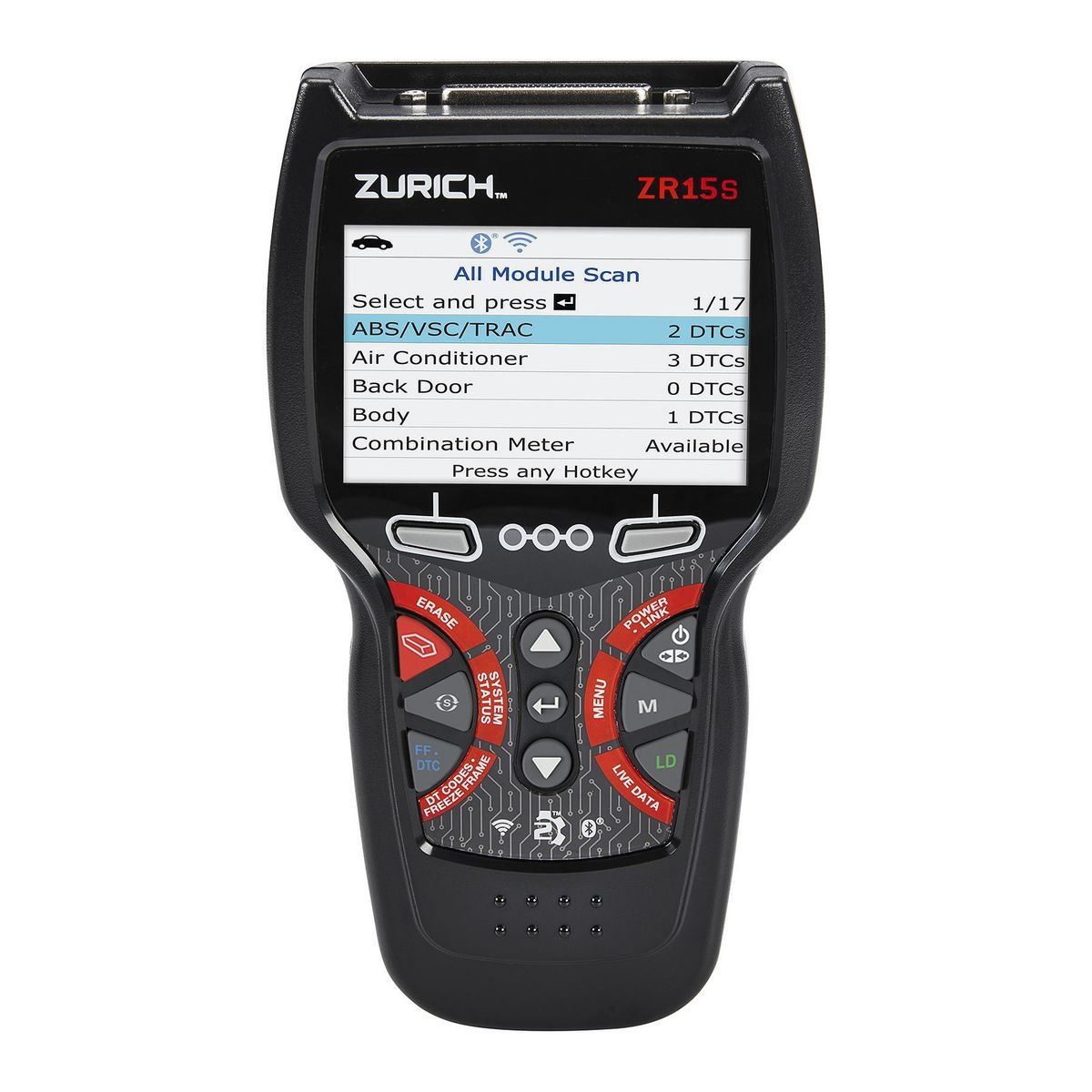
ZR15s OBD2 Code Reader with 3.5 In. Display and Active Test/FIXASSIST
Amazing deals on this Zr15S Active Test Obd2 Code Reader at Harbor Freight. Quality tools & low prices.
www.harborfreight.com
richfinn
Well-known member
How does amp clamp work?
Is it easier than battery tester device?
There is some learning involved and you won't get a traditional pass/fail result. No it won't be easier
Essentially most modern pro battery testers do a few different things to get to a decision. Batteries can fail in numerous ways and the testers are designed to simplify the result (but can be misleading)
1. They perform a conductance/internal resistance test by passing a current through the battery for a few seconds
2. They record Voltage/Current (using a clamp) during a prompted sequence of events carried out by the tech (initial voltage cranking/loads/rpm/drain amps)
3. Temperature compensation
4. Monitoring/comparison of current absorption (over a specified time period usually 5 mins)
5. They then use all this information against the inputted spec/type of battery and an algorithm decides pass/fail
Using a voltmeter/current clamp you can do a very effective version of this type of test by monitoring current absorption over a 5-10 minute period which a lot of cheaper testers without an integral current clamp function will miss, a discharged battery will absorb a high current compared to a failed battery which will refuse to accept much charge, if you add in initial voltage, charging voltage/AC ripple/DC current and an acceptable post test amp drain, you can make a pretty accurate decision with experience.
Bear in mind even the most expensive testers are not 100% accurate, and this type of testing is a more of a quick field test for discharged/defective batteries (where you don't have the luxury of a stable fully charged battery)
For my personal money, I would much rather invest in a good Volt meter (with Min/Max) and a quality amp clamp (and learn a new skill) than spend $500 plus on a pro battery tester every time.
In fact Picoscope software will do almost all of it automatically in a preset test and you can do way more testing with that equipment (a much better investment than a midtronics unit in my opinion).
What does your $329 code reader do that a $25 OBD2 reader can not do?ZR15s OBD2 Code Reader with 3.5 In. Display and Active Test/FIXASSIST
Amazing deals on this Zr15S Active Test Obd2 Code Reader at Harbor Freight. Quality tools & low prices.
2ndGearRubber
Well-known member
There is some learning involved and you won't get a traditional pass/fail result. No it won't be easier
Essentially most modern pro battery testers do a few different things to get to a decision. Batteries can fail in numerous ways and the testers are designed to simplify the result (but can be misleading)
1. They perform a conductance/internal resistance test by passing a current through the battery for a few seconds
2. They record Voltage/Current (using a clamp) during a prompted sequence of events carried out by the tech (initial voltage cranking/loads/rpm/drain amps)
3. Temperature compensation
4. Monitoring/comparison of current absorption (over a specified time period usually 5 mins)
5. They then use all this information against the inputted spec/type of battery and an algorithm decides pass/fail
Using a voltmeter/current clamp you can do a very effective version of this type of test by monitoring current absorption over a 5-10 minute period which a lot of cheaper testers without an integral current clamp function will miss, a discharged battery will absorb a high current compared to a failed battery which will refuse to accept much charge, if you add in initial voltage, charging voltage/AC ripple/DC current and an acceptable post test amp drain, you can make a pretty accurate decision with experience.
Bear in mind even the most expensive testers are not 100% accurate, and this type of testing is a more of a quick field test for discharged/defective batteries (where you don't have the luxury of a stable fully charged battery)
For my personal money, I would much rather invest in a good Volt meter (with Min/Max) and a quality amp clamp (and learn a new skill) than spend $500 plus on a pro battery tester every time.
In fact Picoscope software will do almost all of it automatically in a preset test and you can do way more testing with that equipment (a much better investment than a midtronics unit in my opinion).
Even Pico says battery testing is hard. It's certainly more valuable IMO than the midtronics units, I don't trust those for basically anything. 12.5volts, 550cca/600cca - Replace battery? Yet I have a battery it passes, which will not start this Camry? I have yet to see the Pico test lead me astray.
IMO the best option is 2min with the key on, headlights on, see if it starts. If there's any question, the battery will fail. Now with more LED lights, the headlights aren't much of a load. However as newer cars demand more current to be in the ON position, I think it's a wash. I know people dislike that test, as it will kill/fail a mediocre battery. But my preference is to kill the battery in the shop, when the battery's health is already in question, than some cold night in a parking lot at 10pm.
What does your $329 code reader do that a $25 OBD2 reader can not do?
Click the link, and discover.
richfinn
Well-known member
Even Pico says battery testing is hard. It's certainly more valuable IMO than the midtronics units, I don't trust those for basically anything. 12.5volts, 550cca/600cca - Replace battery? Yet I have a battery it passes, which will not start this Camry? I have yet to see the Pico test lead me astray.
IMO the best option is 2min with the key on, headlights on, see if it starts. If there's any question, the battery will fail. Now with more LED lights, the headlights aren't much of a load. However as newer cars demand more current to be in the ON position, I think it's a wash. I know people dislike that test, as it will kill/fail a mediocre battery. But my preference is to kill the battery in the shop, when the battery's health is already in question, than some cold night in a parking lot at 10pm.
Click the link, and discover.
Agreed, if your in a shop testing a charged battery stress it first, and see what happens.
But if like me you are almost always testing discharged batteries in a jump start/non start scenario the amp clamp is a good way to go to see if it will accept a charge
We have to use the Midtronics unit for fleet/warranty jobs otherwise they won't pay, but 90% of the time I know what the result will be just watching the current after 20 years of watching countdown timers

I ordered this for $25
theoldwizard1
Well-known member
IMHO, the best Battery/Alternator/Starter tester was the old Sun VAT-28 or Sun VAT-33.
Great tool, even today. Great nostalgic garage art, especially with its stand !
Great tool, even today. Great nostalgic garage art, especially with its stand !
This seems to work good. I wanted something less bulky with built in leads.
Price seems to fluctuate, but Amazon also seems to always offer $10 off.
Upgraded version of the little blue TopDon;
Price seems to fluctuate, but Amazon also seems to always offer $10 off.
Upgraded version of the little blue TopDon;
Maybe you could read the description of the product?What does your $329 code reader do that a $25 OBD2 reader can not do?

richfinn
Well-known member
IMHO, the best Battery/Alternator/Starter tester was the old Sun VAT-28 or Sun VAT-33.
Great tool, even today. Great nostalgic garage art, especially with its stand !
We made the switch from a heavy load tester to modern electronic internal resistance testing in 2005 (probably in anticipation of AGM and EFB batteries), but the old testers served us well for a long time.
We are getting ready for our third version of Midtronics tester now (we have had some input into the design this time apparently after buying off the shelf modified versions previously)
I will try and review it when it gets rolled out.
theoldwizard1
Well-known member
For a DIYer, the simplest way to test a battery is
- Clean the top, especially around the posts ! Make sure the battery terminals are in good condition and tight.
- Charge it overnight
- Remove the charger. Check the voltage. A fully charged battery should be at least 13.2V. If it is less than 13.0V you have a bad charger or a bad battery,
- Turn on the headlights and high beams. Wait about 10 minutes and check the voltage. It should be above 12.0V, your battery is weak. Start shopping.
That doesn’t seem simple at all, versus just testing the battery and charging outputFor a DIYer, the simplest way to test a battery is
Simplest way to check an alternator is check the voltage immediately after starting. Should be between 14.0V and 15.0V. After 5 or 10 minutes it will drop, but not below 13.2V
- Clean the top, especially around the posts ! Make sure the battery terminals are in good condition and tight.
- Charge it overnight
- Remove the charger. Check the voltage. A fully charged battery should be at least 13.2V. If it is less than 13.0V you have a bad charger or a bad battery,
- Turn on the headlights and high beams. Wait about 10 minutes and check the voltage. It should be above 12.0V, your battery is weak. Start shopping.
richfinn
Well-known member
For a DIYer, the simplest way to test a battery is
Simplest way to check an alternator is check the voltage immediately after starting. Should be between 14.0V and 15.0V. After 5 or 10 minutes it will drop, but not below 13.2V
- Clean the top, especially around the posts ! Make sure the battery terminals are in good condition and tight.
- Charge it overnight
- Remove the charger. Check the voltage. A fully charged battery should be at least 13.2V. If it is less than 13.0V you have a bad charger or a bad battery,
- Turn on the headlights and high beams. Wait about 10 minutes and check the voltage. It should be above 12.0V, your battery is weak. Start shopping.
100% agree for DIY if you have the time.
In my world people want an answer within 10 minutes and a permanent solution within 30 mins of me arriving at a dead car!!
I got the $25 one. Should be fine for occasional home use.For my personal money, I would much rather invest in a good Volt meter (with Min/Max) and a quality amp clamp (and learn a new skill) than spend $500 plus on a pro battery tester every time.
theoldwizard1
Well-known member
Okay, the CHEAP DIY method !That doesn’t seem simple at all, versus just testing the battery and charging output
Wrench97
Well-known member
Test a couple known good and known bad batteries before you make that determination.......................I got the $25 one. Should be fine for occasional home use.
There are tons of Youtube videos where people tested it against more costly "pro" chargers.Test a couple known good and known bad batteries before you make that determination.......................
Same results. Tested it on a few of my cars and works great
signcrafter
Well-known member
- Joined
- May 9, 2012
- Messages
- 12,336
Test a couple known good and known bad batteries before you make that determination.......................
Diagnostic tools are one type of tool that cheap will burn you eventually and you will be chasing your tail. I used a cheaper midtronics tester, still 10 times more then a 25 dollar tester and it worked for the most part. Until I was chasing an intermittent no start. Used tester and it tested good. Moved on and spent a bunch of time chasing other ****. For fun I took battery to napa to have them test it. Bad cell in battery. My tester still tested good. Ordered a new tester from Napa that day and spent a bunch but it's worth it to have a diagnostic tools you can trust. My time is worth more then a cheap tester that may or may not give accurate results.There are tons of Youtube videos where people tested it against more costly "pro" chargers.
Same results. Tested it on a few of my cars and works great
I highly doubt the NAPA tester cost more than $50.Diagnostic tools are one type of tool that cheap will burn you eventually and you will be chasing your tail. I used a cheaper midtronics tester, still 10 times more then a 25 dollar tester and it worked for the most part. Until I was chasing an intermittent no start. Used tester and it tested good. Moved on and spent a bunch of time chasing other ****. For fun I took battery to napa to have them test it. Bad cell in battery. My tester still tested good. Ordered a new tester from Napa that day and spent a bunch but it's worth it to have a diagnostic tools you can trust. My time is worth more then a cheap tester that may or may not give accurate results.
The question is would the $25 tester have told you to replace the battery?
For a no start, after full charging overnight, first thing I'd do is replace the battery if its over 3 years old.
Lowest hanging fruit
signcrafter
Well-known member
- Joined
- May 9, 2012
- Messages
- 12,336
You highly doubt? How does some random guy on the internet doubt how much I paid even though I specifically said it was way more expensive then your 25 dollar tester. My low end midtronics was 250. My new one was 3 times that. No clue if a cheap 25 dollar tester would have been more accurate then my 250 dollar midtronics or not. But I wanted a tester I could trust so spent 800 on a new tester. It's a tool that I don't use but a few times a year but at least I know when I use it that I can trust it.I highly doubt the NAPA tester cost more than $50.
The question is would the $25 tester have told you to replace the battery?
For a no start, after full charging overnight, first thing I'd do is replace the battery if its over 3 years old.
Lowest hanging fruit
I'm sure your 25 dollar tester will work most of the time and be a good quick check. But it's now where near what a pro level tool is.
A full charge overnight? I don't have time to wait 24 hours to start my diagnoses. Weather it's my vehicle or someone's im working on. I'm glad you don't have anywhere to be or anything to do. So no issue sitting around for 24 hours, have a beer and wait. I don't have that option. As for just replacing a battery, I used to all the time. Anything over 5 years will get replaced but 3 years old I want to test since batteries are 200 bucks now a days. And I will know for sure that when I replace battery the issue is gone. Not wait 24 hours then replace and now start all over at square one because it didn't fix the issue. Or have to tell someone who's car I'm working on I just put a battery in for 200 that you owe me but it didn't fix anything. People get pretty upset about that kind of stuff.
If you know how capacitance testers work you will know they won't find every bad battery, just how their technology is. Even the most expensive ones. Still need a toaster tester that can do half the cca amps to test another way. I have a 500 amp toaster tester to use a long with my capacitance tester.
Diagnostic tools are one type of tool that cheap will burn you eventually and you will be chasing your tail.
On the other hand batteries aren't a terribly complex device to diagnose.
2ndGearRubber
Well-known member
On the other hand batteries aren't a terribly complex device to diagnose.
You would be surprised.
A 15yo car will start disabling random features like rear defrost with no warning due to resting battery voltage being too low.
A dead battery is a easy diagnosis. A battery that will fail 6 months from now is a tough one.
joel63
Well-known member
You highly doubt? How does some random guy on the internet doubt how much I paid even though I specifically said it was way more expensive then your 25 dollar tester. My low end midtronics was 250. My new one was 3 times that. No clue if a cheap 25 dollar tester would have been more accurate then my 250 dollar midtronics or not. But I wanted a tester I could trust so spent 800 on a new tester. It's a tool that I don't use but a few times a year but at least I know when I use it that I can trust it.
I'm sure your 25 dollar tester will work most of the time and be a good quick check. But it's now where near what a pro level tool is.
An absolute must have.If you know how capacitance testers work you will know they won't find every bad battery, just how their technology is. Even the most expensive ones. Still need a toaster tester that can do half the cca amps to test another way. I have a 500 amp toaster tester to use a long with my capacitance tester.
I have 5 battery testers (I'm just DIY). A Midtronics I got off Ebay, and 4 assorted resistance/capacitance testers including a Clore Solar BA5 and BA9, an Ancel, and an "I forget what brand." I don't have a load tester.
When I was on my tester fetish, here is what I PERSONALLY learned in my research and use.
No resistance/capacitance tester will be 100% accurate 100% of the time - even the Midtronics, which is what most "pros" use.
Although people knock the cheaper ones, I have found them to be reasonably accurate and within a few CCA of the Midtronics at any time, with the Clore models probably the closest to Midtronics.
If you need to test a questionable battery right here and now, the best/most accurate way to do it is a load tester - not a resistance/capacitance tester. I'm not saying an electronic tester won't work, but SOMETIMES, a marginal battery will pass as OK. The only time I have found an electronic tester to be 100% accurate is when there are dead/shorted cells - but they DO work fine most of the time.
If using a load tester, everything I have read says you need one with at least 500 amp load - the cheaper 100 amp load testers really does not give an accurate read SOMETIMES. Again, not owning/having a load tester myself, I cannot PERSONALLY vouch for this, but I have come across this statement frequently.
When using an electronic tester, the best way to use them is to use them periodically - taking readings over time (once a year/every 6 months) to be more cognizant of any decline in readings, rather than a one-shot reading only when you suspect a problem.
I have also found the electronic readers do best "out of car. (ie. attached directly to the post and post clamps removed (not that you have to physically remove it from the car).
Since CCA can be significantly affected by cold, especially below 32 F, I would make sure an electronic tester has some kind of temperature compensation algorithm otherwise if you test a cold battery, it might tell you it's a bad battery when in cold weather.
When I was on my tester fetish, here is what I PERSONALLY learned in my research and use.
No resistance/capacitance tester will be 100% accurate 100% of the time - even the Midtronics, which is what most "pros" use.
Although people knock the cheaper ones, I have found them to be reasonably accurate and within a few CCA of the Midtronics at any time, with the Clore models probably the closest to Midtronics.
If you need to test a questionable battery right here and now, the best/most accurate way to do it is a load tester - not a resistance/capacitance tester. I'm not saying an electronic tester won't work, but SOMETIMES, a marginal battery will pass as OK. The only time I have found an electronic tester to be 100% accurate is when there are dead/shorted cells - but they DO work fine most of the time.
If using a load tester, everything I have read says you need one with at least 500 amp load - the cheaper 100 amp load testers really does not give an accurate read SOMETIMES. Again, not owning/having a load tester myself, I cannot PERSONALLY vouch for this, but I have come across this statement frequently.
When using an electronic tester, the best way to use them is to use them periodically - taking readings over time (once a year/every 6 months) to be more cognizant of any decline in readings, rather than a one-shot reading only when you suspect a problem.
I have also found the electronic readers do best "out of car. (ie. attached directly to the post and post clamps removed (not that you have to physically remove it from the car).
Since CCA can be significantly affected by cold, especially below 32 F, I would make sure an electronic tester has some kind of temperature compensation algorithm otherwise if you test a cold battery, it might tell you it's a bad battery when in cold weather.
waltermitty
New member
Given the analog design, like a needle volt meter etc, you simply tweak the screw below the display to 'zero' the deflection. I used my Fluke meter to benchmark the voltage and adjusted the HF load tester accordingly. Takes secondsI have the cheapie HF 100amp carbon battery tester also. Funny thing, I once compared it against multiple multimeters and a Clore battery tester (the one buckaroo just linked), and the voltage reading of the HF one was way off from the others, by about 0.7 volts-ish. don’t know why, maybe the sticker was placed off, maybe it has degraded over time, or perhaps it is just a pos.
Pinemarten
Well-known member
While you are at HF getting a carbon pile battery tester, pick up a IR Thermometer.
 www.harborfreight.com
They are handy. A buddy of mine had a dump truck that the batteries (4) would go dead on in a few days. While charging it, I shot each battery with the IR Thermometer. Three were around 70 degrees, but one was 100+deg. Replaced that internally shorted battery, and no more issues.
12:1 Infrared Laser Thermometer
Amazing deals on this 12:1 Infrared Laser Thermometer at Harbor Freight. Quality tools & low prices.
www.harborfreight.com
They are handy. A buddy of mine had a dump truck that the batteries (4) would go dead on in a few days. While charging it, I shot each battery with the IR Thermometer. Three were around 70 degrees, but one was 100+deg. Replaced that internally shorted battery, and no more issues.