To avoid these ads, REGISTER NOW!

Finding leak in new black iron pipe run

sjoseph316

Member
Joined
Nov 20, 2023
Messages
20
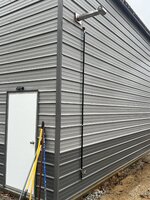
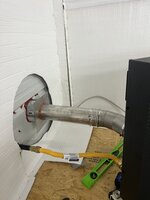
Got the black iron pipe run to my heater for propane. It’s a short run, 24” to the wall, 10 ft down to the drip leg and ****** for connection to propane tank line. I used yellow pipe dope only. Connected the tester and filled it to 25 lbs of air. 24 hours later and I lost 3 lbs. I used dish soap and water to try and find the leak but I done see anything. Should I take it all apart and start over or should I try and tighten each connection one by one? Or is there something else I should do to find the leak and seal it?
No inspection needed, I know I’m supposed to have a shutoff valve but my propane guy said there’s no sense in putting one up By the heater since it is 10.5 feet high, instead he said there will be one right outside the door where a regulator will be.
Thank you!!IMG_2630.jpegIMG_2640.jpeg
 
To avoid these ads, REGISTER NOW!

Maddog3355

Well-known member
Joined
Feb 25, 2018
Messages
128
Our local propane provider will bring their sniffer out for free if you smell propane. You might check that, sometimes they are hard to find especially when you have appliances and furnaces involved.
 

i4ni

Well-known member
Joined
Jan 23, 2010
Messages
1,015
The gas valve on the heater should never be subjected to a pressure test like that, it may have been damaged. Should be a gas **** before the flex connector and the flex connector should be left unhooked during the pressure test with a plug in the gas ****.
This is mostly true but also the gas **** should not be subjected to those pressures either from what I've read.
 

mm08822

Well-known member
Joined
Jan 13, 2012
Messages
5,990
Location
NJ
Tests are not 24hrs, they're usually closer to 15 minutes. Your results aren't valid.

Also, as already pointed out, I hope you didn't test at 25psi with the heater hooked up.
My locale requires 15 psi test pressure for 24 hrs using a 30 psi gauge by the inspectors.

3psi @ 15 mins seems like a joke.
 

PCustoms

Well-known member
Joined
Jul 23, 2011
Messages
23,174
Location
VT
My locale requires 15 psi test pressure for 24 hrs using a 30 psi gauge by the inspectors.

3psi @ 15 mins seems like a joke.
No one said 3psi?

Here's a quick reference:

Screenshot_20240128-154802.png

Pretty sure the guy that checked my system did 25psi for 15 minutes, but I could have the numbers swapped. He had a LARGE face 30psi gage so he could see if there was a drop.
 
OP
S

sjoseph316

Member
Joined
Nov 20, 2023
Messages
20
Thanks everyone! Well hopefully I didn’t screw my heater up. I let the pressure out and am going to test it again, I didn’t tap on the gauge and I didn’t check the fill valve to see if it was the source of the leak.
Now I’m all confused though, I’ve read to leave it 48 hours and 24 hours but this is the first I’ve heard of 15 minutes.
 
To avoid these ads, REGISTER NOW!

housewolf

Well-known member
Joined
Feb 3, 2021
Messages
1,144
Location
East Texas
Thanks everyone! Well hopefully I didn’t screw my heater up. I let the pressure out and am going to test it again, I didn’t tap on the gauge and I didn’t check the fill valve to see if it was the source of the leak.
Now I’m all confused though, I’ve read to leave it 48 hours and 24 hours but this is the first I’ve heard of 15 minutes.
The pressure drop was likely caused by temperature dropping overnight. You went back and soaped the joints and found no leaks, I’d call that a good test. I would be concerned about putting 25 psig on the unit though. If there is any sort of regulator in the unit, it’s likely damaged.
 

HoosierBuddy

Well-known member
Joined
May 9, 2006
Messages
2,930
Location
Southern Indiana
You might have had a leak somewhere. 3 PSI drop would be consistent with your temperature in the pipe dropping from 60 degrees to 34 degrees.....but that seems unlikely. Unless it really did? Did you have the much temperature change?

Also....I disagree with the assertion that you can have a leak at 25 psi that won't leak 1/3 PSI. That is not true in my experience.

I, too, have struggeled with finding leaks with dishwashing soap and water. The commercial leak detection fluid (Leak Seek) or similar works 10 times better. They sell it at the box stores like Home Depot.

Agree you never should have tested with your appliance hooked up. You should have capped your line inside, tested against the cap. Final connection can be tested at operating pressure (14 inches w/c probably) with Leek Seek.

Bottom line....at this point I'd recommend you get someone knowledgeable to help you. This is not a good project for a novice doing this for the first time. I was in my garage a couple of weeks ago and the whole house rattled. Later found out that it was a home blowing up (due to a propane leak) 20 miles away from me. 20 Miles. It turned that house into kindling. Killed the homeowner. Blew out windows in his neighbor's homes up to 1/2 mile away.


You really need to be careful here.
 

Firebrick43

Well-known member
Joined
May 12, 2015
Messages
14,115
Location
West central Indiana
I never could find tiny leaks either with soap and water.

Commercial leak solutions will bubble like crazy with a small leak.

I also agree with Hoosierbuddy that higher pressure isn’t necessarily better.

We test the whole system with regulators at just 9” on water column with a sensitive gauge to ensure regulators are unlocked and can see very tiny leaks that the plumbers don’t sometimes with higher pressure pipe only test.
 

Walkers

Well-known member
Joined
May 17, 2021
Messages
3,912
Location
Cave Creek Az
The way the test is usually done is to put a cap on the transition fitting on the appliance side of the flex. Here it is 15 pounds for 15 minutes. The test pressure comes from either the UBC or the plumbing code, I can’t remember which, though every municipality can change that.
 

PoorUB

Well-known member
Joined
Mar 29, 2021
Messages
11,662
Location
Fargo, ND
I did gas piping for a few years, quite a bit of it. 25 PSI for 30 minutes and let 'er rip!
 

msharley

Well-known member
Joined
Sep 20, 2021
Messages
14,112
Location
Central Pennsylvania
Got the black iron pipe run to my heater for propane. It’s a short run, 24” to the wall, 10 ft down to the drip leg and ****** for connection to propane tank line. I used yellow pipe dope only. Connected the tester and filled it to 25 lbs of air. 24 hours later and I lost 3 lbs. I used dish soap and water to try and find the leak but I done see anything. Should I take it all apart and start over or should I try and tighten each connection one by one? Or is there something else I should do to find the leak and seal it?
No inspection needed, I know I’m supposed to have a shutoff valve but my propane guy said there’s no sense in putting one up By the heater since it is 10.5 feet high, instead he said there will be one right outside the door where a regulator will be.
Thank you!!IMG_2630.jpegIMG_2640.jpeg
Hate to tell you this..

Some of the "import" (cheap foreign imitation) pipe?

Is not up to "snuff"

The welded pipe in particular (if your pipe has a "seam" it is welded pipe, they do not generally vend "seamless" pipe to the DIY crowd..as it costs more) will LEAK along the length of the seam.

Get you a good sponge with heavily soaped water and slowly go the length of the pipe...

Hope this helps...
 
  • Like
Reactions: RPH

LopezBart

Well-known member
Joined
Oct 13, 2023
Messages
2,552
Location
Lopez Island, WA
Propane is in a mixed phase form (both liquid and vapor) at about 150 psi at room temp. Devices that need a lot of propane will use tanks that supply liquid propane to prevent the tanks from "freezing up", since liquid propane takes heat to become vapor. Some forklifts use liquid propane, for example.

Normal household appliances use propane gas at 11" or so of water (less than 1/2 psi). We test piping at much higher pressures to accelerate the leak effects.

For really large scale propane fire effects at Burning Man, it's not uncommon to see propane boilers employed. Fed with liquid propane, they use a bit of the propane to heat the liquid and generate the desired amount and pressure of propane gas. Smaller scale stuff uses garbage cans filled with water and a 100 lb propane tank. A tankless water heater and small pump keeps the water at the desired temperature.
 

Death Row Dave

Well-known member
Joined
May 13, 2020
Messages
485
Location
Home
We “ vaporized “ 900 gallons a minute in a peakshaving plant . 11 IWC is normal “ houseline “ Pressure with “ LPG “ system . There is not much use defining the physical differences and guidelines for testing . I’m just trying to keep you and your family as safe as possible . Propane vapor is 1 1/2 X heavier that air . With that being said it will pool up in any low spot and create explosive not burning mixtures . Im only trying to help you be safe , sounds as if I need , shut up and let things be , I’m sorry .
 

Walkers

Well-known member
Joined
May 17, 2021
Messages
3,912
Location
Cave Creek Az
We “ vaporized “ 900 gallons a minute in a peakshaving plant . 11 IWC is normal “ houseline “ Pressure with “ LPG “ system . There is not much use defining the physical differences and guidelines for testing . I’m just trying to keep you and your family as safe as possible . Propane vapor is 1 1/2 X heavier that air . With that being said it will pool up in any low spot and create explosive not burning mixtures . Im only trying to help you be safe , sounds as if I need , shut up and let things be , I’m sorry .
Well, for certain you need to let go of the quotation mark key!
 

toyotadriver

Well-known member
Joined
Dec 30, 2010
Messages
1,586
When I built my current house, I installed the propane lines. I pressure tested at 20PSI. I shut off all the lines at the appliance and then pressurized it. Since I had other things to do, I left it pressurized for several days. It was winter when I tested it. It was interesting to see the pressure rise and fall with temperature. I can't remember exactly how much the pressure fluctuated but as I recall it was several PSI. It would rise by the afternoon and be the lowest in the morning. When I finally got back to working on the gas lines, I concluded I had no leaks.


Nothing in this post should be misunderstood, interpreted, misinterpreted, or construed to be of a political nature.
 
To avoid these ads, REGISTER NOW!
Top Bottom