To avoid these ads, REGISTER NOW!

Gas vs Electric Heat for Attached Garage.

RoyBell

Well-known member
Joined
Oct 11, 2015
Messages
364
Location
Chicago
Looking for some suggestions on which type of heat to use. This is a 3 car attached garage. Chicagoland. Last couple of weeks it has been below freezing with extended periods below 0F. Down to -14F a couple nights. My garage was sitting at 24 degrees with a 1500W oil filled heater running full tilt. Everything froze. I ran my Little Buddy heater on High and it brought it up to a manageable 40 degrees. However, the humidity also rose. Up to 65% according to my hygrometer.

I ran some 8s to the panel and picked up a 7500W electric heater. Then I got my electric bill and had started second guessing this idea. This is our first winter in the house so trying to get a handle on the heating situation. We had (4) 1500W heaters running full time (garage, barn, 2 in basement). We used 3022 kWh. Supply charge was $.06848/kWh and delivery was $.04901/kWh. Taxes & Fees avg. to .03625. Total of $.15374/kWh. Working on getting the basement figured out. It was 58 degrees in the finished basement. There are supplies and no returns. Once I run returns it should help and not need the electric supplemental heating.

For NG we used 315 Therms. Avg cost is $.36/Therm. Total cost with delivery and taxes avg. to $.705. We have 2 furnaces, I Set to 68 degrees avg. I drop upstairs thermostat to 66 during the day then raise it back when we get home. I honestly was expecting the gas bill to be astronomical and it wasn't bad at all.

The heater is just to keep the garage at a manageable temperature. Maybe 50 degrees. I can do the math to figure out an hour of run time on the electric heater. $1.15/hr. I just don't know how much it will actually run to figure out the monthly cost.

If I do a 30,000 BTU gas heater, @ $.705/therm, that is $.21/hr to run. BIG difference. How much does a fan forced electric heater need to run vs gas to maintain the same temperature? Would like to note, last year our NG was closer to $1.20/therm (up from avg $.68). Even at the avg. double what it is now, it's still 1/3 less than Electric. Right now I think it's way below the average.

Obviously Gas is cheaper to run, but I have the electric ready to go with the heater. Trying to determine if it's worth the effort to go to a gas heater if it's just to keep the garage warm on the really cold days. This week it averaged 42 degrees in there with no heater running. It's been warmer outside, avg. 33 degrees. Do all ventless gas heaters produce excessive amount of moisture like the Little Buddy? I am toying just putting a propane ventless heater instead of NG so I don't need to mess around with running a line to the garage. It's approx $1/lb of propane here. Or, just slap the electric heater up and call it day?
 
To avoid these ads, REGISTER NOW!

D45

Well-known member
Joined
Mar 21, 2014
Messages
4,842
Location
NW INDIANA
Ok, 3 car garage has many variables

Fully insulated and drywalled?

Double walled insulated garage doors?

2x4 or 2x6 construction?
 
Last edited:

loganb

ALLIANCE MEMBER
Joined
Dec 29, 2011
Messages
5,719
Location
Omaha, NE
As stated above...more details of garage construction as well as what you want to do in it. and yes all ventless heaters will dump humidity into the space, water is a byproduct of combustion

I'm sitting in my 3 car attached garage in Omaha metro with a diy mr cool minisplit and its amazing. Yes below 15 or do it can't keep up so if that's a concern keep the 7.5kw elec as a backup but if you're wanting to spend more time out there with target temps in the 60's in winter a minisplit is worth the investigation.
 

JunkBonds

Well-known member
Joined
May 19, 2011
Messages
1,027
Without insulation you are fighting a lost cause.

I had my garage spray foam insulated 3 years ago. Since then a small portable electric heater has kept it slightly above freezing with it being turned on and off at 750 watts based on temp.

In Dec 2023 I installed a mini-split. That thing keeps it at 60f with no increase in electric cost. I just got my electric bill. Plus I will have A/C for the summer. Mini-splits are da bomb!
 
Last edited:

wyb2

Well-known member
Joined
Dec 27, 2012
Messages
188
Location
Southern NH
The first thing is deciding exactly why and how much you want to heat the space. It sounds like you are trying to keep all these spaces heated 24/7, but do you have a specific reason why?

I heat my 3 car attached garage (insulated, New England climate) with an electric heater, largely because I only heat it when I’m actively using the space. Otherwise it’s free to do what it wants (bottoms out around 29/30). This makes the cost pretty negligible, like less than $5 per day of garage time, which ends up being $20-$40 per month. If I kept it on 24/7 it would cost hundreds per month.

Any ventless combustion solution will add moisture in direct proportion to how much fuel it burns, the water is a product of combustion.
 

u3b3rg33k

Well-known member
Joined
Dec 18, 2017
Messages
4,075
I'm well north of you and I have NO problem keeping mine above freezing with a 5kW electric. insulated garage and door, of course. I have a low temp dehumidifier for the winter months (desiccant).

I had my heater OFF until the cold snap. it was idling in the 35-40F range otherwise.
 
OP
R

RoyBell

Well-known member
Joined
Oct 11, 2015
Messages
364
Location
Chicago
Garage is insulated. 2x4 construction (1979). No house above garage, just attic space. Attic shares wall with master closet and the closet is freezing when it was really cold out. Garage doors appear to be insulated. Garage is currently storage from moving, motorcycles and tools. It's our access to the driveway since no one uses the front door...It is 800 square feet. Working on a pole barn so house garage will hopefully be able to house cars in the future.

Since I had the Electric heater and it was all wired, I threw it up to see how it does until I figure out a gas solution. Did some more research on the ventless and it looks like it's going to turn my garage into a humid mess if I want to keep it running all winter vs just heating up when I want to be in the space.

My last house I had living space on the floor above garage. 5K heater, insulated doors and it kept the garage at 60 degrees without much strain on the electric bill. I think the heated living space above helped quite a bit though. Going from old non insulated doors to new insulated made a huge difference.
 

loganb

ALLIANCE MEMBER
Joined
Dec 29, 2011
Messages
5,719
Location
Omaha, NE
Insulated and walls covered with drywall or similar or insulated and uncovered studs? If walls aren't covered, I'd probably consider that as something to put on the "to do" list as that's allowing a lot of extra air exchange which is also not helping you here. If the walls are covered....you sure they're insulated?

If built in '79, almost guaranteed the attic is under-insulated and honestly wouldn't be surprised if there is none up there. I'd be reviewing what's up there that would be nicer to access/upgrade/work(wiring, any vents, radon fan etc) on before you add insulation, get that done and then get additional insulation in there. Blown in is easy to do with 2 people and the 4 hour free rental of the blower is easy to do that size with time leftover. If you don't have an attic hatch/stairs in the garage already, now is the time to do it.
Batts are easier to do solo if you can't get the 2nd person to run the blower. Lots of insulation contractors in the area too will do it for you, and if you want they can even **** up all the existing stuff, air seal then blow in the new. While you're up there the wall with your closet is probably uninsulated as well and probably open to studs on the attic side......be pretty easy to stick in some R20 batts to help out the closet and attached rooms.

Check the air tightness of the garage door during the day...just leave the lights out and see how much light you see leaking in around the perimeter. Likely could benefit from improving the air tightness of the door to wall seal. There are the weatherstrips/seals that go on the outside, there are some that can go on the top panel on the interior(or sides) and there is also a modified hinge called a "green hinge system" (do a search here, several threads on it) that can help.

With a significant percentage of your envelope in the garage doors, a closer look at what they are may be worthwhile. If they're skinned on the interior they're probably insulated as well, but if not some DIY insulation kits to improve that or considering new may be

Once you get that done, any heating system will be far cheaper since you're keeping more of it. If heating is the only concern, gas is generally going to be the cheapest in operation, installation costs can vary based on how much work it is to get the gas to the heater and the exhaust back out. If cooling in the summer is a desire, a minisplit can do heat and cool and generally do it cheaper than a dedicated forced air system for the garage would. Unless you get a "hyper heat" minisplit their efficiency seriously downgrades in that 15 to 20F range and will stop working around 0 to 5F, so a backup heat source may be required for a couple weeks a year if desired. When it happens to me I just plug in a little 1500 watt electric heater and fan to supplement if I'm going to be in mine.
 

u3b3rg33k

Well-known member
Joined
Dec 18, 2017
Messages
4,075
Garage is insulated. 2x4 construction (1979). No house above garage, just attic space. Attic shares wall with master closet and the closet is freezing when it was really cold out. Garage doors appear to be insulated. Garage is currently storage from moving, motorcycles and tools. It's our access to the driveway since no one uses the front door...It is 800 square feet. Working on a pole barn so house garage will hopefully be able to house cars in the future.

Since I had the Electric heater and it was all wired, I threw it up to see how it does until I figure out a gas solution. Did some more research on the ventless and it looks like it's going to turn my garage into a humid mess if I want to keep it running all winter vs just heating up when I want to be in the space.

My last house I had living space on the floor above garage. 5K heater, insulated doors and it kept the garage at 60 degrees without much strain on the electric bill. I think the heated living space above helped quite a bit though. Going from old non insulated doors to new insulated made a huge difference.
the last thing I want to add to my garage is humidity.

definitely worth checking over the air-tightness. insulation is useless if the air is blowing through. the green hinge stuff seems to work well, but if your door track was properly hung and the door seals are in the right spot, you might not need them.

also remember that the warmer you keep the garage, the more it'll cost to heat. not just the "duh" factor but do the math on the temperature differential. if I'm not working out there all I care about is keeping it above freezing and the humidity down. I can get it to 65F out there when it's above 0F with just the 5kW (17kBTU) heater. one of these days I'll get the 24kBTU minisplit up and running.
 

PoorUB

Well-known member
Joined
Mar 29, 2021
Messages
11,937
Location
Fargo, ND
Obviously Gas is cheaper to run, but I have the electric ready to go with the heater. Trying to determine if it's worth the effort to go to a gas heater if it's just to keep the garage warm on the really cold days. This week it averaged 42 degrees in there with no heater running. It's been warmer outside, avg. 33 degrees. Do all ventless gas heaters produce excessive amount of moisture like the Little Buddy? I am toying just putting a propane ventless heater instead of NG so I don't need to mess around with running a line to the garage. It's approx $1/lb of propane here. Or, just slap the electric heater up and call it day?
Electric heat at $0.1537 is $45 per million BTU
Natural gas at $0.70 per therm, 80% heater is $8.75 per million BTU

So electric is over 5 times as expensive, which you figured out.

Are you planning on staying for years? Or good chance you will move in 4-5 years? If you are planning on staying put in a Reznor or Modine heater.

I would not use a non-vented heater in a chicken coop. Just say no!

Any idea what your electric bill runs in maybe September, or October, with no heat running? then compare to what your electric bill has been running in the winter. The difference is your electric heat. If the difference is $300 for a month gas will cost you roughly 1/5th of that, or $60. From there you can approximate your energy use for heat and guesstimate the savings.
 
OP
R

RoyBell

Well-known member
Joined
Oct 11, 2015
Messages
364
Location
Chicago
Update: It was 29 degrees avg. last night. Based on the my sensor, it appears the heat ran for approx 10-15 mins. every hour. Thermostat set at 45 degrees. Based on that math, last night it cost me approx $.25/hr to run, or $6/day if the temp stays 29 for 24 hours. $180/mo.

It's supposed to be in the mid 40s-low 50s all week (during the day) and drop to 35 every night. I recon it will run very little set to 45.

For the questions above:
  • The walls are drywalled with slatwall and cabinets on them. Some holes on the bottom that mice are getting in from.
  • The garage doors are a few years old (previous owner). They are skinned on the inside which makes me think they are insulated. They seal well.
  • I went in the garage attic prior to closing and don't remember if it's insulated. It does have plywood floor for the majority of it, so it is likely batts or nothing. I did air sealing and blown in on my last house and it made a huge difference. This will be on my list of things to do.
    • The house I believe has decent insulation from pictures of home inspection. Remodeled in the late 90s so possibly they added some.
  • We will be here probably another 20 years. Moved in October so limited electric bills.
  • My buddy has a unit that vents out the back. I think that might be the best setup.


HoosierBuddy

Well-known member
Joined
May 9, 2006
Messages
2,957
Location
Southern Indiana
The correct solution is a vented natural gas unit heater (hanging heater). Modine Hot Dawg or similar. Get a thermostat that lets you set it down pretty low. If you want to go with a high efficiency heater, consider the effinity 93 line wich is an upgrade from the Hot Dawg.

We've been debating this fuel choice issue on this forum for over a decade, and the group wisdom seems to boil down to:

1. If natural gas is available in the northern most climate areas, it's going to be your best choice.
2. Electric Resistance heat must be avoided at all costs (as it will "cost" 4-5 times as much as #1.)
3. For mid or southern areas heat pumps are also a viable solution and have the huge benefit of providing AC in the summer. Heat Pumps use a fraction of the power of resistance heating, but are slow to recover and don't perform well at extremely low temperatures.

Hope this helps.
 

u3b3rg33k

Well-known member
Joined
Dec 18, 2017
Messages
4,075
Looking for some suggestions on which type of heat to use. This is a 3 car attached garage. Chicagoland. Last couple of weeks it has been below freezing with extended periods below 0F. Down to -14F a couple nights. My garage was sitting at 24 degrees with a 1500W oil filled heater running full tilt. Everything froze. I ran my Little Buddy heater on High and it brought it up to a manageable 40 degrees. However, the humidity also rose. Up to 65% according to my hygrometer.
i strongly question this. here's why: compare the surface area of a REAL 1500W baseboard heater to an oil filled. now ask, how is it' possible to dissipate 1500W of heat from something 10x smaller?

it isn't. your costing maths are off because the limit switches in a portable oil filled trip out once it's up to temp, and it becomes a 900W or 600W heater after a while. probably 5 minutes or whenever it gets "up to temp" internally.
The correct solution is a vented natural gas unit heater (hanging heater). Modine Hot Dawg or similar. Get a thermostat that lets you set it down pretty low. If you want to go with a high efficiency heater, consider the effinity 93 line wich is an upgrade from the Hot Dawg.

We've been debating this fuel choice issue on this forum for over a decade, and the group wisdom seems to boil down to:

1. If natural gas is available in the northern most climate areas, it's going to be your best choice.
2. Electric Resistance heat must be avoided at all costs (as it will "cost" 4-5 times as much as #1.)
3. For mid or southern areas heat pumps are also a viable solution and have the huge benefit of providing AC in the summer. Heat Pumps use a fraction of the power of resistance heating, but are slow to recover and don't perform well at extremely low temperatures.

Hope this helps.
my main problems with the modines are they're LOUD, inefficient (unless you buy a 93), and they don't filter the air. i'd just as soon hang a used 80% with a 4" filter on it to keep the dust down from whatever project is in play.

personally, the minisplit is the win, since it gives you summer dehumidification/cooling. the DIY MR COOLs have a freeze protect setting (40F), and COP/efficiency is excellent when you're running it with a low target temp. remember minisplit/heatpump costs are directly driven by ∆T/lift, you'll see this in the spec sheets.

FWIW the budget model heat pump I have at work heats down to -17F.
 

JunkBonds

Well-known member
Joined
May 19, 2011
Messages
1,027
The correct solution is a vented natural gas unit heater (hanging heater). Modine Hot Dawg or similar. Get a thermostat that lets you set it down pretty low. If you want to go with a high efficiency heater, consider the effinity 93 line wich is an upgrade from the Hot Dawg.

We've been debating this fuel choice issue on this forum for over a decade, and the group wisdom seems to boil down to:

1. If natural gas is available in the northern most climate areas, it's going to be your best choice.
2. Electric Resistance heat must be avoided at all costs (as it will "cost" 4-5 times as much as #1.)
3. For mid or southern areas heat pumps are also a viable solution and have the huge benefit of providing AC in the summer. Heat Pumps use a fraction of the power of resistance heating, but are slow to recover and don't perform well at extremely low temperatures.

Hope this helps.
Slight modification: if you are in the north and need/want an air conditioner then skip straight to a heat pump. You get both heat and cool and in the shoulder seasons the heat is quite inexpensive.
 

u2slow

Well-known member
Joined
Nov 20, 2011
Messages
3,638
Location
BC
@RoyBell is your electric truly a fixed rate? Or is it tiered? I use all my 6¢/kWH electric quickly, and well into the 15¢/kWH (base rates) and I burn wood for heat!

Piped gas is cheaper, but isn't available here.... otherwise I feel I could stay in the 'cheap' tier of both energy types.
 

engineer2

Well-known member
Joined
Dec 13, 2009
Messages
11,855
Location
Chicago burbs
You'll probably want at least 30000 to 36,000 BTU minimum and 64,000 BTU maximum.
Gas is not too hard to run. Check code. It might need its own electrical circuit even though it is gas.
I got a Williams "between the studs" gas furnace for free from a relative. $25 in parts and a new vent cap, and it was good to go.
Nothing wrong with keeping your electric heaters. A little safer if you are painting or using solvents.

Years ago I had a 24x36 rental garage. I got a used electric house furnace for heat. 240VAC at 88 amps really made that electric meter spin!
 
Last edited:
OP
R

RoyBell

Well-known member
Joined
Oct 11, 2015
Messages
364
Location
Chicago
i strongly question this. here's why: compare the surface area of a REAL 1500W baseboard heater to an oil filled. now ask, how is it' possible to dissipate 1500W of heat from something 10x smaller?

it isn't. your costing maths are off because the limit switches in a portable oil filled trip out once it's up to temp, and it becomes a 900W or 600W heater after a while. probably 5 minutes or whenever it gets "up to temp" internally.

my main problems with the modines are they're LOUD, inefficient (unless you buy a 93), and they don't filter the air. i'd just as soon hang a used 80% with a 4" filter on it to keep the dust down from whatever project is in play.

personally, the minisplit is the win, since it gives you summer dehumidification/cooling. the DIY MR COOLs have a freeze protect setting (40F), and COP/efficiency is excellent when you're running it with a low target temp. remember minisplit/heatpump costs are directly driven by ∆T/lift, you'll see this in the spec sheets.

FWIW the budget model heat pump I have at work heats down to -17F.

I didn't calculate anything based on the oil filled heater.

My calculations are for the 7500W garage heater. Now I have an idea of run time when 29 degrees, I can figure out the costs a little better. That heater is either on or off. I just checked and it's running approx 8-10 mins when it's 39 degrees out (45 in garage). Seems like a lot of cycling for being above freezing out. I will check the actual amperage to see if it's really drawing the 7500 like it's supposed to.

You can see on the chart the couple times the garage door was opened. It really ***** the hot air out, along with the humidity. Guessing the high humidity was from the Little Buddy I had running while I was mounting the electric heater. Then around 8 today my wife opened and closed the door like 6 times.
 

Attachments

  • Screenshot_20240205_134953_Govee Home.jpg
    Screenshot_20240205_134953_Govee Home.jpg
    247.6 KB · Views: 14
OP
R

RoyBell

Well-known member
Joined
Oct 11, 2015
Messages
364
Location
Chicago
@RoyBell is your electric truly a fixed rate? Or is it tiered? I use all my 6¢/kWH electric quickly, and well into the 15¢/kWH (base rates) and I burn wood for heat!

Piped gas is cheaper, but isn't available here.... otherwise I feel I could stay in the 'cheap' tier of both energy types.
It appears to be 1 fixed rate. My office has a peak demand rate and off peak demand rate. I am almost positive my last house did too. I'll have to look into this.

You'll probably want at least 30000 to 36,000 BTU minimum and 64,000 BTU maximum.
Gas is not too hard to run. Check code. It might need its own electrical circuit even though it is gas.
I got a Williams "between the studs" gas furnace for free from a relative. $25 in parts and a new vent cap, and it was good to go.
Nothing wrong with keeping your electric heaters. A little safer if you are painting or using solvents.

Years ago I had a 24x36 rental garage. I got a used electric house furnace for heat. 240VAC at 88 amp really made that electric meter spin!

That's what my buddy has. The Williams. They make a 30K & 40K I was looking at.
 

pembol

Well-known member
Joined
Feb 13, 2014
Messages
278
It seems that you need to insulate and seal first, then figure out your heating situation. I you are using a significant amount of energy to drive a 6F temperature differential (45F in, 39F out) then you have super crappy insulation and/or air sealing. Without addressing the thermal performance you are just wasting energy. For me personally, it is not just about the money, it is also about not being wasteful, however you end up heating it.
 
To avoid these ads, REGISTER NOW!

PoorUB

Well-known member
Joined
Mar 29, 2021
Messages
11,937
Location
Fargo, ND
personally, the minisplit is the win, since it gives you summer dehumidification/cooling. the DIY MR COOLs have a freeze protect setting (40F), and COP/efficiency is excellent when you're running it with a low target temp. remember minisplit/heatpump costs are directly driven by ∆T/lift, you'll see this in the spec sheets.
Minisplits are a hard sell when the outdoor temps can get below zero when competing with natural gas.

Everyone jumps up and down and hollers, "Look at the efficiencies, 400%!!" Yeah, sure, at 40F or 50F. When it hits zero the efficiencies for most of them hit pretty close to one to one and compare to straight electric heat. Sure, there are a few out there that will heat with a reasonable cost. but none of them are 400%, or even 300% when it gets north country cold.

When natural gas is 1/5th the price per BTU compared to elctricity it pretty much kills the mini split. If natural gas is not available, then it is a different deal.
 
Last edited:

bonneyman

Well-known member
Joined
Apr 22, 2010
Messages
8,857
Location
Desert SW
Advantages of electric heat:
You almost always have electricity already at the location
No open flame
No chance of carbon monoxide
No added piping of gas to furnace location
No exhaust venting needed
No combustion relief or combustion air needed

Advantages of gas heat:
Lower usage cost typically when compared to electric
High intensity of heat delivered
Easier to heat a large area efficiently
The high BTU content of natural/LP gas makes it easier to stay comfortable when temperatures are very low
 

pcmeiners

Well-known member
Joined
Aug 13, 2009
Messages
8,088
Location
In the only town in Pennsylvania, Bloomsburg.
"Minisplits are a hard sell when the outdoor temps can get below zero when competing with natural gas."

That was years ago, unless you buy the cheapest minisplit you can find.

"When natural gas is 1/5th the price per BTU compared to electricity it pretty much kills the mini split."

Where did you come up with natural gas being 1/5th the price? On average, a medium efficiency (300% efficient) heat pump is a good bit cheaper per million BTUs than natural gas (vented), using national average natural gas and electric prices.

"Natural gas at $0.70 per therm," national average is $1.37

"Everyone jumps up and down and hollers, "Look at the efficiencies, 400%!!"

That is a high efficiency minisplit's average efficiency, there is nothing wrong with a 400% efficiency over all. For that matter, a medium efficiency minisplit is 300% on average, nothing like getting a COP of 3 either.

"sure, at 40F or 50F. When it hits zero the efficiencies for most of them hit pretty close to one to one and compare to straight electric heat"

That statement is not true either,.... your beliefs are not facts.
 
Last edited:
OP
R

RoyBell

Well-known member
Joined
Oct 11, 2015
Messages
364
Location
Chicago
Update: So I was playing around in the garage last night. Raised temp to 55 degrees. It got there quickly and didn't cycle much for the little I was out there. I think my wifi sensor is not an accurate way of checking how often the heater goes on. It only ran for a minute or two each time it ran to bring temp back up. I will have to sit out there with a stop watch to confirm run time over the course of an hour.

The garage doors are insulated. I could see it when looking at the sides of the panels. I can't get into the attic yet, too many boxes in the way still.

I angled the unit downwards (instead of just angling the fins). Hopefully to get more heat onto the ground which will radiate up.
 

PoorUB

Well-known member
Joined
Mar 29, 2021
Messages
11,937
Location
Fargo, ND
"Minisplits are a hard sell when the outdoor temps can get below zero when competing with natural gas."

That was years ago, unless you buy the cheapest minisplit you can find.

"When natural gas is 1/5th the price per BTU compared to electricity it pretty much kills the mini split."

Where did you come up with natural gas being 1/5th the price? On average, a medium efficiency (300% efficient) heat pump is a good bit cheaper per million BTUs than natural gas (vented), using national average natural gas and electric prices.

"Natural gas at $0.70 per therm," national average is $1.37

"Everyone jumps up and down and hollers, "Look at the efficiencies, 400%!!"

That is a high efficiency minisplit's average efficiency, there is nothing wrong with a 400% efficiency over all. For that matter, a medium efficiency minisplit is 300% on average, nothing like getting a COP of 3 either.

"sure, at 40F or 50F. When it hits zero the efficiencies for most of them hit pretty close to one to one and compare to straight electric heat"

That statement is not true either,.... your beliefs are not facts.
I can back up the comments with facts.

In an earlier post in this thread his gas versus electric cost per BTU is 5 times. Your HP would have to have a COP of 5 to match the cost of gas. Then as the outdoor temp drops the COP drops too. In the OP's situation a HP doesn't make sense, cost wise.

The OP gave his price for gas and electric. Why use averages?

I sold and installed HPs for years and have done the calculations for years. I had calculators supplies by HP manufacturers that proved that often, here in the north, against natural gas, the HP looses the price per BTU war.
 
OP
R

RoyBell

Well-known member
Joined
Oct 11, 2015
Messages
364
Location
Chicago
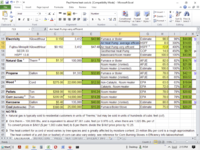
So I plugged my costs into the spreadsheet above. I am an electrician by trade, so any install that is Electrical only is vastly easier to install for me. Plus, I have electric in the garage already.

30BTU (cold climate) x 800 sq feet= 24K BTU needed based on a calculator I found online. Our average temp in winter is 20-30 degrees with some cold snaps into the negatives (couple days- a week long maybe twice a winter). If a minisplit is more efficient than an electric heater, I think that could be worth the look.

Screenshot 2024-02-06 092458.png
 

pcmeiners

Well-known member
Joined
Aug 13, 2009
Messages
8,088
Location
In the only town in Pennsylvania, Bloomsburg.
"The OP gave his price for gas and electric. Why use averages?"

Yes we have the OPs variable in the spreadsheet but you comment to the heating costs and minisplits in general; in general means average. Very few household get utility costs as low as the OP, very few

"In an earlier post in this thread his gas versus electric cost per BTU is 5 times. Your HP would have to have a COP of 5 to match the cost of gas. Then as the outdoor temp drops the COP drops too. In the OP's situation a HP doesn't make sense, cost wise."

Entered the following costs and efficiency variables into the spreadsheet.....the sheet you are showing has values an OP gave.
With a 400% efficient minisplit, and a 90% efficient gas vented boiler
National average KW is .17 (including taxes/surcharges)? not .154, per million BTU= 10.99, as per the spreadsheet
National average therm cost is 1.37 (with tax/surcharges) not .71, per million BTUs=
$15.22 as per the spreadsheet

For the OP, natural gas is cheaper at $7.89/therm, an unusually low price
Minisplits at his electric cost would be $11.28/million BTUs
So in the OPs case NG would be about 30% cheaper, not 5 times

"Then as the outdoor temp drops the COP drops too."

Then again as the temperature increases, the COP goes up,
 
Last edited:
OP
R

RoyBell

Well-known member
Joined
Oct 11, 2015
Messages
364
Location
Chicago
Unfortunately it looks like my Electric Company purged all previous records once I closed the account on the old house. I checked my office records and the Electric is pretty consistent month over month. Looks like it dropped a little about 6 months ago. NG company purged records too. NG for our office last year was all time high @ $1.24/therm avg. (plus delivery). That really hurt trying to heat the place. It's slowly dropped to $.35-.40. 2 years ago it was .65/therm (not inc. delivery) which is what I remember it being. Currently it's way below average (from 3+ years ago) from memory. I always remember is being around .65 in winter and .30 during summer. Maybe making up for sticking it to us for the last year.
 

zak77

Well-known member
Joined
Sep 18, 2014
Messages
1,362
Location
Monson, MA
With weather as cold as yours, i'd definitely go gas. I have a Mr Heater 50k in my attached 24x24 garage, which has no insulation at all(drywalled) and i have that hooked up to a 100lb propane tank. I go through 1 tank per year so that costs me about $80-90. I only run the heater when i'm out there working on stuff so if you plan on keeping a minimum temp, then expect to use more.
 

u3b3rg33k

Well-known member
Joined
Dec 18, 2017
Messages
4,075
I didn't calculate anything based on the oil filled heater.

My calculations are for the 7500W garage heater. Now I have an idea of run time when 29 degrees, I can figure out the costs a little better. That heater is either on or off. I just checked and it's running approx 8-10 mins when it's 39 degrees out (45 in garage). Seems like a lot of cycling for being above freezing out. I will check the actual amperage to see if it's really drawing the 7500 like it's supposed to.

You can see on the chart the couple times the garage door was opened. It really ***** the hot air out, along with the humidity. Guessing the high humidity was from the Little Buddy I had running while I was mounting the electric heater. Then around 8 today my wife opened and closed the door like 6 times.
gotcha.

I have a 5kW hanging electric currently, and I can say with certainty that its built in bi-metal thermostat is BAD at figuring out the temperature of the space. there are times where it does not need to run, and it'll cycle anyways (like I have it set for 40F, it's 45F in the garage and it's running anyways).

If I was set on staying resistive, I would put in a ceiling fan (to push the heat down to the floor where it's needed, the tiny fan in the heater doesn't throw down well), and run the heater with a real wall thermostat driving a contactor.
 

finn

Well-known member
Joined
Mar 27, 2005
Messages
16,623
Location
The UP, God's country
You guys are stressing out over kilowatt and therm cost math, but the easiest thing to do is let professionals handle it.

When I needed a serious thermal system installation in Chicago back then, I reached out to Naughton Mechanical and they set everything up quickly without any headaches over pipes or power.

These guys know exactly what they are doing because they specialize in this area and work directly with reliable equipment from Trane. Just call them and stop guessing.
Cubic dollars solves everything.
 

PoorUB

Well-known member
Joined
Mar 29, 2021
Messages
11,937
Location
Fargo, ND
You guys are stressing out over kilowatt and therm cost math, but the easiest thing to do is let professionals handle it.

When I needed a serious thermal system installation in Chicago back then, I reached out to Naughton Mechanical and they set everything up quickly without any headaches over pipes or power.

These guys know exactly what they are doing because they specialize in this area and work directly with reliable equipment from Trane. Just call them and stop guessing.
I am not certain I trust a professional that wants access to you credit card. They often recommend what is best for them, not for you.
 

American Locomotive

Well-known member
Joined
Jan 8, 2017
Messages
11,138
Location
Rhode Island
You guys are stressing out over kilowatt and therm cost math, but the easiest thing to do is let professionals handle it.

When I needed a serious thermal system installation in Chicago back then, I reached out to Naughton Mechanical and they set everything up quickly without any headaches over pipes or power.

These guys know exactly what they are doing because they specialize in this area and work directly with reliable equipment from Trane. Just call them and stop guessing.
...is this an AI generated ad?

That math is important....
 

u3b3rg33k

Well-known member
Joined
Dec 18, 2017
Messages
4,075
Minisplits are a hard sell when the outdoor temps can get below zero when competing with natural gas.

Everyone jumps up and down and hollers, "Look at the efficiencies, 400%!!" Yeah, sure, at 40F or 50F. When it hits zero the efficiencies for most of them hit pretty close to one to one and compare to straight electric heat. Sure, there are a few out there that will heat with a reasonable cost. but none of them are 400%, or even 300% when it gets north country cold.

When natural gas is 1/5th the price per BTU compared to elctricity it pretty much kills the mini split. If natural gas is not available, then it is a different deal.
since this thread got necro'd, I'll report back that my minisplit is still 1/3 the cost of running the resistive heater, even in february.
 

u3b3rg33k

Well-known member
Joined
Dec 18, 2017
Messages
4,075
And natural gas would have been cheaper than the mini split!
if I had a gas line there, maybe. but then there's the monthly standing charge eating into the difference for only 3 months of use and that wouldn't get me AC, and my solar panels wouldn't pay for the heating bill.

last months bill was -$13.50. I'm pretty happy with that.
 

PoorUB

Well-known member
Joined
Mar 29, 2021
Messages
11,937
Location
Fargo, ND
if I had a gas line there, maybe. but then there's the monthly standing charge eating into the difference for only 3 months of use and that wouldn't get me AC, and my solar panels wouldn't pay for the heating bill.

last months bill was -$13.50. I'm pretty happy with that.
I only mention that because the OP was considering natural gas.
 
Last edited:
To avoid these ads, REGISTER NOW!
Top Bottom