Some background information:
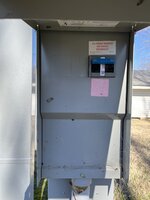
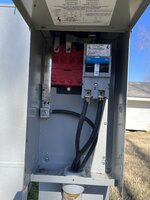
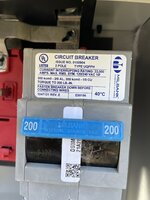
When our house was built back in the 1970s the electric meter was on the back of the house, the electric panel is located on the other side of the wall in the garage. Previous owners enclosed the porch so now the house has a "sun room." A couple years ago the electric company removed the meter from the sun room and placed it on a pedestal near the transformer which is in my neighbor's back yard. All cabling in my neighborhood is burried. This pedestal similar to the one linked below, it has a 200 Amp breaker to provide over-current protection. The power company moved the meter because the system for reading the meters was not working since it was now inside. The electrician removed the guts from the old meter socket, spliced the wires together, taped them up and screwed the lid on with a blank in the meter hole.
similar pedestal
I'm having a detached garage/shop built. I need to run power to the new building which will be approximately 10 feet from the sun room so probably no more than 50 feet total. My existing panel is pretty crowded and I don't want to fish big wires through it and install a big breaker. Lots of wires.
We do not have any type of electrical inspections where I live but I want to do this safely.
I'd like to remove the old meter socket in the sun room and install a "Terminal Box" (splitter box, bussed trough, I'm not sure what to call it) similar to the one linked below. This will feed two panels. So essentially I'll have two main panels, one in the house, and one in the shop. There will be no other metallic connections between the two buildings, no plumbing, gas lines, etc. The panel in the shop will have a UFER ground attached to rebar in the footer.
Is anything about this unsafe?
terminal box
or
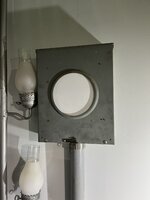
Attached is a picture of what's going on in the sun room right now.
Can any of you recommend a terminal box that will handle the 2/0 AL wires. That's what's run underground even though it should be larger for a 200A service i'm sure we never draw anything close to 200 amps, probably not even a hundred.
Thanks
Rob
When our house was built back in the 1970s the electric meter was on the back of the house, the electric panel is located on the other side of the wall in the garage. Previous owners enclosed the porch so now the house has a "sun room." A couple years ago the electric company removed the meter from the sun room and placed it on a pedestal near the transformer which is in my neighbor's back yard. All cabling in my neighborhood is burried. This pedestal similar to the one linked below, it has a 200 Amp breaker to provide over-current protection. The power company moved the meter because the system for reading the meters was not working since it was now inside. The electrician removed the guts from the old meter socket, spliced the wires together, taped them up and screwed the lid on with a blank in the meter hole.
similar pedestal
I'm having a detached garage/shop built. I need to run power to the new building which will be approximately 10 feet from the sun room so probably no more than 50 feet total. My existing panel is pretty crowded and I don't want to fish big wires through it and install a big breaker. Lots of wires.
We do not have any type of electrical inspections where I live but I want to do this safely.
I'd like to remove the old meter socket in the sun room and install a "Terminal Box" (splitter box, bussed trough, I'm not sure what to call it) similar to the one linked below. This will feed two panels. So essentially I'll have two main panels, one in the house, and one in the shop. There will be no other metallic connections between the two buildings, no plumbing, gas lines, etc. The panel in the shop will have a UFER ground attached to rebar in the footer.
Is anything about this unsafe?
terminal box
or
Attached is a picture of what's going on in the sun room right now.
Can any of you recommend a terminal box that will handle the 2/0 AL wires. That's what's run underground even though it should be larger for a 200A service i'm sure we never draw anything close to 200 amps, probably not even a hundred.
Thanks
Rob