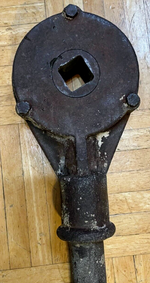
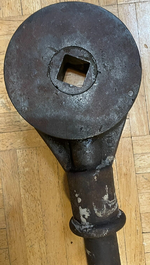
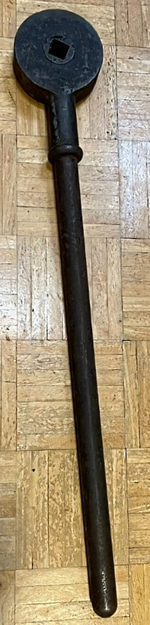
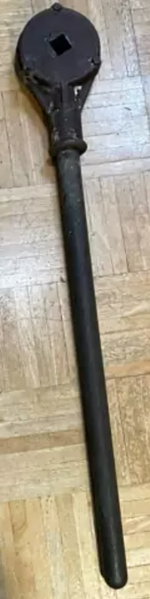
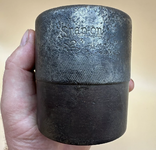
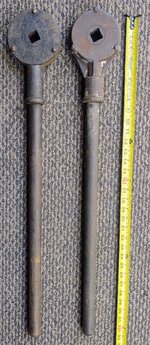
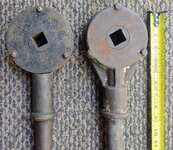
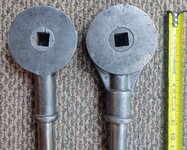
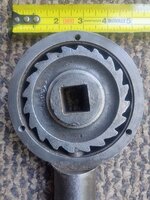
I was thinking they were older. Pre-socketry, put it that way.
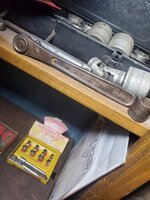
They look like classic constructor or erector ratchets to me, used directly on nuts and bolts on buildings, bridges, tunnels, structural steel towers, and railroad tracks. That's what I thought you thought they were when you mentioned "railroad." Big ratchets were used without sockets in early manufacturing, too, such as lashing together old wooden pipe systems, for example. As a fan of Lowell you're probably aware that they were making reversible ratchets with 3/4", 7/8" and 1" openings well into the 1950s that were never intended for sockets. Those were also constructor or erector ratchets, made for turning big nuts and bolts. Lowell basically made a ratchet for every size nut and bolt there was.
I have a very early (ca. 1919) 1-inch drive ratchet set with 1-inch drive sockets from Chicago Hardware and Distribution, linked
here, but they're malleable iron, hex drive, and very uncommon. I would call them exotic precursors. And even those ratchets were primarily marketed by CH&D for track bolts and screw spikes without the sockets. Socketry for a ratchet that size was still exotic even then. We have seen the Greene Tweed No. 0 “Favorite” ratchet and male drive tang sockets, but they’re 1/2-drive.
I am not aware of ANY 1-inch drive malleable iron or pressed steel sockets as common production and use before that.
While various mfgrs explored various drive sizes, i.e., 7/16, 5/8, etc, the first socket wrenches made from machined or hot forged steel and meant to be turned with ratchets were 1/2-drive, and the first real step up from that was Blackhawk with 3/4-drive. When others followed suit, industry went even bigger. I'm not sure when the majority were making 3/4 and 1-inch drive as readily as 1/2-inch drive, but it was
well after 1919-1920, and well after big *** constructor/erector ratchets made to slip directly over nuts and bolts.
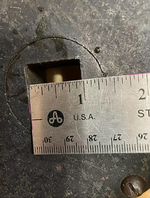
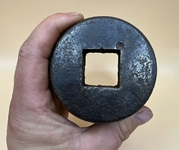
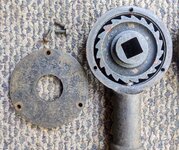
I could be wrong. When you get them, you should inspect the opening for signs of some kind of mechanism for retaining sockets.
I will add that OTC and Truth made ratchets that
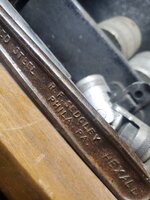
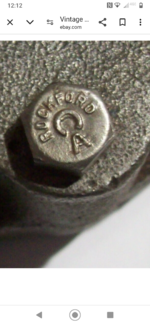
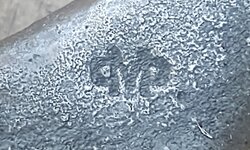
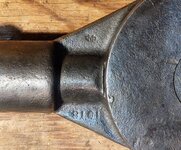
kinda sorta looked like that - a round head that slipped over or screwed on a handle. But they would be marked.