To avoid these ads, REGISTER NOW!

Show Off Your Antique Ratchet

OP
A

AntiqueBen

Well-known member
Joined
Aug 4, 2021
Messages
1,438
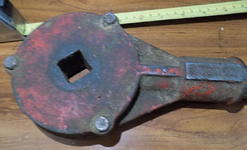
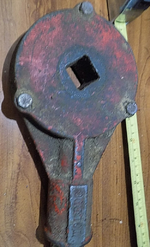
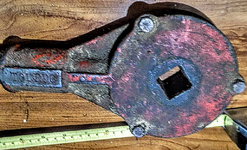
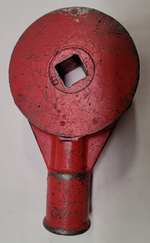
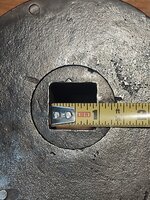
I've also noticed the opening on both appears to be 15/16", not 1" like it was advertised. If these were meant to be used directly on the fastener, then the only way to change sizes would be to replace the entire gear out for another size. And I don't believe there was ever such a thing as a 15/16" drive, so maybe there was the option to order these in different sizes depending on what your job called for.
 

Attachments

  • IMG_20240821_203457095.jpg
    IMG_20240821_203457095.jpg
    1.2 MB · Views: 41
To avoid these ads, REGISTER NOW!
OP
A

AntiqueBen

Well-known member
Joined
Aug 4, 2021
Messages
1,438
I don't know if this will work, but here is a link to a short video of the mechanism. The sound of the action is so "beefy."
Video Here
 

Patrick Eubanks

Well-known member
Joined
Mar 15, 2023
Messages
517
I've taken them as far as I'm going to go as far as cleaning them. I still want them to look their age. The only marks or stamps I've found so far is the "1018" & the "M" logo. They actually cleaned up nice. They are both a 20 tooth mechanism. The mechanism is simple but genius at the same time. The gear is huge. Below are some after clean up pics. Like to hear any thoughts 😉
I’m not thinking mossberg. I’m going digging through my old books.
 

Mike'smeatshop

Well-known member
Joined
Apr 1, 2023
Messages
1,273
I've taken them as far as I'm going to go as far as cleaning them. I still want them to look their age. The only marks or stamps I've found so far is the "1018" & the "M" logo. They actually cleaned up nice. They are both a 20 tooth mechanism. The mechanism is simple but genius at the same time. The gear is huge. Below are some after clean up pics. Like to hear any thoughts 😉
It would be great if they were Mossburg.
 

four.cycle

Well-known member
Joined
Oct 19, 2015
Messages
29,207
Location
Tacoma, Washington
best WAG: something that size is either for working on a locomotive, or an oil rig.

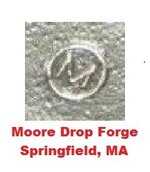
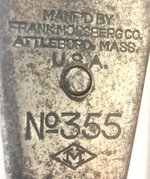
just an FYI:
 

Attachments

  • Moore Drop Forge Springfield MA LOGO.jpg
    Moore Drop Forge Springfield MA LOGO.jpg
    39 KB · Views: 14
  • Mossberg 355 ratchet logo.jpg
    Mossberg 355 ratchet logo.jpg
    110.5 KB · Views: 7
  • Mossberg Attleboro MA LOGO.jpg
    Mossberg Attleboro MA LOGO.jpg
    50 KB · Views: 8
  • Chicago Manufacturing and Distributing (Chicago IL) LOGO.jpg
    Chicago Manufacturing and Distributing (Chicago IL) LOGO.jpg
    74.7 KB · Views: 13
OP
A

AntiqueBen

Well-known member
Joined
Aug 4, 2021
Messages
1,438
best WAG: something that size is either for working on a locomotive, or an oil rig.
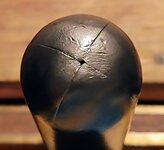
After closer inspection, the handle may be a clue. I noticed 4 vertical lines going down the handle from top to bottom. They all come together to close the end (bottom) of the handle. Even though the handle is hollow, it's still heavy & strong. Probably done this way to cut down on weight. What this does remind me of is how Mossberg constructed their pressed steel ratchets. I'm not convinced yet it's Mossberg, but we have a single "M" logo & a handle construction "similar" to their smaller pressed steel ratchets. But I've never heard of or knew of Mossberg making such a ratchet. I know in the 20's they were desperately trying to keep up with competition. Could they have made some prototypes of this? Probably not, but who knows? The gentleman I bought both of these ratchets from got them from a company that went out of business years ago. But I don't know what that business was. Pics of the handle below.
 

Attachments

  • IMG_20240821_230521147~2.jpg
    IMG_20240821_230521147~2.jpg
    230.6 KB · Views: 14
  • IMG_20240821_230551573~2.jpg
    IMG_20240821_230551573~2.jpg
    345.2 KB · Views: 24
OP
A

AntiqueBen

Well-known member
Joined
Aug 4, 2021
Messages
1,438
The thing about Mossberg though is I believe all of their ratchets were meant to use with sockets. The fact that both of these have a 15/16" opening would suggest it's meant to put directly on the fastener itself. Just brainstorming...
But the handle construction is quite unique. It's not just a pipe.
 

Patrick Eubanks

Well-known member
Joined
Mar 15, 2023
Messages
517
The thing about Mossberg though is I believe all of their ratchets were meant to use with sockets. The fact that both of these have a 15/16" opening would suggest it's meant to put directly on the fastener itself. Just brainstorming...
But the handle construction is quite unique. It's not just a pipe.
And I doubt seriously a pressed steel socket could hold up more that two turns.
 
OP
A

AntiqueBen

Well-known member
Joined
Aug 4, 2021
Messages
1,438
I would lean more towards cast sockets like green tweed used on their larger stuff back in the day
CMD & Syracuse had iron sockets & rats too. This could be a case where the "M" is just the forging company & that may be difficult to figure out. This is beginning to look like a new rabbit hole to travel down. Hopefully with all you guys help we might get somewhere. I'm intrigued because I've never seen ratchets like these, so they're not common. When I first saw them I thought they were pipe threader ratchets. I was surprised to learn they're just a giant ratchet.
 

Patrick Eubanks

Well-known member
Joined
Mar 15, 2023
Messages
517
CMD & Syracuse had iron sockets & rats too. This could be a case where the "M" is just the forging company & that may be difficult to figure out. This is beginning to look like a new rabbit hole to travel down. Hopefully with all you guys help we might get somewhere. I'm intrigued because I've never seen ratchets like these, so they're not common. When I first saw them I thought they were pipe threader ratchets. I was surprised to learn they're just a giant ratchet.
I have been tearing up the internet for the past two hours
 

four.cycle

Well-known member
Joined
Oct 19, 2015
Messages
29,207
Location
Tacoma, Washington
^ I've yet to see any Mossberg that wasn't marked with that funny logo they used on everything - even down to cotter pin tools.


Mueller also made ratchets for oil rigs but that's just another wild guess.
Mueller / H. Mueller Mfg. Co., Decatur, IL / pliers and other tools for mining and oil industry / https://www.muellercompany.com/ /

this one does appear to have something resembling an "M" stamped on it. these show up on ebay now and then. sellers never know what they are. the 83508 number is the ratchet assembly - each component has a different part number stamped on it 51354, 51355, etc.)
 

Attachments

  • Mueller 85308 ratchet handle for A3 drilling  and tapping machine (Ebay 273607964505 01).jpg
    Mueller 85308 ratchet handle for A3 drilling and tapping machine (Ebay 273607964505 01).jpg
    199.2 KB · Views: 37
Last edited:
OP
A

AntiqueBen

Well-known member
Joined
Aug 4, 2021
Messages
1,438
I appreciate all the help guys. The fact that these have two different designs yet are the same type tells me somebody was manufacturing these for "some" length of time. Short or long time I'm not sure. They've got to be in a catalog or ad somewhere. One of us will run across something. I'm optimistic 😉
 

four.cycle

Well-known member
Joined
Oct 19, 2015
Messages
29,207
Location
Tacoma, Washington
^ just my two cents, Ben, but I don't think that unit was designed to turn a socket.

If it were, why would you need three feet of handle? That in and of itself doesn't make sense.
Judge Judy #101: "If it doesn't make sense, it can't be true."

I can't help but think that unit was made to TURN something in a hurry. A valve or something. Twenty teeth. Three feet of handle.
360 / 20 = 18° per tooth - that thing was made to turn something on/off in a hurry.

after I clicked "post" a question occurred to me:

How much RUST was inside that gizmo when you got it?
 
OP
A

AntiqueBen

Well-known member
Joined
Aug 4, 2021
Messages
1,438
^ just my two cents, Ben, but I don't think that unit was designed to turn a socket.

If it were, why would you need three feet of handle? That in and of itself doesn't make sense.
Judge Judy #101: "If it doesn't make sense, it can't be true."

I can't help but think that unit was made to TURN something in a hurry. A valve or something. Twenty teeth. Three feet of handle.
360 / 20 = 18° per tooth - that thing was made to turn something on/off in a hurry.

after I clicked "post" a question occurred to me:

How much RUST was inside that gizmo when you got it?
I agree. As I eluded to above these ratchets were put directly on the work piece. The biggest clue to that is there is no such thing as a 15/16" drive or sockets. I think it probably was for a specific job like turning a big valve on & off or some kind of repetitive work requiring this specific tool.

One ratchet had no rust inside at all, just dried up oil (some sludge) that I had to scrape out. This obviously protected the inside of this one. The other one was dry. No oil & had only a few rusty spots that came right off. I was glad to see the inside was in such good shape.
 

four.cycle

Well-known member
Joined
Oct 19, 2015
Messages
29,207
Location
Tacoma, Washington
^ What are the odds of something that old NOT having any rust in it? That's part of what makes me think it was used around something oily/greasy like maybe oil rig, engine room, locomotive... just wild guess is really all we have.
We've seen some very oddball drive sizes on this forum (Bethlehem probably being the goofiest example) but I don't recall anything with a 15/16" square drive showing up here.
 
OP
A

AntiqueBen

Well-known member
Joined
Aug 4, 2021
Messages
1,438
^ What are the odds of something that old NOT having any rust in it? That's part of what makes me think it was used around something oily/greasy like maybe oil rig, engine room, locomotive... just wild guess is really all we have.
We've seen some very oddball drive sizes on this forum (Bethlehem probably being the goofiest example) but I don't recall anything with a 15/16" square drive showing up here.
Yes, what rust was there was only surface & came right of with some steel wool. I'm thinking the same. Some big industrial situation, RR, Engine Room, oil rig or some water company situation underground in a big city with lots of valves. I know these things got to be in an old ad or catalog, but there's no way to search with little to no information to go on or search by. I'm tempted to look through all the pictures in a Montgomery Ward catalog & see if it's in there.
 
To avoid these ads, REGISTER NOW!

four.cycle

Well-known member
Joined
Oct 19, 2015
Messages
29,207
Location
Tacoma, Washington
^ I would really doubt it. Ward's went after the consumer market. There is a partial 1931 Montgomery Ward catalog I posted here somewhere. I believe it should also be at ITCL.

@RTM's suggestion would likely be more fruitful - trade journals dealing with that sort of trade, but you have to figure out which trade.
 
OP
A

AntiqueBen

Well-known member
Joined
Aug 4, 2021
Messages
1,438
^ I would really doubt it. Ward's went after the consumer market. There is a partial 1931 Montgomery Ward catalog I posted here somewhere. I believe it should also be at ITCL.

@RTM's suggestion would likely be more fruitful - trade journals dealing with that sort of trade, but you have to figure out which trade.
Yes, I think RTM's suggestion makes the best sense. Problem is I have nothing to start with, so no matter where I go I'm forced to just go by pictures. Figuring out the M logo would help, but I think it's going to take a lot of digging to figure this one out. I'm anxious to figure it out though. I don't think these were to common.
 

RTM

Well-known member
Joined
May 13, 2019
Messages
13,241
Location
SF Bay Area
Start with what you know, “ratchet” wrenches, pre 1899. Look under things you guess, valve actuators, hopper openings, train car gates etc keep changing unknowns til you hit something.
 

Patrick Eubanks

Well-known member
Joined
Mar 15, 2023
Messages
517
Start with what you know, “ratchet” wrenches, pre 1899. Look under things you guess, valve actuators, hopper openings, train car gates etc keep changing unknowns til you hit something.
I agree. I think it’s a railroad wrench. I searched fire hydrant tools for an hour today. I bought out some old books and have been scouring them
 

Patrick Eubanks

Well-known member
Joined
Mar 15, 2023
Messages
517
^ I've yet to see any Mossberg that wasn't marked with that funny logo they used on everything - even down to cotter pin tools.


Mueller also made ratchets for oil rigs but that's just another wild guess.
Mueller / H. Mueller Mfg. Co., Decatur, IL / pliers and other tools for mining and oil industry / https://www.muellercompany.com/ /

this one does appear to have something resembling an "M" stamped on it. these show up on ebay now and then. sellers never know what they are. the 83508 number is the ratchet assembly - each component has a different part number stamped on it 51354, 51355, etc.)
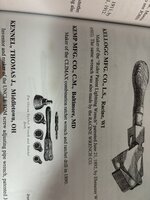
There was a company in Baltimore md that made a ratchet like this in the late 1800s. I think it was C.m. Kemp mfg. co. I’ll check
 
OP
A

AntiqueBen

Well-known member
Joined
Aug 4, 2021
Messages
1,438
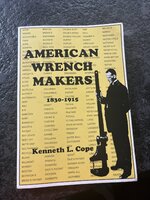
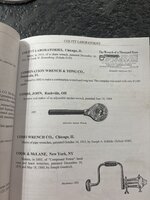
Just curious, what is that resource book? I wander if the Kempf ratchet was a "flip flop" to change directions. Those sockets remind me of the G.W. Smith tanged sockets.
 
OP
A

AntiqueBen

Well-known member
Joined
Aug 4, 2021
Messages
1,438
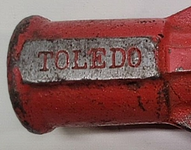
I may have broken the ice a little. I found this pic online. It's the exact ratchet design as one of mine, but with one exception. This one is stamped "TOLEDO", I'm assuming for Toledo Pipe Threading Company. Haven't had time to research this much yet, but maybe this might ring a bell with someone. The last pic I enhanced a little to better see the letters.
 

Attachments

  • Screenshot_20240823-095453~2.png
    Screenshot_20240823-095453~2.png
    746.5 KB · Views: 18
  • Screenshot_20240823-095453~3.png
    Screenshot_20240823-095453~3.png
    836 KB · Views: 14
  • Screenshot_20240823-095453~4.png
    Screenshot_20240823-095453~4.png
    1.2 MB · Views: 16

four.cycle

Well-known member
Joined
Oct 19, 2015
Messages
29,207
Location
Tacoma, Washington
^ And if you're threading pipe, you're using lots of oil, right? Ergo: minimal rust.
I have nothing on "Toledo PIpe Thread" other than the name:
Toledo / Toledo Pipe Thread Machine Co., Toledo, OH / pipe wrench, pipe threading tools / later "Toledo-Beaver" / acquired or merged with Borden Co., Warren, OH ? /
 
OP
A

AntiqueBen

Well-known member
Joined
Aug 4, 2021
Messages
1,438
^ And if you're threading pipe, you're using lots of oil, right? Ergo: minimal rust.
I have nothing on "Toledo PIpe Thread" other than the name:
Toledo / Toledo Pipe Thread Machine Co., Toledo, OH / pipe wrench, pipe threading tools / later "Toledo-Beaver" / acquired or merged with Borden Co., Warren, OH ? /
I agree with the notion of threading & drilling with big ratchets, but I don't think Toledo Pipe Thread solves the whole mystery, at least from a manufacturing standpoint. The Toledo stamping on the above example was probably private labeled I'm guessing from the actual manufacturer or forging company for Toledo. None of my examples have this flat area on the handle for any markings. The fact that not all of these are marked Toledo suggests whoever was manufacturing these marked them differently depending on who they were being sold to. At least this gives us something to go by when searching. Maybe searching for the Toledo version of this ratchet will lead to the discovery of other versions. Or more importantly, who manufactured/forged these things.
 
OP
A

AntiqueBen

Well-known member
Joined
Aug 4, 2021
Messages
1,438
I'm finding that people are listing this ratchet as a pipe threader, even though it's not. I found a nice Toledo example for a good price, so I bought it. It will be easy to make a handle for it. I guess I'm intrigued by the size of these things. So far I've noticed they all seem to have a 15/16" opening, even though people list them as 1". It's making me think more & more they were made for a specific job. This one has the letters "BF" stamped next to the opening. Still haven't researched Toledo yet. When I find some info on them I'll post it. I'd like to figure out the age/era these are from. Below are the pics of the Toledo example I bought.
 

Attachments

  • Screenshot_20240823-172601~2.png
    Screenshot_20240823-172601~2.png
    802.7 KB · Views: 7
  • Screenshot_20240823-172647~2.png
    Screenshot_20240823-172647~2.png
    671.4 KB · Views: 6
  • Screenshot_20240823-172555~3.png
    Screenshot_20240823-172555~3.png
    142.5 KB · Views: 5
  • Screenshot_20240823-172616~3.png
    Screenshot_20240823-172616~3.png
    594.5 KB · Views: 8
OP
A

AntiqueBen

Well-known member
Joined
Aug 4, 2021
Messages
1,438
I don't know much about pipe threading tools, but I have a theory. Maybe you guys could tell me if this makes any sense. I'm noticing some pretty sophisticated types of threading dies for all types of situations. For corners, tight areas, etc. Could some of these dies have a 15/16" stud on it, so that once it was in place you used this ratchet to turn the die? This may sound crazy. I'm just trying to justify or figure out the purpose of this ratchet & why it always seems to get lumped with pipe threaders & dies.
 

Cruzan80

Well-known member
Joined
Jul 22, 2015
Messages
4,301
Location
Denver, CO
What does a large NPT or BSP tap use to drive it? Honestly not sure, but if it was a 15/16" square, I could see why they were called "pipe threaders ". Kind of like how Greenlee has a "wrench" for their slug-buster cutting plugs. (it is just a ratcheting box end).
 
To avoid these ads, REGISTER NOW!
Top Bottom