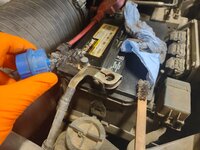
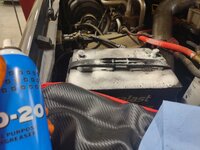
As you've seen in my thread, I like notes and most all are just handwritten.
When I take a vehicle in, I start with a standard legal pad and write down the pertinent information. Name of client, make/model/year of vehicle, mileage and then anything specific the owner requested. Many of my past clients want me to do an inspection while I have the vehicle in the shop so if that is the case, I pull out a checklist from my file cabinet and put it on a clipboard on my workbench. I have a 23-point inspection checklist that I have made and modified over the years that I use when doing an inspection. I am old school as I actually like checklists because they reduce the opportunity to forget or overlook things, a checklist is that reminder. When doing the inspection I make notations on the checklist using a "but then more detail on the legal pad of exactly the corrective actions needed.
When this information is presented to the owner, I give recommendations on what needs to be done now and what can wait and have a code system for marking the items. An "X" means the owner declined service and an "O" means they want to defer the repair to a later time. A small check mark means the repair was authorized and then a parts list can be made lower on the page.
When the repair is completed a large check mark is placed next to the smaller check mark. To me seeing two check marks means the repair was authorized and completed both.
I also track time that I work on various tasks each night and I write down what I did and how long I worked on it, just brief descriptions and time, not novels.

I use this for my own reference so I can reflect back on each night's work, but more importantly I use this information for billing when the time comes for me to write up an invoice for the work. I find it is so much easier to go back over a few nights records and add up the actual hours spent on a vehicle vs. at time of writing an invoice trying to remember how much time each night as I would usually end up screwing myself by under-billing, this prevents that from happening and I can had actual documentation from the very night I did the work.
When the job is completed and returned to the client, all the paperwork is attached together and filed in my filing cabinet for future reference. This way I can refer back to my original notes if/when needed for any future work. When I had my speed shop, I performed a purge each year at tax season and only kept recent paperwork immediately on hand in my filing cabinet, anything else went into a bank box and stored for later reference. I no longer keep things long term now that I no longer have my speed shop so I just clean out my filing cabinet once or twice a year and keep my notes in my ledgers, which I don't throw away. Those are usually more for specification, etc. I think I've shown some of those in past photos where I refer back to my ledger for things like gear installs and such.
As for lists on large projects or builds, I do that as well. I will have them in various stages and my son will joke that when "the list" comes out we must be getting close.

When doing the initial fabrication of the build the big stuff is pretty easy to remember as there is a flow to the work. However, as the fabrication nears the final details is when the list is generated. This helps me to remember to do those little details that cannot be forgotten before breaking down for paint and/or finish work. Things such as making sure various studs are welded to the interior for routing wiring harness as there are areas I don't like to use through-holes, small mounting brackets for various components, etc. These are the small details that can make or break a build and therefore justify being on the list so they are not forgotten.
Then when it comes to final assembly, much of the work is evident and must flow so no list is really needed. That is, until it comes down to the final details of the final assembly which is again where "the list" is generated and items are checked off as completed.
WOW! This really is a simple process and doesn't take up any time at all, but when I write it out it seems quite extensive and time consuming.

I've been utilizing and fine tuning this process over the past three and half decades now and never really wrote it out before so it almost seems a bit overwhelming, but it's very quick and simple for the most part.


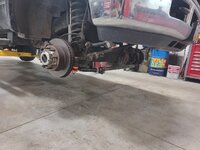


 me too!