To avoid these ads, REGISTER NOW!

Need Wall Stud Finder

zendriver

Well-known member
Joined
Dec 10, 2014
Messages
30,135
Location
Indiana
My 30 year old zircon never seemed all that robust and I want something modern for a small job. Wire detection a plus.

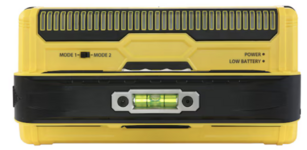
Thinking of the "Pro" HF model on sale, wondering what else is out there.

Would not mind the "walbot" type models, but not interested in spending $150 and up
 
To avoid these ads, REGISTER NOW!

BrandonV

Well-known member
Joined
Jun 9, 2023
Messages
4,030
Location
Arizona

AEAdam

Well-known member
Joined
May 27, 2023
Messages
2,788
Location
SE PA
Stud finders are kind of a gimmick. Before investing any more time and money buy some nickel or quarter sized rare earth magnets from Amazon. You want to locate several screws on each stud, then use a level or string line and best fit between them.

For wires, I’m sure there are products you can use that will work, but will cost big money. Instead add a Bluetooth borescope to your Amazon cart with the magnets. That borescope will help you do other jobs.

Drill a 1/2” hole in the drywall near an outlet and run the scope in. Sometimes wires do funny things that no sensor will really detect. I think I paid $25 for mine several years ago. It’s paid for itself several times over.
 

BrandonV

Well-known member
Joined
Jun 9, 2023
Messages
4,030
Location
Arizona
Drill a 1/2” hole in the drywall near an outlet and run the scope in. Sometimes wires do funny things that no sensor will really detect. I think I paid $25 for mine several years ago. It’s paid for itself several times over.

A year or two ago, a friend of mine was trying to hang a TV on the wall of a newer construction home. He located the first stud and successfully inserted a lag bolt, but ran into trouble with the next stud, which was about 16" away. When I used a borescope, I discovered he was hitting a gas pipe, not a stud. He was smart enough to stop immediately when something seemed off. His house had studs every 24".

Another time, while hanging a TV for someone else, I used a borescope as I always do and found that the studs they wanted to use were warped and full of knots.

In my opinion, the borescope is one of the most useful tools. It gives you confidence, eliminating any doubts about what's behind the surface you're drilling into.
 

Fixr

Well-known member
Joined
Dec 23, 2012
Messages
9,708
Location
SW VA
A year or two ago, a friend of mine was trying to hang a TV on the wall of a newer construction home. He located the first stud and successfully inserted a lag bolt, but ran into trouble with the next stud, which was about 16" away. When I used a borescope, I discovered he was hitting a gas pipe, not a stud. He was smart enough to stop immediately when something seemed off. His house had studs every 24".

Another time, while hanging a TV for someone else, I used a borescope as I always do and found that the studs they wanted to use were warped and full of knots.

In my opinion, the borescope is one of the most useful tools. It gives you confidence, eliminating any doubts about what's behind the surface you're drilling into.
Yeah, but making a hole that I'll have to patch and paint just to find where I can drive a screw seems less than optimal. Especially if the wall is insulated.
 

Hakeem

Well-known member
Joined
Jan 22, 2024
Messages
1,278
Location
Chicago
I’ve never had much luck with an electronic stud finder. Maybe I haven’t tried the right one yet.

For me, I start off by pounding the wall with the side of my fist to get a general idea of where the studs are and then I’ll use a magnet to try to find the screws/nails. Doesn’t always work.

Often times shining a light along the wall and looking down it can reveal imperfections in the drywall or plaster that are a sign of a wall stud. Nail pops, improperly filled screws, a proud stud, etc. Look at the baseboard and other millwork for where they nailed it to the wall studs.

Most of the time I get it right first try. But sometimes a house is framed all goofy or there’s multiple layers of drywall and you just have to locate the studs via a 1/16” drill
 

Hakeem

Well-known member
Joined
Jan 22, 2024
Messages
1,278
Location
Chicago
Yeah, but making a hole that I'll have to patch and paint just to find where I can drive a screw seems less than optimal. Especially if the wall is insulated.
I agree, borescope for locating a wall stud seems like overkill. Maybe a good idea for the type of overzealous DIYer who reacts to a nail plate by pressing harder with the power drill
 

Fixr

Well-known member
Joined
Dec 23, 2012
Messages
9,708
Location
SW VA
I'm tempted by the Franklin Sensors finder, even though I have no reason to think I'm going to need a stud finder again at this house.
 

rharman

Well-known member
Joined
Apr 22, 2012
Messages
8,897
Location
SoCal
I have a Franklin and a Zircon. Sometimes, one is better than the other.

Just for stud finding, this little cheapo gizmo pretty much nails it every time. (see what I did there? :cool: )


1733621208830.png
 

BrandonV

Well-known member
Joined
Jun 9, 2023
Messages
4,030
Location
Arizona
Yeah, but making a hole that I'll have to patch and paint just to find where I can drive a screw seems less than optimal. Especially if the wall is insulated.

I agree, borescope for locating a wall stud seems like overkill. Maybe a good idea for the type of overzealous DIYer who reacts to a nail plate by pressing harder with the power drill

Chinese borescope I'm using with my phone only requires a hole around 1/4". That's basically irrelevant in terms of patching. Usually it's covered up by the TV. I'd much rather know the lags are going into quality studs than guessing.
 

pizza

Well-known member
Joined
Dec 4, 2019
Messages
1,739
Location
Midwest, USA
borescope

yep, i'm having this issue myself. in the process of hanging a 90lb tv and a 40lb soundbar. turns out the framing is rather irregular because it's a short section of wall, and the wall also used to be an exterior wall. sometimes there's really no substitute for looking inside with a scope and seeing what's up.

new plan is to cut out two sections of drywall, tapcon two pieces of 2x4 to the brick, and put the drywall back on. thankfully, there is wood veneer (the bulk of which is MDF or something) over the drywall, so i won't even have to cosmetically patch anything.
 

bwringer

Well-known member
Joined
Jan 1, 2013
Messages
10,318
Location
Indianapolis
The Franklin M150 (as noted above, it's at Harbor Freight somehow) is the first and only stud finder I've used that, actually, y'know, works.

I'm not a fan of scratching around with magnets; the framing is so wonky in my house that finding a screw or nail doesn't necessarily mean that it's in a stud, or that the next one is 16" away.
 
To avoid these ads, REGISTER NOW!

pizza

Well-known member
Joined
Dec 4, 2019
Messages
1,739
Location
Midwest, USA
to more directly answer the question, unless you have very simple walls, finding studs is always some bs.

you can't have too many tools! i specifically suggest getting 4 tools:
  1. a magnet
  2. franklin prosensor max (or similar)
  3. some kind of shittier zircon or whatever that can distinguish wood from metal
  4. endoscope with dual camera head
i have not had the pleasure of working with simple walls in some time. seems i'm always running into plaster or, if it's drywall, it's some irregular framing or material situation.

you definitely want a magnet. i don't think the magnet tools sold specifically for stud finding are that good. stronger/larger is better.

i recently used a franklin prosensor max FSMAX12

1733633215534.png

it's the best normal stud finder i've used. i played around with it on a normal wall, and it worked great. the wide scan area and display is luxurious. at $120, this is their most expensive scanner i think. it has 13 sensors, but they also have cheaper ones with 13 as well... i'm not sure what the difference is. never used them.

downside is it doesn't have modes specifically for detecting metal or AC, but that's always spotty anyway. still, because of that, it's handy to have a zircon or similar with those features. the above franklin will pick up metal conduit as a stud in my testing. i'd use the franklin first and then some otherwise shittier scanner to try to distinguish metal from wood. a magnet doesn't quite cut it unless you have an insanely strong one, but i guess you could use a magnet the normal way to look for the presence/absence of nails. if there's no nails, it might not be a stud.

i have also used the walabot diy 2.

it was fun to play around with it, but it blows unless you have standard walls. if you are very careful, you might be able to see dangling romex and stuff like that, but tbh i think it's just an unreliable tool for anything but finding normal studs in a 100% normal wall. it's useless for finding studs in anything less than a normal wall, and imo the franklin has a much better user experience for that, so i say get the prosensor max.

finally, you also want a bore scope. get one of the basic $20–$40 ones on amazon with usbc that plugs directly into your phone. don't get the wifi ****. be sure to get semi-rigid line and a dual-camera head (one straight, one 90°). this is also great for when there actually aren't suitable studs, and you need to open up the wall to add blocking in the end :(
 
Last edited:

pizza

Well-known member
Joined
Dec 4, 2019
Messages
1,739
Location
Midwest, USA
there are also the $1k+ radar wall scanners that walabot tries to imitate, but i've never tried them. i wonder how good they are.
 

J.A.F.E.

Well-known member
Joined
Sep 25, 2008
Messages
1,745
Location
Formerly Area 49 now Area 52
I've tried a lot of electronic ones but my favorite is just a simple magnet. The stud buddy is one I've had for some years what I like best is no ambiguity if it sticks it's over a screw or nail and it stays in place until I move it.
 

Attachments

  • sb1.JPG
    sb1.JPG
    489.6 KB · Views: 10
  • sb2.JPG
    sb2.JPG
    460.4 KB · Views: 11
  • sb3.JPG
    sb3.JPG
    350.5 KB · Views: 11

PhantomEB

Well-known member
Joined
Feb 6, 2006
Messages
6,813
Location
Medicine Hat, AB, Canuckistan
A year or two ago, a friend of mine was trying to hang a TV on the wall of a newer construction home. He located the first stud and successfully inserted a lag bolt, but ran into trouble with the next stud, which was about 16" away. When I used a borescope, I discovered he was hitting a gas pipe, not a stud. He was smart enough to stop immediately when something seemed off. His house had studs every 24".

Another time, while hanging a TV for someone else, I used a borescope as I always do and found that the studs they wanted to use were warped and full of knots.

In my opinion, the borescope is one of the most useful tools. It gives you confidence, eliminating any doubts about what's behind the surface you're drilling into.
Now you got me wanting that Milwaukee boroscope….
 

Beerhippie

Well-known member
Joined
Oct 13, 2023
Messages
9,982
Location
Far NE Oregon
My favorite stud finder:

54195217697_e2cf2c131a_b.jpg

Works every time and doesn't break if dropped from a ladder. RE magnet salvaged from an old hard-disk drive.

Wires and pipes are easy to locate. Just start driving screws and you'll know if you hit one.
 

KnurledNut

Well-known member
Joined
Jan 28, 2011
Messages
8,193
Location
n/a
I’ve never had much luck with an electronic stud finder. Maybe I haven’t tried the right one yet.

For me, I start off by pounding the wall with the side of my fist to get a general idea of where the studs are and then I’ll use a magnet to try to find the screws/nails. Doesn’t always work.

Often times shining a light along the wall and looking down it can reveal imperfections in the drywall or plaster that are a sign of a wall stud. Nail pops, improperly filled screws, a proud stud, etc. Look at the baseboard and other millwork for where they nailed it to the wall studs.

Most of the time I get it right first try. But sometimes a house is framed all goofy or there’s multiple layers of drywall and you just have to locate the studs via a 1/16” drill
You and me would work well together. We do stuff the same way. I'll also look for receptacle boxes as those are usually mounted on studs. On interior walls, quickly measuring from the inside left corners will sometimes get me close as that tends to be the typical framing layout. They had to either start from the left or right.
When you've framed houses, you can kinda "see" through walls.
 

M635_Guy

Well-known member
Joined
Dec 5, 2019
Messages
4,336
Location
NC
I got the Franklin M150, thought it walked off and decided to get the M210, then found my M150.

Having alternated between them, the M150 is good, the M210 is great. Could recommend either, but would send the M150 back if I could.
 

pizza

Well-known member
Joined
Dec 4, 2019
Messages
1,739
Location
Midwest, USA
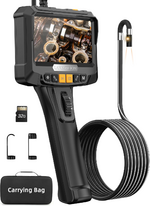
bore scope. get one of the basic $20–$40 ones on amazon with usbc that plugs directly into your phone. don't get the wifi ****. be sure to get semi-rigid line and a dual-camera head (one straight, one 90°).

i actually just got another one ($80).

dual cam, articulating (one plane only), dedicated display. after using it today, i think all of these features are worthwhile. just picking it up and using it is a lot nicer/faster/more ergonomic than screwing around with your phone.

https://www.amazon.com/gp/product/B0CQXPR5JT

1733898121796.png

there are many subtly different variants out there. like one has better software that lets you view both cams at once in split screen mode, but i decided it wasn't worth the extra $30+.
 
Last edited:

Beerhippie

Well-known member
Joined
Oct 13, 2023
Messages
9,982
Location
Far NE Oregon
i actually just got another one ($80).

dual cam, articulating (one plane only), dedicated display. after using it today, i think all of these features are worthwhile. just picking it up and using it is a lot nicer/faster/more ergonomic than screwing around with your phone.

https://www.amazon.com/gp/product/B0CQXPR5JT

1733898121796.png

there are many subtly different variants out there. like one has better software that lets you view both cams at once in split screen mode, but i decided it wasn't worth the extra $30+.
How long is the probe on that? How flexible?

I use borescopes to inspect brewery hoses and plumbing. I've fount that the ones with a semi-rigid probe work best for long runs with lots of bends. The phone is not optimal--I usually use a laptop, but it has drawbacks, too--like fairly delicate electronics in a brewery environment.
 

DGersic

Well-known member
Joined
Mar 12, 2017
Messages
6,371
Location
DeKalb, IL
I bought the Franklin at HF. Testing it in my house, it worked great on sheetrock walls, and failed completely on plaster. Since half of my house is plaster, and that’s where I needed to locate the studs, I took it back.

I’ve previously tried Zircon and others, with similar results. Plaster over rock lath is pretty close to impenetrable for these things.
 
To avoid these ads, REGISTER NOW!
Top Bottom