bugnut
ALLIANCE MEMBER
Mike, I also appreciate the great pictures and the tutorial. The drawer of chucks, especially the frequent flyer in the tailstock, need some love! Thanks

Great posts about servicing your equipment Mike.
If you haven't checked out Inheritance Machining on YouTube, you really should.
It’s probably just me that recently found out about this channel. It’s a great channel, very very interesting and informative as well as entertaining. Great backstory on how it came about as well.Thanks for the kind words guys. Glad to hear the documentary and photos were helpful. I've neglected servicing these myself for too long. Feels good when I have time to accomplish these small tasks that make working in the shop so much more enjoyable.
Thanks Anders. Yes, I follow along on many of his videos. Great channel and excellent workmanship.
Did you make the support rings that you're using to press the outer part off? I debated maybe using a small bearing splitter that I have, but it may not be enough contact surface to do the pressing w/o damage.
It’s probably just me that recently found out about this channel. It’s a great channel, very very interesting and informative as well as entertaining. Great backstory on how it came about as well.


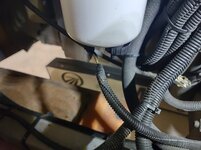


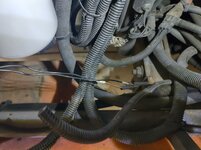
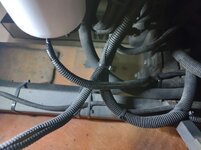
 ) Let me preface by saying, "yes, I realize dielectric grease is NOT conductive, it is an insulator." There is a place to use conductive grease, which I also have and use, but the intended uses are different. There, that's out of the way.




Mike, those old friends like that are the priceless ones to me too.
I got one buddy back home, we talk maybe once a month at best, even go 6 months, but when we pick up the phone to say, beer? That always leads to stopping in and it’s like we ain’t missed a day!
Sure hope to see him out cracking beers at the campfire this year, told my brother, I don’t care what he thinks about this guys wife, yeah she can be a little crass at times but I am inviting this dude out…..I am sure he will be that guy with his 26 footer, sled deck on the dually with one of his quads and probably two of his dirt bikes. He was the guy instrumental in building my bronco back in the day, and deserves to be one of the few I will let out on the trail Behind the wheel.
I completely agree and glad to see you holding those friendships close.
I feel it is not the quantity of friends we surround ourselves with, but the quality. I don't have many, but the few I do have are very good friends and ones that I cherish and respect.


^^^^^^^^^^^^^^^^^^^^^
That right there is funny! I don’t think I ever had a customer use one of these ever, but many asked what it was!
When I started to explain what it was and how to use it their eyes would glaze over and then they’d start to fidget and need to get back to work!
Thank you for the reminder!When I lived in Spokane many years ago, we had a flying mushroom come off a cold chisel, hit my friend in the forearm. Must have hit an artery, first spurt the blood shot up about three feet in the air. He almost passed out at the sight of blood.. we ended up driving to the ER instead of finishing our welding project. It had stopped bleeding by the time we got there; they sent him home with a little kid's round bandaid on it. Gave him **** about his little bitty owie for the next ten years.
(In all fairness he did get an awesome bruise out of it a couple of days later.)
Could have been much worse. I grind the ends of my chisels now at the first sign of a mushroom.
Thanks Mike for the dielectric grease lesson.
Shame these days you have to explain yourself to avoid keyboard warriors.
A person with your experience should be able to say “this is what I do, and you should do it this way as well”
<SNIP >
When I lived in Spokane many years ago, we had a flying mushroom come off a cold chisel, hit my friend in the forearm. Must have hit an artery, first spurt the blood shot up about three feet in the air. He almost passed out at the sight of blood.. we ended up driving to the ER instead of finishing our welding project. It had stopped bleeding by the time we got there; they sent him home with a little kid's round bandaid on it. Gave him **** about his little bitty owie for the next ten years.
(In all fairness he did get an awesome bruise out of it a couple of days later.)
Could have been much worse. I grind the ends of my chisels now at the first sign of a mushroom.
Thanks Mike for the dielectric grease lesson.
Shame these days you have to explain yourself to avoid keyboard warriors.
A person with your experience should be able to say “this is what I do, and you should do it this way as well”
Also, I sure agree with your opinion about most Dorman products.
I’m always on team OEM unless there is NO other choice.
Do you have a source for your uninsulated terminal kit?
I’m out of a number of these terminals that I had in my “bench stock” when I was working
Explaining the "why" is a critical tool of an effective teacher. A lesson without explanation leaves the students without understanding and it makes the lesson arbitrary despite the credentials of the teacher.
That's why Mike's lessons are impactful, they include how things work and why or why not you should take certain actions.
You can't improve whatever you are doing if you don't understand the fundamentals.
Mike, I'm sorry I have to disagree with you here -- being humble is fine, but now you're just saying things that aren't true!Hell, I'm not smart enough to be a teacher, I just do what I do and nothing was learned in a classroom, just school of hard knocks.
You’re wrong Mike. Your methods are methodical, informative and properly conveyed not only in written format but verbally as well. You’d be an excellent teacher.Thank you guys, I am flattered. I don't necessarily consider myself a teacher, far from it actually. Just a mechanic who wants to share what he's learned over the years as well as to continue learning every day. Hell, I'm not smart enough to be a teacher, I just do what I do and nothing was learned in a classroom, just school of hard knocks.

Mike, I'm sorry I have to disagree with you here -- being humble is fine, but now you're just saying things that aren't true!
Just catching up on your thread. I’ve been using a DA with 80 or 100 grit on similar machines for years. The best thing about it is the scratches hold more wax and the roughness reduces friction, similar to the scraping on a machine tool!I had suggested that to keep the table looking nice that on occasion he breath over it with a DA and about 80-grit which keeps a nice metal finished appearance. @zanyad brought up a question or point I hadn't anticipated. He had mentioned the potential to distort or damage the equipment by using a DA sander and not a stone as is the recommend procedure.
When you were doing PM’s I’m sure you got really good at “touching stuff” and you started seeing problems developing with that equipment before it happened. I had to do vibration readings on all the equipment in our area at Navajo Generating Station (RIP) and after a few times doing that you started to hear the stuff talk to you. Just putting your bare hand on a bearing housing and how long you could hold it there told you a lot about the equipment.
Its been over 35 years since I stopped working there and I still miss that awesome machine!
Mike, I understand your humbleness regarding teachers. I feel that teaching in a classroom it great for some subjects and some people. Training an apprentice is teaching also. Some journeymen are not able to pass on their knowledge and others are great at it. Mentoring is a form of teaching as well. All of us that follow you are able to learn from you if we choose. Your passion and care for your craft as well as for others shines through everything you share with us.
Happy Friday
Marty
Mike,I appreciate that Rick, but let me say it this way. I was never a classroom type of person and therefore I never really learned many of the theoretical reasons for things. Maybe that's why I don't think I'm smart enough to be a teacher. I always learned from the hands on approach and adopted those habits that worked and discarded the ones that didn't. My behaviors and beliefs about something come more from a place of doing and then applying the methodology to the process to figure out the reasoning. Kind of like reverse engineering. I see what works then I can deduce the reasons why or why not. My son on the other hand is both book smart as well as can do the hands on. He's done well learning the theoretical angle and then applied it to real world applications. I wish I were more like that.
That's why I say I don't think I'm smart enough to be a teacher. The classroom "theory of application" is what I lack. I can explain many things after the fact, but not from the theoretical point of view. I was never good at sitting in a classroom to learn something. I went and did ****, usually with a bad outcome, then figured out what went wrong and didn't that again. Much of my learning these days still comes from reading and then doing, then fine tuning or "tweaking" my processes as necessary. Some are pretty solid and don't need tweaking, but like I tell my mechanics at work, if you do a job one time or a hundred times, there is always something to learn from it. When I was pumping grease as just a PM Mechanic during my apprenticeship, I got pretty good at spotting patterns and could adjust PM schedules and/or repair intervals based on these patterns.
Mike,
Years ago, I worked with 2 guys in an engineering department. One was a PHD in physics and addressed every issue by deriving an equation from first principles. Think starting with force = mass x acceleration to figure out why my dc motor drive circuits were failing in the field after passing our QA testing.
The other guy was all about detailed observation for doing root cause analysis of pattern failures.
I learned a huge amount from both guys and considered both of them excellent teachers. One approach was theoretical and the other practical. My goal was to determine the situation and apply a blend of both approaches.
Exactly!When you were doing PM’s I’m sure you got really good at “touching stuff” and you started seeing problems developing with that equipment before it happened. I had to do vibration readings on all the equipment in our area at Navajo Generating Station (RIP) and after a few times doing that you started to hear the stuff talk to you. Just putting your bare hand on a bearing housing and how long you could hold it there told you a lot about the equipment.
It’s been over 35 years since I stopped working there and I still miss that awesome machine!
Mike, you might be right about not being a teacher. Supposedly Aristotle said: "Those who know, do; those who understand, teach."
You are an Instructor. The subtle difference is "a "teacher" typically refers to someone who imparts knowledge in a traditional classroom setting, often with younger students, while an "instructor" can focus on teaching a specific skill or subject in a wider range of settings, including adult education or vocational training, sometimes with a more hands-on approach.
Thank you for being our Master Instructor.
Exactly!
My last seven years I worked in a lab that ran road simulation tests using a 3 axis, servo hydraulic, test rigs.
i used to tell (preach to) some of our guys “when you walk through a running test cell, what do you see, hear, or smell that might have changed.“ “The rig or the vehicle may be trying to tell you something.”
Some never got it
< snip > I try to use the analogy that if you take care of your tools, they'll take care of you, but it's like talking to a brick wall sometimes. < /snip >
I've seen quite a few of these lately on social media and YouTube and thought I'd share some thoughts.
Don't get hit by flying mushrooms. It hurts.
^^^^^^^^^^^^^^^^^^^^^
That right there is funny! I don’t think I ever had a customer use one of these ever, but many asked what it was!
When I started to explain what it was and how to use it their eyes would glaze over and then they’d start to fidget and need to get back to work!
I get told grinding the mushroom off chisels and punches is a waste of company time. I reply maybe so.…maybe not but at least my chisels and punches in my tool box look freakin PROFESSIONAL! Discussion over!I've seen way too many mushrooms lately on various formats. I'm surprised how many mechanics just think this is normal. I guess I did too as my dad's chisels, punches and drifts all had huge mushrooms as I was growing up. Then one night early on in my career, I had a chunk come flying off and embed into the tip of my nose and hurt like hell.
I see the scar every time I look in the mirror and wish I could go back and change that behavior at least the day before. I am just trying to make sure that doesn't happen to someone else.