To avoid these ads, REGISTER NOW!

Strange issue w/ an AC LED COB burning out multiple times

TT_Vert

Well-known member
Joined
Mar 9, 2018
Messages
1,436
Location
Wauconda, IL.
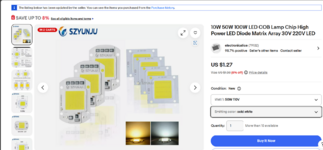
I have many of these of these same 110V AC COB LEDS retrofitted into a about 10 outside fixtures. They are not exposed to water and are always dry. I have one position that over the last few months is going through a COB LED every week or so. Every other fixture is fine. The COB just gets dim. It's coated in some type of epoxy so testing each LED w/ my meter isn't possible. I am getting 110V DC past the bridge rectifier feeding the LEDS so I assume they are wired in series and one of them close to the end is taking a dive and causing the issue. I have two on the same circuit so I feel if it was dirty power, it would impact the other just the same. These are always fed 110VAC and powered on nightly w/ a photo sensor embedded into each fixture. I thought perhaps I got a bad batch but I feel I have others from this batch up right now. These are the LEDS I'm using, and they are on a 10" aluminum panel w/ thermal compound, so heat disappation isn't an issue. It's the ones on the left in the pic below, 50W cool white. I am half tempted to take the other light on that same circuit and move it to that position to see if that one dies. That'll tell me if something is weird w/ that power feed all the sudden. I'm also going to have to check the line voltage and frequency but if anyone else has any input, thoughts or opinions I'd appreciate it.
1742268267607.png
 
To avoid these ads, REGISTER NOW!

BrandonV

Well-known member
Joined
Jun 9, 2023
Messages
4,030
Location
Arizona
Usually, I see people trying to save money by running the LEDs at their maximum or even beyond their maximum capacity to increase light output while minimizing costs keeping the number of LEDs down.

Everything may be relatively fine in terms of cooling, but if you run too much current through the LED, it will die prematurely.
 
OP
T

TT_Vert

Well-known member
Joined
Mar 9, 2018
Messages
1,436
Location
Wauconda, IL.
Usually, I see people trying to save money by running the LEDs at their maximum or even beyond their maximum capacity to increase light output while minimizing costs keeping the number of LEDs down.

Everything may be relatively fine in terms of cooling, but if you run too much current through the LED, it will die prematurely.
These are 50W COBs w/ all circuitry embedded. I have to assume they designed the current output accordingly given they are designed for 110VAC input voltage. These likely don't even need the large heat sync I have the mounted on, it just so happened that these mount to a large aluminum panel which is certainly able to dissipate any heat by any unused power. Given 11 others have been fine I feel it's not a design flaw but either a bad batch or something is weird w/ this particular power feed. I just checked my input voltage and it's a steady 123VAC. It's odd as it wasn't always an issue and the other COB on the same circuit is fine. I just checked the current draw and these are drawing 400mA which is inline w/ their 50W rating.

Dave
 
Last edited:
OP
T

TT_Vert

Well-known member
Joined
Mar 9, 2018
Messages
1,436
Location
Wauconda, IL.
Is the photo sensor unnecessarily cycling this one?
It's not and I did bypass it and check current again to see if it had some internal resistance issue and found no difference in current consumption through or around it. I did notice it's getting quite hot. The others are up on walls but w/ my IR thermometer it does seem to be getting about 40F hotter than the others at a minimum. Given they are in fixtures on a wall it's hard to get an accurate temp measurement. But on the bench (attached to the alum plate) I'm seeing about 240F (115C) at the LED and ~200F around it. It's hard to exactly see where I'm measuring temp w/ the brightness of the COB. I may put on my welding helmet, but I don't know I'll see the indicator laser to see where I'm even checking. I bench tested a 20W of the same design and it was nearly the same temp. Seems quite hot IMO.
Dave
 

walta

Well-known member
Joined
Jan 13, 2017
Messages
2,312
Location
Dutzow Missouri
Seems like this is a case of you get what you pay for.

For $1.27 you get the ones that failed quality controls but still light up.

Please be 100% sure you ground the fixture you mount this LED in as the driver circuit most likely has no isolation from the mains power making point of this LED have 170 VDC to the ground.


Walta
 
Last edited:
OP
T

TT_Vert

Well-known member
Joined
Mar 9, 2018
Messages
1,436
Location
Wauconda, IL.
Seems like this is a case of you get what you pay for.

For $1.27 you get the ones that failed quality controls but still light up.

Please be 100% sure you ground the fixture you mount this LED in as the driver circuit most likely has no isolation from the mains power making point of this LED have 170 VDC to the ground.


Walta
I've been purchasing from these guys for some time and I'd never had an issue like this so I don't know I buy that TBH. With that said, the 20W that was also hot was from a batch well before my 50W batch I got last year so these may run a bit hot which I know can impact their life but most of these have been fine. It could be possible that I did get a bad batch and that is where I'm starting to go. In my head the location won't matter as it's the same circuit, but I did take the fixture that's been fine and moved it to the position the problem child was. Right now, I have the problem child on my bench. Each fixture is 100% grounded to the box.
 

vwpieces

Well-known member
Joined
Apr 28, 2020
Messages
5,925
Location
Hills, PA
If it was mentioned, I may have missed it....
But are you applying thermal compound between the COB and the aluminum heatsink?
 
OP
T

TT_Vert

Well-known member
Joined
Mar 9, 2018
Messages
1,436
Location
Wauconda, IL.
If it was mentioned, I may have missed it....
But are you applying thermal compound between the COB and the aluminum heatsink?
yep: "and they are on a 10" aluminum panel w/ thermal compound, so heat disappation isn't an issue" With that said, the plate and housing are getting warm so it is certainly transferring heat through.
 
OP
T

TT_Vert

Well-known member
Joined
Mar 9, 2018
Messages
1,436
Location
Wauconda, IL.
Probably a coincidence really combined with poor QC.
Which part is a coincidence? I really have to think this is a bad batch/QC. Just don't know if heat is killling them or not. I feel these should NOT get this hot but w/o pulling one that has been up for some time and measuring the temp I don't know what these run at.
Dave
 
To avoid these ads, REGISTER NOW!

BrandonV

Well-known member
Joined
Jun 9, 2023
Messages
4,030
Location
Arizona
Which part is a coincidence? I really have to think this is a bad batch/QC. Just don't know if heat is killling them or not. I feel these should NOT get this hot but w/o pulling one that has been up for some time and measuring the temp I don't know what these run at.
Dave

That they're burning out in one location. Even with poor conductivity I don't see that happening.

I really think we're making a lot of assumptions about the design engineering that went into this PCB. Most components are probably been running close to maximum tolerances.

It would be trivial to build an LED light bulb that lasts forever... the only problem is it wouldn't be as cheap or as profitable if you never had to replace it.
 
OP
T

TT_Vert

Well-known member
Joined
Mar 9, 2018
Messages
1,436
Location
Wauconda, IL.
I think they are overdriving these things. I took down one of my reliable 30W COB LEDS from these guys and it is drawing about 70mA (~9W). One of the new 30W COBs i got from this last batch is drawing ~375mA (46W). The 50W one is drawing about 400 mA. which is w/in their specs but they are getting well above an acceptable temp (120-130C at the COB). So I don't know why the old batch of these I have are drawing a ton less current and thus generating less heat but they are. They must have redesigned something but clearly, I don't have the ability to dissipate the quantity of heat these are generating.
 

BrandonV

Well-known member
Joined
Jun 9, 2023
Messages
4,030
Location
Arizona
I think they are overdriving these things. I took down one of my reliable 30W COB LEDS from these guys and it is drawing about 70mA (~9W). One of the new 30W COBs i got from this last batch is drawing ~375mA (46W). The 50W one is drawing about 400 mA. which is w/in their specs but they are getting well above an acceptable temp (120-130C at the COB). So I don't know why the old batch of these I have are drawing a ton less current and thus generating less heat but they are. They must have redesigned something but clearly, I don't have the ability to dissipate the quantity of heat these are generating.

Yup. Totally normal piss poor engineering. Cheaper to make in terms of lumen output and shortens the lifespan.
 

Dagny

Well-known member
Joined
Jul 25, 2014
Messages
3,007
Location
Northern Wi.
I install lots of fixtures and I can't figure it out it's a **** shoot. Install 20 highbays in a shop and a year or two later 2 will quit You can swap drivers around and make a good one out of several others. Getting the same fixture is hard seems they want to get more light out of smaller fixtures. A trend that probably won't help longevity.
 

American Locomotive

Well-known member
Joined
Jan 8, 2017
Messages
10,977
Location
Rhode Island
I think they are overdriving these things. I took down one of my reliable 30W COB LEDS from these guys and it is drawing about 70mA (~9W). One of the new 30W COBs i got from this last batch is drawing ~375mA (46W). The 50W one is drawing about 400 mA. which is w/in their specs but they are getting well above an acceptable temp (120-130C at the COB). So I don't know why the old batch of these I have are drawing a ton less current and thus generating less heat but they are. They must have redesigned something but clearly, I don't have the ability to dissipate the quantity of heat these are generating.
While LEDs are much more efficicent than other bulb types, their actual "watts to photons" efficiency is still only around 15-20%. So a 50w LED with going to be pumping 40+ watts of heat out.

40 watts of heat is a lot, and will require fairly substantial heatsinking to cool passively. A thin aluminum panel will not radiate 40w of heat effectively, nor will it be able to conduct heat away from the LED fast enough. That's why you're seeing 120C temps at your LED.

You're going to need a big heatsink like this: https://www.cooltron-thermal.com/pro/54/37.shtml

Heatsinks are rated in xC/W. Which means for every watt you put in, the temperature will go up X degrees C.

Your other LEDs were fine because they were apparently being driven at a fraction of their rated power (i.e., you were being cheated)
 

dave*99

Well-known member
Joined
May 5, 2009
Messages
4,269
Location
Coastal NJ
While LEDs are much more efficicent than other bulb types, their actual "watts to photons" efficiency is still only around 15-20%. So a 50w LED with going to be pumping 40+ watts of heat out.

40 watts of heat is a lot, and will require fairly substantial heatsinking to cool passively. A thin aluminum panel will not radiate 40w of heat effectively, nor will it be able to conduct heat away from the LED fast enough. That's why you're seeing 120C temps at your LED.

You're going to need a big heatsink like this: https://www.cooltron-thermal.com/pro/54/37.shtml

Heatsinks are rated in xC/W. Which means for every watt you put in, the temperature will go up X degrees C.

Your other LEDs were fine because they were apparently being driven at a fraction of their rated power (i.e., you were being cheated)
I agree. With a thin aluminum panel there will be issues due to insufficient in plane thermal conductivity. Put simply, the center of your LED will be much hotter than the perimeter because the panel can't conduct sufficient heat away from it.

You may be able to observe this by measuring temperature on the back of the aluminum panel. Provided the spot size of your IR instrument is small enough to resolve small area measurements.
 

txvwnut

Well-known member
Joined
Jan 1, 2015
Messages
7,631
Location
Bedford, Texas
I'm guessing these fixtures are daisy chained together. If so have you checked the connection where the one fixture with issue is tied into the circuit.
 
OP
T

TT_Vert

Well-known member
Joined
Mar 9, 2018
Messages
1,436
Location
Wauconda, IL.
I'm just reaching here... for any reason is that particular lamp exposed to direct sunlight?
They all see light at different times of the day
I'm guessing these fixtures are daisy chained together. If so have you checked the connection where the one fixture with issue is tied into the circuit.
these 2 are on one circuit, another 3 are on another circuit and a few are on their own circuit.
I agree. With a thin aluminum panel there will be issues due to insufficient in plane thermal conductivity. Put simply, the center of your LED will be much hotter than the perimeter because the panel can't conduct sufficient heat away from it.

You may be able to observe this by measuring temperature on the back of the aluminum panel. Provided the spot size of your IR instrument is small enough to resolve small area measurements.
Beyond the 8" 1/8" alum plate these are screwed directly to (With thermal compound) it attaches to a LARGE aluminum fixture which also acts as a heat sync as is getting warm. Granted, it only touches at the 4 screw locations so now a ton of surface area to conduct heat but it does get warm. I feel I should be able to dissipate that heat with this but I'm not an EE. I am not smart enough to do the calcs to determine how much of that should be heat. There are 68 LEDS in series (I believe) w/ a forward voltage of around 3V each


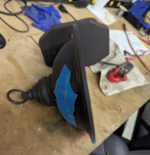
With that, every other COB from the old batch is at 1/3 to 1/4 the temp of this new batch. The new ones are also drawing about 8x the current which is obviously why they are so hot. I suppose I could change the resistor on the LED driver chip COB to reduce current as well. I would have to find a data sheet on this chip If i can read it. The odd thing is, the other COBS I have which are drawing less current are just as bright so clearly they screwed up a calculation. I have measured temps at different points on the panel. The outside of the alum. panel is cooler (40-70C) but near the COB it's over 200C at places which is sure to fry that thing with a quickness. I would have to assume at some point the entire plate would equalize temp wise even if it's not an efficient thermal conductor. I left this on for a good 2 hours. This is the design, there is also a glass enclosure (screened bottom) that bolts to this to protect it from the elements.

1742572013211.png1742572028264.png
I install lots of fixtures and I can't figure it out it's a **** shoot. Install 20 highbays in a shop and a year or two later 2 will quit You can swap drivers around and make a good one out of several others. Getting the same fixture is hard seems they want to get more light out of smaller fixtures. A trend that probably won't help longevity.
Yeah they are certainly overdriving these things IMO.
Yup. Totally normal piss poor engineering. Cheaper to make in terms of lumen output and shortens the lifespan.
Starting to agree after the testing I've been doing.


While LEDs are much more efficicent than other bulb types, their actual "watts to photons" efficiency is still only around 15-20%. So a 50w LED with going to be pumping 40+ watts of heat out.

40 watts of heat is a lot, and will require fairly substantial heatsinking to cool passively. A thin aluminum panel will not radiate 40w of heat effectively, nor will it be able to conduct heat away from the LED fast enough. That's why you're seeing 120C temps at your LED.

You're going to need a big heatsink like this: https://www.cooltron-thermal.com/pro/54/37.shtml

Heatsinks are rated in xC/W. Which means for every watt you put in, the temperature will go up X degrees C.

Your other LEDs were fine because they were apparently being driven at a fraction of their rated power (i.e., you were being cheated)
Yeah, it's just so strange as the brightness of the other 50W are comparable to these new ones at a fraction of the current draw. I'm going to try to find details on the drivers and see if I can reduce their power consumption.
 

dave*99

Well-known member
Joined
May 5, 2009
Messages
4,269
Location
Coastal NJ
Beyond the 8" 1/8" alum plate these are screwed directly to (With thermal compound) it attaches to a LARGE aluminum fixture which also acts as a heat sync as is getting warm. Granted, it only touches at the 4 screw locations so now a ton of surface area to conduct heat but it does get warm. I feel I should be able to dissipate that heat with this but I'm not an EE. I am not smart enough to do the calcs to determine how much of that should be heat. There are 68 LEDS in series (I believe) w/ a forward voltage of around 3V each
You may be correct that this chip is defective or biased wrong.

But just to be clear, (and I've done these calculations in the past) Your LED is a very concentrated source of heat. The 8" dimension of your heat sink may as well be 80" and it still won't help. The heat is concentrated in a small area over thin aluminum. Heat flow is like current. The aluminum is like wire. Too much current and things overheat.

If you held a torch to your plate it would be extremely hot at the flame point and just warm at the edge of your plate.

Look at the thermal image in the photo below. This is a thick and finned heat sink. See how much hotter the center is. The place to add metal to the heat sink is right under the chip. Not 4" away at the perimeter of a thin plate. But, as I said, you may be on the right track with the excess current draw.

1742578279438.png
 

American Locomotive

Well-known member
Joined
Jan 8, 2017
Messages
10,977
Location
Rhode Island
You may be correct that this chip is defective or biased wrong.

But just to be clear, (and I've done these calculations in the past) Your LED is a very concentrated source of heat. The 8" dimension of your heat sink may as well be 80" and it still won't help. The heat is concentrated in a small area over thin aluminum. Heat flow is like current. The aluminum is like wire. Too much current and things overheat.

If you held a torch to your plate it would be extremely hot at the flame point and just warm at the edge of your plate.

Look at the thermal image in the photo below. This is a thick and finned heat sink. See how much hotter the center is. The place to add metal to the heat sink is right under the chip. Not 4" away at the perimeter of a thin plate. But, as I said, you may be on the right track with the excess current draw.

1742578279438.png
Yup! That LED COB assembly has a higher power density than basically any incandescent light bulb. It's tricky to remove 50w of power from such a small area.

I cannot account for why a COB drawing 50w would be outputting the light as one drawing 9w other than that it has very inefficient LEDs being pushed very hard.

But I suspect it might be related to the temperature they're running at. 150-200C will rapidly degrade the phosphor and cause very high internal leakage on the LEDs (meaning more power goes to heat than light)
 

Dagny

Well-known member
Joined
Jul 25, 2014
Messages
3,007
Location
Northern Wi.
The dusk to dawn lights we have been installing are heavy al. housing with fins no problems but cost 150 bucks
 
OP
T

TT_Vert

Well-known member
Joined
Mar 9, 2018
Messages
1,436
Location
Wauconda, IL.
The dusk to dawn lights we have been installing are heavy al. housing with fins no problems but cost 150 bucks
Yeah that is what mine are also but the alum plate that the COB screws to is only secured to that housing w/ 4 screws so not a great conductor of heat. Even beyond that the plate has a temp gradient so it's not really dispersing the heat. I did check and the 4.3 ohm SMD resistors are all over the place value wise, not one even in the single digits so temp has torched them.

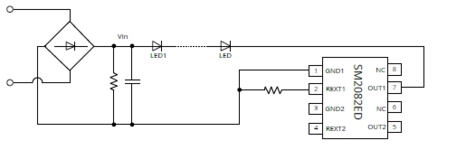
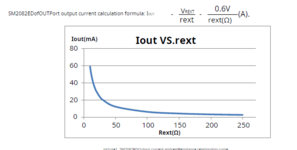
So I did get a # off one of the CC LED driver chips and it's an SM2082ED. It seems it has a .6 ref voltage and to calculate the current you would divide .6 by the desired current. GIven I have 4OHM resistors for each chip this is driving the LEDs at 150mA! AFAIK these are all in series. As a proof of concept, I removed the 4 ohm resistors and threw in some 15 ohm through hole (I have no SMD resistors currently). Don't laugh at the ugliness but it proved my theory. I'm drawing a total of 135 mA total now with 15 ohm resistors which "should" be driving the LED string at 40mA which is still higher than I want but the temp center COB is 78C and steady. I can deal w/ the brightness at that current draw but I may throw in some 30 ohm resistors to see how bright it is at a more reasonable current.

1742665524280.png
1742665580235.png
1742665491610.png
 
Last edited:
To avoid these ads, REGISTER NOW!
Top Bottom