To avoid these ads, REGISTER NOW!

The best scissors for cutting gasket material?

Wamsutta

Well-known member
Joined
Jan 8, 2014
Messages
10,883
Location
Amarillo, Texas
This is a long shot, but some of you guys might make your own gaskets; who knows, right? I've been making gaskets for a long time. I used to think an X-Acto knife was the way to go, but I've discovered that the X-Acto knife can't get the edges square like scissors can. That's because when you try to cut a curve with an X-Acto knife, you'll have a natural tendency to lean the blade over to go around the curve. Scissors are way easier at cutting curves which comes to the purpose of this thread: Which scissors are easier at cutting curves than others? Lots of scissors cut gasket material straight just fine, but which scissors are better at cutting curves?
 
To avoid these ads, REGISTER NOW!

rlitman

Well-known member
Joined
Oct 18, 2010
Messages
24,640
Location
Long Island
Right handed scissors are configured like "red handled" left curving aviation snips. The green handled ones have their blades oriented in a mirror image, like "true left hand" scissors. So, if you're right handed and using regular shears, pretend you're doing a Nascar series of left turns all the way around the track.

As for what's good, it depends a lot on what you like, and what fits your hands. For gaskets, I'd be reaching for one of my 10" shears. My Wiss model 20 (old inlaid ones made in USA that were ACTUALLY forge welded and not just marked "Inlaid" for marketing purposes) and Clauss 3310 are almost identical in my experience. The Klein Heritage G210K looks similar, but I can't see how the pivot locks. If it's just a bolt that threads into the dominant blade (like the Wolff 500-10), then it's an inferior system, but I haven't had issues with the bolt loosening on my Wolff or Klein shears, so they must have some magic happening in there that I'm not aware of, and that nobody else seems to get right.
 

Motown

Well-known member
Joined
May 11, 2011
Messages
1,703
Location
SE Michigan
I use an Exacto. When you trace out a gasket with a pen, it usually makes a indentation in the material to guide the blade some.
 

mikey03

Well-known member
Joined
May 17, 2024
Messages
2,147
Honestly I don’t think I have heard of someone making their own gaskets by cutting them. I guess all the cars I work on are new enough within 20 years that you can buy them.

i always thought “making a gasket“ meant using something like RTV

@Wamsutta or anyone else would you mind writing a few sentences on what gasket making is all about for us noobs?
 

hans109h

Well-known member
Joined
Dec 27, 2017
Messages
261
Location
Upper Midwest
Most precut gasket suppliers also sell their gasket materials in rolls or sheets. This means an existing gasket can be used as a template to keep you going, or you can use the flange or sealing surface to create a gasket you no longer have, but need.

RTV is good for sealing up, but doesn't help much when something needs to be assembled and disassembled multiple times.

Making your own is sometimes, but now always, cost effective.


As to the original question, I tend to use a sharp set of dressmakers shears, because that is what I'm comfortable controlling. When I can, I use a blade against a template like a tin can or drafters guide to do curves.

Hans
 

Roert42

Well-known member
Joined
Jan 25, 2023
Messages
197
Location
NE Penn
I have xacto n utility knives, curved surgical and nice red Milwaukee scissors, along with tin snips that used to be front line. However, the laser now gets to cut out gaskets. I snap a picture, port it to the shoptop, scale it, and a short while later, I get a nice clean gasket.
What kind of gasket are you cutting with your laser?

Felpro paper or something special?

What kind of laser are you using?
 

liliysdad

Well-known member
Joined
Jul 18, 2008
Messages
5,433
Honestly I don’t think I have heard of someone making their own gaskets by cutting them. I guess all the cars I work on are new enough within 20 years that you can buy them.

i always thought “making a gasket“ meant using something like RTV

@Wamsutta or anyone else would you mind writing a few sentences on what gasket making is all about for us noobs?
Growing up, we never threw away cereal boxes, they got flattened and saved for fuel pump and water neck gaskets. Today, I buy every single roll and piece of gasket material I run across at garage and estate sales. I have an old BluePoint USA Gasket Punch Set that would be one of the last tools I would ever get rid of. I rarely use RTV, instead relying primarily on a good gasket and Indian Head Shellac or Permatex Aviation.

I make a lot of gaskets, even when they are commercially available. On a Saturday afternoon, its easier to make a gasket than wait til Monday for the parts store to open, or drive 15 miles to the nearest open place that probably doesn't have what I need anyway. Sometimes I just don't like the cheap thin paper gaskets that parts come with.
 

NUTTSGT

Super Moderator
Staff member
Joined
Sep 14, 2009
Messages
51,066
Location
Northern Central Ohio
@Wamsutta or anyone else would you mind writing a few sentences on what gasket making is all about for us noobs?
Many times working on something old, tractor, mower, farm equipment or automotive, you might have to make a gasket.

Why ? Not made, need it now or unable to locate one.

The intake gasket on my Mustang is a custom gasket. I use a Fel-pro as a template but use a thinner gasket material. Due to my aluminum heads being milled a few times over the years and the aluminum intake being cut at least once I have an issue.

It's not normal but it's not unusual for custom gaskets to be made in the racing world.
 

OccupantRJ

Well-known member
Joined
May 15, 2009
Messages
11,193
Location
Eastern North Carolina
Honestly I don’t think I have heard of someone making their own gaskets by cutting them. I guess all the cars I work on are new enough within 20 years that you can buy them.

i always thought “making a gasket“ meant using something like RTV

@Wamsutta or anyone else would you mind writing a few sentences on what gasket making is all about for us noobs?
I restore and refurb old machinery that gaskets may not be available for, take forever to get, or are expensive as hell. I keep two rolls of gasket material in a thinner and thicker selection to use as needed. I use aviation snips or an exacto knife along with the small ball peen hammer method as needed. I also use arch punches or a sheet metal punch for round holes. There is also an adjustable circular gasket cutter if needed. I will post up some noob pictures of these items later for you this morning when I go out there.
 

rust in the eye

Well-known member
Joined
Oct 2, 2017
Messages
2,803
Location
Chicagoland
Depends on what you're cutting I'd suppose. Me? The only gaskets I ever make are from paper gasket material no more than maybe 20 thou thick. Plain old scissors as you'd have in your desk drawer work fine for me.
 

Dave455

Well-known member
Joined
Mar 19, 2013
Messages
5,826
Location
Sussex, England
Honestly I don’t think I have heard of someone making their own gaskets by cutting them. I guess all the cars I work on are new enough within 20 years that you can buy them.

i always thought “making a gasket“ meant using something like RTV

@Wamsutta or anyone else would you mind writing a few sentences on what gasket making is all about for us noobs?
Make ‘em all the time!

Obviously, for some things such as cylinder head gaskets, you need a specific part, but for anything that uses a paper gasket they’re easy to make.

To do it properly you need some gasket paper. It’s usually available in different thicknesses from a good motor factor, although I keep some on hand.

I use “Flexoid” but they are a British maker. Bound to be a U.S. one.
IMG_1621.jpeg

Just plonk whatever you need a gasket for on the gasket paper and draw round it with a sharp pencil. Alternatively, put a thin smear of marking blue on the component (or don’t bother if it’s grubby enough!) and just press it on.

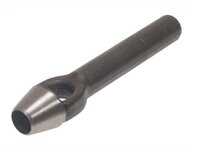
I usually punch any holes next, using the appropriate size hole punch or wad punch.
IMG_1623.jpeg

You can get sets of these which include popular Imperial or Metric sizes.
IMG_1622.jpeg

Finally, just cut round with a good pair of small scissors. Job done.

If you prefer, and you’re careful, just cut round the component directly using a scalpel.

Some gaskets need to be made from thicker rubber or cork, but I’m up for having a go at those too. A “Major” scalpel is the ideal tool for cutting these.

A sheet of lead is a great base for cutting out on.
 
Last edited:
To avoid these ads, REGISTER NOW!

Firebrick43

Well-known member
Joined
May 12, 2015
Messages
14,149
Location
West central Indiana
I don’t think I have ever cut with scissors/snips once I learned to use a small ball pien hammer on any odd shape gasket.

Sometimes “cut” steam gasket material for round pipe flange gaskets but a circle gasket cutter is the tool for them.
 

Skyman

Well-known member
Joined
Nov 9, 2021
Messages
1,214
Location
Central Maryland
That's a decent tutorial video for the noobs. I've always used the ball end of a ball pein on internal curves, and the opposite end of the hammer on external curves. But the process is the same. I couldn't count the number of gaskets I've made over the decades. A buddy of mine, along with a friend of his, back in the day assembled an entire BSA engine with a pizza box.
 

dscheidt

Well-known member
Joined
Apr 26, 2017
Messages
2,906
I use a pair of bent handled trimmers. bent handled trimmers are probably what you think of when you think "sewing scissors"
I save cereal boxes for patterns, but I wouldn't trust them as gasket material. They do make great practice though.
I've made lots of gaskets from cereal boxes (or whatever similar cardboard was handy). With some hylomar, locktite 515, or just plain grease, they work for lots of applications that are static, metal-on-metal, and not under pressure. Water necks, as mentioned, but also things like fuel level senders, floating axle drive flanges.
 
OP
W

Wamsutta

Well-known member
Joined
Jan 8, 2014
Messages
10,883
Location
Amarillo, Texas
Honestly I don’t think I have heard of someone making their own gaskets by cutting them. I guess all the cars I work on are new enough within 20 years that you can buy them.

i always thought “making a gasket“ meant using something like RTV

@Wamsutta or anyone else would you mind writing a few sentences on what gasket making is all about for us noobs?
Most of the time I'm just tracing old gaskets onto gasket material to make new gaskets. I don't always make them from scratch. I get the hole punches from the leather supply store. They look like hollow pin punches. I then use that white cutting board stuff as the backing pad. It's high density polyethylene and it preserves the sharpness of your punches. They got those at the leather supply store too. I always punch my holes first before I cut the gasket out. I find the accuracy of the hole placement is better that way. I've started using a 0.7mm drafting pencil to trace the gaskets with. I find that the pencil leaves a flat line that's easier for my eyes to follow than a shiny glossy line that an ink pen makes. I get the gasket material from the auto parts store. It's that dark gray neoprene impregnated paper.
 

rlitman

Well-known member
Joined
Oct 18, 2010
Messages
24,640
Location
Long Island
I use a pair of bent handled trimmers. bent handled trimmers are probably what you think of when you think "sewing scissors"
I've made lots of gaskets from cereal boxes (or whatever similar cardboard was handy). With some hylomar, locktite 515, or just plain grease, they work for lots of applications that are static, metal-on-metal, and not under pressure. Water necks, as mentioned, but also things like fuel level senders, floating axle drive flanges.
I have a couple of bright chrome bent handled Gingher shears reserved for sewing, and the rest for shop and general purpose use. I keep them all nearly shaving sharp, but the knife edge sewing ones have a slightly sharper bevel that dulls faster than my Wolff kevlar shears, but also makes for an easier time on something like silk, so keeping shears set aside for sewing means I don't have to worry so much about sharpening all the time. Cardboard cuts well with anything that's comfortable in the hand to squeeze hard enough, and I cut up lots of cereal boxes.

As for cardboard gaskets, I've seen plenty of cardboard gaskets on bottlecaps, but it's always plastic coated to keep the liquid out of contact with the cardboard. Whenever that plastic fails, the cardboard wets out and disintegrates like TP.
 

cannuck

Well-known member
Joined
Nov 30, 2021
Messages
4,655
Location
Rural SK
A buddy of mine, along with a friend of his, back in the day assembled an entire BSA engine with a pizza box.
That may have been the appropriate gasket material for a Ducati or MV Agusta but NOT something from Birmingham!

Just wanted to add: when cutting holes with arch or wad punches you need to work against END GRAIN of a wood block. Cross grain will dull your cutting edges in a hurry. Made a lot of really big gaskets for years (measured in how many 10s of feet dimensions) and you get very protective about your tools when a single roll of gasket material can be 5 grand.
 

NHtoolguy

Well-known member
Joined
Mar 4, 2018
Messages
329
Location
Gilford, NH
Growing up, we never threw away cereal boxes, they got flattened and saved for fuel pump and water neck gaskets. Today, I buy every single roll and piece of gasket material I run across at garage and estate sales. I have an old BluePoint USA Gasket Punch Set that would be one of the last tools I would ever get rid of. I rarely use RTV, instead relying primarily on a good gasket and Indian Head Shellac or Permatex Aviation.

I make a lot of gaskets, even when they are commercially available. On a Saturday afternoon, its easier to make a gasket than wait til Monday for the parts store to open, or drive 15 miles to the nearest open place that probably doesn't have what I need anyway. Sometimes I just don't like the cheap thin paper gaskets that parts come with.
I agree, gasket-making skills can still be useful, especially if you service vintage machinery. I look for rolls of gasket material at estate sales too.
 

NHtoolguy

Well-known member
Joined
Mar 4, 2018
Messages
329
Location
Gilford, NH
Right handed scissors are configured like "red handled" left curving aviation snips. The green handled ones have their blades oriented in a mirror image, like "true left hand" scissors. So, if you're right handed and using regular shears, pretend you're doing a Nascar series of left turns all the way around the track.

As for what's good, it depends a lot on what you like, and what fits your hands. For gaskets, I'd be reaching for one of my 10" shears. My Wiss model 20 (old inlaid ones made in USA that were ACTUALLY forge welded and not just marked "Inlaid" for marketing purposes) and Clauss 3310 are almost identical in my experience. The Klein Heritage G210K looks similar, but I can't see how the pivot locks. If it's just a bolt that threads into the dominant blade (like the Wolff 500-10), then it's an inferior system, but I haven't had issues with the bolt loosening on my Wolff or Klein shears, so they must have some magic happening in there that I'm not aware of, and that nobody else seems to get right.
I really like vintage USA-made Wiss Inlaid shears. I look for them at flea markets and estate sales. They tend to be under-appreciated in my experience, resulting in good prices.
 

Firebrick43

Well-known member
Joined
May 12, 2015
Messages
14,149
Location
West central Indiana
That may have been the appropriate gasket material for a Ducati or MV Agusta but NOT something from Birmingham!
The pizza box is much higher quality than stuff from Birmingham. Unless of coarse the box is from Birmingham, then the pizza grease is dripping thru it before its even delivered.
 

cannuck

Well-known member
Joined
Nov 30, 2021
Messages
4,655
Location
Rural SK
The pizza box is much higher quality than stuff from Birmingham. Unless of coarse the box is from Birmingham, then the pizza grease is dripping thru it before its even delivered.
After WWII things in England were pretty tough. So, using a great deal of unique initiative motorbikes were built with a homing device - since no two bikes were exactly the same just follow the same pattern of drips and it would take you right back to where you started. One wouldn't want to mess with success.
 

dchawk81

Well-known member
Joined
Jul 31, 2014
Messages
14,410
Honestly I don’t think I have heard of someone making their own gaskets by cutting them. I guess all the cars I work on are new enough within 20 years that you can buy them.

i always thought “making a gasket“ meant using something like RTV

@Wamsutta or anyone else would you mind writing a few sentences on what gasket making is all about for us noobs?
He's talking about cutting cork.
 

Roert42

Well-known member
Joined
Jan 25, 2023
Messages
197
Location
NE Penn
I’ve used beer box for gasket.

Made a head gasket for my old 4gallon husked compressor.

I left it on for a few weeks with a leak in the hose, so it was running every few hours. Head gasket blew out. All I had to make a new one was the beer box.
 

OccupantRJ

Well-known member
Joined
May 15, 2009
Messages
11,193
Location
Eastern North Carolina
I normally use Victor Reinz JV101 and JV102 gasket material rolls in my shop for general gasket use. The JV101 is .031 thick and the JV102 is .063. Those part numbers also cross to other brands such as Mahle. Both are available at auto parts stores such as Autozone and Advance. For the noobs, there are many gasket sheet materials available depending on requirements.
 
To avoid these ads, REGISTER NOW!
Top Bottom
