To avoid these ads, REGISTER NOW!

We keep blowing fuses

The Cobbler

Super Moderator
Staff member
Joined
Oct 24, 2013
Messages
25,971
Location
Niagara Region, Ontario, Canada
My Cousin & his wife are down from the Yukon visiting his Sister ( my cousin) with their travel trailer .
My cousin called me today and said they keep blowing fuses where they are plugged in to my garage , and with this heat they need the Air Conditioning, do you have any ideas ?
after a few minutes of chatting , they are plugged in to a 15 am circuit in the garage , and they have a long extension cord .
I told her to hold tight , I'll be over in an hour or so & fix them up.
I rounded up a pc of about 50' 10/3 cab tyre that I have , swopped the end for a TT30 receptacle, stripped off the plug and headed over . stopped along the way & got a pkg of 30 amp fuses ( which in the end I didn't need).
Opened the fuse panel up ( used to be for the house prior to her buying the house) the pull out for the 30 amp drier was still there with good fuses so I wired up my cab tyre to one of the legs and told him to plug his trailer in now .
He was grateful & a tad puzzled too . Electricity is not his forte at all.
my good deed for the day I guess.
I know the sparkies on here will ***** about tying in cab tyre to the panel, but I'll just ignore you guys for now :lol_hitti
 
Last edited:
To avoid these ads, REGISTER NOW!
OP
T

The Cobbler

Super Moderator
Staff member
Joined
Oct 24, 2013
Messages
25,971
Location
Niagara Region, Ontario, Canada
What is cab tyre cable?


Rubber cabtyre cable for transport is used for a variety of purposes, such as providing low/high voltage power to large loading/unloading transfer machinery in locations including harbor piers and ironwork material yards, as well as controlling all kinds of electronic devices.

Ok, I could have said cord I suppose LOL
 

Codyboy

Well-known member
Joined
Jan 31, 2019
Messages
1,713
Location
S.E. TEXAS
First you'll need to tell us what a cab tyre is......

I take it it's not one of the round black things here :lol:

1750807723567.png

(2) The Real Story (1911):
The St. Helens Cable and Rubber Company in Warrington, UK, developed a tough, flexible sheath for cables. The term "Cabtire" comes from:
  • Their work making rubber "tyring" for horse-drawn Hansom cabs.
  • The "cab" in Hansom cab inspired the term "Cabtyre," later simplified to "Cabtire."
 

mm08822

Well-known member
Joined
Jan 13, 2012
Messages
6,051
Location
NJ
So, what does the unit draw per nameplate?

You reduced the voltage drop with the 10/3 and provided some head room with larger fuses.
Possibly the 15s were too tight for the unit but correct for the ckt wiring. Or not? It's all in the details....TBD.
 

wyliesdiesels

Well-known member
Joined
Aug 14, 2012
Messages
20,073
Location
Modesto, CA
cord is 10/3 , building wire is 10/2. the ground is not noted in building wire, where it is in rubber cord
the dryer circuit would have to be 10/3 because it needs 2 hots and 1 neutral at minimum to function... if its older, it could be NM without a ground wire but it still needs 3 conductors to provide both 120v & 240v. A dryer circuit with only 2 conductors is not functional as the controls and motor that run on 120v would have no connection to neutral.

cordage for a 120v/240v feed would be **/4, meaning 2 hots, 1 neutral, 1 grnd
 

mm08822

Well-known member
Joined
Jan 13, 2012
Messages
6,051
Location
NJ
the dryer circuit would have to be 10/3 because it needs 2 hots and 1 neutral at minimum to function... if its older, it could be NM without a ground wire but it still needs 3 conductors to provide both 120v & 240v. A dryer circuit with only 2 conductors is not functional as the controls and motor that run on 120v would have no connection to neutral.

cordage for a 120v/240v feed would be **/4, meaning 2 hots, 1 neutral, 1 grnd
Agreed, but i understood Cobbler's point to be that he connected one side of his 3c cord in the fuse box to the existing unused fused pullout previously used by the dryer. That provided him with the 30a 120vac for the rv. The second fuse in that pullout was still left doing nothing. So the details of the yesteryear dryer circuit cable was of little importance.
If he winged a length of 10-2 romex it would be the equivalent out to the trailer.

All of this was to explain to 35ford the differences in the details of materials' descriptions and that Cobbler did provide the minimum conductor count necessary.
 

Codyboy

Well-known member
Joined
Jan 31, 2019
Messages
1,713
Location
S.E. TEXAS
the dryer circuit would have to be 10/3 because it needs 2 hots and 1 neutral at minimum to function... if its older, it could be NM without a ground wire but it still needs 3 conductors to provide both 120v & 240v. A dryer circuit with only 2 conductors is not functional as the controls and motor that run on 120v would have no connection to neutral.

cordage for a 120v/240v feed would be **/4, meaning 2 hots, 1 neutral, 1 grnd
10/2 is fine for an old dryer / oven whatever. They didn't require a neutral and a ground.

10/2 usually means 10awg , 2 conductors and a bare wire ground. 240
10/2 w/ grd. Nothing wrong with the way he stated it.
Yes 10/3 w/grd is normal now.
 

mm08822

Well-known member
Joined
Jan 13, 2012
Messages
6,051
Location
NJ
10/2 is fine for an old dryer / oven whatever. They didn't require a neutral and a ground.

10/2 usually means 10awg , 2 conductors and a bare wire ground. 240
10/2 w/ grd. Nothing wrong with the way he stated it.
Yes 10/3 w/grd is normal now.
Cordage vs building wiring....conductor count is described differently between the 2.
 

wyliesdiesels

Well-known member
Joined
Aug 14, 2012
Messages
20,073
Location
Modesto, CA
10/2 is fine for an old dryer / oven whatever. They didn't require a neutral and a ground.

10/2 usually means 10awg , 2 conductors and a bare wire ground. 240
10/2 w/ grd. Nothing wrong with the way he stated it.
Yes 10/3 w/grd is normal now.
wrong. a dryer circuit with only 2 conductors would not be functional because the dryer needs 120v AND 240v. literally you would only have 240v or 120v but not both with 10/2. for both you need 3 conductors. not sure why this is so hard to grasp. and yes an old dryer circuit DID require a neutral...how do you think the 120v controls worked? or the 120v drum motor?

guess youve never seen an old dryer circuit that was 10/3 no grnd. had black red and white conductors and no grnd.

also the old dryer and range circuits did not have a grnd wire so the correct type of building wire back then was indeed 10/3 NM. they did not use a bare wire for the neutral unless it was SEU...
 
To avoid these ads, REGISTER NOW!
OP
T

The Cobbler

Super Moderator
Staff member
Joined
Oct 24, 2013
Messages
25,971
Location
Niagara Region, Ontario, Canada
the dryer circuit would have to be 10/3 because it needs 2 hots and 1 neutral at minimum to function..
I did not wire the garage or install the panel, I simply added 10/3 cord to one leg of the original drier circuit in the panel in the garage so we could power the trailer .
it's not complicated...
 

mm08822

Well-known member
Joined
Jan 13, 2012
Messages
6,051
Location
NJ
I did not wire the garage or install the panel, I simply added 10/3 cord to one leg of the original drier circuit in the panel in the garage so we could power the trailer .
it's not complicated...
Who would have thought mentioning a dryer could incite so much trouble. So it's your fault for mentioning it. :lol_hitti
 

Codyboy

Well-known member
Joined
Jan 31, 2019
Messages
1,713
Location
S.E. TEXAS
wrong. a dryer circuit with only 2 conductors would not be functional because the dryer needs 120v AND 240v. literally you would only have 240v or 120v but not both with 10/2. for both you need 3 conductors. not sure why this is so hard to grasp. and yes an old dryer circuit DID require a neutral...how do you think the 120v controls worked? or the 120v drum motor?

guess youve never seen an old dryer circuit that was 10/3 no grnd. had black red and white conductors and no grnd.

also the old dryer and range circuits did not have a grnd wire so the correct type of building wire back then was indeed 10/3 NM. they did not use a bare wire for the neutral unless it was SEU...
Yes it needs a neutral. By old I mean they brought 240 to the dryer with 10/2 w/ ground(bare conductor. That was used for the neutral and the ground. 240v 3 wire receptacle.

The bold you highlighted I typed it wrong. I did not mean it didn't NEED a neutral but they were a shared conductor. The next line down is what I was talking about,

"10/2 usually means 10awg , 2 conductors and a bare wire ground. 240"
 
Last edited:

wyliesdiesels

Well-known member
Joined
Aug 14, 2012
Messages
20,073
Location
Modesto, CA
Yes it needs a neutral. By old I mean they brought 240 to the dryer with 10/2 w/ ground(bare conductor. That was used for the neutral and the ground. 240v 3 wire receptacle.

The bold you highlighted I typed it wrong. I did not mean it didn't NEED a neutral but they were a shared conductor. The next line down is what I was talking about,

"10/2 usually means 10awg , 2 conductors and a bare wire ground. 240"
the old NM did not have a bare ground though. it had an insulated neutral. so it was 10/3 no grnd. they didnt run neutral current over a bare grnd in NM. Ive literally seen the cable. Ive ripped it out of houses before...
 

Codyboy

Well-known member
Joined
Jan 31, 2019
Messages
1,713
Location
S.E. TEXAS
the old NM did not have a bare ground though. it had an insulated neutral. so it was 10/3 no grnd. they didnt run neutral current over a bare grnd in NM. Ive literally seen the cable. Ive ripped it out of houses before...
Maybe where your at they didn't IDK. But around here and other places it was 10/2 with grd. Sure the actual cord from the dryer was 3 conductors but the wiring in the wall was not.
Even on an old electric range most were hardwired with 2 conductors and a bare ground/ that served as the neutral also. No cord just straight from the wall to the range.
 

Attachments

  • 3 wire dryer receptacle.jpeg
    3 wire dryer receptacle.jpeg
    498.1 KB · Views: 24

Bert_

Well-known member
Joined
Dec 24, 2016
Messages
9,776
Location
NW Iowa
Hey guys,

If I take a dryer breaker out of my house. Can I put it in the garage to power an air compressor?

Or will the breaker identify only as a dryer breaker and refuse to send power to compressor? Maybe it will spontaneously combust? I know a breaker or fuse never forgets it's original purpose.

Wanted to run this past the brain trust before I have any problems.
 

sparky 1971

Well-known member
Joined
Oct 9, 2018
Messages
8,006
Location
Central Iowa
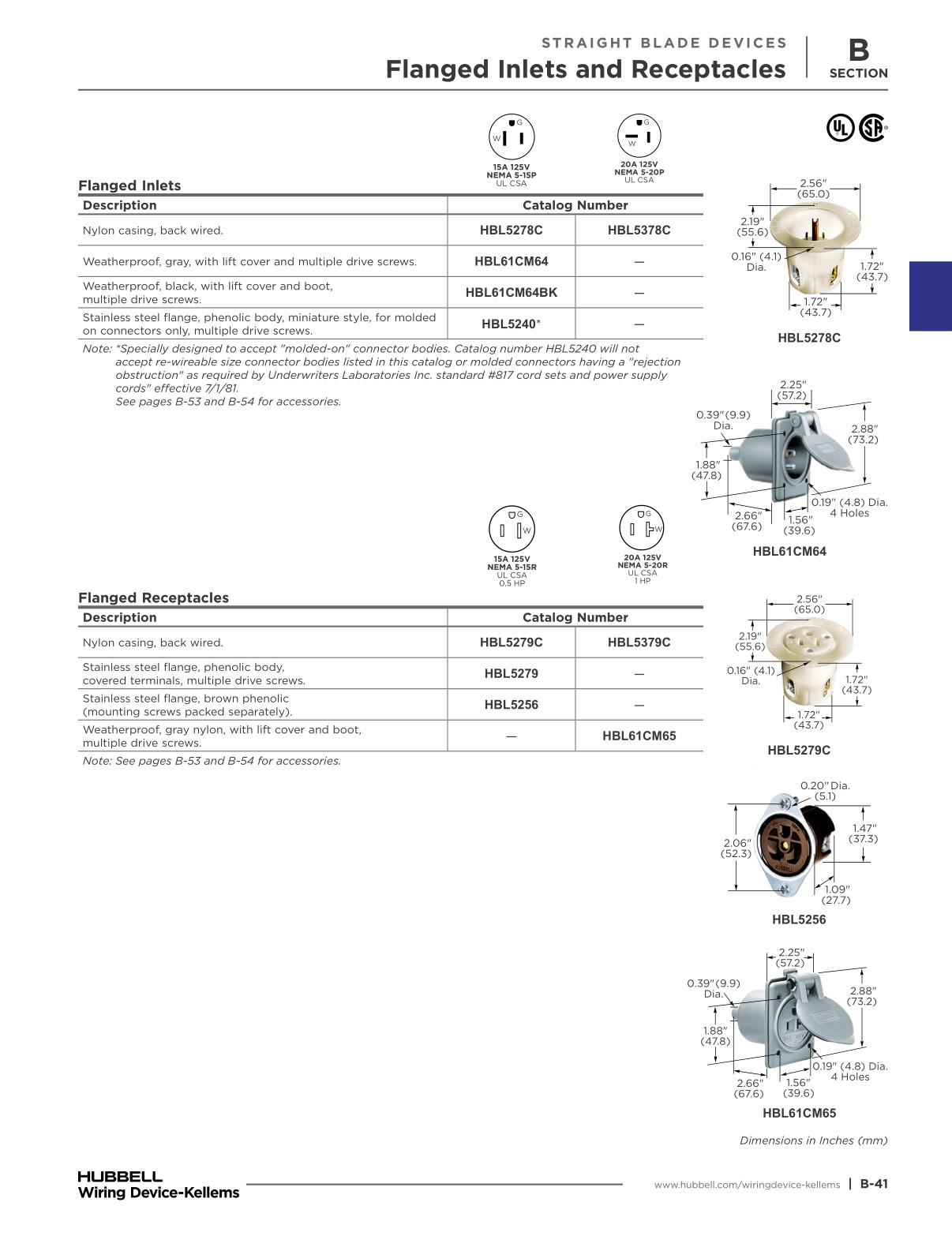
I've torn out and seen even more old three wire dryer receptacles fed with 10/2 romex, but every single one of them was added after the home was built. Probably by a handyman or a homeowner getting info from FB or old Bob down the street after they moved to a gas house but took their old three wire dryer with them. I've also had countless arguments with "licensed electricians" about three wire dryer and range circuits. It's incredible how many of them think they were 240 with a ground. The argument usually ends when I post the page in the Hubbell catalog that gives the description "125/250 volt non grounding receptacle" and ask how in the blue hell a non grounding receptacle has two hots and a ground. I only hear crickets after that.


As far as the OP, Ida done the same thing if I had 10/3 cord. It might have had to get by on 12/3.
 
Last edited:

sparky 1971

Well-known member
Joined
Oct 9, 2018
Messages
8,006
Location
Central Iowa
Maybe where your at they didn't IDK. But around here and other places it was 10/2 with grd. Sure the actual cord from the dryer was 3 conductors but the wiring in the wall was not.
Even on an old electric range most were hardwired with 2 conductors and a bare ground/ that served as the neutral also. No cord just straight from the wall to the range.
Things like that are why many areas have implemented state licensing and permitting. As of 2007 we no longer have a place where inspections aren't required although plenty of things are done without a permit (I'm especially guilty) however, if it's new construction, there won't be a POCO release unless unless it's been inspected. Prior to 2007, it was just about anything goes in most rural areas though there were some county inspections, but those guys for the most part, didn't have a clue what they were looking at. I built a no AFCI house in 2006 because the only inspection I had was for the sewer line.
 

Codyboy

Well-known member
Joined
Jan 31, 2019
Messages
1,713
Location
S.E. TEXAS
Things like that are why many areas have implemented state licensing and permitting. As of 2007 we no longer have a place where inspections aren't required although plenty of things are done without a permit (I'm especially guilty) however, if it's new construction, there won't be a POCO release unless unless it's been inspected. Prior to 2007, it was just about anything goes in most rural areas though there were some county inspections, but those guys for the most part, didn't have a clue what they were looking at. I built a no AFCI house in 2006 because the only inspection I had was for the sewer line.
The "old wiring " i was talking about was way before the internet was even invented. There was no FB .
It was standard practice to run 10/2 w grd to a dryer. Or 2 conductor w grd to a range. I would state a size but I've only had gas ranges so no idea what size wire they would take. 6awg, 8awg, no idea.

There are plenty of places here that require no permit or inspection for residential in unincorporated areas.
That is the only permit I had to have too in 2006 is for the septic.
It is still the same today in 2025 . No building, electric, plumbing permits only the septic which has to be designed and engineered by an environmental company.
 

mm08822

Well-known member
Joined
Jan 13, 2012
Messages
6,051
Location
NJ
Maybe where your at they didn't IDK. But around here and other places it was 10/2 with grd. Sure the actual cord from the dryer was 3 conductors but the wiring in the wall was not.
Even on an old electric range most were hardwired with 2 conductors and a bare ground/ that served as the neutral also. No cord just straight from the wall to the range.
I never sent this earlier today......been in the code book since '96 ish, IIRC.

10-2 NM was not permitted for this use. Only SEU and it could only originate from a main panel. The neutral also had to be taped and terminated at the neutral bar.

See NEC 250.140 (B)(4)
 

sparky 1971

Well-known member
Joined
Oct 9, 2018
Messages
8,006
Location
Central Iowa
The "old wiring " i was talking about was way before the internet was even invented. There was no FB .
It was standard practice to run 10/2 w grd to a dryer. Or 2 conductor w grd to a range. I would state a size but I've only had gas ranges so no idea what size wire they would take. 6awg, 8awg, no idea.

There are plenty of places here that require no permit or inspection for residential in unincorporated areas.
That is the only permit I had to have too in 2006 is for the septic.
It is still the same today in 2025 . No building, electric, plumbing permits only the septic which has to be designed and engineered by an environmental company.
The standard practice of running a two wire with ground was wrong, they just didn't know any better because "it's twotwenny and it don't need no neutral"; there was probably nothing in place as far as an inspection system in place either, leaving nobody to tell the installer it wasn't right. The four wire dryer and range circuits became a thing in 1996, way before FB and everyone having internet, but some people move to a new house set up for gas and take their old three wire dryer with them. They don't know any better and it's more than likely no harm will come from it, but an electric dryer has about five amps of neutral current from the 120 volt motor. Maybe if we go waaay back, two wire with ground was accepted, but hasn't been on my watch. There are some guys on here quite a bit older than me that were twisting wires when I was in diapers, maybe they will chime in.
 
Last edited:
OP
T

The Cobbler

Super Moderator
Staff member
Joined
Oct 24, 2013
Messages
25,971
Location
Niagara Region, Ontario, Canada
as far as know, the 3 wire for driers was a US thing , I don't think it ever existed in Canada. if it did, I never saw it or heard of it. the first time I saw it was in about 1995 in the US at a friend of my now ex's , and I had never seen it before . I thought it was a 240 only plug at the time, not knowing until many years later what it was . I do remember as a kid our stoves & driers were hard wired , there was no plug & receptacles . I think it started to come in in the very early 70's
 

Codyboy

Well-known member
Joined
Jan 31, 2019
Messages
1,713
Location
S.E. TEXAS
The standard practice of running a two wire with ground was wrong, they just didn't know any better because "it's twotwenny and it don't need no neutral"; there was probably nothing in place as far as an inspection system in place either, leaving nobody to tell the installer it wasn't right. The four wire dryer and range circuits became a thing in 1996, way before FB and everyone having internet, but some people move to a new house set up for gas and take their old three wire dryer with them. They don't know any better and it's more than likely no harm will come from it, but an electric dryer has about five amps of neutral current from the 120 volt motor. Maybe if we go waaay back, two wire with ground was accepted, but hasn't been on my watch. There are some guys on here quite a bit older than me that were twisting wires when I was in diapers, maybe they will chime in.
Yes old , further back than that. 1996 is not old. I bought my first house in 1992. It was built in 1983. It had 10/2 for the dryer.
Parents house build in 1972, same thing.
All that stuff is still out there.
Heck I don't know if any of that stuff was code related back then. It was standard practice.


Yall are thinking present day or whatever idk.
There are tons of 10/2 w grd circuits all over the place. All this stuff was done before the code for that stuff was brought up to date.

That pic I posted was normal for a long time.

Eta.
"Twotwenny"
Yeah I'm talking about way before that speak was the norm.
 

sparky 1971

Well-known member
Joined
Oct 9, 2018
Messages
8,006
Location
Central Iowa
Yes old , further back than that. 1996 is not old. I bought my first house in 1992. It was built in 1983. It had 10/2 for the dryer.
Parents house build in 1972, same thing.
All that stuff is still out there.
Heck I don't know if any of that stuff was code related back then. It was standard practice.
Three wire dryer and range circuits, two hots and a neutral, were the norm way BEFORE the 1996 code was adopted, which introduced the four wire circuits and a ground wire. 1972 and 1983 would have/should have had 10/3 w/o ground. 120/240 circuits have never been two hots and a ground, and if it was straight 240, two hots and a ground, it would have had a 240 volt motor and controls; I don't know if that's ever been a thing.
Yall are thinking present day or whatever idk.
There are tons of 10/2 w grd circuits all over the place. All this stuff was done before the code for that stuff was brought up to date.
It's not present day, it's been almost 30 years since the ground was added. Just because it was the norm doesn't mean it was right. What it means, as I posted above, is that some people didn't know what they were doing or didn't realize that the dryer had a 120 motor and controls that required a neutral as well as there was probably nobody to tell them they were wrong. And if there were inspectors, they didn't know it either.
That pic I posted was normal for a long time.
That still doesn't mean it was right.
Eta.
"Twotwenny"
Yeah I'm talking about way before that speak was the norm.
 

Codyboy

Well-known member
Joined
Jan 31, 2019
Messages
1,713
Location
S.E. TEXAS
Three wire dryer and range circuits, two hots and a neutral, were the norm way BEFORE the 1996 code was adopted, which introduced the four wire circuits and a ground wire. 1972 and 1983 would have/should have had 10/3 w/o ground. 120/240 circuits have never been two hots and a ground, and if it was straight 240, two hots and a ground, it would have had a 240 volt motor and controls; I don't know if that's ever been a thing.

It's not present day, it's been almost 30 years since the ground was added. Just because it was the norm doesn't mean it was right. What it means, as I posted above, is that some people didn't know what they were doing or didn't realize that the dryer had a 120 motor and controls that required a neutral as well as there was probably nobody to tell them they were wrong. And if there were inspectors, they didn't know it either.

That still doesn't mean it was right.

I agree it probably wasn't correct at all and was the way things were done.

But to be told in doesn't exist by another poster just because they haven't seen it?
Well ok then.
I never said it was right or wrong, only that it is there , and was normal practice back then.

Eta

It was all over the place
And still is
 
Last edited:

sparky 1971

Well-known member
Joined
Oct 9, 2018
Messages
8,006
Location
Central Iowa
I agree it probably wasn't correct at all and was the way things were done.

But to be told in doesn't exist by another poster just because they haven't seen it?
It didn't exist as far as the code goes. And I didn't come across a post where anyone claimed to have never seen it. I did see plenty of posts other than my own saying it wasn't correct.
Well ok then.
I never said it was right or wrong, only that it is there , and was normal practice hack then.
Normal practice would mean that someone thought it was the right thing to do, and I believe this is the first time you've used the word hack.
 

Codyboy

Well-known member
Joined
Jan 31, 2019
Messages
1,713
Location
S.E. TEXAS
I did not wire the garage or install the panel, I simply added 10/3 cord to one leg of the original drier circuit in the panel in the garage so we could power the trailer .
it's not complicated...
So the dryer was wired with 10/2 with ground for a 120/ 240 volt dryer?
Can you clear this up?
 
To avoid these ads, REGISTER NOW!
Top Bottom