Dave455
Well-known member
A little while back, I started the 1/2” square drive thread, as I didn’t think the tools always get the consideration they deserve.
It had occurred to me, that 1/4” square drive sees a lot more use, and the uses are often quite demanding, so here’s a thread to share experiences.
I’ll start out by listing the factors that I find important, especially with regard to 1/4“ drive.
1) Accurate sizing. If you’re undoing a 15/16 nut, a bit of slop in the socket is neither here nor there. But that’s not so in 1/4” drive. If you have, say, a 5.5mm nut, maybe even made of brass, you only need to deform it by a tiny amount for a socket to slip. Good accurate fit is therefore essential.
2) Good steel and heat treatment. You have to retain the good fit mentioned above. Tools from decent manufacturers will be of good steel and suitably hardened. I have come across some that are not though. Many Taiwanese tools from the 1980’s were quite poor in this regard.
3) Decent finish. Your tools need to stay rust free, and do so despite getting the odd knock. Decent chrome shouldn’t be a problem, but I have found otherwise decent tools that have had issues. Some (by no means all) Japanese tools from the 1980’s tend to flake chrome in a way that better ones don’t.
4) Strength. This is more important than ever before as we push the limits of what 1/4 drive is capable of. Most good manufacturers offer tools that are strong enough, but I have encountered some that are not.
5) Good fit of the parts. This is the area where some, otherwise decent, manufacturers seem to struggle. It’s not that hard to get right.
Firstly, you need to have some sort of detent in the socket for the ball to lock into. It can either be a simple drilled hole, forming an interior detent, or a machined detent. Either way, it does need to be right. Some manufacturers drill a hole in the socket, but make it far too big, allowing the socket to move.
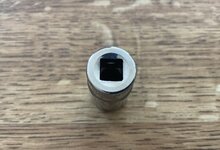
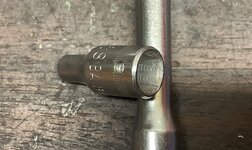
Here’s a manufacturer that get’s it right - this KoKen socket has a correctly drilled locking hole, and a machined detent. Both are perfect and either can be used.
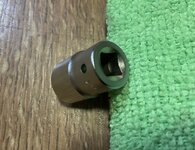
Secondly, parts such as extensions need to be matched to the sockets they are to be used with. Better ones will have a positive lip that the socket is retained rigidly to. This Hazet shows how it should be done.

The resultant socket and extension pairing are incredibly rigid.

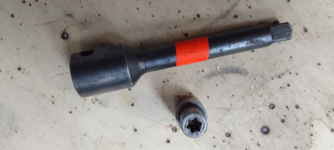
This Wurth Zebra extension shows how not to do it. The shape of the extension almost prohibits a decent fit, unless the sockets match exactly, which they do not. These Wurth tools wobble, and don’t lock at all rigidly.

The shape probably allows relatively easy mixing of parts from different manufacturers, but that's never ideal. Note the different finishes on these different parts - bith Wurth branded.

Anyway, on to the tools. Over the next few days I’ll post some tools that I have found meet all the requirements above, and generally stood the test of time. I might post a few that don’t…!
Feel free to post 1/4” drive tools that have worked for you too.
It had occurred to me, that 1/4” square drive sees a lot more use, and the uses are often quite demanding, so here’s a thread to share experiences.
I’ll start out by listing the factors that I find important, especially with regard to 1/4“ drive.
1) Accurate sizing. If you’re undoing a 15/16 nut, a bit of slop in the socket is neither here nor there. But that’s not so in 1/4” drive. If you have, say, a 5.5mm nut, maybe even made of brass, you only need to deform it by a tiny amount for a socket to slip. Good accurate fit is therefore essential.
2) Good steel and heat treatment. You have to retain the good fit mentioned above. Tools from decent manufacturers will be of good steel and suitably hardened. I have come across some that are not though. Many Taiwanese tools from the 1980’s were quite poor in this regard.
3) Decent finish. Your tools need to stay rust free, and do so despite getting the odd knock. Decent chrome shouldn’t be a problem, but I have found otherwise decent tools that have had issues. Some (by no means all) Japanese tools from the 1980’s tend to flake chrome in a way that better ones don’t.
4) Strength. This is more important than ever before as we push the limits of what 1/4 drive is capable of. Most good manufacturers offer tools that are strong enough, but I have encountered some that are not.
5) Good fit of the parts. This is the area where some, otherwise decent, manufacturers seem to struggle. It’s not that hard to get right.
Firstly, you need to have some sort of detent in the socket for the ball to lock into. It can either be a simple drilled hole, forming an interior detent, or a machined detent. Either way, it does need to be right. Some manufacturers drill a hole in the socket, but make it far too big, allowing the socket to move.
Here’s a manufacturer that get’s it right - this KoKen socket has a correctly drilled locking hole, and a machined detent. Both are perfect and either can be used.
Secondly, parts such as extensions need to be matched to the sockets they are to be used with. Better ones will have a positive lip that the socket is retained rigidly to. This Hazet shows how it should be done.
The resultant socket and extension pairing are incredibly rigid.
This Wurth Zebra extension shows how not to do it. The shape of the extension almost prohibits a decent fit, unless the sockets match exactly, which they do not. These Wurth tools wobble, and don’t lock at all rigidly.
The shape probably allows relatively easy mixing of parts from different manufacturers, but that's never ideal. Note the different finishes on these different parts - bith Wurth branded.
Anyway, on to the tools. Over the next few days I’ll post some tools that I have found meet all the requirements above, and generally stood the test of time. I might post a few that don’t…!
Feel free to post 1/4” drive tools that have worked for you too.