nadogail
Well-known member
I am of the opinion that Starrett is the "Gold Standard" in measuring tools. I don't own any Starrett tools, as good as they are I can't justify the expense for my personal use.

-They make decent instruments but avoid buying the series 711 "Last Word" indicator, especially if it's used. There are often problems with the 711 Last Word and there are better choices than that one model.I am of the opinion that Starrett is the "Gold Standard" in measuring tools.
When I attended trade school we called them "Last Time" indicators. The first time you'd use one was probably the last time you'd use one. By time everyone graduated, most had replaced it with an Interapid or a B&S.-They make decent instruments but avoid buying the series 711 "Last Word" indicator, especially if it's used. There are often problems with the 711 Last Word and there are better choices than that one model.
You should look for them at estate sales for a fraction of the price. Then you can join the Garage Sale Thread and show off your buys!I am of the opinion that Starrett is the "Gold Standard" in measuring tools. I don't own any Starrett tools, as good as they are I can't justify the expense for my personal use.
-I don't like to knock that model but it was an old design where Starrett bought out the original company (H. E. Lowe) to continue producing it. There's a lot of older machinists that own these, have great sentimental attachment to them, and might find my comments to be offensive. Should any of you take offense bear in mind that the complaints about this model are legion and easily found on various websites from professional machinists. If yours still works that's great, you do you. For the Starrett collectors, there's better designed offerings from them than this one. For the beginning shop wanting to add to the unending tooling list, don't waste your money. I own a lot of different indicator brands but never considered this one for purchase after the ones I'd seen that others owned.When I attended trade school we called them "Last Time" indicators. The first time you'd use one was probably the last time you'd use one. By time everyone graduated, most had replaced it with an Interapid or a B&S.
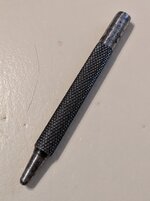
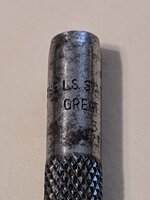

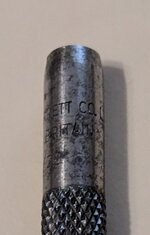
It didn't look like that when it was new.Found today in the ReStore, a Starrett 3/32" punch. I didn't even know they made those.

Found today in the ReStore, a Starrett 3/32" punch. I didn't even know they made those.
I'm sure it looked a lot like a nail set when it was new. The 3/32" is a common nail set size. As a punch it will probably be fine, but it probably broke when someone tried to pry with it. It may now be beyond the heat treated zone, so it may not hold a point as well. But for making center marks in wood, or other softish things, should be fine.It didn't look like that when it was new.
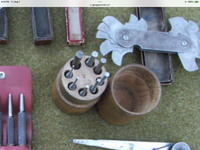
I have a bunch of mismatched punches in the base of a box. One of these days I'm gonna turn and steam bend a lid for it. SomedayHere is a Starret set in a wooden block belonging to gpw_42. I‘m always looking for one of those.
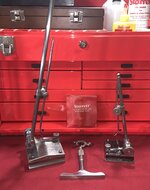
What's the little thing(s) in the center above the depth gage?Todays grab… all vintage Starrett
Steve
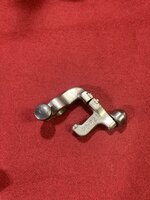
That is a A9-R2 90 degree indicator adapter. That I don’t believe is Starrett. It clamps to a plunge type indicator and pivots on a spring steel joint… neat little piece.What's the little thing(s) in the center above the depth gage?
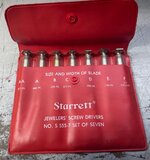
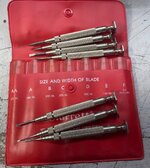
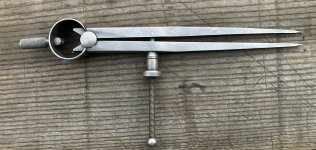
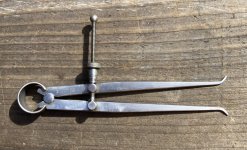
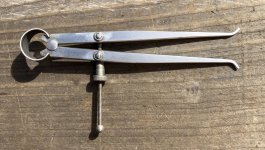
 Purchased these 3 Starrett calipers and one M&W caliper today at the flea market.
I can’t even figure out how to use these?Todays grab… all vintage Starrett
Steve
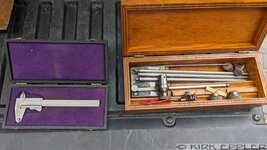

-The one in the middle is a depth micrometer. The other two are sometimes for scribing lines a set distance off a surface plate in laying out geometry on metal. They are often called a surface gauge. What those two are more commonly used for is holding a dial indicator, usually a lever or plunger type, to check dimensions (used with gauge blocks), to check flatness of a surface, measure location of a construction hole, check top/bottom for parallelism, spindle concentricity, or to check perpendicularity of top/bottom to the sides of a square or rectangle like a thick plate. A surface gauge with a mounted dial indicator is also used for setting other fixtures (Harig type head, radius dresser, etc.) to exact locations that require it. Surface gauges are mostly used with surface grinders or small OD grinding. There's other uses but this is probably more than you wanted to know already. I'll go sit down now....I can’t even figure out how to use these?
Thank you, I can’t say I understand everything you said but I do appreciate you trying to explain it. It does give me somewhere to start searching.-The one in the middle is a depth micrometer. The other two are sometimes for scribing lines a set distance off a surface plate in laying out geometry on metal. They are often called a surface gauge. What those two are more commonly used for is holding a dial indicator, usually a lever or plunger type, to check dimensions (used with gauge blocks), to check flatness of a surface, measure location of a construction hole, check top/bottom for parallelism, spindle concentricity, or to check perpendicularity of top/bottom to the sides of a square or rectangle like a thick plate. A surface gauge with a mounted dial indicator is also used for setting other fixtures (Harig type head, radius dresser, etc.) to exact locations that require it. Surface gauges are mostly used with surface grinders or small OD grinding. There's other uses but this is probably more than you wanted to know already. I'll go sit down now....
-It's machine shop gobbledygook, doesn't mean anything outside of a machine shopThank you, I can’t say I understand everything you said
-I can further explain things....but you'll be sorry you asked.but I do appreciate you trying to explain it.
-Searching for what? If you're not in a shop why will you search? Just curious.It does give me somewhere to start searching.
I just like learning and moving ahead slowly when it comes to stuff like this. I may never use any of it, but I like to know how things work. I’m all ears, so if you’re up to explaining more, I’m listening but I wouldn’t expect it.-It's machine shop gobbledygook, doesn't mean anything outside of a machine shop
-I can further explain things....but you'll be sorry you asked.
-Searching for what? If you're not in a shop why will you search? Just curious.
-So pick out what you didn't understand about what I wrote/typed in my reply. Evaluate which one(s) you might apply to what you're currently doing so you can use it. If none of it applies then pick the ones with familiar geometric terms. I need to bore someone else besides my own social circle.I just like learning and moving ahead slowly when it comes to stuff like this. I may never use any of it, but I like to know how things work. I’m all ears, so if you’re up to explaining more, I’m listening but I wouldn’t expect it.
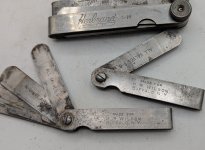
Pretty sweet onesI have posted this feeler gage in the KR Wilson thread. Enjoy.

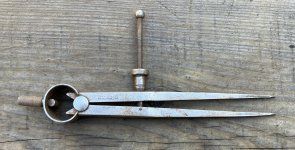 The evaporust minimized the rusty areas. It has the quick adjust feature