1Bad55Chevy
Well-known member
- Joined
- Feb 20, 2025
- Messages
- 704
So.... you secured the vise to the block with 5/16" or 3/8" lag screws?
Better than drywall screws!


So.... you secured the vise to the block with 5/16" or 3/8" lag screws?
That was my first choice! ( but I only had 2 of the 1 5/8 length so I had to improvise)Better than drywall screws!
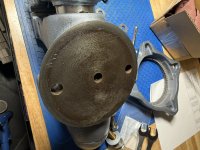
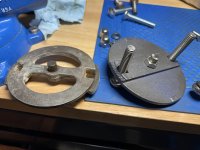 The C0 swivel ring on the left has no teeth. I replaced it with a new plate with teeth.
  This Cadet has no plate, but has cleats (mismatched) with teeth that mate with the bottom of the swivel base.
Well I could just cut the zip ties and move it? LolIt's a little late now, but a vise placed farther forward so the rear (fixed) jaw lines up with the edge of the stand allows one to work on long pieces held vertically.
Agree.It's a little late now, but a vise placed farther forward so the rear (fixed) jaw lines up with the edge of the stand allows one to work on long pieces held vertically.
For something like that in end grain, I'd get some of those screw in wood anchors and use regular bolts.Agree.
I drilled 2 sets of mounting holes. One with the fixed jaw behind the front of the stand and the other so I can clamp something vertical if needed.
I also removed the swivel base.
The parts for it are sstashed in a drawer somewhere.
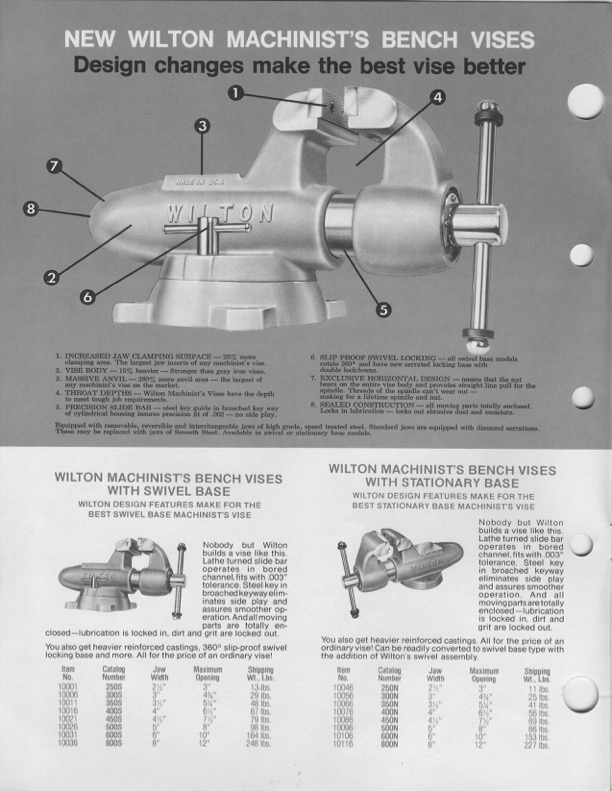
Most all of these gentlemen are your basic guide, if/when they have the time to volunteer some. These pics are from the ‘54 catalog, where they state the dog-earred plate is a newer design.Is there a basic guide on how Wilton vise swivel bases and cleats have been built and evolved over the years?
I have a C0 where the swivel base ring plate had no teeth, so the swivel base with teeth had nothing to lock into. I replaced it with a plate with teeth and believe it is now going to be more locked in.
I have a Cadet with no plate, but it has cleats with teeth that lock up with the bottom of the swivel base.
In my limited experience, I think there are smooth plates, toothed plates, and toothed cleats with toothed swivel bases and no plates.
What are the different options and what are the pros and cons?
Here are examples of the few I that have.


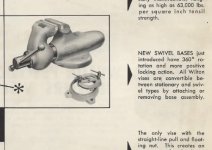
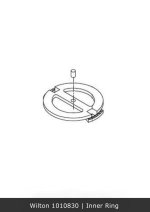
Thank you for the catalog pictures!Most all of these gentlemen are your basic guide, if/when they have the time to volunteer some. These pics are from the ‘54 catalog, where they state the dog-earred plate is a newer design.
Simple drawing..
Is it accurate to say you still seek this plate, but with teeth and accompanying centering pin? If so; be sure to post that is what you seek over in the parts swap thread. I do hope the ‘54 catalog clears up some info.
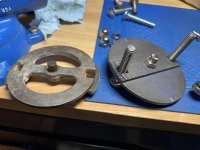 It fits well and replaces the ring with no teeth that came with the vise (the one on the left). I don’t know what model the new one normally comes with now, but he said it’s from Wilton and is likely of imported origin.
Mine is a 76’ per the date on the key. I wonder if the C0 didn’t get the improved swivel locking feature that the Bullets got. That still seems odd to me. It could also be, that mine is a mutt.. with parts from other Wiltons.Most all of these gentlemen are your basic guide, if/when they have the time to volunteer some. These pics are from the ‘54 catalog, where they state the dog-earred plate is a newer design.
Simple drawing..
Is it accurate to say you still seek this plate, but with teeth and accompanying centering pin? If so; be sure to post that is what you seek over in the parts swap thread. I do hope the ‘54 catalog clears up some info.
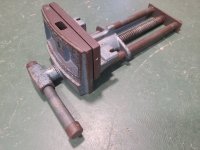


Too bad you're so far away. I could probably make a new one for you if you provided the celebratory beverages after we finished.My first post on this great thread - I'm not much of a woodworker (more of a mechanic type of guy), but this Wilton woodworking vise came with the house we bought, so how could I say no?
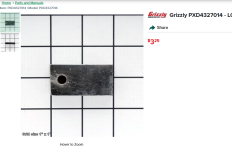
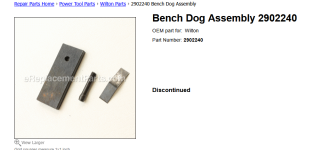
I'd like to clean it up a bit and put it to use, but I see that the pop up dog assembly is missing. I haven't been able to find a replacement, so I'm thinking of maybe making my own. Does anyone know if these dogs were just a block of steel with a thumbscrew, or were they spring loaded?
Another option it to buy a spare dog from a different vise, hoping it might fit. For example, the dog assembly for this Shop Fox looks similar:
Any suggestions would be appreciated.
That's a very kind offer, I would be happy to take you up on it if all else fails (happy to cover shipping cost as well as celebratory beveragesToo bad you're so far away. I could probably make a new one for you if you provided the celebratory beverages after we finished.
).I have the equivalent Record brand vices (they are English. And spell it this way) and they have a thumb screw holding it in position.Does anyone know if these dogs were just a block of steel with a thumbscrew, or were they spring loaded?

Thanks for the tip. I'm not sure of the model of my vise, it seems close to a 53A, but not exactly. The 53A does show a fixed pin and a leaf spring, discontinued of course:I have the equivalent Record brand vices (they are English. And spell it this way) and they have a thumb screw holding it in position.
The new Wilton vises look like they have a pin holding it in the up position. Not sure I like that because I sometimes put mine only a fraction of the way up.
This '70s vintage catalog seems to show a fixed pin so I would assume there is a leaf spring behind this somehow
Wilton Clamping Tools : Vises, C-Clamps & Special Clamps, PowRarm Work Positioners, Hydraulic Vises : Catalog No. 131 : Wilton Tool Division : Free Download, Borrow, and Streaming : Internet Archive
48 p., illus., 27.9 cm, trade catalogarchive.org
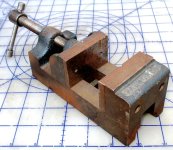
Lots of original paint still presentThursday Estate sale got me this Palmgren 2-1/2" DP vise. some light surface rust but otherwise in pretty good condition. looks like one oops in the jaw surface, and one of that jaws screws are MIA, but no other "battle damage" They had a very small Taiwan DP that I'd class as a "hobby" DP.

The discontinued should not bother us, we are GJ. As you noted, bar stock and a pin should work. Not sure if my local Ace stocks leaf springs, or if you need to make your own, or buy from McMaster.Thanks for the tip. I'm not sure of the model of my vise, it seems close to a 53A, but not exactly. The 53A does show a fixed pin and a leaf spring, discontinued of course:
.

It would work but 4140 is hard to machine (cut, drill and tap threads if needed)Yeah, I found a shallow pocket for the a spring, though I think the thumbscrew would be easier to use. I'll start by fabricating the dog and attempt a homemade leaf spring, then see how I like it
Edited to add: would this be a good starting point, or is it too hard and I should go with a hot rolled piece?
It would work but 4140 is hard to machine (cut, drill and tap threads if needed)
An ordinary piece of cold rolled , even hot rolled would be better.

thanks.. how would i tell the age.. i paid $25 so i think i did ok, aside from the person painting itWilton tradesman. 17XX, whereas ** is jaw width. E.g.; 1750 vise is 5”, & 1755 tradesman vise is 5.5 inch jaw width.

 www.garagejournal.com
www.garagejournal.com
www.garagejournal.com
 additional info resources;
 mivise.com
 archimedescafe.com

 the only thing I see, that gave me pause was the red ring on the underside of the baseplate…

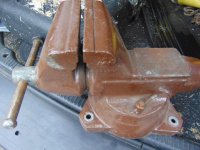
i was looking through endless google images trying to find one with a base like i have.. most/all have that ring of teeth(as you said) where i have a clean base .. i have no clue if its a knock off of some kind$25… Even the gentleman who hate on Wilton’s would have bought it for 25 bucks, because it’s likely a good vise.
The locking nut pads with teeth pictured here is more what I have come upon on the tradesman vises I have restored.
 note the manufacturer forge “stamped marking” as well as other raised lettering. The symbols help with narrowing the discernment of country of origin. As always, Wiltons that flat out say “made in USA,” leave no questions/guessing.
thanks for the info..tomorrow im gonna try and use a heat gun to get some of the house paint off to get a better idea.. even if fake im still happy with it ( not as happy if it was realSorry for the delay.. always juggling.
Here is another thread with more tradesman specifics info:
Posted in thread 'Value of 1972 Wilton 1750 vise'
https://www.garagejournal.com/forum/threads/value-of-1972-wilton-1750-vise.449461/post-8435356
..Yeah, some people see that ring and dismiss the tool in it’s entirety. A redeeming factor about Wilton as they still produce and sell replacement parts, and their vises remain extremely modular. People do not know that, or operating on a “ yeah that’s nice. I can’t afford parts”-type budget, & may find a temporary solutions by cannibalizing parts that fit.
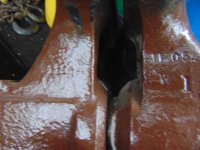
That said, they are often copied. The huge “1” is not a normal, good indicator. pictures of the under jaws with the brown gobbed on paint does not help.
Excellent indicator that the vise is American made is it says so.
I believe the raised lettering was removed from the casting design, in lieu of an aluminum plate, at some point. Again, be wildin’… “imitation is the sincerest form of flattery..” Wilton’s were being copied, which may have been a contributing factor, when they decided to move some of their production overseas. I do not know for certain.
) cause i needed a vise and this thing looks pretty tuff and is about 70 lbsthis kinda looks like itSorry for the delay.. always juggling.
Here is another thread with more tradesman specifics info:
Posted in thread 'Value of 1972 Wilton 1750 vise'
https://www.garagejournal.com/forum/threads/value-of-1972-wilton-1750-vise.449461/post-8435356
..Yeah, some people see that ring and dismiss the tool in it’s entirety. A redeeming factor about Wilton as they still produce and sell replacement parts, and their vises remain extremely modular. People do not know that, or operating on a “ yeah that’s nice. I can’t afford parts”-type budget, & may find a temporary solutions by cannibalizing parts that fit.
That said, they are often copied. The huge “1” is not a normal, good indicator. pictures of the under jaws with the brown gobbed on paint does not help.
Excellent indicator that the vise is American made is it says so.
I believe the raised lettering was removed from the casting design, in lieu of an aluminum plate, at some point. Again, be wildin’… “imitation is the sincerest form of flattery..” Wilton’s were being copied, which may have been a contributing factor, when they decided to move some of their production overseas. I do not know for certain.
www.garagejournal.com
I did a quick search here and did not find any posts for this video, but if it has been already posted. I apologize ahead of time.
I have no association with this guy and in fact since these test were not performed by an independent and unbiased third party, I would take any claims made in this video with a grain of salt. For one thing he did not include any of the Reed vises in his tests. Nevertheless personally I found it entertaining and thought some might enjoy it as well.
www.garagejournal.com
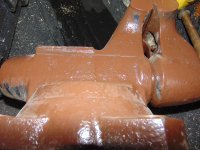
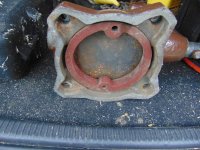
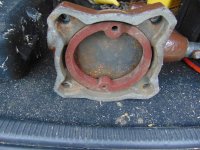
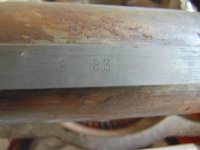
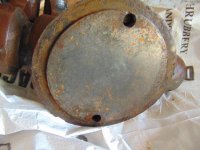
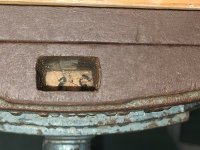
i took it apart.. the base has teeth like the others but on this one the lock nut has a threaded bolt attached to it which goes through to the plate.. im guessing at some point the parts were lost/broke and he put it back together as best he could. the inside shaft says 6 83Sorry for the delay.. always juggling.
Here is another thread with more tradesman specifics info:
Posted in thread 'Value of 1972 Wilton 1750 vise'
https://www.garagejournal.com/forum/threads/value-of-1972-wilton-1750-vise.449461/post-8435356
..Yeah, some people see that ring and dismiss the tool in it’s entirety. A redeeming factor about Wilton as they still produce and sell replacement parts, and their vises remain extremely modular. People do not know that, or operating on a “ yeah that’s nice. I can’t afford parts”-type budget, & may find a temporary solutions by cannibalizing parts that fit.
That said, they are often copied. The huge “1” is not a normal, good indicator. pictures of the under jaws with the brown gobbed on paint does not help.
Excellent indicator that the vise is American made is it says so.
I believe the raised lettering was removed from the casting design, in lieu of an aluminum plate, at some point. Again, be wildin’… “imitation is the sincerest form of flattery..” Wilton’s were being copied, which may have been a contributing factor, when they decided to move some of their production overseas. I do not know for certain.