To avoid these ads, REGISTER NOW!

Honda Crank Bolt - Using Old High (Mid by Today Standards) Torque Impact, Will it be Enough?

YoshiMoshi3

Well-known member
Joined
Nov 2, 2022
Messages
502
I have a 2019 Honda Odyssey with the 3.5 L J35Y6 V6, rust belt. I got the car as a used car, and it has 70k miles on it, so likely the first itme the crank bolt will have come out since it was installed at the factory. I have a older Milwaukee high torque impact that I got a few years back at Home Depot, 2663-20. The nut busting torque is advertised as 640 ft lb. I know this is nothing compared to modern day stuff, and likely equivalent to a modern day mid torque impact. I was also planing on pairing it with an Astro Drum Socket, #71019
1771503625526.png
Will this be enough to get the bolt out? I'm a bit scared of trying to maually unfasten the bolt, and sheering off the head of the bolt, given my bad luck. So I'd rather use an impact if possible.

Anyone have any experience getting honda crank bolts out with modern day mid torque impacts? If you didn't have success on getting the bolt out, what impact and socket were you using?

I'm debating on if I should bite the bullet and get a modern high torque impact. I'd hate to start this project and not be able to get the bolt out.
 
To avoid these ads, REGISTER NOW!

cgrutt

Well-known member
Joined
Mar 4, 2016
Messages
8,360
What battery are you using with the impact?

Do you have the tool to lock down crank while you're removing bolt?


Buckaroo5

Well-known member
Joined
Oct 18, 2012
Messages
825
Location
Central Ohio
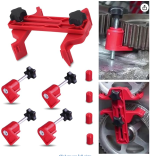
It can easily be removed without an impact using one of these handy-dandy tools....
 

dnschmidt

Well-known member
Joined
Oct 3, 2014
Messages
7,289
Location
Phoenix, AZ
Short answer YES with that socket. NO without it. Use at least the 5.0 XC battery fully charged and you should be golden.
 

cgrutt

Well-known member
Joined
Mar 4, 2016
Messages
8,360
Short answer YES with that socket. NO without it. Use at least the 5.0 XC battery fully charged and you should be golden.
My 1/2 Milwaukee is a dog with the 5.0 XC but a beast with my high demand 9.0... that's why I asked about battery.
 
OP
Y

YoshiMoshi3

Well-known member
Joined
Nov 2, 2022
Messages
502
I'm going to have to go look at the battery. But it's one of the free ones that has a single row of 18650s in it. I doubt it's enough.

I do have that crank pulley holding tool. I thought that with the impact, you wouldn't need the crank pulley holding tool, because it's not a constant torque. I have it though, and will need it to install and torque it to spec.

Knowing my luck, I'd probably shear off the head of the bolt if I used a 3/4" drive breaker bar. So, I'm hoping to resort to that option as a last resort.
 
Last edited:

cgrutt

Well-known member
Joined
Mar 4, 2016
Messages
8,360
I'm going to have to go look at the battery. But it's one of the free ones that has a single row of 18650s in it. I doubt it's enough.

I do have that crank pulley holding tool. I thought that with the impact, you wouldn't need the crank pulley holding tool, because it's not a constant torque. I have it though, and will need it to install and torque it to spec.

Knowing my luck, I'd probably shear off the head of the bolt if I used a 3/4" drive breaker bar. So, I'm hoping to resort to that option as a last resort.
I wouldn't think a crank bolt would shear but don't have a ton of experience with this. I would lock crank down no matter how you go about it dont want to spin engine in reverse. Doubt a single row of batteries is going to do it that sounds like a 2.0 or something. Also suggest marking everything for timing reference when you put it back together.
 
OP
Y

YoshiMoshi3

Well-known member
Joined
Nov 2, 2022
Messages
502
I wouldn't think a crank bolt would shear but don't have a ton of experience with this. I would lock crank down no matter how you go about it dont want to spin engine in reverse. Doubt a single row of batteries is going to do it that sounds like a 2.0 or something. Also suggest marking everything for timing reference when you put it back together.
Thanks. I was thinking of using one of those camshaft locking tools, to keep the camshafts locked in place prior to belt removal, so I don't have to worry about it. But I don't think such a tool exists for this V6?
 

cgrutt

Well-known member
Joined
Mar 4, 2016
Messages
8,360
Thanks. I was thinking of using one of those camshaft locking tools, to keep the camshafts locked in place prior to belt removal, so I don't have to worry about it. But I don't think such a tool exists for this V6?
I was just talking about using the tool above and in video to hold crank while you remove crank bolt. I know what you're talking about though have to buy a set for my son's car. Not sure if they are available or even needed on the Honda. Just don't want to spin motor backwards while removing crank bolt. Good luck with it hope it comes loose easily.
 

BD55

Well-known member
Joined
Aug 15, 2011
Messages
219
Location
Northern Utah
I've done two. Once for wife's aunt and once for SIL. First time was with the holder and a breaker. I was literally hanging off it to get it to budge. Second go around I had my milwaukee mid with the heavy socket and 5.0 battery and that worked amazingly well.
 

tvand13

Well-known member
Joined
Aug 20, 2015
Messages
76
Location
Northern Virginia
I've worked on a couple of these and the weighted socket is the magic bullet. I think it lets the impact "wind up" a lot more momentum and hit the bolt harder. The momentum also keeps the socket from rebounding as quickly and clattering on the bolt head without doing much. I would definitely use the hex pulley holder with a breaker bar wedged against the ground or something safe in the suspension, and I would not worry too much about the impact torque. With the weighted impact, any reasonable impact gun should do.
 

dnschmidt

Well-known member
Joined
Oct 3, 2014
Messages
7,289
Location
Phoenix, AZ
The notes on that socket say that it multiplies torque. How does that happen?
Simple physics. F=ma. Force = Mass X Acceleration. The impact imparts a constant acceleration, which is unique for each particular impact wrench, but in general can be considered a constant in this equation. What you're controlling with the heavy socket is the mass which is at least three times that of a conventional 19mm impact socket. So it acts like a torque multiplier. Eric O., of South Main Auto, is a master mechanic but apparently didn't really pay attention in Physics class. I won $20 from him when Lisle first introduced their heavy socket for the Honda crankshaft bolt. The bet was it would work on the impact he tried and failed with using a normal 19 mm impact socket but would take it off with the Lisle socket. Eric, being an honest man, paid up.
 

Old tool guy

Well-known member
Joined
Apr 13, 2023
Messages
3,343
What you're controlling with the heavy socket is the mass which is at least three times that of a conventional 19mm impact socket
Except that the socket is motionless until struck by the hammer inside the tool. So the tool has to overcome the friction of the nut plus the mass of the socket, and some of the F is lost to the higher mass.
 

dnschmidt

Well-known member
Joined
Oct 3, 2014
Messages
7,289
Location
Phoenix, AZ
Except that the socket is motionless until struck by the hammer inside the tool. So the tool has to overcome the friction of the nut plus the mass of the socket, and some of the F is lost to the higher mass.
Apparently, very little as the Lisle socket has been out for at least ten years and has become more or less an industry standard for this particular job.
 

Astro_Pneumatic_Tools

Well-known member
Joined
Oct 30, 2013
Messages
2,113
Location
South El Monte
It's not about mass, it's about rigidity. Adding thickness is simply a cheap way to do that, so that's why most just use a heavier socket. Diameter does that even better, which is why ours is hollow. A solid piece the same size as our drum socket performs worse, so that confirms its not just mass as well and that it does take energy to get the mass moving.
It's also not a constant force or axial load like a drill either, so its not as simple a math equation as we might hope for. It's interrupted impulses - which is the only reason why rigidity matters.

It translates sudden impulses efficiently, more so than any regular sockets would. Which becomes even more important when working on something that is not a fixed body, like a bolt in a moveable crankshaft. That's about the beginning and end of it all
 
OP
Y

YoshiMoshi3

Well-known member
Joined
Nov 2, 2022
Messages
502
TTC discusses and shows all of that here.

That TTC video is why I went with getting the Astro one, instead of the IR flywheel design. In another video he compared the two, and the Astro one was better.

Now we just need 3/8 " drive weighted sockets, fly wheel sockets, drum sockets :)

Also I think those IR ones are no longer being made.
 
To avoid these ads, REGISTER NOW!

Hakeem

Well-known member
Joined
Jan 22, 2024
Messages
1,278
Location
Chicago
I got mine off with the corded brushed harbor freight impact + lisle weighted socket. Took about 15 seconds of impacting but it came off. I’d expect your Milwaukee to have an easier time with it.
 

toddmorr

Well-known member
Joined
May 4, 2017
Messages
649
Location
Potomac, Maryland
Any of these heavy socket designs are seriously one of the better innovations of the last several years. Cheap too. Total no brainer.
 

Steve_P

Well-known member
Joined
Sep 15, 2010
Messages
5,186
I can say from experience that you will break a typical impact socket before the bolt head shears off. I have no idea why Honda thinks these have to be so tight because once they're out you can just zip them in with an IR 231, that wouldn't remove it, and they stay put forever.
 

Wrench97

Well-known member
Joined
Jun 23, 2018
Messages
12,154
Location
Southeastern Pa
I doubt the drum socket will fit inside the holding tool.
If you do use the holding tool make sure to clean up the inside of the pulley so it sits flat and even.
 

KnurledNut

Well-known member
Joined
Jan 28, 2011
Messages
8,194
Location
n/a
Most great ideas are simple. E=mc^2 is really simple but it took a genius to figure that out.
Before any of these sockets existed, a mechanic posted a video of one he made on Youtube.

I can say from experience that you will break a typical impact socket before the bolt head shears off. I have no idea why Honda thinks these have to be so tight because once they're out you can just zip them in with an IR 231, that wouldn't remove it, and they stay put forever.
I had one break. It was about as much of a nightmare as it sounds.
 

Ohio Andy

Well-known member
Joined
Jul 31, 2024
Messages
2,351
Location
Columbus, Ohio
Just so we're clear, I can give you zero experienced input On this particular bolt, but, if you have to be worried about getting it off, will you have enough torque to put it back on the way you need?

If you are near the middle of Ohio, hit me up, I have something that probably has a bit more chugga chugga And I'm happy to wander over with it as well as popcorn and a Coke and I can enjoy watching you work :)

Okay I would probably get roped into doing something that would have my hands too dirty to be eating popcorn but...
 

dnschmidt

Well-known member
Joined
Oct 3, 2014
Messages
7,289
Location
Phoenix, AZ
I can say from experience that you will break a typical impact socket before the bolt head shears off. I have no idea why Honda thinks these have to be so tight because once they're out you can just zip them in with an IR 231, that wouldn't remove it, and they stay put forever.
It has nothing to do with Honda per se. What it is caused by is the anomaly of having a counter rotation engine which I think is unique to Honda. This causes the continuous tightening of the crankshaft bolt during use. All of this could have been solved if they had simply used a left-handed crankshaft bolt but clearly, they chose not to.
 

dnschmidt

Well-known member
Joined
Oct 3, 2014
Messages
7,289
Location
Phoenix, AZ
Just so we're clear, I can give you zero experienced input On this particular bolt, but, if you have to be worried about getting it off, will you have enough torque to put it back on the way you need?

If you are near the middle of Ohio, hit me up, I have something that probably has a bit more chugga chugga And I'm happy to wander over with it as well as popcorn and a Coke and I can enjoy watching you work :)

Okay I would probably get roped into doing something that would have my hands too dirty to be eating popcorn but...
You look like such a nice guy in your picture. Who would have expected you to be a sadist, enjoying the struggles of fellow humans. Can I watch too?
 

lund

Well-known member
Joined
Nov 2, 2019
Messages
832
Location
Michigan
Ah ... Honda crank bolts. THAT brings back bad memories to the oxidation surface welded bolts being next to impossible to break free. This dates from when I was 25 years younger before I owned an air impact gun etc. I was trying everything to break loose a 97 civic crank bolt to do a timing belt replacement. I had to take apart the opposite side of the engine, pin the flywheel, and then use a pipe on a huge breaker bar supported by jacks with the pivot point clamped. I thought I was close to picking up the car when it made a horrible noise like something snapped when it finally broke free. I was sure that I sheared the bolt or crankshaft. But both survived, and as did the seals and bearings. I was almost sure something was badly damaged from the noise.

Fast forward, in the future I was using 1/2 impact (with air pressure beyond spec for more strength) and I had to hammer it so much i thought it would never come off ... so much that it would even start turning the engine. BUT it would barely break free.

As some point out here, you can buy a Honda specific crank pulley lock for a central cutout and use it to keep the engine from turning and/or use a 3/4 impact. I saw some reports online on some 3/4 impact guns being killed from Honda crank bolts from hell. But that crank pulley contraption makes it much easier to torque the crank bolt properly on assembly (which is no easy task for the high torque specified).

One thing for sure: when you put it back together use anti-seize. The reason it is so hard the 1st round is the dissimilar metals surface oxidize and bond making a large diameter bolt installed with high torque pure hell to break free. Anti-Seize makes it much much easier next time round. From the factory at ~100k miles of oxidation time should be the worst case if you use anti-seize.

I now have Subaru cars with timing chains. So I have not had analogous issues in recent years. But Honda crank bolts still give me cold sweats when I recall the struggle. For the life of me, I cannot understand why the car manufacturers cannot use anti-seize on stuff like this on the assembly line. I guess they save a tenth of a cent in an automated line. Perhaps they figure nobody should fix their cars and they only care about them not coming in before warranty expiration.

Subaru wheel bearings are as bad or even worse in the rust belt than the Honda crank pulley bolt. They have large radius flange surfaces that get corrosion welded and have to be shocked off (with special tools usually) or use a torch (wonderful to need to do that in proximity to ball joints etc). Again the manufactures could avoid this with anti-seize ... especially with the Subaru's advertised as "snow cars." Ha! I guess so long as the bearings survive the warranty they do not care. Or they assume you can avoid salt in a snow car (bastards!).
 
Last edited:

lund

Well-known member
Joined
Nov 2, 2019
Messages
832
Location
Michigan
It has nothing to do with Honda per se. What it is caused by is the anomaly of having a counter rotation engine which I think is unique to Honda. This causes the continuous tightening of the crankshaft bolt during use. All of this could have been solved if they had simply used a left-handed crankshaft bolt but clearly, they chose not to.
I think is more than the issue you bring up here: Dissimilar metals have junction potentials. This causes small current that can carry a small amount of material from one metal to the next, effectively mico-welding the surface. That happens with smaller diameter bolts too. BUT on a large bolt at very high pressure, more of this happens distributed on a larger surface area making it all hell to break free.

This is why it is important to use a lubrication (like anti-seize) on it when you reinstall. The factory should also do this when they put the parts together ... but i guess they are happy to save 1/100 of a cent if they can by not doing it.

I swear the first time I dealt with one of these I was thinking it must be left handed and kept looking online wondering what the heck was wrong. For whatever reason, Honda seems notorious with this crank bolt issue. It could be the alloys and factory torque they are using.
 

Wrench97

Well-known member
Joined
Jun 23, 2018
Messages
12,154
Location
Southeastern Pa
Ah ... Honda crank bolts. THAT brings back bad memories to the oxidation surface welded bolts being next to impossible to break free. This dates from when I was 25 years younger before I owned an air impact gun etc. I was trying everything to break loose a 97 civic crank bolt to do a timing belt replacement. I had to take apart the opposite side of the engine, pin the flywheel, and then use a pipe on a huge breaker bar supported by jacks with the pivot point clamped. I thought I was close to picking up the car when it made a horrible noise like something snapped when it finally broke free. I was sure that I sheared the bolt or crankshaft. But both survived, and as did the seals and bearings. I was almost sure something was badly damaged from the noise.

Fast forward, in the future I was using 1/2 impact (with air pressure beyond spec for more strength) and I had to hammer it so much i thought it would never come off ... so much that it would even start turning the engine. BUT it would barely break free.

As some point out here, you can buy a Honda specific crank pulley lock for a central cutout and use it to keep the engine from turning and/or use a 3/4 impact. I saw some reports online on some 3/4 impact guns being killed from Honda crank bolts from hell. But that crank pulley contraption makes it much easier to torque the crank bolt properly on assembly (which is no easy task for the high torque specified).

One thing for sure: when you put it back together use anti-seize. The reason it is so hard the 1st round is the dissimilar metals surface oxidize and bond making a large diameter bolt installed with high torque pure hell to break free. Anti-Seize makes it much much easier next time round. From the factory at ~100k miles of oxidation time should be the worst case if you use anti-seize.

I now have Subaru cars with timing chains. So I have not had analogous issues in recent years. But Honda crank bolts still give me cold sweats when I recall the struggle. For the life of me, I cannot understand why the car manufacturers cannot use anti-seize on stuff like this on the assembly line. I guess they save a tenth of a cent in an automated line. Perhaps they figure nobody should fix their cars and they only care about them not coming in before warranty expiration.

Subaru wheel bearings are as bad or even worse in the rust belt than the Honda crank pulley bolt. They have large radius flange surfaces that get corrosion welded and have to be shocked off (with special tools usually) or use a torch (wonderful to need to do that in proximity to ball joints etc). Again the manufactures could avoid this with anti-seize ... especially with the Subaru's advertised as "snow cars." Ha! I guess so long as the bearings survive the warranty they do not care. Or they assume you can avoid salt in a snow car (bastards!).
Heat, like the old saying "If it's liquid it can't be stuck" :lol:
 

Wrench97

Well-known member
Joined
Jun 23, 2018
Messages
12,154
Location
Southeastern Pa
I think is more than the issue you bring up here: Dissimilar metals have junction potentials. This causes small current that can carry a small amount of material from one metal to the next, effectively mico-welding the surface. That happens with smaller diameter bolts too. BUT on a large bolt at very high pressure, more of this happens distributed on a larger surface area making it all hell to break free.

This is why it is important to use a lubrication (like anti-seize) on it when you reinstall. The factory should also do this when they put the parts together ... but i guess they are happy to save 1/100 of a cent if they can by not doing it.

I swear the first time I dealt with one of these I was thinking it must be left handed and kept looking online wondering what the heck was wrong. For whatever reason, Honda seems notorious with this crank bolt issue. It could be the alloys and factory torque they are using.
Buddy was trying to take the fan off a Ford 7.3L one day, called be 3 or 4 times insisting it was left hand thread kept telling him it's not, another call can't get it off, I told him wait another hour and I'll stop by on the way home from work. Brought my air hammer and a long chisel bit one smack on the fan nut to the left and it spun loose. He said wow your here 30 seconds and got it loose. ya even after you've been tightening it up for 3 hours.......:lol:
 
OP
Y

YoshiMoshi3

Well-known member
Joined
Nov 2, 2022
Messages
502
In case anyone was wondering, the areas 19 mm drum socket that is shallow is not long enough to go into the honda harmonic balancer holding tool. Maybe the longer with L in the part number will work

honda engines rotate counterclocwise?
 

Hakeem

Well-known member
Joined
Jan 22, 2024
Messages
1,278
Location
Chicago
You don’t need the harmonic balancer holding tool if you’re using an impact, that’s just if you’re using a breaker bar.
 

mcj115

Well-known member
Joined
Dec 4, 2018
Messages
297
Location
Hershey PA
For the Honda V6 I use a breaker bar braced to the floor and bump the starter. No special sockets
 

ChevyEFI

Well-known member
Joined
Sep 2, 2012
Messages
8,782
Location
Phoenix, AZ
Are the ~2004 Accord 4cyl engines one of the difficult crank bolts? The big 1/2" 18V Bosch works on those.
 
To avoid these ads, REGISTER NOW!
Top Bottom