Woodworking Tool Kit - Suggestion/Critique

Joined
Oct 25, 2011
Messages
19
I have a number of the tools on your list.
PEC makes great stuff. Look on https://www.harryepstein.com/ for PEC seconds. Saves a bit of money and supports a great store.
I have had a Bosch contractor table saw for about 8 years and got a Milwaukee m18 track saw about a year ago. If i was starting over today I would get the track saw and a guide setup like TSO products and skip the contractor table saw. I did not see a miter saw on the list but I would recommend a 12 inch slider. Bosch makes a great one. Everyone’s Bosch sander advice is spot on. They are great.
 
To avoid these ads, REGISTER NOW!
OP
E

EricM1990

Active member
Joined
Dec 30, 2025
Messages
33
You guys are talking about a much higher tier and probably larger size than I was looking at. I'm not sure. Is there any downside to a smaller sander beyond more time? I do hear you all saying sanding *****, i should make it as easy as possible., both clean up and sanding.

That all makes sense

Just trying to do the math on how much time I will save vs how much more i'm spending. Assuming the end result is the same anyway. Which it may not be.
 
OP
E

EricM1990

Active member
Joined
Dec 30, 2025
Messages
33
I have a number of the tools on your list.
PEC makes great stuff. Look on https://www.harryepstein.com/ for PEC seconds. Saves a bit of money and supports a great store.
I have had a Bosch contractor table saw for about 8 years and got a Milwaukee m18 track saw about a year ago. If i was starting over today I would get the track saw and a guide setup like TSO products and skip the contractor table saw. I did not see a miter saw on the list but I would recommend a 12 inch slider. Bosch makes a great one. Everyone’s Bosch sander advice is spot on. They are great.

I actually found Harry Epstein and ordered. I couldn't find blemished product anywhere else for a reasonable price. Ebay had a little bit but not much stock

I am still trying to decide on circular/table/guides vs track saw/guides
 

f121

Well-known member
Joined
Dec 8, 2018
Messages
2,088
Location
UK
You guys are talking about a much higher tier and probably larger size than I was looking at. I'm not sure. Is there any downside to a smaller sander beyond more time? I do hear you all saying sanding *****, i should make it as easy as possible., both clean up and sanding.

That all makes sense

Just trying to do the math on how much time I will save vs how much more i'm spending. Assuming the end result is the same anyway. Which it may not be.
Biggest things with a higher end sander are:
- dust extraction. I can use my festool in the house without worrying about stuff getting dusty.
- durability. Expect to get more years use out of a more expensive tool, although some cheap ones last a very long time.
- less vibration
- speed to get the result you want (either lots of material removal quickly or a decent finish quickly)
 

tyyost

Well-known member
Joined
Jan 14, 2009
Messages
812
Location
Tunkhannock, PA
If I was doing it again I’d buy the 6” Festool Rotex or Bosch equivalent to start. I know it seems like a lot of coin, but there really is a huge huge difference difference. The off-the-shelf home center style sanders leave a ton of room to be desired. It’s like going back in time to vibrating sheet pad Sanders.
 

gahrajmahal

Well-known member
Joined
Dec 12, 2008
Messages
2,621
Location
Cincinnati, Ohio
Our host Ryan was going through this very similar quest only a few years ago or so it seems. He is an excellent metal man and mechanic and was new to woodworking. He asked the board for suggestions and followed many of them. Using search you can find his festool purchases and several wood project threads. Here is one I found to get started.


Last edited:

gahrajmahal

Well-known member
Joined
Dec 12, 2008
Messages
2,621
Location
Cincinnati, Ohio
As far as my tool purchases I start cheap or free. Then, if my project requires a specific tool, say a router, I then purchase better or best as my budget allows selling off the cheaper one or giving it to Habitat for Humanity to sell.
 
OP
E

EricM1990

Active member
Joined
Dec 30, 2025
Messages
33
As far as my tool purchases I start cheap or free. Then, if my project requires a specific tool, say a router, I then purchase better or best as my budget allows selling off the cheaper one or giving it to Habitat for Humanity to sell.

This is how I have done hand tools. I think there is merit in this approach. But even if I never use them again. If I just complete a couple projects that look like passable work, they will pay for themselves. Almost every tool i have ever bought was to fix something not make something. It's a novel feeling to gauge tool purchases in that way. I shouldn't get carried away though
 

tarbellb

Well-known member
Joined
Apr 17, 2011
Messages
5,810
Location
Oregon
To answer your question about size

Yes the larger size (6") has disadvantages, edge work is not optimal, anything vertical or overhead due to weight. All doable but not ideal.

Most sanding tho is large open spaces, flat, and needing lots of passes, all of which benefit from those things mentioned above.

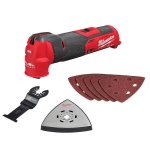
My preferred setup is the larger dual action sander combined with a multi tool and triangle sanding pad.
Multi tools w sanding pads are surprisingly effective, excelling at edge work, contours, small spaces, etc....

1769122485210.jpeg
 

Aaron_W

Well-known member
Joined
Feb 6, 2018
Messages
2,994
Location
Northern California
Not a bad list, I have some of those you have listed. Only thing is to reiterate what others have said, which is for some tools wait until you have a need, or the tool may sit in a box. Not terrible if the money spent isn't something maybe spent elsewhere, at least it is there when you need it and having it is sometimes all the motivation needed to find a use for it.

Measuring tools, I also weld and have a small machine shop set up so I have some higher end measuring tools available. For wood working I've found Stanley, Empire and General to be readily available at my local stores and they have been fine for the level of accuracy I need.

Not familiar with PEC but as an inexpensive tool, Igauging does get generally decent comments from hobby machinists who don't want to spend name brand money for Starrett, Mitutoyo etc. If it is good enough for hobby machinists there should be no issue for woodworking.

On the power tools, I'm mostly a cord guy, in part because that lets me pick and choose brands without concern for battery platform. Seems like every major brand has their excellent and subpar tools, so I don't like to be locked in.

Bosch 1617 router, I have this. A good router, but I don't actually use it much. This is a big router, you may want to also look at a smaller trim router. Dewalt's corded and cordless trim routers are well thought of. After quite a bit of research I've had the DWP611 on my wishlist for quite sometime. I just haven't run into a need for a router enough to convince me to buy it yet.

Bosch jigsaw, I have the d handle version. Again a good tool but sees limited use.

Drill press, this is a tool where used often makes the most sense. They are often cheap and plentiful on CL, FBMP etc.
I've got an old Delta radial drill press that gives me a large capacity drill press in a medium size package. It isn't a powerful drill press being based on their 11" drill press, but it does give me up to 31" reach. I paid $80 for it a few years ago.
New or used though don't go small, I wouldn't bother with anything under 12" and would try to go larger. This is a tool where going with budget brands isn't usually an issue, and Harbor Freight can offer some decent options.

I have an old cast iron top Craftsman 113 contractors table saw. I've looked at that Skil 10" before and it does seem to be a pretty nice option for a smaller budget table saw. Unless you have a specific need for a smaller table saw I'd avoid one that doesn't use a 10" blade. With a 10" blade you will have far more blade options, better availability and the blades will generally be cheaper as well. Consider your needs though this type of small table saw is far less useful than a full size cabinet style or hybrid saw.

A circular saw with a track is super useful for breaking down sheet goods. You don't have to spend "tracksaw money" to get the benefit. You can make a guide yourself or buy a universal track for whichever circular saw you have.
I bought an Evolution multi-material circular saw with their track system and have been very pleased with it at only a fraction of the cost of a "real" track saw. It is a pretty nice circular saw as well. I have the corded version, but they offer cordless as well.

Bandsaw is like a jig or scrollsaw. Super handy when you need one, but not too useful outside of their specific uses. That said I have been happy to have a bandsaw for those times I needed one as not many other tools can do what it does. No particular recommendations for new as I have a 1940s Davis and Wells 14", and a 9" Delta from the 1990s.
I will say although it leaves something to be desired I've had the 9" for more than 20 years and it has proved to be useful before I got the 14" a couple years ago. The 9" doesn't take up a lot of space and is light enough to be easily moved into an out of the way spot when I don't need it.

You don't have a miter saw on your list. Personally I've found this and the circular saw to get more far use than all the other saws. Only having a contractors table saw I find the miter saw is often a far better choice than the table saw. I've got a 12" Rigid double bevel non-sliding miter saw I bought about 12 years ago. If I were to buy another I might go with something else, but the Rigid has served me well, I have no complaints.

On the sanders, I'd just go Dewalt on the orbital sander. I'm not a huge Dewalt fan, but orbital sanders and trim routers seem to be things that they really got right. I've had a corded Dewalt 5" orbital sander about 25 years, still works great.

I've had a couple of belt / disk sanders. They are ok, but evaluate your use / needs. You get what you pay for. The common, fairly inexpensive 4" belt / 6" disk sanders are decent general purpose, but may be very inadequate for furniture making. I was gifted a Delta 6x48" / 8" disk and it is practically a different tool from the 1" / 5" Craftsman or 4" / 6" Grizzly I had.

A combination spindle / belt sander might be something else to look at.


Don't ignore Harbor Freight. Many of the Bauer and Hercules tools are very competitive with Ryobi, Craftsman, Rigid and Kobalt. I've ended up with a bunch of Bauer and a few Hercules cordless tools and I've been quite happy with them. Some of their bench tools seem to be solid as well, but I still have to much of my old don't buy anything with a cord from Harbor Freight to take that plunge.
 

Aaron_W

Well-known member
Joined
Feb 6, 2018
Messages
2,994
Location
Northern California
No experience with on the Bora Centipede, but for portable work stations in general I've become a fan after (finally) buying a B&D Workmate.

I'd seen the Workmates for years but just thought they were an "as seen on TV" gadget. There was a thread here a couple years back that convinced me to give one a try, I got the WM425 on sale for around $100, and I love that thing. About a year ago Costco had some Pegasus Worx folding tables on sale, so I bought one of those as well. A different use than the WM, but It does make for a nice work table.

The Centipede does look nice though and offers the ability to expand the work surface.
 

willy3486

Well-known member
Joined
Jan 14, 2010
Messages
1,603
Location
Middle Tennessee
I got tired of the quality of newer tools so if I find a vintage or older tool I buy it over new. As far as new types of tools I haven't used yet I will buy a cheap tool and see if I will use it. If I use it a lot I will replace it with better quality when it breaks. For example years ago I bought a cheap biscuit joiner at a flea market or something. I got the hang of using it and used it all the time. I saw a good sale on a Makita biscuit joiner and bought it. One time I bought a sawzall at HF to see if I would use it and I used it a lot. So after it broke I bought a Milwaukee sawzall I found at a good price. I bought a cheap compression gauge and used it once. I probably will never use it again but I spent very little on it. but if it broke and I needed one I would probably buy a cheap one as I almost never have a need for it.
 

T45

Well-known member
Joined
Nov 20, 2014
Messages
3,255
Pretty good list, curious if the OP has any updates.

I just went thru a similar build out last fall. $1k is doable if you make some strategic choices, but as with anything, its not just the quality/price consideration but the buy/not buy this category of tool that will make or break the budget.

One tool I would add...I didn't see an impact to match the drill. For that, I really like m12 surge...esp. for indoor use. It's surge is sooooo... much quieter , and so much of what you really need is small things.

Maybe its a luxury item for a DIY but alot of pro's seem to recommend it.
 

RickP

Well-known member
Joined
Jan 15, 2013
Messages
1,560
Location
Annapolis, MD
Your list of tools looks good -- as others have said, buying as you go works well. And your list will help you pull the trigger when you see one go on sale.
Taught by framing a house. Weak in metal fab and woodworking that ends with a serious finish. Bulk of future work should be furniture making
Furniture making and getting a serious finish will take you up a level from using plywood for shop cabinets (like most of my stuff). I'm trying to make the same jump. For that, you'll probably need to flatten boards faster than just sanding them. Have you thought about adding a lunchbox planer to the list? I was shopping for one last year, and most brands are very similar. The one model that consistently stands out is the Dewalt DW735X, which is a heavy duty (more accurate) version of the standard lunchbox model.

I bought mine around Black Friday, and got it for $679, including a rolling stand. It's on sale for $639 (without the stand) this week: Home Depot Link Edit: just went on sale today for $581: Link

Have fun with getting all the tools on your list!
 
Last edited:
OP
E

EricM1990

Active member
Joined
Dec 30, 2025
Messages
33
Hello Everyone,

I feel that I owe you an update after all you've helped me to do. Life has me swamped me so I have taken very little action relative to my original timeline. The only real project I completed was a desk. Which was more of a wood finishing than wood working project. Looks good though.

I found myself approaching a new project to turn a bedroom into an office/IT workshop with the same ethos i had with the desk. I looked up Home Depot and Ikea pre built cabinet options. Started quoting things out and all I really had to concern myself with is how to finish the wood. Just a few cuts, some carpet work, and fastening repquired. But the price tag I'm going to pay even with my most economical options makes it rational to considerin buying tools and building skills. There is a lot of ROI to customizing things for myself (i want cabinets with a lot of drawers for example similar to a tool chest)

Below is a drawing for a workbench I had an LLM generate for me. Ignore the window/extrator. Height on cabinets will be 34.5 plus whatever I put on top of it. AI decided for my height I should build a custom plinth. The cabinet drawer configuration is still up in the air. Does it make sense for me to dump a huge amount of labor in to save some money and build skills in this context? I'm not sure I can match the fit and finish of a budget Home Depot cabinet. I am apparently a coward, so i came here for encouragement one way or the other

My current plan is to use two layers of plywood as a top with some sort of rubber matting and hardwood trim on the edge as a final finish. The cabinets I'm either going to find used or buy from Home Depot, Ikea, or another similar provider. Maybe some type of hardwood for the riser deck.

But the more I think about it the more it makes sense for me to just build this all myself. Any tips, tricks, or thoughts would be appreciated

Thanks
1788111413101.png
1788111485654.png
 

MushCreek

Well-known member
Joined
Jan 14, 2015
Messages
9,977
Location
Upstate South Carolina
When I built our kitchen cabinets, I used the Kreg system and Titebond glue to assemble everything. It went very well, and the cabinets are very strong. I have 33 drawers in my kitchen, so I needed an efficient system. If you're not familiar, the Kreg set-up is a drilling fixture and special screws. I have the cheapest, most basic fixture and it works great. I built everything out of 3/4" cabinet grade plywood, and used iron-on veneer to dress up the plywood edges.


RickP

Well-known member
Joined
Jan 15, 2013
Messages
1,560
Location
Annapolis, MD
Sounds like a great project to make a start in woodworking. With a converted bedroom, are you planning for this to look more like an office or a workshop? I've built a couple workbenches out of 2x4s and plywood, but they look rough and I don't think I'd ever move them out of the basement.

If you're going for an upscale shop look, maybe you could use steel drawer units and frame them with nicer wood? I'm working my way up to building drawers and cabinet faces, but I haven't tackled them yet.

Good luck with your build!
 
OP
E

EricM1990

Active member
Joined
Dec 30, 2025
Messages
33
When I built our kitchen cabinets, I used the Kreg system and Titebond glue to assemble everything. It went very well, and the cabinets are very strong. I have 33 drawers in my kitchen, so I needed an efficient system. If you're not familiar, the Kreg set-up is a drilling fixture and special screws. I have the cheapest, most basic fixture and it works great. I built everything out of 3/4" cabinet grade plywood, and used iron-on veneer to dress up the plywood edges.


I am familiar with the Kreg products and would definitely use some sort of jig to fasten. Adhesives I know nothing about so that will be interesting ti learn. Adding Titebond to my notes
 
To avoid these ads, REGISTER NOW!
OP
E

EricM1990

Active member
Joined
Dec 30, 2025
Messages
33
Sounds like a great project to make a start in woodworking. With a converted bedroom, are you planning for this to look more like an office or a workshop? I've built a couple workbenches out of 2x4s and plywood, but they look rough and I don't think I'd ever move them out of the basement.

If you're going for an upscale shop look, maybe you could use steel drawer units and frame them with nicer wood? I'm working my way up to building drawers and cabinet faces, but I haven't tackled them yet.

Good luck with your build!

I made the desk to a relatively high level. So now I've sort of built myself a standard I don't want to necessarily keep for this room. I need it to look professional on camera. I could in theory do everything with 90 degree cuts with a bit of rounding and paint and get no flac for it. Not sure I want to do that though

I will consider the metal drawers/wood combo. I'm not sure what my cost options there are. Metal is probably more expensive than bottomof the barrel home depot cabinets. It's good to hear others with more skills than mehave reservations about just jumping into cabinet making though.
 

manwithtools

ALLIANCE MEMBER
Joined
Aug 24, 2015
Messages
14,810
Location
Lebanon, TN
Great first project. There are tons of videos out there on how to build cabinets. Look up Bents Woodworking on YouTube, he has some pretty good videos on cabinet construction. Kreg Jig is handy for cabinet construction, plenty of other good ways as well. A track saw would be a real time saver if you don't already have one. Find a place to buy real cabinet construction plywood near you, not Home Depot or Lowes or Menards.
 

rsanter

Well-known member
Joined
Dec 22, 2007
Messages
18,555
Location
visalia ca
The fact is that you can make furniture with worn out **** or even just hand tools.
the questions is how much time do you want to spend and how accurate are you wanting to make your projects. I guess size is a factor as well.

i use a unisaw, but some of the old craftsman table saws are very undervalued for the saw that they are.
i have a bid band saw now, but for years I used a benchtop Royobi that did everything I wanted from it.
i want a big thickness planer but my 12” has gotten the job done.
i want a big surface sander, but hand power sanders have gotten it done.
i really like my Dewalt biscuit jointer, but you can use the tablesaw.
 

Gmonkee

Well-known member
Joined
May 9, 2010
Messages
3,093
My approach to tooling up was get what I would could use for metal fab, woodworking or whatever equally. A carbide saw in a hand grinder is a wood saw. A circular saw and plywood is an emergency table saw. I needed it once. Drills do everything with the right bits.

I do odd and diverse jobs infrequently. I don't need a full shop tool setup.
 

manwithtools

ALLIANCE MEMBER
Joined
Aug 24, 2015
Messages
14,810
Location
Lebanon, TN
My approach to tooling up was get what I would could use for metal fab, woodworking or whatever equally. A carbide saw in a hand grinder is a wood saw. A circular saw and plywood is an emergency table saw. I needed it once. Drills do everything with the right bits.
I'm sorry, but this is really poor advice to give someone wanting to start a woodworking journey. Not only that, but seriously dangerous to use some of the methods you suggest and I've seen you post. "A carbide saw in a hand grinder", seriously? It's also a hand remover 😟

And you certainly won't build cabinets with that type of tool approach.
 
OP
E

EricM1990

Active member
Joined
Dec 30, 2025
Messages
33
Great first project. There are tons of videos out there on how to build cabinets. Look up Bents Woodworking on YouTube, he has some pretty good videos on cabinet construction. Kreg Jig is handy for cabinet construction, plenty of other good ways as well. A track saw would be a real time saver if you don't already have one. Find a place to buy real cabinet construction plywood near you, not Home Depot or Lowes or Menards.

I'm definitely feeling like if I go forward with the full build I will need to do a track saw or a table saw.
 
OP
E

EricM1990

Active member
Joined
Dec 30, 2025
Messages
33
The fact is that you can make furniture with worn out **** or even just hand tools.
the questions is how much time do you want to spend and how accurate are you wanting to make your projects. I guess size is a factor as well.

i use a unisaw, but some of the old craftsman table saws are very undervalued for the saw that they are.
i have a bid band saw now, but for years I used a benchtop Royobi that did everything I wanted from it.
i want a big thickness planer but my 12” has gotten the job done.
i want a big surface sander, but hand power sanders have gotten it done.
i really like my Dewalt biscuit jointer, but you can use the tablesaw.

This is all 100% true, I'm just concerned in contexts that matter I can't keep the tools true. But on paper I see no problem with cheap power tools as long as the indicators are obvious something it out of wack, and it's generally not that unsafe.

I will probably go with a sawstop even though I see no ROI in that over especially used premium options

There is a balance there
 
OP
E

EricM1990

Active member
Joined
Dec 30, 2025
Messages
33
My approach to tooling up was get what I would could use for metal fab, woodworking or whatever equally. A carbide saw in a hand grinder is a wood saw. A circular saw and plywood is an emergency table saw. I needed it once. Drills do everything with the right bits.

I do odd and diverse jobs infrequently. I don't need a full shop tool setup.

I am not putting a saw in a hand grinder, too far. I would just get a hand tool

I'm imagining you doing a cross cut on a 2x4 and am scared. But if you have steadier hands than me I could see that being fine beyond the safety concerns. Any unexpected kick back is going to be a bit stressful

But I too do things infrequently. I don't need a full woodworking shop. But having one would change the way I approach projects/needs a great deal
 

Gmonkee

Well-known member
Joined
May 9, 2010
Messages
3,093
The hand grinder doesn't kick in wood. It eats everything wherever it is. Full guards all the way of course.

Err towards safety is the default. I have handsaws to use on weird stuff.. I run chainsaws in trees too and errors are death there.
 
Last edited:
OP
E

EricM1990

Active member
Joined
Dec 30, 2025
Messages
33
I'm sorry, but this is really poor advice to give someone wanting to start a woodworking journey. Not only that, but seriously dangerous to use some of the methods you suggest and I've seen you post. "A carbide saw in a hand grinder", seriously? It's also a hand remover 😟

And you certainly won't build cabinets with that type of tool approach.

I just got done reading threads where people were worried about left vs right orientation on a circular saw.

Monkee must be really confident in his grip strength.
 

Aaron_W

Well-known member
Joined
Feb 6, 2018
Messages
2,994
Location
Northern California
Hello Everyone,

I feel that I owe you an update after all you've helped me to do. Life has me swamped me so I have taken very little action relative to my original timeline. The only real project I completed was a desk. Which was more of a wood finishing than wood working project. Looks good though.

I found myself approaching a new project to turn a bedroom into an office/IT workshop with the same ethos i had with the desk. I looked up Home Depot and Ikea pre built cabinet options. Started quoting things out and all I really had to concern myself with is how to finish the wood. Just a few cuts, some carpet work, and fastening repquired. But the price tag I'm going to pay even with my most economical options makes it rational to considerin buying tools and building skills. There is a lot of ROI to customizing things for myself (i want cabinets with a lot of drawers for example similar to a tool chest)

Below is a drawing for a workbench I had an LLM generate for me. Ignore the window/extrator. Height on cabinets will be 34.5 plus whatever I put on top of it. AI decided for my height I should build a custom plinth. The cabinet drawer configuration is still up in the air. Does it make sense for me to dump a huge amount of labor in to save some money and build skills in this context? I'm not sure I can match the fit and finish of a budget Home Depot cabinet. I am apparently a coward, so i came here for encouragement one way or the other

My current plan is to use two layers of plywood as a top with some sort of rubber matting and hardwood trim on the edge as a final finish. The cabinets I'm either going to find used or buy from Home Depot, Ikea, or another similar provider. Maybe some type of hardwood for the riser deck.

But the more I think about it the more it makes sense for me to just build this all myself. Any tips, tricks, or thoughts would be appreciated

Thanks
1788111413101.png
1788111485654.png

Do not under sell the value of rehabbing old furniture. People are often practically (or literally) giving away old furniture with good potential. Materials are expensive, and the cost to refinish / repurpose is often only a fraction of the cost to make.
I've got a work bench in my basement that was a heavy table / desk I bought off CL for $50. I probably put another $50 and a few hours of work into it, but materials alone probably would have been $200-300 to build it from scratch.
 

RoninB4

Well-known member
Joined
Jul 22, 2020
Messages
3,713
Location
Under My House
-For @EricM1990 : You can follow whatever approach you want to, I don't know your ambition or experience level. I'd suggest doing some reading on joinery first. House framing is not the same as joinery used in furniture construction. A work table can be slapped together with metal brackets for reinforcement but it's not a very solid build IMO. Through/blind mortise and tenon, dovetails, finger joinery, etc. are what's best used in constructing a desk/table. You want to get comfortable with joinery on smaller projects like In/Out desk trays(documents), jewelry boxes, computer desk monitor stand, etc. before you scale up to larger projects. Just a suggestion.

-I don't see anything in the way of hand tools for woodworking like planes, saws, chisels, or drawknives/spokeshaves. Not everything can be (or should be) completed with power tools.

-Should you build it or just buy it? That will depend upon how you value your sense of accomplishment. Not everything comes down to a ROI equation. Building things (wood or metal) is a lot of planning and physical work. Writing a check is a lot easier but far less satisfying for some of us.

-Power tools for cutting pine won't work well for thicker hardwoods like oak or maple so mate your power tools to the material. I own just one cordless drill, everything else is corded but that's just my preference. For stationary machinery, stay away from anything that uses a sheet metal table as a working surface, they're never flat. I also work in decimal notation instead of fractions, print out one of those large charts and put it on the wall for reference.

-Gluing, sanding, staining, and finishing is almost a separate sub-topic for woodworking. Plenty can be discussed when you're ready for it.
 

RoninB4

Well-known member
Joined
Jul 22, 2020
Messages
3,713
Location
Under My House
Chicago Suburbs
-I used to live about 2 miles from Owl Hardwood (St. Charles Rd. in Lombard). They used to have a nice selection of different woods when you're wanting it. I've still got a few large chunks from them. There are several choices for materials than the big box stores. Frog Tool on Jackson (downtown area) closed up shop years ago unfortunately.
 
OP
E

EricM1990

Active member
Joined
Dec 30, 2025
Messages
33
Do not under sell the value of rehabbing old furniture. People are often practically (or literally) giving away old furniture with good potential. Materials are expensive, and the cost to refinish / repurpose is often only a fraction of the cost to make.
I've got a work bench in my basement that was a heavy table / desk I bought off CL for $50. I probably put another $50 and a few hours of work into it, but materials alone probably would have been $200-300 to build it from scratch.

Used is definitely my preferred path. But I'm seeing a lot of overly fancy things, incorrect height for what I want. ETC

I will keep an eye out but I want to commit and execute at this point. Not continue to wait.
 

manwithtools

ALLIANCE MEMBER
Joined
Aug 24, 2015
Messages
14,810
Location
Lebanon, TN
I'm definitely feeling like if I go forward with the full build I will need to do a track saw or a table saw.
I'd recommend the track saw for starting out, you can use it for many things. It takes far less room than a table saw, you can break the sheets down into smaller more manageable sizes for easier handling.
 
OP
E

EricM1990

Active member
Joined
Dec 30, 2025
Messages
33
-For @EricM1990 : You can follow whatever approach you want to, I don't know your ambition or experience level. I'd suggest doing some reading on joinery first. House framing is not the same as joinery used in furniture construction. A work table can be slapped together with metal brackets for reinforcement but it's not a very solid build IMO. Through/blind mortise and tenon, dovetails, finger joinery, etc. are what's best used in constructing a desk/table. You want to get comfortable with joinery on smaller projects like In/Out desk trays(documents), jewelry boxes, computer desk monitor stand, etc. before you scale up to larger projects. Just a suggestion.

-I don't see anything in the way of hand tools for woodworking like planes, saws, chisels, or drawknives/spokeshaves. Not everything can be (or should be) completed with power tools.

-Should you build it or just buy it? That will depend upon how you value your sense of accomplishment. Not everything comes down to a ROI equation. Building things (wood or metal) is a lot of planning and physical work. Writing a check is a lot easier but far less satisfying for some of us.

-Power tools for cutting pine won't work well for thicker hardwoods like oak or maple so mate your power tools to the material. I own just one cordless drill, everything else is corded but that's just my preference. For stationary machinery, stay away from anything that uses a sheet metal table as a working surface, they're never flat. I also work in decimal notation instead of fractions, print out one of those large charts and put it on the wall for reference.

-Gluing, sanding, staining, and finishing is almost a separate sub-topic for woodworking. Plenty can be discussed when you're ready for it.

Hand tools I will just make the decision as needed. I'm much more familiar with that space. It's not that complicated to find good value options. Adds a lot of bulk to the thread I do not need.

I do project work in manufacturing...So I'm not unused to a hard days work when needed. Simply looking at what my hands have wrought is not an uncommon experience for me. Everything i do for my projects is based on some sort of business calculus. I see no reason to not apply that logic when managing my personal projects. If a vendor can do something more efficiently than me, then so be it. Most of us here probably build a lot of things at work. While it would be nice to add to the list of things I can build. I need to know that I not only executed the plan but my plan was a good one. If I'm doing something inefficient. I need to flag it and justify it

If I struggle or worse fail to reach the standard I could have had by simply buying Hampton Bay pre built cabinets.....I'm not going to be happy with my decisions. Granted at least I'll have more tools to make trying again more rational. Small projects are definitely a better way to gauge my ability to do this. But I don't know that I'm going to want to complete any at this time. Maybe I'll just build some sort of wooden tool cabinet that doesn't have to mount into my bench for the garage.
 
OP
E

EricM1990

Active member
Joined
Dec 30, 2025
Messages
33
I'd recommend the track saw for starting out, you can use it for many things. It takes far less room than a table saw, you can break the sheets down into smaller more manageable sizes for easier handling.

My only concern with the track saw is I don't really have a mentor. While people taught me a lot of tricks and tips with a table saw. So while in theory the track saw should be better. With my specific knowledge the table saw will be much much more useful in the short term
 

manwithtools

ALLIANCE MEMBER
Joined
Aug 24, 2015
Messages
14,810
Location
Lebanon, TN
My only concern with the track saw is I don't really have a mentor.
These days the mentors are online. Track saws are very easy to operate, their only challenge is ripping thin stock, but there are workarounds and accessories that address that. If you are comfortable with a table saw, then by all means that's the tool to get, you would eventually want one anyway.

I'll also add that for your cabinets, you could focus on just making the caracases. You can buy doors and drawers from many sources online that are almost as cheap as making your own, even if you place very little value on your time.
 
To avoid these ads, REGISTER NOW!
Top Bottom